Love Affair, or The Case of the Missing Switchboard Operator
Original title: Ljubavni slucaj ili tragedija sluzbenice P.T.T.
IMDb RATING
7.3/10
2.1K
YOUR RATING

A young female starts a love relationship with a serious young man. However, while he is away on business, she gets lonely and succumbs to her colleague's desires.A young female starts a love relationship with a serious young man. However, while he is away on business, she gets lonely and succumbs to her colleague's desires.A young female starts a love relationship with a serious young man. However, while he is away on business, she gets lonely and succumbs to her colleague's desires.
- Director
- Writers
- Stars
- Awards
- 2 wins total

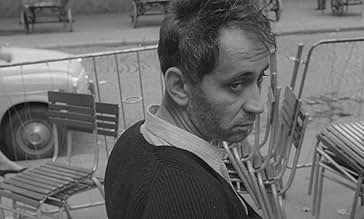
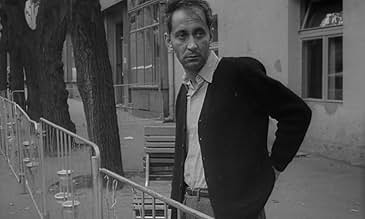


Aleksander Kostic
- Ekspert za seksualna pitanja
- (as Dr Aleksandar Dj Kostic)
Zivojin Aleksic
- Ekspert za kriminalistiku
- (as Dr Zivojin L Aleksic)
Dragan Obradovic
- Obducent
- (as Dr Dragan Obradovic)
- Director
- Writers
- All cast & crew
- Production, box office & more at IMDbPro
7.32.1K
1
2
3
4
5
6
7
8
9
10
Featured reviews
rats, a girl, and phallus art: all in a day's work for Dusan Majavejev
To the newcomer, especially to a work like Love Affair or The Case of the Missing Switchboard Operator, it might appear that the filmmaker Dusan Makavejev has attention deficit disorder. The guy isn't interested in stories like your Pappy filmmaker John Ford was. He comes from a country that has been through the war and revolution, but he's well aware of what the moving image can give to the intended (or unintended) viewer. His style goes from one thing to another in a snap, without fair warning. This is why, perhaps, the best entry point into his career is the scandalous, hilarious politi-sex docu-drama-comedy WR The Mysteries of the Organism. Once you get through that, and you want more, you can go on to his earlier works such as this one.
In a way it's similar to WR in that it tells a very conventional, some would say uber-melodrama, story of a average-but-pretty switchboard operator who meets a rodent-catcher (aka sanitation worker) and they have a love affair. It has this, but Makavejev also cuts in clips from a sex doctor espousing about the nature of sex and phalluses in art, and how an egg is more than "just an omelet" and faces the audience directly with this. And, on top of this, we get every so often a fact about rodent over-populations and some political imagery and workers marching the in the street for good measure. For the filmmaker, this story of a girl and a man having a fling, mostly happy and only sad towards the end of their affair, when an unintentional betrayal occurs on the part of the girl, is just part of the woodwork, and we can take what we will what it means in context of rodents and sex... or a murder mystery for that matter.
Some of the film is amusing in its sudden movements and cutaways. Take the scene where Isabella is trying to work late and the guy that runs the switchboard keeps teasing her sexually, trying to have his way. She finally gives in, very reluctantly, and we see her face is devastated. Immediately this cuts to a very scratchy-grainy film stock showing "Adam and Eve", a naked man and woman, in a circling movement in various sculpture-like poses. What does this mean? Why does Makavejev throw this in here? Perhaps as a practical joke, or as one of those self-conscious beats akin to Godard. But for him, it could mean everything or nothing. We get some blatant nudity, but none of the sex is too graphic; it's about average people, then made non-linear by a (somewhat) average murder case, and then made extraordinary by its editing style and fresh outlook on Yugoslavian love and work.
In other words, expect a free-wheeling film that mixes real romance and satire, real documentary footage and breaking-the-fourth wall, melodrama and tragedy. It's not always exciting, and a little rough around the edges. For even the somewhat-fan of the director's, it's an anarchic treat.
In a way it's similar to WR in that it tells a very conventional, some would say uber-melodrama, story of a average-but-pretty switchboard operator who meets a rodent-catcher (aka sanitation worker) and they have a love affair. It has this, but Makavejev also cuts in clips from a sex doctor espousing about the nature of sex and phalluses in art, and how an egg is more than "just an omelet" and faces the audience directly with this. And, on top of this, we get every so often a fact about rodent over-populations and some political imagery and workers marching the in the street for good measure. For the filmmaker, this story of a girl and a man having a fling, mostly happy and only sad towards the end of their affair, when an unintentional betrayal occurs on the part of the girl, is just part of the woodwork, and we can take what we will what it means in context of rodents and sex... or a murder mystery for that matter.
Some of the film is amusing in its sudden movements and cutaways. Take the scene where Isabella is trying to work late and the guy that runs the switchboard keeps teasing her sexually, trying to have his way. She finally gives in, very reluctantly, and we see her face is devastated. Immediately this cuts to a very scratchy-grainy film stock showing "Adam and Eve", a naked man and woman, in a circling movement in various sculpture-like poses. What does this mean? Why does Makavejev throw this in here? Perhaps as a practical joke, or as one of those self-conscious beats akin to Godard. But for him, it could mean everything or nothing. We get some blatant nudity, but none of the sex is too graphic; it's about average people, then made non-linear by a (somewhat) average murder case, and then made extraordinary by its editing style and fresh outlook on Yugoslavian love and work.
In other words, expect a free-wheeling film that mixes real romance and satire, real documentary footage and breaking-the-fourth wall, melodrama and tragedy. It's not always exciting, and a little rough around the edges. For even the somewhat-fan of the director's, it's an anarchic treat.
Heritage
Film for me is a matter of apprehension, of temporal experience of who you are relative to what is playing before you. So I don't care about a historicist or cinematic scholarly approach to films, in that film (and history) by itself is nothing, a carved artifact. This is my way of saying that there are probably several reasons to find this interesting, as token of 60s Yugoslav mores and 60s New Wave, admire the technique, which is wonderful in its freedom and placing. But for me, none of that matters when it doesn't enliven me.
A sexologist opens the film by humorously explaining the hidden omnipresence of sex in all we do, establishing the essence of the film as something to be secretly whispered and discovered.
The film follows a relationship between a rat exterminator and a blonde switchboard operator around Belgrade, the ups and downs. Salad days, captured with deliberate languidness. Eventually, there is betrayal and tragedy.
The point seems to be, contrasted levels of apprehension: everyday life in the affair in its dullness, small joy and unpredictability, with the system that frames that life as story, attempting to explain: 'experts' lecture on various topics, polemic footage of revolution play in ironic celebration, histories are recounted in voice-over. But you'll note, for instance, that the sexologist makes up nearly everything he says: Rembrandt did not paint sex, Mesopotamian priests did not sit ontop of a phallic column for days. The same fabrication then extends in the footage of joyous communist parades, a similarly subversive ploy is found in the silent Mr. West in the Land of the Bolsheviks.
But it's a weird, incongruent alignment of cycles that fails and fails to build for an hour. One hour felt like two. A big reason seems to be that this sort of bare observation was fresh at the time, but overly familiar now so all the vitality has been zapped out.
It just wastes what could have been a tremendously powerful last scene, where so much of what we see could be toyed with as different levels of involved understanding: a murder has been set up early in the film, but we don't know it's going to feature in the story, the different levels are that suddenly we are aware of what's coming (the murder), unexpectedly what we find out (that it was an accident), and what were the human emotional dynamics (regret and despair, not hate). Imagine the richness..
A sexologist opens the film by humorously explaining the hidden omnipresence of sex in all we do, establishing the essence of the film as something to be secretly whispered and discovered.
The film follows a relationship between a rat exterminator and a blonde switchboard operator around Belgrade, the ups and downs. Salad days, captured with deliberate languidness. Eventually, there is betrayal and tragedy.
The point seems to be, contrasted levels of apprehension: everyday life in the affair in its dullness, small joy and unpredictability, with the system that frames that life as story, attempting to explain: 'experts' lecture on various topics, polemic footage of revolution play in ironic celebration, histories are recounted in voice-over. But you'll note, for instance, that the sexologist makes up nearly everything he says: Rembrandt did not paint sex, Mesopotamian priests did not sit ontop of a phallic column for days. The same fabrication then extends in the footage of joyous communist parades, a similarly subversive ploy is found in the silent Mr. West in the Land of the Bolsheviks.
But it's a weird, incongruent alignment of cycles that fails and fails to build for an hour. One hour felt like two. A big reason seems to be that this sort of bare observation was fresh at the time, but overly familiar now so all the vitality has been zapped out.
It just wastes what could have been a tremendously powerful last scene, where so much of what we see could be toyed with as different levels of involved understanding: a murder has been set up early in the film, but we don't know it's going to feature in the story, the different levels are that suddenly we are aware of what's coming (the murder), unexpectedly what we find out (that it was an accident), and what were the human emotional dynamics (regret and despair, not hate). Imagine the richness..
In the Entire Title, the Word "Or" Is the Tell
What I enjoyed most about this inexplicable Yugoslavian film was the source of pleasure in watching a movie filmed on grainy, imprecise celluloid stock. Every scene hums with that lovely old-fashioned atmosphere of maddeningly strenuous traditional film-making. We can sense the boom mikes, the film reel, the guys with big, uncomfortable headphones, and the director with a big vision that frustrates him by communication breakdown, as the outcome of his film is a bewilderingly ambiguous celluloid mishmash of sex, young lovers, totalitarian Yugoslavia, and nonlinear narrative structure.
And as such, it is a joy! It splurges and has fun! In one hour and nine minutes, its main thread, concerning a Hungarian switchboard operator who meets and falls in love with a Muslim who soon moves into her apartment much to the jealous chagrin of an imposing postal worker, intruding some touching intercuts of archive footage that give impressions of lives ensnared in totalitarian society, a brief history of how the gray rat infested Europe, and a sexologist in his study talking about the history of sex. Even the central train of thought is deconstructed into ambiguity as, seemingly at the same time, the police are investigating the drowning of a young woman.
Director Dusan Makavejev seems to have simply made a multi-faceted montage of Yugoslavia and reflections based on its time, 1967. In spite of its self-indulgence, as was a common limitation of progressive European art-house films of the time, it is very enjoyable.
And as such, it is a joy! It splurges and has fun! In one hour and nine minutes, its main thread, concerning a Hungarian switchboard operator who meets and falls in love with a Muslim who soon moves into her apartment much to the jealous chagrin of an imposing postal worker, intruding some touching intercuts of archive footage that give impressions of lives ensnared in totalitarian society, a brief history of how the gray rat infested Europe, and a sexologist in his study talking about the history of sex. Even the central train of thought is deconstructed into ambiguity as, seemingly at the same time, the police are investigating the drowning of a young woman.
Director Dusan Makavejev seems to have simply made a multi-faceted montage of Yugoslavia and reflections based on its time, 1967. In spite of its self-indulgence, as was a common limitation of progressive European art-house films of the time, it is very enjoyable.
10dragokin
Arguably Makavejev's finest work
The combination of almost documentary approach with non-linear storytelling makes Love Affair arguably Makavejev's finest work.
The documentary approach, including a lot of archive footage, echoes Innocence Unprotected (Nevinost bez zatite) as we follow common people during what turned out to be socialism's heyday in former Yugoslavia.
Non-linear storytelling has later been driven to the excess in WR: Mysteries of Organism (WR: Misterije organizma) rendering Love Affair much more accessible.
This must have been an extraordinary movie at the time, along with rather brave Eva Ras in one of the lead roles.
The documentary approach, including a lot of archive footage, echoes Innocence Unprotected (Nevinost bez zatite) as we follow common people during what turned out to be socialism's heyday in former Yugoslavia.
Non-linear storytelling has later been driven to the excess in WR: Mysteries of Organism (WR: Misterije organizma) rendering Love Affair much more accessible.
This must have been an extraordinary movie at the time, along with rather brave Eva Ras in one of the lead roles.
Fantastic
"It's still unclear who will rule the Earth in 100 years: people or rats." - hmm, are the rats already ruling?
Wonderfully offbeat, this is like a Yugoslavian version of a French new wave film, directed by Dusan Makavejev and starring the fantastic Eva Ras. It shows how subversively naughty it's going to be from the beginning, with a sexologist talking about the ancients worshipping giant phalluses, with cuts to lewd classical images. The story is simple, but how it's told is anything but. It has a switchboard operator (Ras) taking a rat catcher (Slobodan Aligrudic) as a lover, an affair which ends in tragedy.
Throughout the story we get various lectures, including a criminologist talking about modern CSI advances, wonderment expressed over a hen's egg, and a description of notable rat infestations in history, which finishes with a poem to them scrolling up the screen. We also get a window into some of the humbler aspects of life in Yugoslavia at the time, including the woman's apartment where she makes coffee using an iron and the couple sit down to watch a "good" television show, which turns out to be a communist parade with marchers advocating the closing of churches, then looters destroying one. His garret makes her place look like a palace, but they're happy together - in one scene she makes a delectable looking strudel from scratch, stretching the dough out to a thin sheet, and in another, he gets a contractor in to install a water heater for her so she can take a hot shower.
As the story is told in an interleaved way, with a flash forward to her on a gurney in preparation for a postmortem, we know it's going to end badly, and the film gradually fills in how. Along the way we get lots of references to sex which seem like an assurance that it's natural and healthy, including most obviously Eva Ras showing off her beautiful body, and a return of the sexologist to describe a painting that could be thought of as pornographic by Dorde Andrejevic-Kun. Even the door to door wool thrasher is on the make, asking a middle-aged lady "Want me to thrash you too?" to which she replies, "Oh, I was thrashed long ago, my friend." It's therefore ironic that underneath all of its flair, the film could also be seen as a morality tale, as the Hungarian woman who can't go without sex for too long gets pregnant and then killed.
The film seems wonderfully realistic, shot in the streets of Belgrade with real people sometimes staring directly into the camera, and including footage down a wonderfully dank city well. At the same time, it's very playful, alternating between things like the woman blowing big soap bubbles into being on her hands before breaking the 4th wall, a 360 degree revolution shot around Adam and Eve being reenacted by a couple, and soaring communist era patriotic music.
The main thing I didn't like was that the postman who is incredibly aggressive and annoying with his sexual advances eventually gets his way, the old "no means yes if you persist long enough" crap. I considered lowering my review score a bit because of it, but the truth is that I was delighted at how creative this was, especially coming out of Yugoslavia in 1967. I will definitely be checking out more of Makavejev's work.
Wonderfully offbeat, this is like a Yugoslavian version of a French new wave film, directed by Dusan Makavejev and starring the fantastic Eva Ras. It shows how subversively naughty it's going to be from the beginning, with a sexologist talking about the ancients worshipping giant phalluses, with cuts to lewd classical images. The story is simple, but how it's told is anything but. It has a switchboard operator (Ras) taking a rat catcher (Slobodan Aligrudic) as a lover, an affair which ends in tragedy.
Throughout the story we get various lectures, including a criminologist talking about modern CSI advances, wonderment expressed over a hen's egg, and a description of notable rat infestations in history, which finishes with a poem to them scrolling up the screen. We also get a window into some of the humbler aspects of life in Yugoslavia at the time, including the woman's apartment where she makes coffee using an iron and the couple sit down to watch a "good" television show, which turns out to be a communist parade with marchers advocating the closing of churches, then looters destroying one. His garret makes her place look like a palace, but they're happy together - in one scene she makes a delectable looking strudel from scratch, stretching the dough out to a thin sheet, and in another, he gets a contractor in to install a water heater for her so she can take a hot shower.
As the story is told in an interleaved way, with a flash forward to her on a gurney in preparation for a postmortem, we know it's going to end badly, and the film gradually fills in how. Along the way we get lots of references to sex which seem like an assurance that it's natural and healthy, including most obviously Eva Ras showing off her beautiful body, and a return of the sexologist to describe a painting that could be thought of as pornographic by Dorde Andrejevic-Kun. Even the door to door wool thrasher is on the make, asking a middle-aged lady "Want me to thrash you too?" to which she replies, "Oh, I was thrashed long ago, my friend." It's therefore ironic that underneath all of its flair, the film could also be seen as a morality tale, as the Hungarian woman who can't go without sex for too long gets pregnant and then killed.
The film seems wonderfully realistic, shot in the streets of Belgrade with real people sometimes staring directly into the camera, and including footage down a wonderfully dank city well. At the same time, it's very playful, alternating between things like the woman blowing big soap bubbles into being on her hands before breaking the 4th wall, a 360 degree revolution shot around Adam and Eve being reenacted by a couple, and soaring communist era patriotic music.
The main thing I didn't like was that the postman who is incredibly aggressive and annoying with his sexual advances eventually gets his way, the old "no means yes if you persist long enough" crap. I considered lowering my review score a bit because of it, but the truth is that I was delighted at how creative this was, especially coming out of Yugoslavia in 1967. I will definitely be checking out more of Makavejev's work.


Did you know
- TriviaThe film was initially refused a UK certificate by the BBFC owing to shots of pubic hair, though the distributor himself partly ruined its chances by ignoring the film's creative aspects and instead telling censor John Trevelyan "I am sending you a film with a few tits in it. I don't think much of it but I can sell it to the sex theaters". It was eventually passed with minor cuts in 1969 and released fully uncut on video in 1996.
- Quotes
[first lines]
Ekspert za seksualna pitanja: I'm sure you must be interested in sex, and it's a good thing. It would be sad if you weren't. I too am very interested in sex.
- ConnectionsFeatured in Zabranjeni bez zabrane (2007)
Details
- Release date
- Country of origin
- Languages
- Also known as
- An Affair of the Heart
- Production company
- See more company credits at IMDbPro
- Runtime
- 1h 10m(70 min)
- Color
- Sound mix
- Aspect ratio
- 1.66 : 1
Contribute to this page
Suggest an edit or add missing content