IMDb RATING
7.3/10
3.9K
YOUR RATING

In the fictional Latin American country Eldorado, a poet tries to effect political change by influencing powerful men.In the fictional Latin American country Eldorado, a poet tries to effect political change by influencing powerful men.In the fictional Latin American country Eldorado, a poet tries to effect political change by influencing powerful men.
- Awards
- 2 wins & 1 nomination total

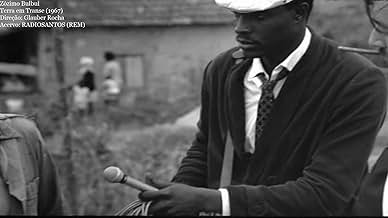

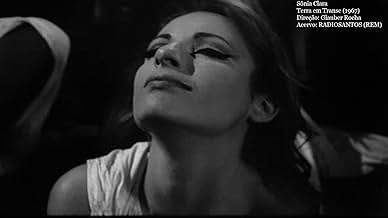
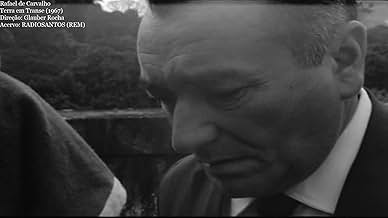


Jofre Soares
- Father Gil
- (as Joffre Soares)


Thelma Reston
- Felício's wife
- (as Telma Reston)


Emmanuel Cavalcanti
- Felício
- (as Emanuel Cavalcanti)
- Director
- Writer
- All cast & crew
- Production, box office & more at IMDbPro
7.33.9K
1
2
3
4
5
6
7
8
9
10
Featured reviews
The Brazilian Camera
Eldorado, a fictitious country in Latin America, is sparkling with the internal struggle for political power. In the eye of this social convulsion, the jaded journalist Paulo Martins opposes two equally corrupt political candidates: a pseudopopulist and a conservative.
Its exhibition was forbidden in Brazil in April 1967 for "tarnishing the image of Brazil" but after protests by both Brazilian and French filmmakers, it was authorized by the Brazilian government to be screened at Cannes and in Brazil. What image it is tarnishing is unclear to me, but but every country sees national pride differently.
If any aspect of the film is singled out, it is typically the cinematography. In this case, it comes from Luiz Carlos Barreto, who is more generally known as a prolific producer rather than a cameraman. His best-known film is likely "How Tasty Was My Little Frenchman" (1971). Although he produced 50 films, he only acted as director of photography one other time -- on "Barren Lives" (1963).
Its exhibition was forbidden in Brazil in April 1967 for "tarnishing the image of Brazil" but after protests by both Brazilian and French filmmakers, it was authorized by the Brazilian government to be screened at Cannes and in Brazil. What image it is tarnishing is unclear to me, but but every country sees national pride differently.
If any aspect of the film is singled out, it is typically the cinematography. In this case, it comes from Luiz Carlos Barreto, who is more generally known as a prolific producer rather than a cameraman. His best-known film is likely "How Tasty Was My Little Frenchman" (1971). Although he produced 50 films, he only acted as director of photography one other time -- on "Barren Lives" (1963).
Excellent film and reliable service
Released on Mr Bongo in 2005 "Terra em Transe" is dated, and has a confused screenplay, although being magnificently updated regarding the lack of ethics and the amoral behavior of the politicians. If the reader has had the opportunity of reading Machiavelli's "The Prince", you'll probably see how the behavior of politicians remains unchanged along the centuries.
However, keeping in mind that in this is movie Brazil was under a tough military dictatorship, this movie is a milestone in the history of Brazilian New Cinema. Glauber Rocha was very braze, discussing forbidden themes such as fight of classes, manipulation of the submissive masses by the elites, corruption in politician, anarchism, campaign promises not kept after the elections, economical power of foreign groups (or countries) in Latin American countries and coup d'état. In 1967, "Terra em Transe" was awarded with "Great Prize" in the Locarno Festival (Switzerland); "Luis Buñuel Prize" in Cannes Festival; "Federation of International Critics Prize" in Cannes Festival; and Best Movie of the Year in the Air France Prize, among other prizes
However, keeping in mind that in this is movie Brazil was under a tough military dictatorship, this movie is a milestone in the history of Brazilian New Cinema. Glauber Rocha was very braze, discussing forbidden themes such as fight of classes, manipulation of the submissive masses by the elites, corruption in politician, anarchism, campaign promises not kept after the elections, economical power of foreign groups (or countries) in Latin American countries and coup d'état. In 1967, "Terra em Transe" was awarded with "Great Prize" in the Locarno Festival (Switzerland); "Luis Buñuel Prize" in Cannes Festival; "Federation of International Critics Prize" in Cannes Festival; and Best Movie of the Year in the Air France Prize, among other prizes
Often exhausting but consistently breathtaking
Following his fascinating portrayal of outlaw Antonio das Mortes and the dying days of banditry, Black God, White Devil (1964), Brazilian director Glauber Rocha - only 28 at the time - made the dazzling, deliberately contradictory and admittedly plodding Entranced Earth, a kaleidoscopic satire of politics in Latin America and the mad dictators who seemed to delight their people only to oppress them once elected. Filmed with the free-styling vigour of the French New Wave, Entranced Earth is often exhausting but consistently breathtaking.
Told through the eyes of poet and journalist Paulo Martins (Jardel Filho), we first encounter him pleading angrily with governor Felipe Vieira (Jose Lewgoy) to fight back in the midst of a social uprising against his administration. We flash back to learn that they were once friends, with Paulo offering his support during the election process, only to see the the promises Vieira campaigned on go out the window as the people go hungry. Vieira's political opponent, conservative Porfirio Diaz (Paulo Autran), was also once Paulo's friend, and has spent his life in luxury away from public view until a chance to rule turns him into a raving, yet highly charismatic, lunatic.
Entranced Earth is quite a confusing film. It strides along shifting back-and-forth in time and between various characters, and the kinetic, in-your-face camera-work makes it difficult at times to decipher just what the hell is going on. As a time capsule and a piece of experimental film-making, it is fascinating and deserves to have each of its frames pulled apart and analysed. It's a leftist view that is without any overt political statements, and instead seems to set out to capture the political counter-culture of the 1960's (or the demise of it). By setting it in the fictional country of Eldorado, Glauber avoids commenting on any country in particular, but is clearly making a statement about Latin America. It may leave you confused and worn- out by the end, but it's political cinema with both an edge and a sense of humour, and takes its technical influences from the greats of world cinema.
Told through the eyes of poet and journalist Paulo Martins (Jardel Filho), we first encounter him pleading angrily with governor Felipe Vieira (Jose Lewgoy) to fight back in the midst of a social uprising against his administration. We flash back to learn that they were once friends, with Paulo offering his support during the election process, only to see the the promises Vieira campaigned on go out the window as the people go hungry. Vieira's political opponent, conservative Porfirio Diaz (Paulo Autran), was also once Paulo's friend, and has spent his life in luxury away from public view until a chance to rule turns him into a raving, yet highly charismatic, lunatic.
Entranced Earth is quite a confusing film. It strides along shifting back-and-forth in time and between various characters, and the kinetic, in-your-face camera-work makes it difficult at times to decipher just what the hell is going on. As a time capsule and a piece of experimental film-making, it is fascinating and deserves to have each of its frames pulled apart and analysed. It's a leftist view that is without any overt political statements, and instead seems to set out to capture the political counter-culture of the 1960's (or the demise of it). By setting it in the fictional country of Eldorado, Glauber avoids commenting on any country in particular, but is clearly making a statement about Latin America. It may leave you confused and worn- out by the end, but it's political cinema with both an edge and a sense of humour, and takes its technical influences from the greats of world cinema.
Entranced Earth
Another movie watched, or rather, reviewed, for the course on Cinema Novo that I'm doing in Cinema com Teoria, taught by Prof. Alisson Gutenberg.
Terra em Transe is part of the second phase of Cinema Novo. Directed by Glauber Rocha, it has an exquisite cast, all in fantastic performances: Jardel Filho (Paulo Martins), Paulo Autran (Porfírio Diaz), José Lewgoy (Felipe Vieira), Glauce Rocha (Sara), Paulo Gracindo (Don Julio Fuentes), Hugo Carvana (Álvaro), Joffre Soares (Father Gil), Danuza Leão (Sílvia), Mário Lago (Captain), Flávio Migliaccio (man of the people), Francisco Milani (Aldo).
To circumvent the censorship, which was still not as incisive as after the AI-5, Rocha set the plot in Eldorado, a fictional country located in Latin America. Porfírio Diaz, not by chance is the name of the Mexican dictator who has been in power for more than three decades, with a campaign theme that unites Catholic religion and conservatism, will run for reelection as president of Eldorado with Felipe Vieira, a populist politician. Paulo Martins is a poet who advised Porfírio, but changes sides when he realizes that he distances himself from popular agendas. Sara is his wife and balance point. It is in this political context that the story unfolds.
Glauber uses a lot of allegory to develop a plot that was a mirror of the situation experienced by Brazil, a few years after the 1964 military coup. As an allegory, it will explore situations reminiscent of a samba school parade: dancers and drums at a Felipe Vieira rally, luxurious costumes that portray the past of Eldorado, with the arrival of the white man on the country's coast (here there is a luxurious participation of Clóvis Bornay, icon of the costume parades in Rio de Janeiro), a lot of percussion in the soundtrack, in contrast with classical music, which makes a good distinction between the popular and the erudite, the flag bearer (in this case, Glauber subverts the order and puts a man, Porfírio, to carry a black flag - a sign of mourning for the situation in Brazil?, another allegory) and the parade itself with the walks of candidate Fellipe with the people.
The film also directly brings strong messages such as the scene in which Jerônimo, a representative of the people, starts to speak to Felipe, but is interrupted with Paulo Martins' hand in his mouth, saying that the people have no voice. The violence against those who demonstrated is also shown, and the most violent period of the Brazilian dictatorship had not even begun, in the scene in which the character of Flávio Migliaccio, purposely unnamed, is punched by the candidate's security (Maurício do Valle).
Another interesting contrast is between Carnival, as already exposed here, and Opera, once linked to the poorest strata of the population, to later become synonymous with the elite. The scene in which Porphyry falls with his flag on the steps of a palace is a true act of an opera.
The dialogues and monologues, especially those of Paulo Martins, are difficult to understand, with much erudition. And then Glauber didn't understand why his films didn't have an audience... Reviewing the film, I realized its relevance, especially regarding the political context in which Brazil plunged with the result of the 2018 election.
Despite all these considerations above, which I think are very appropriate, I don't like the film, much for its audio. The noise is annoying all the time, with overlapping voices, soundtrack and ambient sound, at a volume above normal. It is often difficult to understand what the actors are saying, and understanding the dialogues requires reflection at all times. For me, it was a lot of allegory inserted in the political context, which came to be caricatured. Anyway, I recognize the importance of the film for the history of Brazilian and Latin American cinema.
Terra em Transe is part of the second phase of Cinema Novo. Directed by Glauber Rocha, it has an exquisite cast, all in fantastic performances: Jardel Filho (Paulo Martins), Paulo Autran (Porfírio Diaz), José Lewgoy (Felipe Vieira), Glauce Rocha (Sara), Paulo Gracindo (Don Julio Fuentes), Hugo Carvana (Álvaro), Joffre Soares (Father Gil), Danuza Leão (Sílvia), Mário Lago (Captain), Flávio Migliaccio (man of the people), Francisco Milani (Aldo).
To circumvent the censorship, which was still not as incisive as after the AI-5, Rocha set the plot in Eldorado, a fictional country located in Latin America. Porfírio Diaz, not by chance is the name of the Mexican dictator who has been in power for more than three decades, with a campaign theme that unites Catholic religion and conservatism, will run for reelection as president of Eldorado with Felipe Vieira, a populist politician. Paulo Martins is a poet who advised Porfírio, but changes sides when he realizes that he distances himself from popular agendas. Sara is his wife and balance point. It is in this political context that the story unfolds.
Glauber uses a lot of allegory to develop a plot that was a mirror of the situation experienced by Brazil, a few years after the 1964 military coup. As an allegory, it will explore situations reminiscent of a samba school parade: dancers and drums at a Felipe Vieira rally, luxurious costumes that portray the past of Eldorado, with the arrival of the white man on the country's coast (here there is a luxurious participation of Clóvis Bornay, icon of the costume parades in Rio de Janeiro), a lot of percussion in the soundtrack, in contrast with classical music, which makes a good distinction between the popular and the erudite, the flag bearer (in this case, Glauber subverts the order and puts a man, Porfírio, to carry a black flag - a sign of mourning for the situation in Brazil?, another allegory) and the parade itself with the walks of candidate Fellipe with the people.
The film also directly brings strong messages such as the scene in which Jerônimo, a representative of the people, starts to speak to Felipe, but is interrupted with Paulo Martins' hand in his mouth, saying that the people have no voice. The violence against those who demonstrated is also shown, and the most violent period of the Brazilian dictatorship had not even begun, in the scene in which the character of Flávio Migliaccio, purposely unnamed, is punched by the candidate's security (Maurício do Valle).
Another interesting contrast is between Carnival, as already exposed here, and Opera, once linked to the poorest strata of the population, to later become synonymous with the elite. The scene in which Porphyry falls with his flag on the steps of a palace is a true act of an opera.
The dialogues and monologues, especially those of Paulo Martins, are difficult to understand, with much erudition. And then Glauber didn't understand why his films didn't have an audience... Reviewing the film, I realized its relevance, especially regarding the political context in which Brazil plunged with the result of the 2018 election.
Despite all these considerations above, which I think are very appropriate, I don't like the film, much for its audio. The noise is annoying all the time, with overlapping voices, soundtrack and ambient sound, at a volume above normal. It is often difficult to understand what the actors are saying, and understanding the dialogues requires reflection at all times. For me, it was a lot of allegory inserted in the political context, which came to be caricatured. Anyway, I recognize the importance of the film for the history of Brazilian and Latin American cinema.
Problematic and seriously overrated
I know that most people will consider this opinion as heretics, but I think this a bad movie. Despite the good cinematography and the many great actors. The script is an undevelopped and confusing mess, partially in a hurry, partially simply shallow, exceding in its chaotic expressionist improvisation. It is pretensious but lacks deepness and a more sophisticated social political critique. Dialogs are just bad. Technically, sound is also quite flawed. Edition is unjustifiably harsh sometimes, with abrupt cuts. Many scenes are partially documental, as they were shot with few actors and many extras who were indeed common people who ignored that the situation was fictious (it may work but is moral questionable). The only really good part is the small segment in which there is a kind of mockumentary about Porfirio Diaz. To resume, "Enhanced earth" is world-wide celebrated but seriously overrated.


Did you know
- TriviaEldorado is a fictional country. It's entirely based on political and social issues of Brazil after 1964 while the country was under a military dictatorship that was over only in 1985.
- Quotes
Felipe Vieira: The streets belong to the people, like the sky belongs to the condors.
- ConnectionsFeatured in Cinema Novo (1967)
- SoundtracksOtello: Overture
Music by Giuseppe Verdi
- How long is Entranced Earth?Powered by Alexa
Details
- Runtime
- 1h 48m(108 min)
- Color
- Sound mix
- Aspect ratio
- 1.66 : 1
Contribute to this page
Suggest an edit or add missing content