IMDb RATING
6.6/10
5.1K
YOUR RATING


Al Capone's Valentine's Day surprise for the rival Bugs Moran gang in 1929 Chicago.Al Capone's Valentine's Day surprise for the rival Bugs Moran gang in 1929 Chicago.Al Capone's Valentine's Day surprise for the rival Bugs Moran gang in 1929 Chicago.
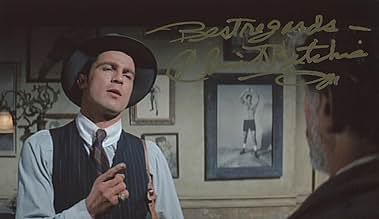
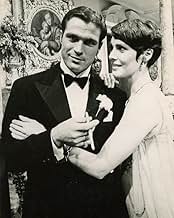
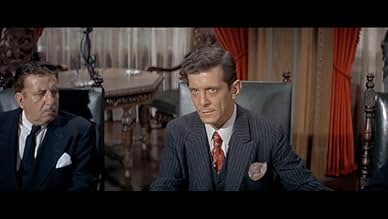
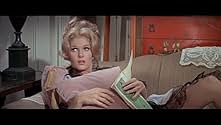


Joe Turkel
- Jake 'Greasy Thumb' Guzik
- (as Joseph Turkel)


- Director
- Writer
- All cast & crew
- Production, box office & more at IMDbPro
6.65.1K
1
2
3
4
5
6
7
8
9
10
Featured reviews
8qrt7
Bang bang!!! Yer dead!!!
Taking a step back from the intellectual surmising involving Godfather, Goodfellas et al., I thought this was an enjoyable film, 'a live action cartoon' as it was put.
Yep, sure it was a tad formulaic with characters going about their predetermined business and the armchair historians knew the conclusion of the film before it happened. I accept this as valid criticism, but I would stress more that it is supposed to be a quasi-documentary, with the solemn narrator venting sparse mechanical facts about each character and their relevance to the bigger picture as they were introduced. The film itself wasn't trying (I felt) to make a big artistic or intellectual statement, just an enjoyable and disposable piece of cinema. I think that it would be worse if it had been trying top make a 'big point' but fell on its arse, which a number of mobster-related films are guilty of.
As an enjoyable 'get on and enjoy the ride' movie I think it succeeded very well. Having only a basic knowledge of prohibition gangsterland, I found it quite gripping and that the documentary style enhance my enjoyment of an otherwise complex background. The set was also very well done, though Capone was miscast.
I would recommend this to most, unless they are Godfather fans!
8/10
Yep, sure it was a tad formulaic with characters going about their predetermined business and the armchair historians knew the conclusion of the film before it happened. I accept this as valid criticism, but I would stress more that it is supposed to be a quasi-documentary, with the solemn narrator venting sparse mechanical facts about each character and their relevance to the bigger picture as they were introduced. The film itself wasn't trying (I felt) to make a big artistic or intellectual statement, just an enjoyable and disposable piece of cinema. I think that it would be worse if it had been trying top make a 'big point' but fell on its arse, which a number of mobster-related films are guilty of.
As an enjoyable 'get on and enjoy the ride' movie I think it succeeded very well. Having only a basic knowledge of prohibition gangsterland, I found it quite gripping and that the documentary style enhance my enjoyment of an otherwise complex background. The set was also very well done, though Capone was miscast.
I would recommend this to most, unless they are Godfather fans!
8/10
Pre-GODFATHER classic!
If you love movies, this Roger Corman entry into the gangster genre is a revelation. The story is told in a series of loosely connected episodes that supposedly document real circumstances leading up to the St. Valentine's Day Massacre. A narrator tells us what we need to know for each scene, moving the action forward with an astonishing speed and clarity. Corman stamps the Docudrama style with this convention, and it really works; the immediate story is constantly informed by the narrator's voice-of-god telling of characters' past, present, and future circumstances. Even though the visual dimension of the film never escapes its studio locations, Corman's staging and his work with the actors gives it a sense of urgency. Corman has never really been talked about as an actor's director, but here he apparently had the time, the script, and I assume the inclination to let the players rip through the ceiling. The performances are all terrific. Jason Robards (looking nothing like Al Capone!) has an insane, maniacal smile that is often more unsettling than his violent rages. The camera seems to follow him around without the interruption of a cut; his mood swings keep his men in line and the viewer disarmed. True, Robards carries on, but it seems appropriate for the movie. George Segal has two great scenes that seem to play out without interruption. The one with Barbara Hale is a doozy. In fact, all through the film, Corman showcases characters in often ironic situations creating a tapestry of collective behavior that gives the film an amazing sense of vitality. Its the odd, subjective character detail that builds this story; we get involved not in the melodramatics of the story, per se, but rather in the lives of those individuals that come together who create the story.
In a very real way, Corman's approach pre-figures and creates the template for Coppola's internal view of the Mafia in the GODFATHER movies. It lacks the scope of Coppola's saga, for sure. But it sets the precedent. Corman was a terrific director. This movie was the only one he did for a major studio, 20th Century Fox. As a director, a major studio suited Corman, the artist. But as a producer, Corman has written about his distain for studio waste and book keeping. So for the next few years, before giving up directing altogether, Corman continued to work on his own under his safe and financially responsible American International umbrella. If you love movies, this is one you will cherish. Please give it a look. It a rich, satisfying, and disarmingly complex little gangster movie; terrifically entertaining.
In a very real way, Corman's approach pre-figures and creates the template for Coppola's internal view of the Mafia in the GODFATHER movies. It lacks the scope of Coppola's saga, for sure. But it sets the precedent. Corman was a terrific director. This movie was the only one he did for a major studio, 20th Century Fox. As a director, a major studio suited Corman, the artist. But as a producer, Corman has written about his distain for studio waste and book keeping. So for the next few years, before giving up directing altogether, Corman continued to work on his own under his safe and financially responsible American International umbrella. If you love movies, this is one you will cherish. Please give it a look. It a rich, satisfying, and disarmingly complex little gangster movie; terrifically entertaining.
Bears interesting comparison with THE GODFATHER.
It's incredible to think that this film, Roger Corman's major studio debut, and THE GODFATHER (made by Corman alumnus Coppola) were made within five years of each other. They could be decades apart, in look, in sensibility, in impact. Whereas GODFATHER gropes for a rich, mythic timelessness, MASSACRE seems brittle, thin, a mere pastiche of, variously, 30s Warners gangster films, 40s B-movies, or Corman's own early work. Whereas Coppola's characters have passed into popular culture, Corman's gangsters are thinly characterised, theatrical, parodic; whereas GODFATHER's plot is slow-burning, tense, silent, punctuated with shocking shards of tangible violence, MASSACRE is almost cartoon-like in its relentless gunfire, which, because it's not rooted in character, does not have as traumatic an effect.
Some of us, however, might recoil a little from the major film's more questionable posturing, and MASSACRE has many excellencies. Most immediately pleasurable is the plot, mathematically simple, as Corman narrates the titular bloodbath like a theorem, showing A (Capone) meeting B (Moran) to create C (the massacre). QED. Nothing is allowed interfere with this beautiful simplicity - every scene, every character, every action refers to this theorem alone. Even scenes which seem to illustrate character (eg Peter Gusenberg and Myrtle) only do so to 'explain' why one side got the better of another.
This quality extends to the film as a whole, which is a series of repetitions and mirroring scenes. Another pleasure is the voiceover, which again transforms a conventional narrative about real people into abstract formalism. Like a voice of God, it intrudes without warning, frequently, mixing bald factual details about all the players (eg Such and such, born 1893 in such a place, suspected gun-runner, killer etc., will die on 3 May 1957 of heart failure) with speculation. Before any character has even begun their parts in the film, their life stories are known to us. This robs them of everything that makes us human - motivation, hope, action. Sartre said we are what we do. Not here. Robbed of human characteristics, they become mere ciphers, playing out their inevitable fates, and denying the viewer the kind of emotional empathy that Coppola will dubiously over-indulge in.
Despite the (relatively) high budget, production values do nothing to make the film more realistic. Indeed, the uniformity of colour (predominantly grey), the repetition of scenes and places, the reduction of sequences to sheer functionality, makes the film increasingly artificial. The theatricality of the acting adds to this, with Robards especially hamming away to amusingly grand effect, but theatricality is embedded too, as narratively crucial scenes become sites for rhetoric, oratory, dramatic performance, an actor declaiming to an enrapt public, hanging (for dear life) to his every word.
Add to all this Corman's stunning, playful direction, confident and fluid, making interiors and objects live, fixing characters in their place. The violent scenes are expertly choreographed, if they aren't disturbing, their formal excellence is undiminished. All this formalism is not an empty, academic exercise. By revealing the phoniness of his subject matter, Corman reveals the processes of myth-making that, especially through the cinema, curiously glamourised an era, when America was in thrall to a number of violent fascists.
Corman is not seriously moralistic, he is cheerfully aware of human nature's strange pulls - he shows how the need for violence and sensation in cinema is close to the fascistic, but also undeniable. It is a trap Coppola doesn't always avoid. The score, which makes ragtime eerily modernist, is astounding, while Corman reveals, as in TALES OF TERROR, that he has a canny sense of the domestic's comic violence - the Pete/Myrtle scene is a hilarious-troubling classic.
Some of us, however, might recoil a little from the major film's more questionable posturing, and MASSACRE has many excellencies. Most immediately pleasurable is the plot, mathematically simple, as Corman narrates the titular bloodbath like a theorem, showing A (Capone) meeting B (Moran) to create C (the massacre). QED. Nothing is allowed interfere with this beautiful simplicity - every scene, every character, every action refers to this theorem alone. Even scenes which seem to illustrate character (eg Peter Gusenberg and Myrtle) only do so to 'explain' why one side got the better of another.
This quality extends to the film as a whole, which is a series of repetitions and mirroring scenes. Another pleasure is the voiceover, which again transforms a conventional narrative about real people into abstract formalism. Like a voice of God, it intrudes without warning, frequently, mixing bald factual details about all the players (eg Such and such, born 1893 in such a place, suspected gun-runner, killer etc., will die on 3 May 1957 of heart failure) with speculation. Before any character has even begun their parts in the film, their life stories are known to us. This robs them of everything that makes us human - motivation, hope, action. Sartre said we are what we do. Not here. Robbed of human characteristics, they become mere ciphers, playing out their inevitable fates, and denying the viewer the kind of emotional empathy that Coppola will dubiously over-indulge in.
Despite the (relatively) high budget, production values do nothing to make the film more realistic. Indeed, the uniformity of colour (predominantly grey), the repetition of scenes and places, the reduction of sequences to sheer functionality, makes the film increasingly artificial. The theatricality of the acting adds to this, with Robards especially hamming away to amusingly grand effect, but theatricality is embedded too, as narratively crucial scenes become sites for rhetoric, oratory, dramatic performance, an actor declaiming to an enrapt public, hanging (for dear life) to his every word.
Add to all this Corman's stunning, playful direction, confident and fluid, making interiors and objects live, fixing characters in their place. The violent scenes are expertly choreographed, if they aren't disturbing, their formal excellence is undiminished. All this formalism is not an empty, academic exercise. By revealing the phoniness of his subject matter, Corman reveals the processes of myth-making that, especially through the cinema, curiously glamourised an era, when America was in thrall to a number of violent fascists.
Corman is not seriously moralistic, he is cheerfully aware of human nature's strange pulls - he shows how the need for violence and sensation in cinema is close to the fascistic, but also undeniable. It is a trap Coppola doesn't always avoid. The score, which makes ragtime eerily modernist, is astounding, while Corman reveals, as in TALES OF TERROR, that he has a canny sense of the domestic's comic violence - the Pete/Myrtle scene is a hilarious-troubling classic.
Very entertaining, fast paced, and a marvelous cast
Just one more movie that highlights how much better movies were 30+ years ago than they are now. If this story were told today, the gore would overwhelm most of the plot and all of the entertainment.
As is, even the shlock Roger Corman produces a highly enjoyable, rapid paced vehicle. The scene with George Segal and Jean Hale is reminiscent of the one between Glenn Ford and Hope Lange in "Pocketful of Miracles." And, after watching it, one wonders why Jean Hale's filmography is so short.
Only Jason Robards, Jr. really overdoes it, but who's to say that Capone himself didn't overact a bit? Certainly no one who's alive to write a review here.
More entertaining than many other 60's gangster flicks, including "Bonnie and Clyde," "Dillinger," and the depressing "Murder, Inc."
While "The Godfather" series and "Goodfellas" were much higher budget and quality productions, both had parts which were overextended or just downright dull (for example, the long drawn out day of Henry Hill's arrest in "Goodfellas").
This one doesn't. It rocks from beginning to end. And most of the cast (such as the ubiquitous Charlie Dierkop) look more like hoodlums than real hoodlums do. (I think.)
Very high marks for sheer entertainment value.
As is, even the shlock Roger Corman produces a highly enjoyable, rapid paced vehicle. The scene with George Segal and Jean Hale is reminiscent of the one between Glenn Ford and Hope Lange in "Pocketful of Miracles." And, after watching it, one wonders why Jean Hale's filmography is so short.
Only Jason Robards, Jr. really overdoes it, but who's to say that Capone himself didn't overact a bit? Certainly no one who's alive to write a review here.
More entertaining than many other 60's gangster flicks, including "Bonnie and Clyde," "Dillinger," and the depressing "Murder, Inc."
While "The Godfather" series and "Goodfellas" were much higher budget and quality productions, both had parts which were overextended or just downright dull (for example, the long drawn out day of Henry Hill's arrest in "Goodfellas").
This one doesn't. It rocks from beginning to end. And most of the cast (such as the ubiquitous Charlie Dierkop) look more like hoodlums than real hoodlums do. (I think.)
Very high marks for sheer entertainment value.
Jason Robards is a surprisingly effective Al Capone
This is a very entertaining account of the famous rub-out in 1929 Chicago. Jason Robards is a decent Al Capone, and thankfully, doesn't try for an Italian accent. He also wields a mean baseball bat, thus having Capone's malice down but not his mass. Ralph Meeker plays Bugs Moran, leader of the rival Chicago gang. The cast is loaded with familiar faces and future stars, and it seems like somebody gets bumped off every ten minutes. Harold J. Stone plays Frank "The Enforcer" Nitti and almost, but not quite, convinces me he could be Italian. George Segal has a riotous brawling scene with Jean Hale after he finds out she spent three grand on a fur coat. Joan Shawlee has a bit as a "streetwalking entrepreneur," as we call it now. Jack Nicholson has one line, which he grunts out in a hoarse voice pre-Don Corleone. And you may even feel sorry for Bruce Dern in this film.
The movie was directed by Roger Corman, and features some of his stock players, including Dick Miller as one of the hit men. Paul Frees supplies the narration, giving this a semi-documentary feel. But he is no Walter Winchell. Definitely worth a look.
The movie was directed by Roger Corman, and features some of his stock players, including Dick Miller as one of the hit men. Paul Frees supplies the narration, giving this a semi-documentary feel. But he is no Walter Winchell. Definitely worth a look.


Did you know
- TriviaFor the massacre scene in the garage, the actors playing the slain gangsters were shown photos and directed as how to fall so their positions were identical to the real photos of the massacre. Two actors bumped together on the way down. After studying photographs they realized they had fallen and collided in the exact way the slain gangsters had fallen and had landed in the correct positions.
- Quotes
Reporter: Y'know some are sayin' that it really was the cops who shot those men.
Bugs Moran: You must be new to this town, mister. Only Al Capone kills like that.
- ConnectionsEdited into Capone (1975)
- How long is The St. Valentine's Day Massacre?Powered by Alexa
Details
- Release date
- Country of origin
- Languages
- Also known as
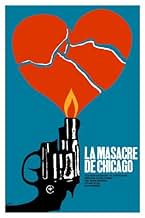
- La masacre de Chicago 1929
- Filming locations
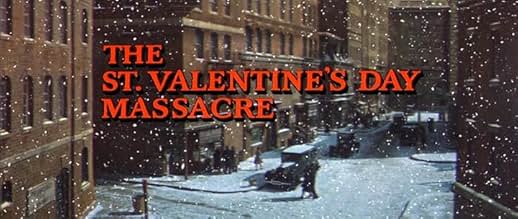
- Desilu Studios - 9336 W. Washington Blvd., Culver City, California, USA(street scenes, garage - exteriors)
- Production company
- See more company credits at IMDbPro
Box office
- Budget
- $1,000,000 (estimated)
- Runtime
- 1h 40m(100 min)
- Color
- Aspect ratio
- 2.35 : 1
Contribute to this page
Suggest an edit or add missing content