IMDb RATING
7.8/10
6.6K
YOUR RATING
A farmer has a violent dispute with his fellow villagers by claiming ownership of the water that comes out of his land. He is as sexually frustrated as he is greedy.A farmer has a violent dispute with his fellow villagers by claiming ownership of the water that comes out of his land. He is as sexually frustrated as he is greedy.A farmer has a violent dispute with his fellow villagers by claiming ownership of the water that comes out of his land. He is as sexually frustrated as he is greedy.
- Awards
- 2 wins total
7.86.5K
1
2
3
4
5
6
7
8
9
10
Featured reviews
The theme itself is reminiscent to a short story western
(1963) Dry Summer/ Susuz Yaz
(In Turkey with English subtitles)
DRAMA
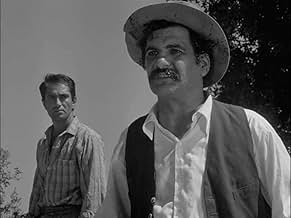
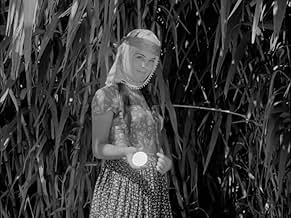
Co-written and directed by Metin Erksan that has Osman Kocabas (Erol Tas) carrying ply wood for the intention was to block a spring water that runs through his farm. He first informs his younger brother, Hasan Kocabas (Ulvi Dogan) about his intentions before he informs some of the other villagers about it. The villagers presume it was nothing more but a verbal threat so they chose to ignore him. While this was happening, Hasan spends countless hours with his 19 year old fiance, Bahar (Hülya Koçyigit). By the time both Hasan and Bahar get married and are then work on the farm, Osman then decides to make good with his threat by blocking the water canal that leads to the valley.
After my second viewing, it is reminiscent to a fable when a simple precious commodity such as water becomes important in our daily lives. This also reminds me of a western as well to which water and land rights become the center of the movie.
Co-written and directed by Metin Erksan that has Osman Kocabas (Erol Tas) carrying ply wood for the intention was to block a spring water that runs through his farm. He first informs his younger brother, Hasan Kocabas (Ulvi Dogan) about his intentions before he informs some of the other villagers about it. The villagers presume it was nothing more but a verbal threat so they chose to ignore him. While this was happening, Hasan spends countless hours with his 19 year old fiance, Bahar (Hülya Koçyigit). By the time both Hasan and Bahar get married and are then work on the farm, Osman then decides to make good with his threat by blocking the water canal that leads to the valley.
After my second viewing, it is reminiscent to a fable when a simple precious commodity such as water becomes important in our daily lives. This also reminds me of a western as well to which water and land rights become the center of the movie.
Harpiscord in a Turkish village film ???? :)))
before i watched, I had not expected such a gripping and fascinating film, i think its because we all (Turks) are used to watching funny village films with full of comedy where we burst into laugh even one kills another but this film shows us the dark side of village people with their great will to stay alive while trying to get the water (or any other) they need for their districts. usually village people (still, but especially in 1960s) are supposed to be uneducated and carrying gun with them in case there's an attack from other village people, in that case we should not be criticizing why the man does not agree to give water to all his neighbours, its very normal if we consider not everyone has the same brain cells, that is as normal as why there was world wars before. We cannot ask why for this film and for these times because simply there are no rules and the most brave with a gun in hand may grab all and dominate all. I have 2 things in mind, the musics are very interesting, because if there is no action you hear traditional Turkish tunes, with "saz" (a stringed Turkish instrument) but when there is action, you hear something like Bach with harpiscord, that is realllyyy interesting for me to hear this instrument in a Turkish Village film :)) the second thing is that was it necessary to kill those animals ? i think no, the director (metin erksan) could have made it possible easily if he wanted to. Anyway, its a must watch film, not only because it won the first golden bear from Turkey, but, also because probably it deserved. you might like the film very much or you might hate i don't know, but you will not get bored that's a guarantee... (try the new edited version in u-tube, its really great and as if it was shot 10 years ago)
Strong Drama of Rural Passions
This is a tense, strong drama, although perhaps not for the squeamish. The photography is artistically done, on the other hand the looping is typical 60s; that is, artificial. Evocative use is made of the santur, a Turkish string instrument like a cimbalom. A completely different kind of music accompanies fights and scenes of violence. Then we switch to avant garde atonal riffs; here the instruments are Western. The camera is almost always close to the action, helping to create a sense of claustrophobia. The dialog is sparse; the director preferring to rely on meaningful glances. There are no snappy one-liners. Most of the film is easily understood without even looking at the subtitles. There are some particularly memorable, even disturbing images near the end. The title might be better translated as "Thirsty Summer," suggesting as it does the rapacity driving the main character.
Criterion
It was a nice experience to watch this unique 1963 film in the Criterion collection at Martin Scorsese's attempt. Cinema is Immortal. Thanks to Martin Scorsese, Giovanni Armani and Versace, I hope we watch more movies.
Did you know
- TriviaOne of Martin Scorsese's favorite films. Scorsese has supported the film's preservation through the World Cinema Foundation.
- ConnectionsFeatured in Sudaki suretler (2011)
- How long is Dry Summer?Powered by Alexa
Details
- Release date
- Country of origin
- Language
- Also known as
- Reflections
- Filming locations
- Bademler Village, Urla, Izmir(location)
- Production company
- See more company credits at IMDbPro
- Runtime
- 1h 30m(90 min)
- Color
- Sound mix
- Aspect ratio
- 1.37 : 1
Contribute to this page
Suggest an edit or add missing content