
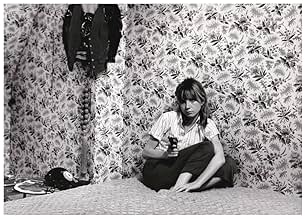
Sébastien is staging Racine's Andromaque and is having a falling out with his partner Claire, who is to play Hermione. He decides to call on his former wife to replace her, and Claire sinks ... Read allSébastien is staging Racine's Andromaque and is having a falling out with his partner Claire, who is to play Hermione. He decides to call on his former wife to replace her, and Claire sinks into despair.Sébastien is staging Racine's Andromaque and is having a falling out with his partner Claire, who is to play Hermione. He decides to call on his former wife to replace her, and Claire sinks into despair.
- Director
- Writers
- Stars
- Awards
- 1 win & 1 nomination total




Claude Richard
- Philippe
- (as Claude-Eric Richard)
Étienne Becker
- Le chef-opérateur
- (uncredited)
Patrice Wyers
- Le caméraman
- (uncredited)
- Director
- Writers
- All cast & crew
- Production, box office & more at IMDbPro
7.3996
1
2
3
4
5
6
7
8
9
10
Featured reviews
The word BORING doesn't justify...
4 hours+ to tell a dull story! Chain smoking french men and women rehearsing for Greek play, and some weak-ass relationship drama on the side. That's it!!! I started fast forwarding after 40 minutes, and I can believe I actually endured that much. A complete waste of time, so don't bother!
Mad love
Yes, on the face of it, four hours spent in the company of stage actors rehearsing a Racine play might seem excessive. After all, how many changes can Rivette ring on a discontented couple who do all sorts of things to hurt each other? How many times can Claire cheat on Sebastien with that weedy fellow, and how many times can Sebastien flirt with the brunette who's going to replace Claire as Andromaque? Whatever the answer, I have to say I find the whole thing fascinating. The film crew sent in to cover the proceedings seems to comment on everything. At times it has the air of a high school dramatic society offering, at other times it's deadly serious.
The performers do everything expected of them. Bulle Ogier became Rivette's favourite actress; she is stunning. Bright, sullen, depressed, elated--she goes through it all. Kalfon appeared in a later film, L'amour par terre, as a playwright. He's all silky assurance until the confused ending. A wonderful experience, a must for Rivette enthusiasts.
The performers do everything expected of them. Bulle Ogier became Rivette's favourite actress; she is stunning. Bright, sullen, depressed, elated--she goes through it all. Kalfon appeared in a later film, L'amour par terre, as a playwright. He's all silky assurance until the confused ending. A wonderful experience, a must for Rivette enthusiasts.
Imperfect, but overall excellent
16mm, 35mm, black and white, handheld camera, scant music, seemingly low budget, aloof characters with odd behaviors or habits: it's been awhile since I last watched an independent movie that truly looked and felt like an independent film, and moreover, truly was one. (Darren Aronofsky's 'Pi' comes to mind, and Kevin Smith's 'Clerks.') Though similar in length this is otherwise a far cry from the finessed mastery of 'La belle noiseuse,' to date my personal favorite of those films I've seen of Jacques Rivette; understated and very gradual as the progression of the narrative is I'm reminded of the films of Chantal Akerman, though this is a tad more meandering instead of simply deliberate (to the point that the length feels about as self-indulgent as it does meaningful).
Though possibly drawn out a smidgen more than is fruitful, the narrative core is outstanding. Slowly but surely the picture marks the painful disintegration of Claire and Sebastien's marriage, and more than that, husband and wife are both falling apart in their separate ways. Sebastien becomes increasingly cruel and indifferent, and moreover unfocused as rehearsals for his play flounder and go nowhere; Claire is plainly experiencing a mental breakdown, as much for the mere fact of the state of the relationship as for Sebastien's cold behavior. That both come full circle, and unite in a mutual sort of delirium before it all ends, makes the whole all the more delicious. I don't think the ebb and flow of the central relationship is depicted in a way that feels entirely natural, cohesive, or believable; some stops along the way rather seem to come out of nowhere. The screenplay is also imbalanced in terms of spotlighting Claire or Sebastien, the two of them together, or the rehearsals, and I think the writing of scenes and the narrative could have been tightened. Still, though uneven, overall the story is engrossing and compelling, and ultimately quite satisfying.
Rivette's direction feels weirdly loose, and maybe even scattered. I leave it to those who are more heavily familiar with the man's works to decide where his approach here fits within his oeuvre, though it's clear that it's intentional; regardless, it feels appropriate for the tone and style of the picture. So it is, too, with the acting, primarily that of chief stars Bulle Ogier and Jean-Pierre Kalfon: Claire and Sebastien are both a mess, and I'd rather be worried if the players DIDN'T reflect those troubled states in their performances. While mostly reserved and tempered in keeping with the overarching tack of the feature, Ogier and Kalfon both illustrate tremendous nuance in their portrayals that's deeply gratifying as a viewer; we can't necessarily relate to the characters in and of themselves, but their actors make their emotions real in a way that is highly relatable and sympathetic. Mixed together with the terse scenes and story, imperfect though they may sometimes be, the result is somewhat entrancing. I would even say that my opinion oscillated throughout these four hours, and I was at best unsure of what I might have to say of 'L'amour fou' when all was said and done. However, all the varied pieces do come together quite nicely, and what strength the movie boasts well outweighs the weaker aspects.
It's not flawless, but despite its faults I find it to be much better than not. Would that Rivette and co-writer Marilù Parolini had firmed up the screenplay a bit, yet even at that the tale they've woven is absorbing and enjoyable. The cast are splendid; all those behind the scenes turned in fine work, including not least editor Nicole Lubtchansky and cinematographers Étienne Becker and Alain Levent. At large I very much like this. I don't think it's a masterpiece, nor a revelation, and I can understand how the runtime might be prohibitive for some viewers. It's solid and deserving on its own merits, however, and whether one is specifically a fan of someone involved or just looking for something good to watch, I think 'L'amour fou' is very worthwhile. Maybe just as much to the point, if this was all that I knew of Rivette and his collaborators, it would be enough to impel me to look for more of everyone's films; if that's not a compliment, then I don't know what is.
Though possibly drawn out a smidgen more than is fruitful, the narrative core is outstanding. Slowly but surely the picture marks the painful disintegration of Claire and Sebastien's marriage, and more than that, husband and wife are both falling apart in their separate ways. Sebastien becomes increasingly cruel and indifferent, and moreover unfocused as rehearsals for his play flounder and go nowhere; Claire is plainly experiencing a mental breakdown, as much for the mere fact of the state of the relationship as for Sebastien's cold behavior. That both come full circle, and unite in a mutual sort of delirium before it all ends, makes the whole all the more delicious. I don't think the ebb and flow of the central relationship is depicted in a way that feels entirely natural, cohesive, or believable; some stops along the way rather seem to come out of nowhere. The screenplay is also imbalanced in terms of spotlighting Claire or Sebastien, the two of them together, or the rehearsals, and I think the writing of scenes and the narrative could have been tightened. Still, though uneven, overall the story is engrossing and compelling, and ultimately quite satisfying.
Rivette's direction feels weirdly loose, and maybe even scattered. I leave it to those who are more heavily familiar with the man's works to decide where his approach here fits within his oeuvre, though it's clear that it's intentional; regardless, it feels appropriate for the tone and style of the picture. So it is, too, with the acting, primarily that of chief stars Bulle Ogier and Jean-Pierre Kalfon: Claire and Sebastien are both a mess, and I'd rather be worried if the players DIDN'T reflect those troubled states in their performances. While mostly reserved and tempered in keeping with the overarching tack of the feature, Ogier and Kalfon both illustrate tremendous nuance in their portrayals that's deeply gratifying as a viewer; we can't necessarily relate to the characters in and of themselves, but their actors make their emotions real in a way that is highly relatable and sympathetic. Mixed together with the terse scenes and story, imperfect though they may sometimes be, the result is somewhat entrancing. I would even say that my opinion oscillated throughout these four hours, and I was at best unsure of what I might have to say of 'L'amour fou' when all was said and done. However, all the varied pieces do come together quite nicely, and what strength the movie boasts well outweighs the weaker aspects.
It's not flawless, but despite its faults I find it to be much better than not. Would that Rivette and co-writer Marilù Parolini had firmed up the screenplay a bit, yet even at that the tale they've woven is absorbing and enjoyable. The cast are splendid; all those behind the scenes turned in fine work, including not least editor Nicole Lubtchansky and cinematographers Étienne Becker and Alain Levent. At large I very much like this. I don't think it's a masterpiece, nor a revelation, and I can understand how the runtime might be prohibitive for some viewers. It's solid and deserving on its own merits, however, and whether one is specifically a fan of someone involved or just looking for something good to watch, I think 'L'amour fou' is very worthwhile. Maybe just as much to the point, if this was all that I knew of Rivette and his collaborators, it would be enough to impel me to look for more of everyone's films; if that's not a compliment, then I don't know what is.
Lourd
Strikingly photographed, low key cinema verite, sometimes difused, sometimes harsh, high contrast black and white; it's almost like we're watching a film/ play, *and* a "Making Of" documentary of same, as the drama and dissolution of a marriage unfolds during rehearsals for a theatrical production- but the film goes on for four hours, and little happens, until a 20 minutes long mix of amour et fureur, as the couple take axes and chop down the walls of their apartment, and smash their television set with the same ax, vandalise the walls, and maybe reconcile.
I greatly enjoyed Rivette's later, Out 1, and can see its foundation being layed here in its lengthy runtime, and conversations filmed in mirrors, but I found this film to be quite a chore to endure. I look forward to watching Out 1 again, but can't say I have any interest in watching this again (and I watched it twice already, hoping something would click for me, but no such luck)
I greatly enjoyed Rivette's later, Out 1, and can see its foundation being layed here in its lengthy runtime, and conversations filmed in mirrors, but I found this film to be quite a chore to endure. I look forward to watching Out 1 again, but can't say I have any interest in watching this again (and I watched it twice already, hoping something would click for me, but no such luck)
Andromaque Zombie as an image of an emotional world that seems to dissolve.
Extraordinary and long film by Rivette, who reinvents himself with this kind of mockumentary about theatre, full of dead times, and which defines many of the aspects of what will be the director's work from now on.
By no means a rehearsal for Out 1, but a great film absolutely mature in itself, and as interesting as the more famous and marathonian following work.
Claire and Sebastian are a married couple of actors from the Parisian experimental scene, embarking on the project of representing Andromaque by Racine. Sebastian is also the stage manager. The film begins when, after a dispute over how to recite a reply, Claire decides to leave the project and Sebastian replaces her with Marta.
With Sebastian embarking on this project that he is passionate about but very minority oriented and Claire without a job (and not interest in finding it) and spending the mornings recording herself on a tape recorder, surprisingly it does not seem that they have financial problems to make ends meet.
The film alternates scenes of private life with long rehearsals being filmed by a television crew.
Sebastian's rants about his revolutionary concept of acting are very typical of the time, posing a way that they want to pass off as revolutionary. The rehearsals, to call them somehow, naturally take place on an empty stage and the actors, to call them something, read their parts in the purest zombie style with a tone of unbearable laconicism. What is supposed to internalize emotions is actually shown as disinterest or inability to express them.
This is repeated in the relationships of the characters offstage: Claire and Sebastian apparently love each other, but there is a certain coldness and self-absorption that is frightening. Sebastian doesn't even show real interest in his infidelities, and rarely comes out of a distanced laconicism, and Claire shows her superficiality when she capriciously wants to buy herself a dog (buying herself is the best way to call it) because she likes the photograph of a pet on the cover of an album. .
Claire begins to show clear signs of imbalance and depression. She wanders around the house, while Sebastian sleeps (apparently) terrifyingly caressing her eyelids with a needle...
At one point, without us having witnessed any specific crisis, Sebastian decides to spend his nights at the theater, while Claire slits her wrists in an apparent clumsy suicide attempt. But in the next scene we have them casually spending an afternoon together, as playfully distant as ever.
There is something annoying and unpleasant in the environment and in the behavior of the characters, an emotional emptiness that is almost terrifying: like the actors on stage who seem to be talking to themselves, unable to show their emotions and declaiming without any conviction a text that seems impossed to them, in the same way outside the essays the characters are equally isolated, laconic and self-absorbed.
I like Rivette's concept of de-dramatizing his films, and lengthening the times, giving us the illusion of a world that runs with absolute naturalness. Even in the more eventful second part of the film, we don't get that feeling of stepping into a movie plot.
The second part is more dynamic, the long scenes are mostly replaced by agile parallel editing, the shots are shortened, there is a planning of the scenes and a manipulation of the contents with expressive purposes that becomes more evident. Even the rehearsals begin to be manipulated in the editing, interspersing different scenes and making their character as a commentary on the actors' own lives more clear.
Faced with the actors incarnating a role of traditional cinema, and the "non-professional" actors of neorealist cinema, or Bresson's models, Rivette seems to choose a different path, choosing his actors clearly for their own personality and showing them in the least manipulative possible. That is why we intuit that there is a lot of improvisation, that they work on minimal plot lines.
The two leads are magnificent, especially Bulle Ogier. Little more is required of the rest of the cast than to appear natural.
One of Rivette's great films, with the director's characteristic treatment of time (some would call it unbearably slow), but without the fantasy element that Rivette will include in almost all of his other films, more along the lines of La belle noiseuse than in that of Celine et Julie vont en bateau.
By no means a rehearsal for Out 1, but a great film absolutely mature in itself, and as interesting as the more famous and marathonian following work.
Claire and Sebastian are a married couple of actors from the Parisian experimental scene, embarking on the project of representing Andromaque by Racine. Sebastian is also the stage manager. The film begins when, after a dispute over how to recite a reply, Claire decides to leave the project and Sebastian replaces her with Marta.
With Sebastian embarking on this project that he is passionate about but very minority oriented and Claire without a job (and not interest in finding it) and spending the mornings recording herself on a tape recorder, surprisingly it does not seem that they have financial problems to make ends meet.
The film alternates scenes of private life with long rehearsals being filmed by a television crew.
Sebastian's rants about his revolutionary concept of acting are very typical of the time, posing a way that they want to pass off as revolutionary. The rehearsals, to call them somehow, naturally take place on an empty stage and the actors, to call them something, read their parts in the purest zombie style with a tone of unbearable laconicism. What is supposed to internalize emotions is actually shown as disinterest or inability to express them.
This is repeated in the relationships of the characters offstage: Claire and Sebastian apparently love each other, but there is a certain coldness and self-absorption that is frightening. Sebastian doesn't even show real interest in his infidelities, and rarely comes out of a distanced laconicism, and Claire shows her superficiality when she capriciously wants to buy herself a dog (buying herself is the best way to call it) because she likes the photograph of a pet on the cover of an album. .
Claire begins to show clear signs of imbalance and depression. She wanders around the house, while Sebastian sleeps (apparently) terrifyingly caressing her eyelids with a needle...
At one point, without us having witnessed any specific crisis, Sebastian decides to spend his nights at the theater, while Claire slits her wrists in an apparent clumsy suicide attempt. But in the next scene we have them casually spending an afternoon together, as playfully distant as ever.
There is something annoying and unpleasant in the environment and in the behavior of the characters, an emotional emptiness that is almost terrifying: like the actors on stage who seem to be talking to themselves, unable to show their emotions and declaiming without any conviction a text that seems impossed to them, in the same way outside the essays the characters are equally isolated, laconic and self-absorbed.
I like Rivette's concept of de-dramatizing his films, and lengthening the times, giving us the illusion of a world that runs with absolute naturalness. Even in the more eventful second part of the film, we don't get that feeling of stepping into a movie plot.
The second part is more dynamic, the long scenes are mostly replaced by agile parallel editing, the shots are shortened, there is a planning of the scenes and a manipulation of the contents with expressive purposes that becomes more evident. Even the rehearsals begin to be manipulated in the editing, interspersing different scenes and making their character as a commentary on the actors' own lives more clear.
Faced with the actors incarnating a role of traditional cinema, and the "non-professional" actors of neorealist cinema, or Bresson's models, Rivette seems to choose a different path, choosing his actors clearly for their own personality and showing them in the least manipulative possible. That is why we intuit that there is a lot of improvisation, that they work on minimal plot lines.
The two leads are magnificent, especially Bulle Ogier. Little more is required of the rest of the cast than to appear natural.
One of Rivette's great films, with the director's characteristic treatment of time (some would call it unbearably slow), but without the fantasy element that Rivette will include in almost all of his other films, more along the lines of La belle noiseuse than in that of Celine et Julie vont en bateau.


Did you know
- TriviaWhen the movie was released in french theaters in 1969, two versions were offered to the audiences. Either an edited version of the 35mm footage based on a script which lasted about 2 hours or a longer version (about 4 hours), including 16mm footage made by a television crew, during the rehearsals of the play.
- ConnectionsFeatured in Cinéma, de notre temps: Jacques Rivette le veilleur: 1-Le jour (1990)
- SoundtracksFa Fa Fa Fa Fa (Sad Song)
(excerpt) (uncredited)
By Otis Redding and Steve Cropper
Performed by Otis Redding
- How long is Mad Love?Powered by Alexa
Details
- Release date
- Country of origin
- Official site
- Language
- Also known as
- Amour fou
- Production companies
- See more company credits at IMDbPro
- Runtime
- 4h 12m(252 min)
- Color
- Sound mix
Contribute to this page
Suggest an edit or add missing content