
Dr. Henry Jekyll experiments with scientific means of revealing the hidden, dark side of man and releases a murderer from within himself.Dr. Henry Jekyll experiments with scientific means of revealing the hidden, dark side of man and releases a murderer from within himself.Dr. Henry Jekyll experiments with scientific means of revealing the hidden, dark side of man and releases a murderer from within himself.
- Director
- Writers
- Stars
- Nominated for 4 Primetime Emmys
- 1 win & 4 nominations total




Elizabeth Cole
- Hattie
- (as Liz Cole)


Jeanette Landis
- Liz
- (as Jeannette Landis)


- Director
- Writers
- All cast & crew
- Production, box office & more at IMDbPro
6.8864
1
2
3
4
5
6
7
8
9
10
Featured reviews
Has an incredible amount of impact.
Robert Louis Stevenson's book was more of detective story than anything else, hence its called "The Strange CASE of Dr Jekyll and Mr Hyde". It is about Dr Lanyon hearing of these unusual and horrific events and trying to piece them together, and in the final few chapters (Jekyll's letters) the story is finally told. As a book, that was very interesting, though as a film this would have been rather dull, and it is much more exciting to see these events unfold on a screen.
The story is very well-known, a scientist splits his personalities and creates an inhuman tyrannical demon that destroys the lives of both of them as well as many others. Only in the book Jekyll invented the drug because he thought that as every man had only one life and two sides, it is impossible to leave a life that satisfies the urges of both of these sides. So he splits them and tries to lead to separate lives, each undisturbed by the other, though of course he fails. Here it is merely out of reckless curiosity, he does something purely because he can without stopping to think if he should.
It also suggests the idea that Dr Jekyll is responsible for Hyde's murders, not Hyde. This is because Hyde isn't a whole person, therefore he can't be judged as a real person or held responsible for his actions. Hyde is the dark side of Jekyll, and nothing about Hyde wasn't already inside the doctor. Jekyll should never have empowered him and let him run loose. I would agree with this.
A brilliant display of fine performances and dialogue, as well as some very interesting imagery, Dan Curtis' adaptation is a delight.
In particular, Jack Palance is extraordinary in both roles. Showing us carelessness and selfishness and in the end fear and desperation in Jekyll as well as impulsiveness, anger and just pure evil in Hyde.
Outstanding! Particularly towards the end.
The story is very well-known, a scientist splits his personalities and creates an inhuman tyrannical demon that destroys the lives of both of them as well as many others. Only in the book Jekyll invented the drug because he thought that as every man had only one life and two sides, it is impossible to leave a life that satisfies the urges of both of these sides. So he splits them and tries to lead to separate lives, each undisturbed by the other, though of course he fails. Here it is merely out of reckless curiosity, he does something purely because he can without stopping to think if he should.
It also suggests the idea that Dr Jekyll is responsible for Hyde's murders, not Hyde. This is because Hyde isn't a whole person, therefore he can't be judged as a real person or held responsible for his actions. Hyde is the dark side of Jekyll, and nothing about Hyde wasn't already inside the doctor. Jekyll should never have empowered him and let him run loose. I would agree with this.
A brilliant display of fine performances and dialogue, as well as some very interesting imagery, Dan Curtis' adaptation is a delight.
In particular, Jack Palance is extraordinary in both roles. Showing us carelessness and selfishness and in the end fear and desperation in Jekyll as well as impulsiveness, anger and just pure evil in Hyde.
Outstanding! Particularly towards the end.
Mr Hyde is on a rampage in Victorian London. But what of Dr Jekyll?
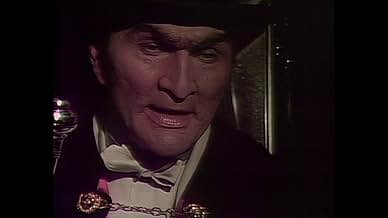
This is easily my favorite version of the Robert Louis Stevenson monster tale. Jack Palance is ideally cast as Mr Hyde. He is physically strong, athletic, menacing, and quite vicious when crossed.Legendary make up artist Dick Smith created Hyde's Satanic look. Palance's Dr Jekyll is effective as well.He plays him as socially awkward and uncomfortable with his emotions. An excellent supporting cast includes Denholm Elliot, Leo Genn, Oskar Homolka, and Torn Thatcher. Billie Whitelaw plays Gwyn as sexy,vulnerable and the object of Hyde's sadistic lust.
Dan Curtis became a master of Gothic story telling and he gets strong performances from everyone involved. He capture's the look of London in the 1880's with its foggy and gas lit back streets with help from set dresser Fred Brown.Robert Colbert's eerie theme music would later show up in Curtis's Dark Shadows
A chillingly good story and outstanding performances make this one a must for any horror film connoisseur.8 out of 10.
Dan Curtis became a master of Gothic story telling and he gets strong performances from everyone involved. He capture's the look of London in the 1880's with its foggy and gas lit back streets with help from set dresser Fred Brown.Robert Colbert's eerie theme music would later show up in Curtis's Dark Shadows
A chillingly good story and outstanding performances make this one a must for any horror film connoisseur.8 out of 10.
" When I see a ray of light I move towards it; unlike you who remain in the dark "
Amid the long lists of accomplishments, for actor Jack Palance, is this truly remarkable film achievement. Robert Louis Stevenson created his memorable set of characters; humanitarian Jekyll and terrifying Mr. Hyde, never realizing how many thespians would attempt to personify his creations. On stage and later in Hollywood several actors tried. From the 1930s' to a modern interpretation involving Michael Caine, a dozen actors have attempted the duel parts. Many are consider excellent, but for my money, the very best is none other than Jack Palance as Dr. Henry Jekyll and Mr. Edward Hyde. I suppose its because, Jack Palance throughout his movie career, has established himself as a reputable heavy. No one, including myself, had ever seen him emulate a respectable, sophisticated and admired medical man of science. His performance in this role is nothing short of magical, nay, electrifying. For the first time in film history, has an actor stun the audience with such an incredible performance, as to leave them applauding him with praise and wonderful accolades. To his credit, his fellow actors believed that as well. They included Denholm Elliott as Mr. George Devlin, Leo Genn as Dr. Lanyon, Torin Thatcher as Sir John Turnbull and wonderful Oscar Homolka as Stryker. You may see other film adaptions of this horror tale, but in my opinion, few to equal this version. *****
One of the better versions of the classic story.
In the late 1960s, Dan Curtis made a name for himself by being the executive producer and writer for "Dark Shadows". In addition, he made a few made for TV horror films--including "Dracula", "The Picture of Dorian Gray" and this film, "The Strange Case of Dr. Jekyll and Mr. Hyde".
One problem with this and all other versions of the story I have seen is that they have the same actor play both Dr. Jekyll AND Mr. Hyde. I say this is a mistake because in Robert Louis Stevenson's novel, the reason why folks could not believe the two men were one was that Hyde was SIGNIFICANTLY shorter than the doctor. In other words, films only use a bit of makeup to make the transformation and the two invariably look too similar to make the story very convincing.
Unlike the movie versions of the story made during the sound era, this one is unusual in that it jumps right into the action. Within a few minutes of the start of the film, Dr. Jekyll has already created his elixir to transform himself into a less restrained persona, Mr. Hyde. His motivations and good works he did before the transformation are really not explored in any depth like other films. I don't think this is a bad thing--just different.
Another thing that was a bit different is that this version is quite a bit more violent than other versions (such as the Frederic March and Spencer Tracy films). Hyde stabs and beats a lot of folks for kicks and seems more nasty than usual. Again, not a bad thing at all--just different. Plus, the awfulness of Hyde is well in keeping with the spirit of the novel.
I think the thing that surprised me the most is that Jack Palance was quite good. He was intense as Hyde and quite restrained as Jekyll. The film also looked exceptional. In particular, the streets of London were quite striking as were the costumes. They got the look down quite well--far better than you'd expect for a made for TV production. As a result, it's about as good a version as you can find--though, as I pointed out above, it sure would be nice to see a version closer to the book in regard to how Hyde looked.
One problem with this and all other versions of the story I have seen is that they have the same actor play both Dr. Jekyll AND Mr. Hyde. I say this is a mistake because in Robert Louis Stevenson's novel, the reason why folks could not believe the two men were one was that Hyde was SIGNIFICANTLY shorter than the doctor. In other words, films only use a bit of makeup to make the transformation and the two invariably look too similar to make the story very convincing.
Unlike the movie versions of the story made during the sound era, this one is unusual in that it jumps right into the action. Within a few minutes of the start of the film, Dr. Jekyll has already created his elixir to transform himself into a less restrained persona, Mr. Hyde. His motivations and good works he did before the transformation are really not explored in any depth like other films. I don't think this is a bad thing--just different.
Another thing that was a bit different is that this version is quite a bit more violent than other versions (such as the Frederic March and Spencer Tracy films). Hyde stabs and beats a lot of folks for kicks and seems more nasty than usual. Again, not a bad thing at all--just different. Plus, the awfulness of Hyde is well in keeping with the spirit of the novel.
I think the thing that surprised me the most is that Jack Palance was quite good. He was intense as Hyde and quite restrained as Jekyll. The film also looked exceptional. In particular, the streets of London were quite striking as were the costumes. They got the look down quite well--far better than you'd expect for a made for TV production. As a result, it's about as good a version as you can find--though, as I pointed out above, it sure would be nice to see a version closer to the book in regard to how Hyde looked.
The best version of the story I have ever seen
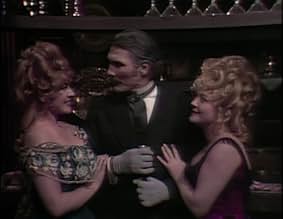
I saw this movie when it first came out on TV and at least one other time on TV. Seems like it was made for TV by the Canadian Broadcasting Company, as I recall. I had read the book and had seen several movie versions and was delighted at the vigor and believability that Jack Palance brought to the title role(s). As someone else has said here, I think it was the closest rendition of the book as well. He was good as both the good doctor and as Hyde, but was remarkable in bringing Hyde to life without much makeup, rather with the strength of his acting. His physical vigor was a part of it too, dashing through the streets, doing violence with his sword-cane in the action scenes, and I think I remember him leaping across the furniture in a pub in one scene. I'm glad to read here that it is out on DVD and will look forward to seeing it again.


Did you know
- TriviaThis production originally began shooting with Jason Robards in the title role(s), and a makeup that was heavily influenced by John Barrymore in the 1920 silent version (Dr. Jekyll and Mr. Hyde (1920)). The production was to be a coproduction between ABC (the American Broadcasting Company) and the British ABC (Associated British Corporation) franchise of ITV. Production was halted due to an ITV strike, and when filming was able to resume, Robards was no longer available. Jack Palance took over the Jekyll/Hyde role, and the makeup concept was radically changed - inspired, more or less, by that of a satyr. Ironically, the production ended up being shown by ITV's rivals at the BBC.
- GoofsWhen Jekyll's friends call on him and he sends them away without seeing them, Jekyll returns to his desk. As the camera follows him, crew can be seen in a reflection of the mirror on the left side of the picture while Jekyll is writing at his desk.
- Quotes
Mr. George Devlin: [opening narration] It has been said that many men have found their way through the valley of violence to the palace of wisdom. But if all men must learn wisdom tomorrow from violence today, then who can expect there will be a tomorrow?
Details
- Release date
- Countries of origin
- Language
- Also known as
- Dr. Jekyll and Mr. Hyde
- Filming locations
- Distillery District, Toronto, Ontario, Canada(Old London, England)
- Production companies
- See more company credits at IMDbPro
Box office
- Budget
- $900,000 (estimated)
Contribute to this page
Suggest an edit or add missing content