IMDb RATING
6.9/10
420
YOUR RATING

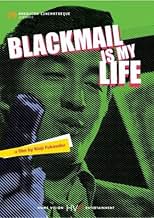
A pungent, extremely entertaining tale of hedonistic, amoral blackmailer Matsukata.A pungent, extremely entertaining tale of hedonistic, amoral blackmailer Matsukata.A pungent, extremely entertaining tale of hedonistic, amoral blackmailer Matsukata.


6.9420
1
2
3
4
5
6
7
8
9
10
Featured reviews
Good, not great film from the Japanese New Wave
The story involves four people whose work is blackmail. They're successful in their "business," but their eyes eventually get too big for their stomachs when they think they've found a way to rip off the yakuza. The job proves harder than the easy money it initially seemed. While it is generally well done, its techniques reminded me a little too much of the annoying modern style with a lot of unnecessary freeze frames, chronological jumps, and shifts from black and white to color. I also felt that the characters ought to have been more well developed; the story is good, but the style overwhelms possible substance. My favorite part of the film is the fact that the characters whistle the theme tune to Suzuki Seijun's Tokyo Drifter, which means that Suzuki had to have had some popularity if his work was quoted like this. 7/10.
Great First Half Then Loses Steam....A lot of Steam
I really wanted to like this movie and for the first half hour it delivers. Interesting shots, flashbacks, cool stuff and innovative for the 1960s. Good backstory of the hero is shown, and interesting blackmail plot for the first 40 minutes. But then the writers and director lost focus, the plot got boring, and my urge was to turn the movie off. Now that's not a good instinct for a movie you want to like. I give it a 6 simply for the great beginning and interesting film style, but it could have been much better. Without this, the movie is below average, a 4 or 5. I do not recommend except for those interested in these kinds of movies, students, film buffs, etc. For most, this will be a big disappointment.
Old isn't bad. New isn't better.
A fun movie. Discovering films like this is a constant source of knowledge for me. Knowledge that cinema, today, creeps forward rather than bounds ahead, as we insist on believeing. Just when you think that some director's style is an innovation you realize it's either a rip-off of, or is derived from, a school that is older and off the beaten track. Rather than criticize old movies for "reminding" us of new movies, it's better to see these movies in a historical context. And then we might finally get over our big old selves and see modern cinema in a more accurate perspective.
Early Fukasaku picture sees the great director still honing his style, on his way to greater things
Blackmail is my Life came in a transitional period for Japanese crime cinema and it shows that by being somehow stylistically confused. The genre was with one foot still set on the earlier Nikkatsu pictures that portrayed yakuzas as people who operated with some sense of chivalry (and BIML reflects that by having the blackmailers act as the heroes), the cool of Seijun Suzuki who bid the genre adieu with Branded to Kill one year earlier (and what an adieu that was) and one foot looking at the future.
The first half of the picture resembles the colourful pop air of Suzuki and anticipates the disjointed timelines and narrative style of The Yakuza Papers. Hiroki Matsukata is Muraki; professional blackmailer and quite successful at that. He lies on a bed and remembers. Flashbacks show us his humble beginnings. They start in black and white then colour kicks in. Frames freeze while he narrates in a voice-over. We go back and forth like that until after the half hour mark the story starts to shape up. His rise as a prominent blackmailer is seen through a series of incidents that lead up to the big con.
The second half is predicated more on character than style. Fukasaku puts the quirky flashbacks, stills and narration of the beginning to the side and focuses on the story in a straight-forward manner. He's just as good this way. The movie turns more cynical and gritty and the ending is particularly memorable.
The director is still not at the top of his craft (it's relatively still early in his career) but he shows that he's not willing to settle down for a simple, run-of-the-mill yakuza flick. He gambles; sometimes he wins, sometimes he doesn't. But he dares and as the saying goes, fortune favours the brave. If he hadn't taken a stab at a different approach like BIML, maybe The Yakuza Papers would have never materialized in all its glory. In that sense, Fukasaku deserves kudos for taking chances and following his vision.
Blackmail is my Life may not always be successful in its stylistic daring but it's entertaining and cool. As the missing link between the hard bop of the 60's and the grittiness of the 70's, it's an important part of the general picture. Fans owe it to themselves to check it out.
The first half of the picture resembles the colourful pop air of Suzuki and anticipates the disjointed timelines and narrative style of The Yakuza Papers. Hiroki Matsukata is Muraki; professional blackmailer and quite successful at that. He lies on a bed and remembers. Flashbacks show us his humble beginnings. They start in black and white then colour kicks in. Frames freeze while he narrates in a voice-over. We go back and forth like that until after the half hour mark the story starts to shape up. His rise as a prominent blackmailer is seen through a series of incidents that lead up to the big con.
The second half is predicated more on character than style. Fukasaku puts the quirky flashbacks, stills and narration of the beginning to the side and focuses on the story in a straight-forward manner. He's just as good this way. The movie turns more cynical and gritty and the ending is particularly memorable.
The director is still not at the top of his craft (it's relatively still early in his career) but he shows that he's not willing to settle down for a simple, run-of-the-mill yakuza flick. He gambles; sometimes he wins, sometimes he doesn't. But he dares and as the saying goes, fortune favours the brave. If he hadn't taken a stab at a different approach like BIML, maybe The Yakuza Papers would have never materialized in all its glory. In that sense, Fukasaku deserves kudos for taking chances and following his vision.
Blackmail is my Life may not always be successful in its stylistic daring but it's entertaining and cool. As the missing link between the hard bop of the 60's and the grittiness of the 70's, it's an important part of the general picture. Fans owe it to themselves to check it out.
a great visual experience
Blackmail is My Life is one of four films that Fukasaku produced in that year and once again affirms not only his brilliant visual style but the incredible energy of the whole crew that worked with him. You have to see this film wide on a big screen to see how beautifully it is shot and composed. It moves fast but the visual strategies show Fukasaku's control over his world and produce a great viewing experience before you even have to delve into the brutal world of Japanese low lifes and the power of the political world that exists at the time. This film fits in comfortably with other films of the time from all over the globe where power and politics were being critiqued and examined from every angle and genre available.


Did you know
- TriviaTitle music, played several times during the film, is ripped off (different but substantially an imitation) from the 1966 Yardbirds' song "Over Under Sideways Down".
- ConnectionsReferences Tokyo Drifter (1966)
Details
- Country of origin
- Language
- Also known as
- Blackmail Is My Business
- Production company
- See more company credits at IMDbPro
- Runtime
- 1h 30m(90 min)
- Sound mix
- Aspect ratio
- 2.35 : 1
Contribute to this page
Suggest an edit or add missing content