
A documentary that takes a look inside the Church of Satan, founded in San Francisco, California in the 1960s by Anton Szandor LaVey, a former circus lion tamer.A documentary that takes a look inside the Church of Satan, founded in San Francisco, California in the 1960s by Anton Szandor LaVey, a former circus lion tamer.A documentary that takes a look inside the Church of Satan, founded in San Francisco, California in the 1960s by Anton Szandor LaVey, a former circus lion tamer.

- Self
- (uncredited)

- Self
- (uncredited)

- Self
- (uncredited)

- Self - Cult member
- (uncredited)
Featured reviews
No surprises, but good enough
Oh, The Lion
Director Ray Laurent interviewed several of the Church's neighbors, who seem most worried about his unwillingness to clean his back yard, and the lion. Lavey had been a professional lion tamer, and several of the neighbors talk about the lion he keeps, which is noisiest at night -- although one youngster, interviewed in his bed room, says never notices the lion, even as the 500-pound beast tries to get into his room.
It's most interesting as a document of the home-grown craziness that San Francisco is known for. Lavey doesn't make for a particularly interesting interview and this 86-minute documentary goes on for a lot longer than I found interesting.
One of the first films about modern Satanism.
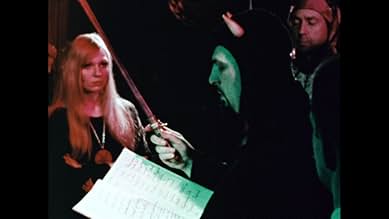
This documentary interviews neighbors, friends and enemies of Anton LaVey and his church and helps shed some light (dark?) on origins of the philosophies that were codified in this unique religious movement. This ilm is not without it's tongue-in-cheek moments. During one of the opening scenes, one of a Satanic ritual, the participant's solemn mood is broken when the Priest of the ceremony (LaVey) says, "Okay, that's enough for that part." Perhaps it was the director's idea to show some incidental humor in the film.
One thing that will probably strike everybody as strange is the sense of humor shown throughout the film by most of the people that are interviewed. Satanists are often seen as dour, humorless folk, but, as Anton LaVey points out in the film, a person without a sense of humor is intolerable at worst, and doesn't make a good Satanist. Humor abounds and stands in stark contrast to the rituals.
Also seen, as noted before, are some of the enemies to LaVey's cause. There are interviews with Mormon missionaries and priests from the area and they are given a chance to voice their outrage towards this philosophy. This film is highly recommended as a documentary of a rather maligned religion. It can be a bit hard to find, but it is available.
Satanic snoozefest
A good tool for insomniacs to get some needed sleep.
If you're going to be a sinner, be the best sinner on the block.
It's not overwhelmingly cinematic, but there are some decent camera angles and movements throughout; the lighting is also noteworthy. The main reason to watch is to see this vintage footage of Mr. LaVey, who comes across as a fairly charismatic, fairly easygoing individual. He based his "religion", if one can call it that, on the idea that humans are basically flawed anyway, and that these flaws could be celebrated and even encouraged. He felt that most organized religion spent too much time condemning people and insisting that they do / not do certain things.
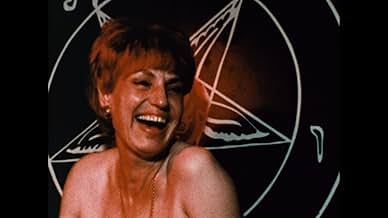
If nothing else, "Satanis: The Devil's Mass" is an amusing enough look at an alternative lifestyle, no matter what one may think of Mr. Lavey's personal beliefs. We are witness to some entertaining decadence: nude women on altars, ass whippings, the expected incantations and rituals, etc. Among the major topics covered are public reactions to the goings-on at LaVey's "Black House" in San Francisco in the 60s, the hassles with the law due to Mr. LaVey having a pet lion at his residence, and his response when confronted with the notion that he may be nothing more than a big phony.
This is worth a look for curiosity seekers, provided they don't get their hopes up too high about it.
Six out of 10.


Did you know
- Quotes
Anton LaVey: We feel that the, ah, the so-called carnal side of man, or the carnal nature of man, is the most important. We feel the soul is just a pitance, it's something that's sort of rung out, like if you squeeze an orange, you get a few drops of juice out of it, and certainly this can be the essence. But this doesn't mean that the orange is any less important, simply because the juice comes out of it. We feel that the body of man, the carnal symbolism of man, is by far the most important.
- ConnectionsEdited into Revival of Evil (1980)