IMDb RATING
6.5/10
1.2K
YOUR RATING

A preacher's adopted son comes upon a village that is under the thumb of a deranged ex-Confederate officer who, among other things, is stealing land from the locals with phony land grants.A preacher's adopted son comes upon a village that is under the thumb of a deranged ex-Confederate officer who, among other things, is stealing land from the locals with phony land grants.A preacher's adopted son comes upon a village that is under the thumb of a deranged ex-Confederate officer who, among other things, is stealing land from the locals with phony land grants.
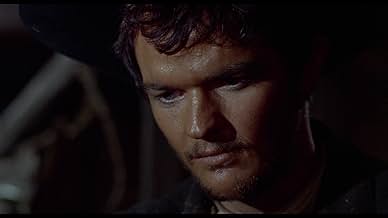
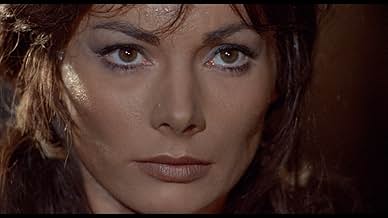
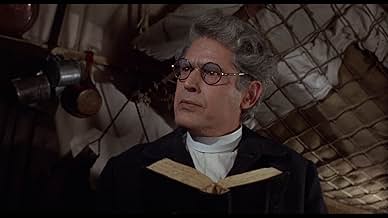


Rossana Martini
- Lope
- (as Rossana Krisman)


Luisa Baratto
- Pilar
- (as Liz Barrett)

Ninetto Davoli
- El Niño
- (as Nino Davoli)


6.51.2K
1
2
3
4
5
6
7
8
9
10
Featured reviews
It's a very good film despite not being directed by Sergio Leone's
Carlo Lizzani is more of a realistic director as he didn't intend to be spectacular and impressive in any of the details. Real-life facts like killing and humiliation make the work done.
The BSO is not its forte so that's why I didn't give it 10 stars but it was more centered around the story. There's too many scenes that are silent with the only sound of footsteps, horses, guns and crying -except when there's a peaceful scene where some little melody appears and in the opening and closing scenes.
The main antagonist (a lot of western-fans know him) is well developed as a character and he can be quite contradictory with morals as any politician would. There are many philosophic stuff so it's quite agreeable when giving sense to life and death and the script in general was well done. I think the script is what was best done in the whole story and I don't agree with people who think that they were silly games because I'm aware those games existed and still exist nowadays.
The photography can be quite catching to the eye but in this film is very realistic and the quality is quite ordinary. There's no "paysage scenes" (if you know what I mean in Western films) as is always centered in the people and surroundings.
The BSO is not its forte so that's why I didn't give it 10 stars but it was more centered around the story. There's too many scenes that are silent with the only sound of footsteps, horses, guns and crying -except when there's a peaceful scene where some little melody appears and in the opening and closing scenes.
The main antagonist (a lot of western-fans know him) is well developed as a character and he can be quite contradictory with morals as any politician would. There are many philosophic stuff so it's quite agreeable when giving sense to life and death and the script in general was well done. I think the script is what was best done in the whole story and I don't agree with people who think that they were silly games because I'm aware those games existed and still exist nowadays.
The photography can be quite catching to the eye but in this film is very realistic and the quality is quite ordinary. There's no "paysage scenes" (if you know what I mean in Western films) as is always centered in the people and surroundings.
One of the finest westerns you will ever see!
I just had to write a little something to combat the folks on here calling this mediocre or worse... This is one incredible epic that will satisfy your lust for revenge & adventure! Pasolini makes an infamous cameo so if you're a fan of his for outrageous work like "Salo or the 120 Days of Sodom" then this is a must watch on that merit alone. I would put it in the top 10 westerns ever, for it's almost biblical storytelling, that pays off in the best ways as if God's judgement is handed down right in front of the camera. I really cannot fathom such a low rating. I found this movie to be full of soul, like the people who made it cared a lot about their precious baby. I think this should be mentioned in the same breath as Leone even if it's not as groundbreaking as some of his films.
The force of the collective
'Requiescant' stands out from the Euro-western crowd for the appearance of Pier Paolo Pasolini himself, in a rare acting cameo as the Mexican priest Don Juan, who, despite his name, is less a man of the flesh than an ascetic liberation theology advocate who drifts in and out of the narrative at key points. The titular hero, played by Lou Castel, is the sole survivor of a local landowner's massacre of the peasants in the ruined chapel which serves as the film's opening and climactic acts of violence: the massacre and the act of liberation which avenges it. That structure, of a suppressed violence which the hero (and audience) slowly come to understand, in an inevitable journey of violence begetting violence, is familiar from Leone, from 'Django', from numerous other Euro-westerns of the periods. Here, though, as usual, it's framed through the figure of the lone gunfighter, it's given a greater collective dimension. Requiescant, adopted by a religious family (hence his habit of saying a prayer over those he's killed), seeks to rescue his adopted sister from the clutches of the landowner who runs the town as a connected network of vice, of semi-legitimated criminality based on exploitation and dispossession. His act of violence against the landowner and his henchmen simultaneously serves his own personal quest for revenge and the interests of the peasants led by Pasolini (which the flashback structure reveals to be connected). As in Glauber Rocha's later 'Antonio das Mortes', Lizzani suggests that the individualist gunslinger, whose skill and firepower are need in the struggle--and who remains a figure of cinematic lore and popular fantasy more than a historical figure--is also ultimately subsidiary to the force of the collective.
People Have TOTALLY Missed the Point Here
This one has to take the prize for the reviews completely failing to set expectations. I really could not believe the difference. I can see why people would say the things they have...but it doesn't change the fact that they have watched this movie and not seen most of what was happening.
On pure production values and in terms of story, yes, the story is absurd, on the face of it, but so are most the stories in musicals and so are the production values of B horror movies. If anyone said that, though, you'd give them a look because everyone knows that is the case. That's not what you're watching it for. So, I can see disappointment if you're watching this as a Hollywood Western.
But Spaghetti Westerns were made by left wing radicals, this one actually has one of the leading lights of the PCI (Italian Communist Party) in it, and that is very much the focus for director Carlo Lizzani. Whereas most all of the sub-genre were Westerns with an Italian artistic slant and some radical sub-text, this one is a straight-ahead, let's give the young communistas some proper learning, Western movie style. The story is thin because it's totally unimportant. There aren't plot holes; there's a bit of hand waving to acknowledge it, much like you might add a box to a flow diagram to represent an input you're not fully diagramming. Those bits are deemed unimportant. "How does he learn to shoot?" It's not important. It's not telling a story, it's acting out critical moments in life to provoke thoughts about class struggle.
I couldn't believe how dense the political/social message was. EVERY little scene, EVERYTHING is there for symbolic value. And the story isn't that bad as I never felt it dragging. So preachy, such a thin story, it should have become tedious. It never did. I usually watch the classics in installments to get every detail, but I watched this one start to end because I couldn't stop watching it. I couldn't believe he had made such a pure vehicle for talking about class struggle, the role of violence, when should violence be used, how does doing so change the person, etc., etc., etc.
You can certainly argue that that's not a valid way to make any kind of Western. But if you like Spaghetti Westerns for that reason, this is not to be missed because you will never find another that is so straight-ahead about what it's doing. Lizzani basically said, "Damn it, I'm tired of pussy footing around with a few abstract comparisons. Let's lay it all right out there". Most the other reviews on this are like reading Alice in Wonderland and saying, "That doesn't seem very realistic. How can that be about logic?" But I'm not complaining. It was very nice to be so pleasantly surprised after having very low expectations.
On pure production values and in terms of story, yes, the story is absurd, on the face of it, but so are most the stories in musicals and so are the production values of B horror movies. If anyone said that, though, you'd give them a look because everyone knows that is the case. That's not what you're watching it for. So, I can see disappointment if you're watching this as a Hollywood Western.
But Spaghetti Westerns were made by left wing radicals, this one actually has one of the leading lights of the PCI (Italian Communist Party) in it, and that is very much the focus for director Carlo Lizzani. Whereas most all of the sub-genre were Westerns with an Italian artistic slant and some radical sub-text, this one is a straight-ahead, let's give the young communistas some proper learning, Western movie style. The story is thin because it's totally unimportant. There aren't plot holes; there's a bit of hand waving to acknowledge it, much like you might add a box to a flow diagram to represent an input you're not fully diagramming. Those bits are deemed unimportant. "How does he learn to shoot?" It's not important. It's not telling a story, it's acting out critical moments in life to provoke thoughts about class struggle.
I couldn't believe how dense the political/social message was. EVERY little scene, EVERYTHING is there for symbolic value. And the story isn't that bad as I never felt it dragging. So preachy, such a thin story, it should have become tedious. It never did. I usually watch the classics in installments to get every detail, but I watched this one start to end because I couldn't stop watching it. I couldn't believe he had made such a pure vehicle for talking about class struggle, the role of violence, when should violence be used, how does doing so change the person, etc., etc., etc.
You can certainly argue that that's not a valid way to make any kind of Western. But if you like Spaghetti Westerns for that reason, this is not to be missed because you will never find another that is so straight-ahead about what it's doing. Lizzani basically said, "Damn it, I'm tired of pussy footing around with a few abstract comparisons. Let's lay it all right out there". Most the other reviews on this are like reading Alice in Wonderland and saying, "That doesn't seem very realistic. How can that be about logic?" But I'm not complaining. It was very nice to be so pleasantly surprised after having very low expectations.
The Gunslingers control the means of Production
Lou is a young preacher dude, one that doesn't remember his entire family being massacred when was child, mainly due to him taking a bullet to the head. Now he's a travelling preacher with his adopted family and his quasi-sister, who stupidly runs off to join a dancing troupe. This means that Lou will have to go after her, with only a bible to begin with.
Lou quickly realizes that he's deadly shot while during a robbery in the street, he picks up a gun from a corpse and effortlessly kills two raiders with it. Lou finds out that his half-sister Princy has become a whore, and pimped by one of the guys who was present when his family where massacred, and his boss is the vampire like Mark Damon, who's character has a lot of space to move around in. This is not your usual Western, even if the basic plot is.
Franco Citti's character likes to rub a little doll on his face, Lou and Mark have a shooting contest, shooting out candle flames while drinking. Lou has to hide inside a bell while people throw bombs at him. There's also a duel where Lou and another guy stand on stools with nooses round their necks and tries to shoot the legs off the stool before the other does. Most of the actual emotional stuff comes from Mark Damon, who has trouble with his wife, gets riled at the mess caused by his men, and might even be gay.
I've read somewhere that this is some kind of communist Western, but that's up to others to figure out.
Lou quickly realizes that he's deadly shot while during a robbery in the street, he picks up a gun from a corpse and effortlessly kills two raiders with it. Lou finds out that his half-sister Princy has become a whore, and pimped by one of the guys who was present when his family where massacred, and his boss is the vampire like Mark Damon, who's character has a lot of space to move around in. This is not your usual Western, even if the basic plot is.
Franco Citti's character likes to rub a little doll on his face, Lou and Mark have a shooting contest, shooting out candle flames while drinking. Lou has to hide inside a bell while people throw bombs at him. There's also a duel where Lou and another guy stand on stools with nooses round their necks and tries to shoot the legs off the stool before the other does. Most of the actual emotional stuff comes from Mark Damon, who has trouble with his wife, gets riled at the mess caused by his men, and might even be gay.
I've read somewhere that this is some kind of communist Western, but that's up to others to figure out.


Did you know
- TriviaThree years before, Mark Damon (George Bellow Ferguson) and Barbara Frey (Princy) also appeared in the movie I cento cavalieri (1964). In 1971, they married. They divorced some years later.
- Quotes
Dean Light: The only women I ever skinned were Indians.
- Alternate versionsGerman version was cut by ca. 15 minutes. Only in 2012 the uncut version was released by Koch Media.
- ConnectionsReferenced in Enas Vengos gia oles tis douleies (1970)
- How long is Requiescant?Powered by Alexa
Details
- Runtime
- 1h 46m(106 min)
- Sound mix
- Aspect ratio
- 1.85 : 1
Contribute to this page
Suggest an edit or add missing content