IMDb RATING
6.2/10
3.5K
YOUR RATING

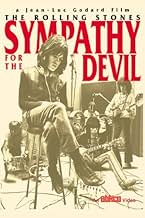
While The Rolling Stones rehearse "Sympathy for the Devil" in the studio, Godard reflects on 1968 society, politics and culture through five different vignettes.While The Rolling Stones rehearse "Sympathy for the Devil" in the studio, Godard reflects on 1968 society, politics and culture through five different vignettes.While The Rolling Stones rehearse "Sympathy for the Devil" in the studio, Godard reflects on 1968 society, politics and culture through five different vignettes.
- Director
- Writers
- Stars




Sean Lynch
- Self - Commentary
- (voice)


Keith Richards
- Self - The Rolling Stones
- (as Keith Richard)


Frankie Dymon
- Self - Black power militant
- (as Frankie Dymon Jnr.)


Tommy Ansah
- Self - Black power militant
- (as Tommy Ansar)
- Director
- Writers
- All cast & crew
- Production, box office & more at IMDbPro
6.23.4K
1
2
3
4
5
6
7
8
9
10
Featured reviews
Pure Trash
Sympathy for the Devil (1968)
BOMB (out of 4)
Jean-Luc Godard's "documentary" shows The Rolling Stones recording the title track while mixing in footage of the Black Panthers preaching hatred. This is without question one of the worst documentaries I've ever seen and it's the worth Godard film I've seen to date but it's rather amazing how incredibly stupid this legendary director can be at times. The title is going to attract mainly fans of The Rolling Stones but their footage isn't here for fans and I'm still trying to think of why Godard put the footage here. Apparently he's director's cut run eleven minutes longer and features more of the Black Panthers and it's clear that he wanted the spotlight on hate instead of the band so why include the band at all? There's one scene where a couple Black Panthers tell a story of how they want to kill white women and Godard follows this up with a short film of black men gunning down white women. There's non-stop hatred talk coming from this group so I'm really shocked there's not more controversy surrounding this film. There are various short films throughout the movie and there's all sorts of stuff acted out, which makes no sense when put together and you also get constant scenes of men spray painting cars. The Stones footage shows them recording the classic song from the early stages to its complete version but with all the other crap in this film I can't even recommend this to fans of the group.
BOMB (out of 4)
Jean-Luc Godard's "documentary" shows The Rolling Stones recording the title track while mixing in footage of the Black Panthers preaching hatred. This is without question one of the worst documentaries I've ever seen and it's the worth Godard film I've seen to date but it's rather amazing how incredibly stupid this legendary director can be at times. The title is going to attract mainly fans of The Rolling Stones but their footage isn't here for fans and I'm still trying to think of why Godard put the footage here. Apparently he's director's cut run eleven minutes longer and features more of the Black Panthers and it's clear that he wanted the spotlight on hate instead of the band so why include the band at all? There's one scene where a couple Black Panthers tell a story of how they want to kill white women and Godard follows this up with a short film of black men gunning down white women. There's non-stop hatred talk coming from this group so I'm really shocked there's not more controversy surrounding this film. There are various short films throughout the movie and there's all sorts of stuff acted out, which makes no sense when put together and you also get constant scenes of men spray painting cars. The Stones footage shows them recording the classic song from the early stages to its complete version but with all the other crap in this film I can't even recommend this to fans of the group.
To save you time...
To save you time, I'll make some broad generalizations up front. Further down I'll get more into the guts of this film, but if you're just trying to decide if this movie is worth 2hrs of your life, here's what you need to know:
If you're a hardcore Stones fan, then this film will possibly irritate you, maybe even to the point of rioting as Stones fans reportedly did at the premiere of this film in '68. This is not a documentary about the Stones nor is it a documentary at all. It's a film that Godard had been intending to make about counter-culture revolution, and it just happened to coincide with Godard filming the Stones recording "Sympathy for the Devil", so he mashed them together and this is the result.
If you're a Godard fan, you might appreciate what he tried to accomplish here, but all the same, I've never met a Godard fan who considers this among his better efforts.
With a visionary filmmaker like Godard and a very poetic & provocative song like "Sympathy for the Devil", you'd think the marriage of the two would spawn a work of art the likes of which hadn't been seen since Pink Floyd's "The Wall". (Yeah I know The Wall came out in 1982 but bear with me, I'm onna roll).
Instead I feel like the two themes didn't exactly gel. Godard took a markedly different approach which, on its own, could have been a worthy film. Rather than follow the Stones' lead with an intriguing historical narrative that leads us from Biblical times to the assassination of JFK, Godard just throws a bunch of unrelated vignettes full of superfluous political blather (intended to be tiresome) interspersed with Stones recording the song, and we are to accept that they are somehow related?
While both the song & the film make heavy use of irony & sarcasm, and while both the song & the film are about the decline of human society due to human nature ("the devil"), the Stones & Godard are on different ends of the spectrum. What makes the Stones song so memorable is its suave, seductive flair told in 1st person narrative. In the very first line, Mick introduces the devil (the speaker) as "a man of wealth and taste". Essentially, this presents a very revolutionary concept of the devil: not an, ugly, smelly, cartoonish creature with a pitchfork but a charming, hypnotizing, classy character.
It would have been great if the film had followed along this absolutely central theme, but instead it took a very base, unattractive approach that was not enticing at all. There are no classy gents playing the devil here, instead we get the Black Panthers in a squalid junkyard spouting NOT hypnotic words but pulpy rhetoric which we immediately dismiss as pointless ravings as they casually commit base murder before our eyes.
In another example, Godard sets up a comical slapstick scene in a comic book store that also sells porn & Nazi propaganda, where the customers are allowed to take what they want in exchange for a "heil Hitler" and a slap across the face of two kidnapped hippies. I thought that was a hilarious scene, but really it was jarringly incongruous with the Stones song.
Between the half dozen vignettes like the Black Panther scene & the comic book scene & scenes of someone spray painting graffiti slogans across London, we get abruptly shifted back to the studio sessions where the Stones are working out the details of their song. In contrast with the vignettes, the studio scenes are very somber, very respectful and very endearing to watch. I found myself wishing that someone actually *would* make a documentary about the "Sympathy" sessions because so much could have been expounded on. We see the slow evolution of the initial song (a gospel type ballad) to what it ultimately became, an ironically uptempo samba that draws its power from a seductive Afro-Brazilian candomblé beat. Again I'm harping on the seductiveness of the song, both lyrically and instrumentally, because it's a real shame that Godard either didn't pick up on that, or chose to go in the opposite direction with a (deliberately) unappealing visual show.
Like I said, Godard's film would have been worthy on its own. The Stones song is, of course, a great piece of literature in its own right. But sticking them both together like this just didn't stick. I'm glad I saw this film, and I'll probably watch it again. But I wouldn't recommend it to anyone unless they're ready for a very strange and jarring experience.
For a great marriage of movie & music, I would recommend the aforementioned "Pink Floyd The Wall" as well as "Tommy", a sarcastic, carnival-esque satire much like Godard's approach here but with the perfect music in the same vein, and maybe the Monkees movie "Head" which is a nearly-incomprehensible acid trip but with similarly nearly-incomprehensible lyrics that gel perfectly.
If you're a hardcore Stones fan, then this film will possibly irritate you, maybe even to the point of rioting as Stones fans reportedly did at the premiere of this film in '68. This is not a documentary about the Stones nor is it a documentary at all. It's a film that Godard had been intending to make about counter-culture revolution, and it just happened to coincide with Godard filming the Stones recording "Sympathy for the Devil", so he mashed them together and this is the result.
If you're a Godard fan, you might appreciate what he tried to accomplish here, but all the same, I've never met a Godard fan who considers this among his better efforts.
With a visionary filmmaker like Godard and a very poetic & provocative song like "Sympathy for the Devil", you'd think the marriage of the two would spawn a work of art the likes of which hadn't been seen since Pink Floyd's "The Wall". (Yeah I know The Wall came out in 1982 but bear with me, I'm onna roll).
Instead I feel like the two themes didn't exactly gel. Godard took a markedly different approach which, on its own, could have been a worthy film. Rather than follow the Stones' lead with an intriguing historical narrative that leads us from Biblical times to the assassination of JFK, Godard just throws a bunch of unrelated vignettes full of superfluous political blather (intended to be tiresome) interspersed with Stones recording the song, and we are to accept that they are somehow related?
While both the song & the film make heavy use of irony & sarcasm, and while both the song & the film are about the decline of human society due to human nature ("the devil"), the Stones & Godard are on different ends of the spectrum. What makes the Stones song so memorable is its suave, seductive flair told in 1st person narrative. In the very first line, Mick introduces the devil (the speaker) as "a man of wealth and taste". Essentially, this presents a very revolutionary concept of the devil: not an, ugly, smelly, cartoonish creature with a pitchfork but a charming, hypnotizing, classy character.
It would have been great if the film had followed along this absolutely central theme, but instead it took a very base, unattractive approach that was not enticing at all. There are no classy gents playing the devil here, instead we get the Black Panthers in a squalid junkyard spouting NOT hypnotic words but pulpy rhetoric which we immediately dismiss as pointless ravings as they casually commit base murder before our eyes.
In another example, Godard sets up a comical slapstick scene in a comic book store that also sells porn & Nazi propaganda, where the customers are allowed to take what they want in exchange for a "heil Hitler" and a slap across the face of two kidnapped hippies. I thought that was a hilarious scene, but really it was jarringly incongruous with the Stones song.
Between the half dozen vignettes like the Black Panther scene & the comic book scene & scenes of someone spray painting graffiti slogans across London, we get abruptly shifted back to the studio sessions where the Stones are working out the details of their song. In contrast with the vignettes, the studio scenes are very somber, very respectful and very endearing to watch. I found myself wishing that someone actually *would* make a documentary about the "Sympathy" sessions because so much could have been expounded on. We see the slow evolution of the initial song (a gospel type ballad) to what it ultimately became, an ironically uptempo samba that draws its power from a seductive Afro-Brazilian candomblé beat. Again I'm harping on the seductiveness of the song, both lyrically and instrumentally, because it's a real shame that Godard either didn't pick up on that, or chose to go in the opposite direction with a (deliberately) unappealing visual show.
Like I said, Godard's film would have been worthy on its own. The Stones song is, of course, a great piece of literature in its own right. But sticking them both together like this just didn't stick. I'm glad I saw this film, and I'll probably watch it again. But I wouldn't recommend it to anyone unless they're ready for a very strange and jarring experience.
For a great marriage of movie & music, I would recommend the aforementioned "Pink Floyd The Wall" as well as "Tommy", a sarcastic, carnival-esque satire much like Godard's approach here but with the perfect music in the same vein, and maybe the Monkees movie "Head" which is a nearly-incomprehensible acid trip but with similarly nearly-incomprehensible lyrics that gel perfectly.
Political blather and the process of creation
Godard made this film during his ultra-loopy "Marxist polemics" period, although before he stopped being so individualistic as to credit himself, rather than a "collective," as the director. It is a rare English-language Godard film, made in the UK. SYMPATHY FOR THE DEVIL alternates documentary scenes of the Rolling Stones developing and rehearsing the title track (a chilling examination of the seductiveness of evil behavior, and one of the Stones's best songs) with what are basically political skits, plus quick bits showing characters spray-painting political slogans on various surfaces, always cutting away before the character finishes the message.
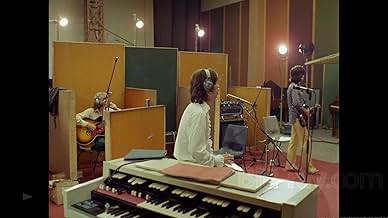
The Stones scenes in themselves make the film worth seeing (for fans of the song, at least). The process of creating and refining an instantly classic song makes for truly fascinating viewing for those interested in making music and seeing how a song evolves. The viewer initially sees Mick Jagger demonstrating the song on acoustic guitar for the other band members. Gradually (in between political interruptions!), the band fleshes out the song's arrangement, adding keyboards, electric guitar, and multiple layers of percussion, developing this work into the rumbling tempest Stones fans know and love. At one point famous Stones hangers-on Anita Pallenberg and Marianne Faithfull appear to help with the "whoo-whoo" backing vocals. Near the end, Godard himself materializes to pass out cigarettes to the band members, an oddly post-coital gesture.
The film's other scenes? Amusingly absurd at times, the skits usually involve the characters reading various texts for the viewer. Black militants read from Eldridge Cleaver and the like, while the owner of a porno shop reads from what sounds like Nazi texts, while customers present their selections to him, give a Nazi salute, take their purchase and leave. (The equation of pornography with National Socialism here must have warmed Andrea Dworkin's heart.) The black militant scenes feel rather disturbing, as the viewer sees white women in white gowns led at gunpoint into a junkyard, underscored by Cleaver's thoughts on white women. Later the viewer sees the bloodied corpses of a couple of the women, and the film ends with a dead white woman draped over a crane adorned with red and black flags. Godard seems to be endorsing the vengeful Leftist by-any-means-necessary morality, the kind of thing the Stones's song warns against.
The completed version of "Sympathy of the Devil" plays under the film's ending; allegedly Godard was incensed by the producers' inserting the finished song here. Godard probably wanted the rehearsal scenes to symbolize the development of "the revolution" ("you'll get yours, bourgeoisie!"), and, since "the revolution" hadn't come yet, using the _complete_ song would ruin the parallel. That must also be why the vandals never get to complete their spray-painted slogans. I would be quite interested to see ONE PLUS ONE, Godard's director's cut of this film.
The Stones scenes in themselves make the film worth seeing (for fans of the song, at least). The process of creating and refining an instantly classic song makes for truly fascinating viewing for those interested in making music and seeing how a song evolves. The viewer initially sees Mick Jagger demonstrating the song on acoustic guitar for the other band members. Gradually (in between political interruptions!), the band fleshes out the song's arrangement, adding keyboards, electric guitar, and multiple layers of percussion, developing this work into the rumbling tempest Stones fans know and love. At one point famous Stones hangers-on Anita Pallenberg and Marianne Faithfull appear to help with the "whoo-whoo" backing vocals. Near the end, Godard himself materializes to pass out cigarettes to the band members, an oddly post-coital gesture.
The film's other scenes? Amusingly absurd at times, the skits usually involve the characters reading various texts for the viewer. Black militants read from Eldridge Cleaver and the like, while the owner of a porno shop reads from what sounds like Nazi texts, while customers present their selections to him, give a Nazi salute, take their purchase and leave. (The equation of pornography with National Socialism here must have warmed Andrea Dworkin's heart.) The black militant scenes feel rather disturbing, as the viewer sees white women in white gowns led at gunpoint into a junkyard, underscored by Cleaver's thoughts on white women. Later the viewer sees the bloodied corpses of a couple of the women, and the film ends with a dead white woman draped over a crane adorned with red and black flags. Godard seems to be endorsing the vengeful Leftist by-any-means-necessary morality, the kind of thing the Stones's song warns against.
The completed version of "Sympathy of the Devil" plays under the film's ending; allegedly Godard was incensed by the producers' inserting the finished song here. Godard probably wanted the rehearsal scenes to symbolize the development of "the revolution" ("you'll get yours, bourgeoisie!"), and, since "the revolution" hadn't come yet, using the _complete_ song would ruin the parallel. That must also be why the vandals never get to complete their spray-painted slogans. I would be quite interested to see ONE PLUS ONE, Godard's director's cut of this film.
Jarring as its juxtaposition of rock music and Maoist agitprop may be, this is still an enjoyable portrait of the Stones and 1960s fashion and strident politics
Has a film ever combined one theme of such wide popular appeal with another that will interest only a small crowd and simply baffle that big popular audience? Jean-Luc Godard's SYMPATHY FOR THE DEVIL would delight one set of viewers and infuriate another. How does one even give a star rating to this? In May 1968, Jean-Luc Godard was permitted to film the Rolling Stones over several days in a London studio as they gradually fleshed out their now classic song "Sympathy for the Devil", and so one might expect simply a documentary about a rock band's creative process. However, over the last year Godard had broken ties with conventional cinema (even in its zany French New Wave form) and was now interested in using film to agitate for the Maoist philosophy that he had latched onto as the Zeitgeist for this era. Consequently, hardly have we seen the Stones at work before Godard cuts to completely different footage centered around the reading of strident political texts. Over the course of the film we repeatedly go back and forth between the Rolling Stones in the studio and political shots: Black Panthers sitting around a junkyard and advocating revolution, a woman spraypainting Maoist slogans over London walls, a comic book shop as a metaphor for American imperialism, etc.
Even if the juxtaposition is jarring and indeed rather silly, the Rolling Stones portion of the film is satisfying for fans of this music. The viewer gets a sense of how the song "Sympathy for the Devil" went from merely a product of Jagger's imagination that he has to teach Keith Richards to ultimately the ample rendition with conga and backing-vocals that was finally released. Probably unbeknownst to Godard himself at the time, the film also serves as a portrait of Brian Jones' breakdown only about a year before his death: he's sometimes present in the studio, but he just sits in the corner, neglected by his bandmates and strumming a guitar that isn't even miked.
The rest of the Stones, however, are clearly enjoying themselves. It's amusing how Jagger's English working-class accent, itself quite fake, immediately shifts to an imitation of some old American bluesman as soon as the recording of each take starts; rarely have I got such a vivid sense of how much blues meant to this generation of English youth. The last shot of the band in the film, presumably after recording wrapped on "Sympathy of the Devil", is a longish jam session. Another delight of this film for music lovers is that we can see in full colour how recording studios looked in the 1960s with the technology and sound insulation strategies of that era. (Everyone's smoking constantly, too. The place must have smelled like an ashtray).
What, then, of the political bits? These would weird out anyone not familiar with Godard's earlier work of the late 1960s, but if one watches his films chronologically, then there is a clear progression from WEEKEND, his last relatively conventional film: again we see a breakdown of 1960s consumerist society depicted through militants holding guns versus prostrate figures red with (intentionally very fake) blood. Anne Wiazemsky, who had acted in Godard's immediately preceding films as a symbol of rebellious youth and now the director's second wife, appears as the personification "Eve Democracy". Unable to answer anything to her interlocutor's questions but "Yes" or "No", she mocks what Godard saw as the impotency of bourgeois representative democracy, where the people have no other way to effect political change except to vote for or against a candidate, a process that happens only every few years even as the nation is confronted by pressing challenges.
Godard's politics during this time were wonky and it's hard to tell just how seriously he believed in Maoism, or whether the 38-year-old director was just trying on a fad to be closer to the youth. And yet, for viewers interested in history and especially this turbulent decade, the political scenes too hold a lot of interest. In the comic book shop segment, the camera pans slowly across the shelves, presenting a variety of pulp literature and pornography that is utterly forgotten today. Didactic as the scenes of the Black Panthers and Eve Democracy might be, even they can be appreciated as a time capsule of 1960s fashion thanks to their colourfully dressed characters.
Even if the juxtaposition is jarring and indeed rather silly, the Rolling Stones portion of the film is satisfying for fans of this music. The viewer gets a sense of how the song "Sympathy for the Devil" went from merely a product of Jagger's imagination that he has to teach Keith Richards to ultimately the ample rendition with conga and backing-vocals that was finally released. Probably unbeknownst to Godard himself at the time, the film also serves as a portrait of Brian Jones' breakdown only about a year before his death: he's sometimes present in the studio, but he just sits in the corner, neglected by his bandmates and strumming a guitar that isn't even miked.
The rest of the Stones, however, are clearly enjoying themselves. It's amusing how Jagger's English working-class accent, itself quite fake, immediately shifts to an imitation of some old American bluesman as soon as the recording of each take starts; rarely have I got such a vivid sense of how much blues meant to this generation of English youth. The last shot of the band in the film, presumably after recording wrapped on "Sympathy of the Devil", is a longish jam session. Another delight of this film for music lovers is that we can see in full colour how recording studios looked in the 1960s with the technology and sound insulation strategies of that era. (Everyone's smoking constantly, too. The place must have smelled like an ashtray).
What, then, of the political bits? These would weird out anyone not familiar with Godard's earlier work of the late 1960s, but if one watches his films chronologically, then there is a clear progression from WEEKEND, his last relatively conventional film: again we see a breakdown of 1960s consumerist society depicted through militants holding guns versus prostrate figures red with (intentionally very fake) blood. Anne Wiazemsky, who had acted in Godard's immediately preceding films as a symbol of rebellious youth and now the director's second wife, appears as the personification "Eve Democracy". Unable to answer anything to her interlocutor's questions but "Yes" or "No", she mocks what Godard saw as the impotency of bourgeois representative democracy, where the people have no other way to effect political change except to vote for or against a candidate, a process that happens only every few years even as the nation is confronted by pressing challenges.
Godard's politics during this time were wonky and it's hard to tell just how seriously he believed in Maoism, or whether the 38-year-old director was just trying on a fad to be closer to the youth. And yet, for viewers interested in history and especially this turbulent decade, the political scenes too hold a lot of interest. In the comic book shop segment, the camera pans slowly across the shelves, presenting a variety of pulp literature and pornography that is utterly forgotten today. Didactic as the scenes of the Black Panthers and Eve Democracy might be, even they can be appreciated as a time capsule of 1960s fashion thanks to their colourfully dressed characters.
the ABKCO cut & re-release of Godard's original film..
ABKCO, not exactly a cultural or artistic enterprise obtained the rights to Godard's original film & cut titled 'One Pus One' , as well a large part of the Stones song catalog in a management dispute & subsequent separation between the two.
The 'Sympathy' release is significantly different than the original 'One Plus One', with much of the Stones studio material edited out for reasons unknown.
Huge clips of the development of the song have simply vanished, while the political scenes, rhetoric and narration remain intact.
What a shame, as I doubt very much we will ever see the 'One Plus One' Godard cut anywhere, ever.
The 'Sympathy' release is significantly different than the original 'One Plus One', with much of the Stones studio material edited out for reasons unknown.
Huge clips of the development of the song have simply vanished, while the political scenes, rhetoric and narration remain intact.
What a shame, as I doubt very much we will ever see the 'One Plus One' Godard cut anywhere, ever.


Did you know
- TriviaThe producer of the film added film of The Rolling Stones performing the completed version of "Sympathy for the Devil" at the end of the movie in an attempt to make it more commercial. Jean-Luc Godard was so incensed by this that he punched the producer during a talk at London's National Film Theatre.
- Alternate versionsJean-Luc Godard's original director's cut (titled "One Plus One") runs approximately 110 minutes and consists largely of additional footage of the black power militants. The film's producers were dissatisfied with this cut and deleted 11 minutes, changed the title to "Sympathy for the Devil" to underscore the Stones connection, and added the final version of the title song to the film's soundtrack, over a freeze-frame of the last shot. These changes were all made without Godard's knowledge; when he finally saw them at the film's London Film Festival premiere, he allgedly went berserk and physically attacked one of the producers.
- ConnectionsEdited into Histoire(s) du cinéma: Une vague nouvelle (1999)
Details
- Release date
- Countries of origin
- Official site
- Language
- Also known as
- The Rolling Stones: Sympathy for the Devil
- Filming locations
- Battersea Railway Bridge, Battersea, London, England, UK(car wreck by the Thames)
- Production companies
- See more company credits at IMDbPro
Box office
- Budget
- $1,000,000 (estimated)
Contribute to this page
Suggest an edit or add missing content