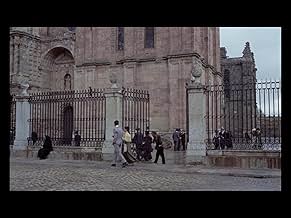
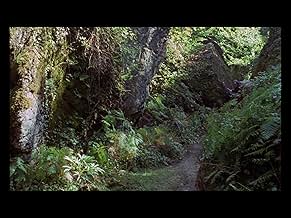
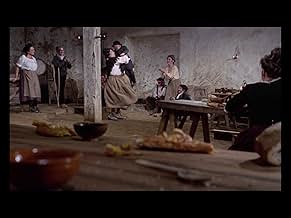
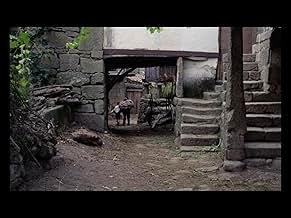
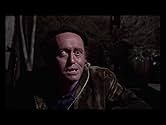
Benito Freire is a peddler who lives miserably in an environment dominated by ignorance and superstition. He is dedicated to peddling by the Galician towns and suffers severe attacks of epil... Read allBenito Freire is a peddler who lives miserably in an environment dominated by ignorance and superstition. He is dedicated to peddling by the Galician towns and suffers severe attacks of epilepsy. Through the region begins to spread the rumor that he is a werewolf and that he is p... Read allBenito Freire is a peddler who lives miserably in an environment dominated by ignorance and superstition. He is dedicated to peddling by the Galician towns and suffers severe attacks of epilepsy. Through the region begins to spread the rumor that he is a werewolf and that he is possessed by a demonic spirit. And it will be precisely the stories that people are telling... Read all
- Director
- Writers
- Stars
- Awards
- 7 wins & 1 nomination total
- Vilairo
- (as Fernando Sánchez Polak)
- Vigaira
- (as Porfiría Sanchís)
- Director
- Writers
- All cast & crew
- Production, box office & more at IMDbPro
Featured reviews
gradually the ghastly tale unfolds
Superstition Meets Tragedy in Rural Spain 🐺🌲😔
José Luis López Vázquez delivers a committed performance as the tormented Benito, bringing genuine pathos to a character caught between medical reality and supernatural hysteria. He is dedicated to peddling by the Galician towns and suffers severe attacks of epilepsy, and López Vázquez effectively conveys both the physical anguish and psychological deterioration of his protagonist. The supporting cast, including Amparo Soler Leal and Antonio Casas, provides solid work within the confines of somewhat archetypal roles, though their characters remain more symbolic than fully realized.
The cinematography captures the bleakness of rural Spain with appropriate moodiness, employing shadowy interiors and mist-shrouded landscapes that should theoretically enhance the film's Gothic sensibilities. However, the visual storytelling often feels derivative of other European art films of the period, lacking the distinctive voice that might elevate the material beyond its literary origins. The picture is based on the true-life story of Manuel Blanco Romasanta, the traveling vendor, who confessed to the murders of thirteen people, using their body fat to make soap, yet the historical foundation becomes lost in overly stylized presentations.
Where the film succeeds is in its exploration of how collective paranoia can destroy an individual, but where it falters is in its pacing and tonal inconsistencies. Through the region begins to spread the rumor that he is a werewolf and that he is possessed by a demonic spirit, and this psychological transformation should provide the film's dramatic core. Instead, Olea's approach feels more academic than visceral, examining themes of alienation and madness through a lens that distances rather than engages the viewer.
The film's treatment of epilepsy as a source of supernatural suspicion offers interesting social commentary, but the execution lacks the nuanced understanding that might make such material genuinely compelling. While "El bosque del lobo" demonstrates technical competence and features a strong central performance, it ultimately feels like a missed opportunity to create something truly memorable from its rich source material.
One of the best Spanish films ever made
In my defense, I'm a werewolf.
José Luis López Vázquez plays the film's murderer, Galician pedlar Benito Freire, who has been afflicted with an unspecified ailment since childhood - now, when acting as a guide for travellers, he suddenly becomes gripped by a madness that drives him to kill. Freire is shown not to be a werewolf, but rather suffering from a mental condition - schizophrenia, perhaps - that makes him act in a violent manner against his usual character. The killings are brutal, with the murder of a child being particularly disturbing (he starts to strangle her and then accidentally sets her on fire).
The film is very gradually paced, so much so that it's easy for one's attention to wander at times (I soon started to notice all of the flies in the film), but it is well acted, José Luis López Vázquez putting in a convincing central performance as the killer who evokes pity as much as he does fear. The story builds to a satisfying climax, as Freire's lies eventually start to unravel, evidence mounts against him and he becomes the subject of a manhunt.
7/10. For a more recent version of the same story (but not as good), check out Romasanta (2004), starring the late Julian Sands.
Un Canto a Galicia (but not the one Julio Iglesias sung...)
So much for the little history lesson that you can also read on Wikipedia, because here we cover the magisterial and extremely respectful (for both victims and culprit) folklore horror/drama film that director Pedro Olea has made about this dark page of Galician history.
It feels strange to see a Spanish horror production from the early 1970s with the word "Lobo" in the title. Why? Because the Spanish exploitation/horror demigod Paul Nashchy had monopolized the entire werewolf business during this period, of course! Between 1968 and 2004, Naschy made a whole cycle of "Hombre Lobo" films featuring the character of Waldemar Daninsky as a martyr in the shape of a Wolfman. In terms of plot, atmosphere, style, and shlock-value, "El Bosque Del Lobo" cannot be compared to Naschy's work at all, let that be clear.
José Luis López Vásquez, who I also found brilliant in "La Cabina", stars as Benito Freire (the names of victims and culprit have been changed). He is an traveling salesman who is very popular in the small Galician villages, and he earns some extra money by guiding people from region to region through difficult mountain passes and inhospitable regions. Some of these travelers never arrive at their destination, but their relatives don't know, because Benito sends their regards and writes letters in their name. Benito himself also suffers enormously from his "irresistible urge" to kill, and the screenplay certainly suggests that Benito firmly believes that he carries a curse with him.
"El Bosque del Lobo" is a very compelling and beautifully made film that honestly deserves more recognition and fame. The pace is slow, but this is in favor of the tension building and gives the viewer a genuine opportunity to develop compassion for both Benito and his victims - including children - who often die gruesome deaths. Pedro Olea also very efficiently emphasizes the sign of the times and the circumstances in which the story takes place. People live in poverty. There is little food, and filthy flies literally hang around the people's heads, the priest is the most influential figure in the village, and justice eventually comes through an angry crowd with torches and pitchforks.
Top film. Fascinating true crime. Time for me to seek Paco Plaza's 2004 film "Romasanta", which is based on the same serial killer.
Did you know
- TriviaThe film is based on the life of Manuel Blanco Romasanta, a Galician peddler who lived in the first half of the 19th century and was the author of thirteen crimes, also considered the first and only case of lycanthropy in Spain.
- ConnectionsVersion of Romasanta (2004)
- How long is The Ancines Woods?Powered by Alexa
Details
- Release date
- Country of origin
- Official site
- Languages
- Also known as
- The Forest of the Wolf
- Filming locations
- Production company
- See more company credits at IMDbPro
- Runtime
- 1h 30m(90 min)
- Sound mix
- Aspect ratio
- 1.66 : 1