During the First World War, female German spy Fraulein Doktor and her team of saboteurs plan to kill Lord Kitchener, obtain the Allied defense plans, and steal the new French mustard-gas for... Read allDuring the First World War, female German spy Fraulein Doktor and her team of saboteurs plan to kill Lord Kitchener, obtain the Allied defense plans, and steal the new French mustard-gas formula.During the First World War, female German spy Fraulein Doktor and her team of saboteurs plan to kill Lord Kitchener, obtain the Allied defense plans, and steal the new French mustard-gas formula.
Olivera Katarina
- Marchioness de Haro
- (as Olivera Vucio)
Milivoje Popovic-Mavid
- Chaplain
- (as Mavid Popovic)
Milutin Micovic
- Blondel
- (as Miki Micovic)
6.4560
1
2
3
4
5
6
7
8
9
10
Featured reviews
This film really chilled me
I saw this film by chance on the small box. It has a fantastic and chilling scene about poisonous gas. A lot about fanatical patriotism. A bit of eroticism. I can't believe it's still waiting for 5 votes!!
Fraulein Doktor should've long been on video
Two films of the 1960s I want to see in their entirety but as time goes by I don't think I ever will. Those films are Fraulein Doktor(1969) & Sands of the Kalahari(1965), both released by Paramount in the US. I have a reasonably good copy of Kalahari taped off of TV with the expected commercial cuts. But this is not the whole movie. I haven't seen nothing of Fraulein Doktor since I last saw it 25 to 30 years ago and as time goes by memory fades. I remember two scenes in Fraulein Doktor distinctly, the horseback poison gas scene & Suzy Kendall crying her eyes out in the back of a military vehicle after having committed once last deceit and afterward she wanted no more of espionage. Two memorable scenes. I agree with the other posters that the major studios will give a goofy modern joke of a film a wide video release but will completely ignore these gems. If I'm not mistaken neither Fraulein Doktor nor Sands of the Kalahari have had a home video release of any kind be it: Betamax, VHS, 8mm, Laserdisc or DVD. There!, ... five different formats from the last 30 years and these two movies cannot get a home video release of some sorts. There are other films from this era that also have never seen the light of the 'video' day. But time marches on, 40 years now, for the best print materials from films like FD & SotK. It would be a tragedy if we were to lose the best printing sources of these two films(at just 40 yrs) forever if they are not restored for present day audiences to enjoy. We're not talking about silent films, we're talking films that are as recent as 40 years ago. Another poster mentioned the Sicilian Clan(1968) which I saw for the first time a few weeks before 9/11/01. Excellent film and not on video yet either to my knowledge. But the other two films are wonderful and deserve to be on DVD.
Fräulein Doktor Pretty Good War Movie, Could Have Been A Lot Better
After seeing again Fräulein Doktor on NetFlix streaming video (before I cut that service, thanks to its notifying me two days ago of its massive pricing increase in September), I realize that this movie was nowhere near as good as I thought for years. So I am making a massive rewrite of my previous very positive review of this WWI spy movie. As others here at IMDb have commented, that brief scene of soldiers on horseback marching onto a gassed battlefield is very impressive, the group of seven or so horses wearing horse gas masks and protective body covers. The problem is the closing scenes in the final third of Fräulein Doktor on or near the battlefield wreck this movie.
In the end, the character of Fräulein Doktor is pushed of the stage by scenes of trench warfare, scenes of soldiers with the flesh on their hands being eaten away by poison gas and a subplot tossed in about German soldiers posing as French soldiers to break into military HQ to copy battle plans. While these goings on are happening, Suzy Kendall's Fräulein Doktor is busy running around in a nurse's uniform as part of a Spanish contingent of nurses on their way to the Western Front to treat wounded allied soldiers. Somehow the Doktor speaks Spanish perfectly, with no German accent.
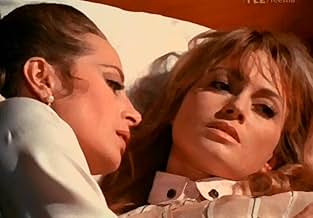
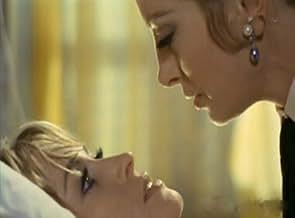
Netflix's streaming video version of this movie seems to have included the full lesbian scene between Suzy Kendall and Capucine, a scene censored on TV airings of the movie. Capucine plays Dr. Saforet, who is developing a new poison gas. In the scene, Capucine kisses Kendall on the lips, hot stuff back then. The scene does serve a real purpose, to show how Fräulein Doktor gets her hands on the poison gas.
Another scene, not censored, shows Kenneth More, playing a British intelligence officer, telling a caught spy to either talk or the spy will play the Wall Game. The wall being opposite a firing squad, with little chance of the spy winning the game. That sort of cynical attitude played well across national borders in the Vietnam War era.
Fräulein Doktor is a demonstration of how, 40 years ago, the once great film industry in Western Europe could turn out movies that had broad appeal all over the world. In the late 60s, while the big Hollywood studios were on the ropes, Italy, France and England were turning out movies to fill the void left by Hollywood's decline. There were the James Bond pictures (Doctor No was a surprise hit in the USA, it was first released at the Century theater chain in NYC with a 99 cent afternoon admission price), the Clint Eastwood spaghetti westerns (with A Fistful of Dollars released by a distributor that never paid the Italian producers a dime) and French crime movies that usually went to art houses, with exceptions like The Sicilian Clan. And there were European co-productions like Doctor Zhivago and, of course, Fräulein Doktor. Fräulein Doktor was good enough that some viewers still remember the movie decades later, long after it was out of circulation.
Trouble is, my memories of Fräulein Doktor do not include the badly photographed battle scenes, the poorly done model work showing a warship in a storm, the terrible ending of this movie and the unnecessarily graphic scenes of soldiers' rotting flesh. Suzy Kendall, though, is just as beautiful as I remember her.
In the end, the character of Fräulein Doktor is pushed of the stage by scenes of trench warfare, scenes of soldiers with the flesh on their hands being eaten away by poison gas and a subplot tossed in about German soldiers posing as French soldiers to break into military HQ to copy battle plans. While these goings on are happening, Suzy Kendall's Fräulein Doktor is busy running around in a nurse's uniform as part of a Spanish contingent of nurses on their way to the Western Front to treat wounded allied soldiers. Somehow the Doktor speaks Spanish perfectly, with no German accent.
Netflix's streaming video version of this movie seems to have included the full lesbian scene between Suzy Kendall and Capucine, a scene censored on TV airings of the movie. Capucine plays Dr. Saforet, who is developing a new poison gas. In the scene, Capucine kisses Kendall on the lips, hot stuff back then. The scene does serve a real purpose, to show how Fräulein Doktor gets her hands on the poison gas.
Another scene, not censored, shows Kenneth More, playing a British intelligence officer, telling a caught spy to either talk or the spy will play the Wall Game. The wall being opposite a firing squad, with little chance of the spy winning the game. That sort of cynical attitude played well across national borders in the Vietnam War era.
Fräulein Doktor is a demonstration of how, 40 years ago, the once great film industry in Western Europe could turn out movies that had broad appeal all over the world. In the late 60s, while the big Hollywood studios were on the ropes, Italy, France and England were turning out movies to fill the void left by Hollywood's decline. There were the James Bond pictures (Doctor No was a surprise hit in the USA, it was first released at the Century theater chain in NYC with a 99 cent afternoon admission price), the Clint Eastwood spaghetti westerns (with A Fistful of Dollars released by a distributor that never paid the Italian producers a dime) and French crime movies that usually went to art houses, with exceptions like The Sicilian Clan. And there were European co-productions like Doctor Zhivago and, of course, Fräulein Doktor. Fräulein Doktor was good enough that some viewers still remember the movie decades later, long after it was out of circulation.
Trouble is, my memories of Fräulein Doktor do not include the badly photographed battle scenes, the poorly done model work showing a warship in a storm, the terrible ending of this movie and the unnecessarily graphic scenes of soldiers' rotting flesh. Suzy Kendall, though, is just as beautiful as I remember her.
A chilling scene
I saw this at the theater in the early 1970's. The most memorable and scary scene is when the German army attacks with yellow cross mustard gas for the first time. The Germans and their horses are covered from head to toe (or hoof) with eerie protective suits. The experienced British soldiers don gas masks (only) and once again await the clouds of gas and the German attackers. The gas clouds move ever closer, finally enveloping the British defenders. The Germans move forward slowly menacingly in their scary looking garb. Suddenly a scream from the defenders... This gas is like no other that they have experienced before....
Now you will know why I have remembered this scene for the last 30+ years and still shiver, I think that you will too!
Make sure you tape this one!
I am not ordinarily a fan of spy thrillers because the spies always seem to live in their own world oblivious to the realities of the rest of the world around them. But this film shows for the first time a spy who sees first hand the results of her work. There is blood on her hands literally as well as symbolically. It is interesting that the one time we see a spy coming face to face with the realities of their handiwork, it is a woman who is the spy.
Like others have mentioned, the battlefield scenes contain some of the most horrific scenes of war carnage ever shot. Not since Akira Kurosawa's "Kagemusha" has the futility and horror of battle been so profoundly depicted. No war was more futile and insane than the first world war, and the grisly images of melting skin and soldier's bodies spasming and writhing in agony are a perfect illustration of one of the biggest turning points in world history. War was no longer played according to rules or any standard of humanity. This is also poignantly shown in a scene when a German general reluctantly pins a medal on "Fraulein Doktor" because she'd killed Lord Kitchener and Kitchener had been a personal friend of his.
One has to put aside some of the 60s-style make-up and hairstyles, but most of the acting is very good and the whole movie will keep your attention all the way through to to the riveting climax. Id' rank this along with "Gallipoli", "Paths of Glory" and "King and Country" as one of the best WWI movies ever made. And to echo some of the other comments here.... I wish I had taped this!
Like others have mentioned, the battlefield scenes contain some of the most horrific scenes of war carnage ever shot. Not since Akira Kurosawa's "Kagemusha" has the futility and horror of battle been so profoundly depicted. No war was more futile and insane than the first world war, and the grisly images of melting skin and soldier's bodies spasming and writhing in agony are a perfect illustration of one of the biggest turning points in world history. War was no longer played according to rules or any standard of humanity. This is also poignantly shown in a scene when a German general reluctantly pins a medal on "Fraulein Doktor" because she'd killed Lord Kitchener and Kitchener had been a personal friend of his.
One has to put aside some of the 60s-style make-up and hairstyles, but most of the acting is very good and the whole movie will keep your attention all the way through to to the riveting climax. Id' rank this along with "Gallipoli", "Paths of Glory" and "King and Country" as one of the best WWI movies ever made. And to echo some of the other comments here.... I wish I had taped this!
Did you know
- TriviaFor many years Elsbeth Schragmüller, the film's subject, was invariably known as Mademoiselle Docteur or Fräulein Doktor, her actual name being revealed only in 1945 from German intelligence documents captured by the Allies after World War II, by which time she had already died of miliary tuberculosis in 1940.
- ConnectionsFeatured in Ennio (2021)
- How long is Fraulein Doktor?Powered by Alexa
Details
- Runtime
- 1h 44m(104 min)
- Aspect ratio
- 1.85 : 1
Contribute to this page
Suggest an edit or add missing content