

A series of disjointed mythical tales set in first-century Rome.A series of disjointed mythical tales set in first-century Rome.A series of disjointed mythical tales set in first-century Rome.
- Nominated for 1 Oscar
- 5 wins & 8 nominations total


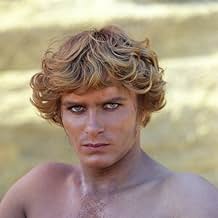
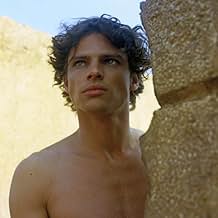
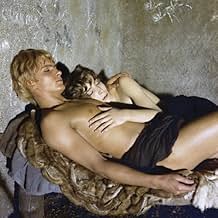


- Trimalcione
- (as Il Moro)


- Scintilla
- (as Danica la Loggia)

- La matrona
- (as Lucia Bosé)
- Il suicida
- (as Joseph Weelher)


- Minotauro
- (as Luigi Montefiori)
Featured reviews
Ahem...
On one hand, its many flaws are rather upsetting. The out-of-sync lipping (bad post-sync), the fact that the movie neither really tells a story nor evocates sensible moral or philosophical concepts... so one may say it's actually a dull movie. The violence in this movie doesn't seem to make real sense, neither does the homosexuality, neither does the "romanian decadence" portrait.
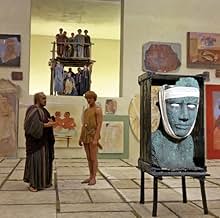
On the other hand, the scenography, the sets, the costumes and makup are among the most dazzling ones you'll ever see in cinema, and the cinematography... well... maybe the BEST one you'll ever see. I can't think of any another movie able to compete with "Satyricon"'s mindblowing cinematography. Each scene is a terrific picture, with several visual layers, extraordinary lights and focuses, a lot of invention, of visual flair, and the overall technical mastery is stunning.
The result is something mesmerizing for some, totally disgusting for others. I have to say I'm more on the mesmerized side, because I was mainly focused on the visual/meditative aspects of the movie, not on the narrative ones.
If you're really into cinema, I mean as an artistic media more than as entertainment, you MUST see "Satyricon", as it's to my sense the most *visually* outstanding movie ever made. Be prepared for some disappointment about the movie as a whole, though...
Petronius and Fellini collaborate on a picaresque romp.
Something a wee bit different
As Vincent Canby said in his review, from 1970 in the New York Times, 'Fellini Satyricon is its own justification'. This movie exists purely to engage on an aesthetic level. The surrealism, the carnival-of-life atmosphere, the monumental pageantry, the visual juxtaposition of beauty and ugliness, and the black humour are all the film possesses and are all it requires. I believe that Fellini's intention with this film was simply to entertain. And he was a master entertainer, no doubt.
Don't expect much in the way of characterisation, of complex plot developments, or of nifty moral expression. This is a film that looks and sounds beautiful, and it manages to hold your interest (or mine anyway, I can't speak for everyone) for two brief hours by doing just that. Fellini = Godlike genius.
Interesting and Strange
** 1/2 (out of 4)
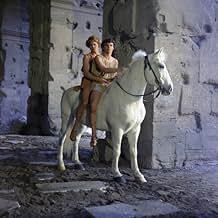
Set during the first century Rome, Encolpio (Martin Potter) and Ascilto (Hiram Keller) fight over which one will get to be with a young slave boy (Max Born). After that we travel through various parts of Rome seeing its history through the eyes of Fellini who is certainly more interested in visuals than an actual story. This is an extremely bizarre film that will probably drive a lot of people crazy but to me the movie was so crazy and so over the top that it kept me interested from start to finish. I think you could show this movie with every scene out of order and it really wouldn't make a difference because the actual story really isn't there because we just have various settings for the director to do his magic. One scene that place on a huge, pyramid like set where we get a great visual of people coming out of various doors and that's pretty much it. I can only imagine a lot of work being done for such a short scene. The eventual destruction is very well done as were various other segments thrown around here. There's a cannibal orgy, beheadings and other forms of violence, which are more corny than shocking but they're all done in a nice visual style and that includes a great scene where a decapitated head is floating in the water. The performances were decent enough for what the film required but none of them are going to really stick out. In the end this movie isn't really a movie but instead just a group of weird images thrown together to make the viewer scratch their heads. On that level the movie works but I can see plenty of people turning this one off early.
In some ways very close to the book.


Did you know
- TriviaGian Luigi Polidoro registered the title Satyricon (1969) for his movie first. Federico Fellini fought to use the title for his movie but lost the case. Subsequently the title was changed to Fellini Satyricon.
- GoofsIn one version, Joseph Wheeler is credited as 'Joseph Weelher'.
- Quotes
Soldier at Tomb: They've stolen the hanged man! While I was with you, the thief's family took him away! I know what punishment I'll get... a horrible death. Why should I wait for it? I'd rather die by my own hands.
[pulls his sword out and is about to stab himself]
Wife of Ephesus: [stops him] No! No, my dear... To lose the two men in my life, one after the other, would be too much...
Wife of Ephesus: [looks at the corpse of her husband] Better to hang a dead husband than to lose a living lover.
[the couple replace the missing hanged corpse with the corpse of her husband]
- ConnectionsEdited into Fellini: I'm a Born Liar (2002)
- SoundtracksThe Drums for the Niegpadouda Dance
From Anthology of Music of Black Africa
Recorded by Everest Records
Arranged by Bernard C. Salomon
Published by Arvon Music
- How long is Satyricon?Powered by Alexa
Details
Box office
- Budget
- $3,000,000 (estimated)
- Gross US & Canada
- $1,135,943
- Gross worldwide
- $1,138,108
- Runtime
- 2h 9m(129 min)
- Sound mix
- Aspect ratio
- 2.35 : 1