

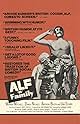
The film version of Till Death Us Do Part (1965) tells the story of Alf Garnett and his family living through the London Blitz.The film version of Till Death Us Do Part (1965) tells the story of Alf Garnett and his family living through the London Blitz.The film version of Till Death Us Do Part (1965) tells the story of Alf Garnett and his family living through the London Blitz.


Pat Coombs
- Neighbour
- (as Pat Coombes)


- Director
- Writer
- All cast & crew
- Production, box office & more at IMDbPro
6.2549
1
2
3
4
5
6
7
8
9
10
Featured reviews
Above average TV Spin Off.
The Seventies would see the boom of the sitcom spin off film a very mixed bag but for my generation the first examples of many series' we'd see.
Alf Garnett remains a classic TV character much misunderstood but you can find commentators who can write more eloquently then myself on that.
The film is an interesting mix of Alf in wartime and in the sixties (including the 1966 World cup final) - It's a well made lovingly shot film (the exact opposite of the 2nd film - the truly awful 'The Alf Garnett Saga).
Times have changed and thankfully so - The trailer for the film even uses the racist language Alf spewed - But this film gives an excellent view of the changing times in both eras.
Cast wise all of the main TV cast are here and are as good as ever - One problem for Alf is that Warren Mitchell was such a good actor and managed to make us like the old sod!
A time capsule and well worth seeking out (Network DVD have released the ultimate version).
Alf Garnett remains a classic TV character much misunderstood but you can find commentators who can write more eloquently then myself on that.
The film is an interesting mix of Alf in wartime and in the sixties (including the 1966 World cup final) - It's a well made lovingly shot film (the exact opposite of the 2nd film - the truly awful 'The Alf Garnett Saga).
Times have changed and thankfully so - The trailer for the film even uses the racist language Alf spewed - But this film gives an excellent view of the changing times in both eras.
Cast wise all of the main TV cast are here and are as good as ever - One problem for Alf is that Warren Mitchell was such a good actor and managed to make us like the old sod!
A time capsule and well worth seeking out (Network DVD have released the ultimate version).
The Garnetts transfer to the silver screen
In the 1960s and 1970s It was customary for British sitcoms to make the leap from the small screen to film and the Garnet family were one of BBC one's successful sitcoms so a film adaptation was inevitable.
Released in 1968 the film is about the early years of Alf and Elsie's marriage during the Blitz in world war two as well as the arrival of their first born child Rita played by Una Stubbs.
The film is pleasant and charming albeit less aggressive in it's interpretation of the politically motivated themes which were scattered throughout the series, the recreation of the period detail of Whopping in world war two is inspired.
The performances are very good Warren Mitchell as Alf slips back into the role he made famous in the British BBC one sitcom ( 1965- 1975) with ease. Dandy Nichols lights up the screen as his wife Elsie, whereas the burgeoning relationship between his daughter Rita once she grows up and her future husband Mike played by Anthony Booth is poignant and charming as can be.
Overall: A worthy big screen adaptation of the popular BBC One series, better than the awful and dreadful sequel which followed in 1972 that started two different actors playing the roles of Mike and Rita as Anthony Booth and Una Stubbs has other work commitments.
Released in 1968 the film is about the early years of Alf and Elsie's marriage during the Blitz in world war two as well as the arrival of their first born child Rita played by Una Stubbs.
The film is pleasant and charming albeit less aggressive in it's interpretation of the politically motivated themes which were scattered throughout the series, the recreation of the period detail of Whopping in world war two is inspired.
The performances are very good Warren Mitchell as Alf slips back into the role he made famous in the British BBC one sitcom ( 1965- 1975) with ease. Dandy Nichols lights up the screen as his wife Elsie, whereas the burgeoning relationship between his daughter Rita once she grows up and her future husband Mike played by Anthony Booth is poignant and charming as can be.
Overall: A worthy big screen adaptation of the popular BBC One series, better than the awful and dreadful sequel which followed in 1972 that started two different actors playing the roles of Mike and Rita as Anthony Booth and Una Stubbs has other work commitments.
"Innit marvellous!"
Alf Garnett is one of TV's finest - and most misunderstood - comedy creations. Alf's brought to life by socialist writer Johnny Speight and tremendous comic actor Warren Mitchell. Mitchell is Jewish, yet Garnett is a blistering satire of right-wing bigotry.
The film version of Till Death Do Us Part is superior to the misguided sequel In Sickness and in Health, though slightly behind the '65 TV original. The first half of the movie lacks the ethical counterpoint of his Labour-voting ("Randy Scouse git!") son-in-law, yet still scores with Mitchell's classic study of loud-mouth stupidity.
The joke is Alf himself, not his views, and seeing him denounce Hitler's fascism then, in almost the same breath, rally against "Eye-ties" and "coloureds" is a fine parody of small-minded ignorance. This is a man who gleefully cries, "get a bit of action now" at the outbreak of the Second World War. A man who proffers "Ugly, innit?" at the birth of his own daughter. On being told his daughter's mother-in-law goes to church every Sunday, he rants, "I said I was religious - I didn't say I was a bloody religious maniac!" Often it's the way he tells 'em. Other Alf philosophies include repressing student demonstrations with a plan to "bung that lot out to work at fourteen, same as they done in the old days". "Wasn't that bad," he says about Hitler, when deciding, with hindsight, that we should have joined forces with the Third Reich, "Had his faults."
Alf's the man who has an opinion on everything, no matter how ill informed, and regularly expresses it, preferably in a crowded pub, to anyone that will listen. Alf's only flexibility in his views is in having a photograph of Winston Churchill ready to take the place of Neville Chamberlain's when he resigns.
This form of satire takes risks and can be shocking - during the film Alf criticises the calibre of the Japanese after Hiroshima and insults the Pope. "The coon's got a sense o'humour" he declares of a young girl before collapsing in a drunken heap and plastering his daughter with beer at her wedding reception. A documentary on Mitchell's life saw him recount a tale of a man who approached him in the street, praising him for "having a go at them coons." Mitchell's response was "we were actually having a go at idiots like you." That said, while an elitist amusement, the fact that this material became such a mainstream hit means that real-life bigots will ultimately see it as a vindication of their views, making it questionable entertainment.
Working a half-hour sitcom into a feature-length narrative is inevitably hit and miss, though Speight must be praised for doing something new with the format rather than just crafting a triple-length episode. Where the series saw Alf tirading against 60s counterculture, the first half of the movie is a kind of pre-story, with Alf and Else in the middle of the blitz. The film's recreation of 40s England is well realised, even if editing in stock footage of aircraft disrupts the illusion somewhat. Direction by Norman Cohen is also often cleverer than you might expect for this type of material.
At the halfway mark we get a "nearly 20 years later" caption, taking us up to the present date and the series' timeline. A three-and-a-half-minute dream sequence in the final stages may seem like filler, but it was good enough for Chaplin in The Kid, so it gets by here. Maybe the problem with the central character is that Mitchell makes him so likeable in spite of himself. Some famous names offer support in the film - Brian Blessed, Bill Maynard, Geoffrey Hughes, Anthony Booth and Frank Thornton - but, other than Booth, none of them get much of a look in, this being Mitchell's film all the way.
The film version of Till Death Do Us Part is superior to the misguided sequel In Sickness and in Health, though slightly behind the '65 TV original. The first half of the movie lacks the ethical counterpoint of his Labour-voting ("Randy Scouse git!") son-in-law, yet still scores with Mitchell's classic study of loud-mouth stupidity.
The joke is Alf himself, not his views, and seeing him denounce Hitler's fascism then, in almost the same breath, rally against "Eye-ties" and "coloureds" is a fine parody of small-minded ignorance. This is a man who gleefully cries, "get a bit of action now" at the outbreak of the Second World War. A man who proffers "Ugly, innit?" at the birth of his own daughter. On being told his daughter's mother-in-law goes to church every Sunday, he rants, "I said I was religious - I didn't say I was a bloody religious maniac!" Often it's the way he tells 'em. Other Alf philosophies include repressing student demonstrations with a plan to "bung that lot out to work at fourteen, same as they done in the old days". "Wasn't that bad," he says about Hitler, when deciding, with hindsight, that we should have joined forces with the Third Reich, "Had his faults."
Alf's the man who has an opinion on everything, no matter how ill informed, and regularly expresses it, preferably in a crowded pub, to anyone that will listen. Alf's only flexibility in his views is in having a photograph of Winston Churchill ready to take the place of Neville Chamberlain's when he resigns.
This form of satire takes risks and can be shocking - during the film Alf criticises the calibre of the Japanese after Hiroshima and insults the Pope. "The coon's got a sense o'humour" he declares of a young girl before collapsing in a drunken heap and plastering his daughter with beer at her wedding reception. A documentary on Mitchell's life saw him recount a tale of a man who approached him in the street, praising him for "having a go at them coons." Mitchell's response was "we were actually having a go at idiots like you." That said, while an elitist amusement, the fact that this material became such a mainstream hit means that real-life bigots will ultimately see it as a vindication of their views, making it questionable entertainment.
Working a half-hour sitcom into a feature-length narrative is inevitably hit and miss, though Speight must be praised for doing something new with the format rather than just crafting a triple-length episode. Where the series saw Alf tirading against 60s counterculture, the first half of the movie is a kind of pre-story, with Alf and Else in the middle of the blitz. The film's recreation of 40s England is well realised, even if editing in stock footage of aircraft disrupts the illusion somewhat. Direction by Norman Cohen is also often cleverer than you might expect for this type of material.
At the halfway mark we get a "nearly 20 years later" caption, taking us up to the present date and the series' timeline. A three-and-a-half-minute dream sequence in the final stages may seem like filler, but it was good enough for Chaplin in The Kid, so it gets by here. Maybe the problem with the central character is that Mitchell makes him so likeable in spite of himself. Some famous names offer support in the film - Brian Blessed, Bill Maynard, Geoffrey Hughes, Anthony Booth and Frank Thornton - but, other than Booth, none of them get much of a look in, this being Mitchell's film all the way.
"Has it's moments, but not up to the TV series!"
The life and times of the bigoted East End docker Alf Garnett (WARREN MITCHELL) from the second world war up until the late 1960's. Events include the birth of Alf's daughter Rita, Alf being called up for war service, the 1966 UK general election and Rita's (UNA STUBBS) wedding to Mike(ANTHONY BOOTH).
In the late sixties and early seventies, practically every popular British sitcom had it's own big-screen spin-off and the result was quite often disastrous with the exception of ON THE BUSES (1971), which proved to be the most popular British film of that year and MAN ABOUT THE HOUSE was a sizeable hit on its release in 1974. The first spin-off from the popular yet highly controversial BBC sitcom TILL DEATH US DO PART is far from being bad, but it seems comparatively tame with the TV series. There are moments such as Alf at the 1966 World Cup and during the year's general election where the British Labour party was returned with a landslide; but they fail to pack the same punch that has made the TV original become a milestone in the history of British television as it changed the way TV said things and how it said it. However, the original cast performs cheerfully and the film has a nice sense of place and period thanks to the photography of veteran British cinematographer Harry Waxman whose credits include BRIGHTON ROCK (1947) and THE WICKER MAN (1973). Very few movies of this nature were fortunate to have such a distinguished veteran of the industry behind the camera and another thing that works in the film's favour is that it opens up the story of the Garnett family (although it occasionally conflicts with how the TV series sometimes depicted the beginning) rather than just being an extended episode
Followed by a sequel entitled THE ALF GARNETT SAGA (1972), which was even more crude and out of character.
In the late sixties and early seventies, practically every popular British sitcom had it's own big-screen spin-off and the result was quite often disastrous with the exception of ON THE BUSES (1971), which proved to be the most popular British film of that year and MAN ABOUT THE HOUSE was a sizeable hit on its release in 1974. The first spin-off from the popular yet highly controversial BBC sitcom TILL DEATH US DO PART is far from being bad, but it seems comparatively tame with the TV series. There are moments such as Alf at the 1966 World Cup and during the year's general election where the British Labour party was returned with a landslide; but they fail to pack the same punch that has made the TV original become a milestone in the history of British television as it changed the way TV said things and how it said it. However, the original cast performs cheerfully and the film has a nice sense of place and period thanks to the photography of veteran British cinematographer Harry Waxman whose credits include BRIGHTON ROCK (1947) and THE WICKER MAN (1973). Very few movies of this nature were fortunate to have such a distinguished veteran of the industry behind the camera and another thing that works in the film's favour is that it opens up the story of the Garnett family (although it occasionally conflicts with how the TV series sometimes depicted the beginning) rather than just being an extended episode
Followed by a sequel entitled THE ALF GARNETT SAGA (1972), which was even more crude and out of character.
Superior television spin-off
One of the first television situation comedies to get the cinema treatment, 'Till Death
' avoids the trap of being just an extended television episode which befalls many other adoptions, by opening out the story. It is more a prequel than merely being the 'film of the show', showing us the history of the Garnett family, from just before the start of the Second World War to the 'present day' of 1969, taking in the 1966 World Cup on it's way.
It is the wartime sequence of the movie (it roughly takes up the first 45 minutes of the film) which for me is the highlight of the picture. You really do get a proper sense of time and place. The credit mainly goes to the director, Norman Cohen, who gives what could have been a static television-style play, a real cinematic treatment.
The script by Johnny Speight is generally excellent and (as far as I know) isn't just a re-packaging of old television material. Ironically the movie falters when it moves 'twenty or so years later' and moves into the more familiar setting of the series That said, Rita's wedding is a memorable set-piece, moving between drama and comedy (and very uncomfortable viewing at times, due to Garnett's racism).
It's Mitchell's movie, of course. It's a credit to the actor's talents that that you can't help liking Alf, despite the fact that Speight's script constantly under-cuts and mocks the character.
It's an oddly bitter-sweet movie, as a community which had survived the Blitz is eventually disbanded, with the Garnett family exiled to a bleak modern concrete tower block. There is a real sense of loss here and it is this which places it a few notches up from the normal television spin-off. It's a pity that this movie will always be over-shadowed by its more controversial small screen incarnation, as it deserves a wider audience. It also showcases a rather brilliant title song, by Ray Davies, which any fan of The Kinks should check out.
It is the wartime sequence of the movie (it roughly takes up the first 45 minutes of the film) which for me is the highlight of the picture. You really do get a proper sense of time and place. The credit mainly goes to the director, Norman Cohen, who gives what could have been a static television-style play, a real cinematic treatment.
The script by Johnny Speight is generally excellent and (as far as I know) isn't just a re-packaging of old television material. Ironically the movie falters when it moves 'twenty or so years later' and moves into the more familiar setting of the series That said, Rita's wedding is a memorable set-piece, moving between drama and comedy (and very uncomfortable viewing at times, due to Garnett's racism).
It's Mitchell's movie, of course. It's a credit to the actor's talents that that you can't help liking Alf, despite the fact that Speight's script constantly under-cuts and mocks the character.
It's an oddly bitter-sweet movie, as a community which had survived the Blitz is eventually disbanded, with the Garnett family exiled to a bleak modern concrete tower block. There is a real sense of loss here and it is this which places it a few notches up from the normal television spin-off. It's a pity that this movie will always be over-shadowed by its more controversial small screen incarnation, as it deserves a wider audience. It also showcases a rather brilliant title song, by Ray Davies, which any fan of The Kinks should check out.


Did you know
- TriviaThe film contains rarely-seen colour footage of the 30th July 1966 World Cup final between England and West Germany.
- GoofsWhen Alf and Mike go into the pub before the 1966 World Cup, the car outside has the registration PGX392E, which means it was registered between 1 January 1967 and 31 July 1967.
- ConnectionsFeatured in Hitler: The Comedy Years (2007)
- How long is Alf 'n' Family?Powered by Alexa
Details
- Runtime
- 1h 36m(96 min)
- Sound mix
- Aspect ratio
- 1.66 : 1
Contribute to this page
Suggest an edit or add missing content