IMDb RATING
7.8/10
5.3K
YOUR RATING

A high-ranking official is forced to confess to high treason.A high-ranking official is forced to confess to high treason.A high-ranking official is forced to confess to high treason.
- Director
- Writers
- Stars
- Nominated for 1 BAFTA Award
- 3 wins & 3 nominations total
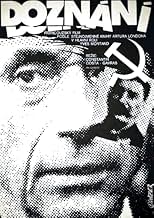
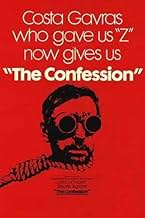

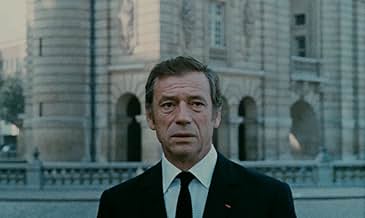




- Director
- Writers
- All cast & crew
- Production, box office & more at IMDbPro
7.85.2K
1
2
3
4
5
6
7
8
9
10
Featured reviews
Thrilling and fascinating!
I'll start this review by saying that although I do consider Gavras to be a very good and skillful director, at the same moment I consider him overrated by many, at least according to the films I have seen of him (Z, Mad City and Amen). However, in this film he really left me at some moments breathless! The film is set in an unnamed communist state of Eastern Europe, a satellite of the USSR. The main character had recently reached the Supreme Council of the Party by being appointed Minister. He has a rich history behind him as a communist fighter and politician. However, one morning, some guys from the secret police arrest him (and others as we later find out), throw him in a cell, try to break his will and make him confess of his unloyalty to the Party, something that he never committed though. Of course it is the Soviets who demanded his imprisonment and confession and the puppet government has to oblige.
We had this film shown at the university here two weeks ago and I really couldn't understand why some guys found it "boring". It showed things that seem really barbarous to us now but they DID happen to MANY people back then. And many of them did not have the influence the character of this film had. I suppose the people who made this criticism judge a movie by how many explosions and cold jokes it has in it but that's not the point here. This movie HAD to have a slow pacing in order to show how hard it is for the days to pass in this madhouse-prison.
The acting is great, especially from Yves Montand and all those actors who play the crazy communist officials :p It's thrilling to see the character's facial expressions change throughout the film showing suspicion at first before he gets arrested... then shock... then despair... and then plain stubbornness and exhaustion. It's obvious that everyone took this film very seriously and thus the great performances! Another thing that surprised me and was also mentioned by the (unfortunately only) other reviewer of this film is that it was shot in 1971. This is noticeable on its own, because it was a time that not only the Soviet Union was still strong (with Brezniev trying to show a "nicer" but also stronger face to the world) but the Communist Party in France had also great support and numbers of voters. I would like to know more about how the French audience reacted when the film was screened for the first time back then...
Overall, it is a movie that I would recommend anyone watching. It is a good and graphic display of how far the demands of power can reach and the paranoid mentality of the Cold War (and it would be wise to remember that this mentality and these incidents did not only take place in the East side but in the West as well). If you find it on VHS (since I doubt that it is released on DVD) just grab it!
We had this film shown at the university here two weeks ago and I really couldn't understand why some guys found it "boring". It showed things that seem really barbarous to us now but they DID happen to MANY people back then. And many of them did not have the influence the character of this film had. I suppose the people who made this criticism judge a movie by how many explosions and cold jokes it has in it but that's not the point here. This movie HAD to have a slow pacing in order to show how hard it is for the days to pass in this madhouse-prison.
The acting is great, especially from Yves Montand and all those actors who play the crazy communist officials :p It's thrilling to see the character's facial expressions change throughout the film showing suspicion at first before he gets arrested... then shock... then despair... and then plain stubbornness and exhaustion. It's obvious that everyone took this film very seriously and thus the great performances! Another thing that surprised me and was also mentioned by the (unfortunately only) other reviewer of this film is that it was shot in 1971. This is noticeable on its own, because it was a time that not only the Soviet Union was still strong (with Brezniev trying to show a "nicer" but also stronger face to the world) but the Communist Party in France had also great support and numbers of voters. I would like to know more about how the French audience reacted when the film was screened for the first time back then...
Overall, it is a movie that I would recommend anyone watching. It is a good and graphic display of how far the demands of power can reach and the paranoid mentality of the Cold War (and it would be wise to remember that this mentality and these incidents did not only take place in the East side but in the West as well). If you find it on VHS (since I doubt that it is released on DVD) just grab it!
When Communists Turn Against Each Other
"The Confession" is an uber-bleak film that stars Yves Montand as a loyal member of the Communist party who is turned on and made a scapegoat of when the party becomes paranoid about informers. He is imprisoned and systematically tortured until he admits to crimes against the party he didn't actually commit. Simone Signoret has a much smaller role as his wife, who sees her home invaded by Communist party thugs during the time in which her husband is in prison.
"The Confession" I think provides a good illustration of the pitfalls of Communism, which, despite its merits on paper, rarely works as an actual system. Those who adhere to it feel too persecuted to remain secure for long, and they turn against each other, convinced of double crossings and disloyalty to the party. It reminded me very much of the excellent novel "Darkness at Noon," which similarly examines the ways in which Communism eventually falls apart in practice.
I can't say I necessarily enjoyed "The Confession." It's extremely one-note; the film doesn't really have much of a dramatic arc. It's not able to marry the qualities of political expose and thriller the way another of director Costa-Gavras's classics, "Z," is. But I would still recommend it.
Grade: B+
"The Confession" I think provides a good illustration of the pitfalls of Communism, which, despite its merits on paper, rarely works as an actual system. Those who adhere to it feel too persecuted to remain secure for long, and they turn against each other, convinced of double crossings and disloyalty to the party. It reminded me very much of the excellent novel "Darkness at Noon," which similarly examines the ways in which Communism eventually falls apart in practice.
I can't say I necessarily enjoyed "The Confession." It's extremely one-note; the film doesn't really have much of a dramatic arc. It's not able to marry the qualities of political expose and thriller the way another of director Costa-Gavras's classics, "Z," is. But I would still recommend it.
Grade: B+
for the dose of truth, a masterpiece
I saw it as a Eastern viewer, knowing , directly, few crumbs of the last decade of Ceausescu regime. I saw it, too, as History teacher. And as one of familiars with the universe of Costa Gavras cinematographic work. It is a pure masterpiece , first for the high dose of truth. Second, for acting. Not the last, for the final part . In essence a try of exorcism. Brutal, honest, precise. Maybe useful.
French Political Thriller!
Anton Ludvik, aka Gerard, is vice-minister of Foreign Affairs of Czechoslovakia. He realizes he is watched and followed. One day, he is arrested and put into jail, in solitary confinement. Will be shown the mental tortures during the investigations and how a faithful top-ranking civil servant is made to confess to treason.
A French political thriller based on a real story in Czechoslovakia? Wow! This actually makes a lot of sense. The Czech people do not have many stories told about them, but they do happen to live in an unfortunate area, sandwiched between Germany and Russia. And, as we know, throughout the 20th Century, those two nations liked to assert their influence on the neighbors.
It is so great to see the story here of a man who stood against the Nazis now having to fight back against the politicians he helped support (sort of).
A French political thriller based on a real story in Czechoslovakia? Wow! This actually makes a lot of sense. The Czech people do not have many stories told about them, but they do happen to live in an unfortunate area, sandwiched between Germany and Russia. And, as we know, throughout the 20th Century, those two nations liked to assert their influence on the neighbors.
It is so great to see the story here of a man who stood against the Nazis now having to fight back against the politicians he helped support (sort of).
Exposing the wounds of a frailty regime which pretended to be error proof. Brutal, suffocating and realistic film.
In "L'Aveau" Costa-Gavras breaks at once and for all in defending one political ideology and attacking the other, like he did in "Z". This time he goes to show that both sides have their problematic aspects, they all make severe mistakes, we can't know which was good and which was bad. The bottom of line is that both with capitalism and communism someone decent always had to pay the prize for trying to do the right thing.
Yves Montand plays the victim once again (murdered in "Z" and arrested by militants in "Etat de Siege" closing the combative Gavras political trilogy, "Missing" goes as an addendum, made years later after those films), a Czech and Communist vice-minister who'll be arrested and suffer on the hands of other members of the party who consider him a traitor of their cause. They believe he was a spy who had connections with American officials and all they want is a full confession of his crimes, which never existed, never happened (and they know that!), using of mental and physical methods to achieve results with the prisoner. The confession extraction is the real purpose to be visualized in here, exploited in painful and realistic details, methods used by the Communist - I recalled some of the descriptions made by Soljenitsin in "Gulag Archipelag", released on the same year as "L'Aveau" - like privation of sleep, keep marching at all times inside of the cell, and many other horrible techniques they used on prisoners during months and years if possible in order to break their resistance and confess everything, real or not.
We have to give plenty of credit to Montand during those scenes, which are not few. Definitely not an easy shooting to make, you feel his exhaustion, weakening each frame goes by, the visible weight-loss, he went to extremes very few actors can reach and no, this isn't much method acting, one does not go in training method for those scenes, he just put himself there at each sequence. It doesn't go well for the character and it sure does not go well with the audience. It's hard to watch since the brutality and the frequency everything happens is so repetitive as if Gavras was trying to make the people in the audience to break out from the movie when in fact he's just being real with the events, causing some stir in us to the point where we ask ourselves how come this guy is not guilty of treason.
In this manifest against the totalitarianism, the writer and director seemed to not making of the Socialists the almost heroes they were in "Z", while investigating the assassination of the popular leader. Their destructive paranoia, the unsubstantial suspicion they had with their own members, it's all a smoke curtain to hide the flaws of bigger people working on the Party and to hide the failures of a deeply flawed and inconsistent regime.
Authentic, honorable and well-acted in all possible ways, just not much easy to endure. But truthful, powerful, haunting and rewarding nonetheless. 9/10
Yves Montand plays the victim once again (murdered in "Z" and arrested by militants in "Etat de Siege" closing the combative Gavras political trilogy, "Missing" goes as an addendum, made years later after those films), a Czech and Communist vice-minister who'll be arrested and suffer on the hands of other members of the party who consider him a traitor of their cause. They believe he was a spy who had connections with American officials and all they want is a full confession of his crimes, which never existed, never happened (and they know that!), using of mental and physical methods to achieve results with the prisoner. The confession extraction is the real purpose to be visualized in here, exploited in painful and realistic details, methods used by the Communist - I recalled some of the descriptions made by Soljenitsin in "Gulag Archipelag", released on the same year as "L'Aveau" - like privation of sleep, keep marching at all times inside of the cell, and many other horrible techniques they used on prisoners during months and years if possible in order to break their resistance and confess everything, real or not.
We have to give plenty of credit to Montand during those scenes, which are not few. Definitely not an easy shooting to make, you feel his exhaustion, weakening each frame goes by, the visible weight-loss, he went to extremes very few actors can reach and no, this isn't much method acting, one does not go in training method for those scenes, he just put himself there at each sequence. It doesn't go well for the character and it sure does not go well with the audience. It's hard to watch since the brutality and the frequency everything happens is so repetitive as if Gavras was trying to make the people in the audience to break out from the movie when in fact he's just being real with the events, causing some stir in us to the point where we ask ourselves how come this guy is not guilty of treason.
In this manifest against the totalitarianism, the writer and director seemed to not making of the Socialists the almost heroes they were in "Z", while investigating the assassination of the popular leader. Their destructive paranoia, the unsubstantial suspicion they had with their own members, it's all a smoke curtain to hide the flaws of bigger people working on the Party and to hide the failures of a deeply flawed and inconsistent regime.
Authentic, honorable and well-acted in all possible ways, just not much easy to endure. But truthful, powerful, haunting and rewarding nonetheless. 9/10


Did you know
- TriviaThe film was restored in 2014 by KG Productions with the support of the CNC under the supervision of Costa-Gavras by Éclair Group for the image and L.E. Diapason for the sound.
- ConnectionsEdited into The Last Bolshevik (1993)
- SoundtracksL'Aveu (Générique)
Written by Giovanni Fusco
- How long is The Confession?Powered by Alexa
Details
- Release date
- Countries of origin
- Languages
- Also known as
- Das Geständnis
- Filming locations
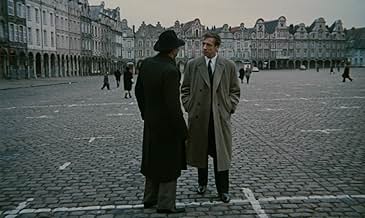
- Grand Place, Arras, Pas-de-Calais, France(London seeing Kahoutek for the last time)
- Production companies
- See more company credits at IMDbPro
Box office
- Gross US & Canada
- $329,954
Contribute to this page
Suggest an edit or add missing content