IMDb RATING
7.0/10
7.8K
YOUR RATING


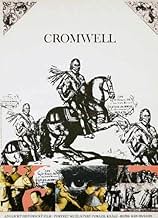
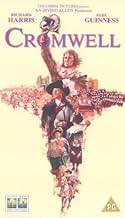
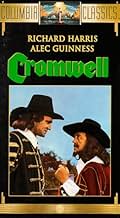
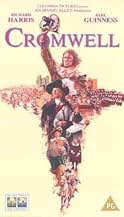
Puritan statesman Oliver Cromwell leads England in a civil war against the absolutist and Catholic-sympathetic King Charles I.Puritan statesman Oliver Cromwell leads England in a civil war against the absolutist and Catholic-sympathetic King Charles I.Puritan statesman Oliver Cromwell leads England in a civil war against the absolutist and Catholic-sympathetic King Charles I.
- Won 1 Oscar
- 2 wins & 5 nominations total




- Director
- Writer
- All cast & crew
- Production, box office & more at IMDbPro
7.07.7K
1
2
3
4
5
6
7
8
9
10
Featured reviews
Good Guiness, Hollering Harris, Bad History
It is to be admitted that Oliver Cromwell (a.k.a. THE LORD PROTECTOR, "Old NOLL") was a great figure in British history. But Cromwell was a flawed hero. He did rebel against his liege king, Charles I, and voted for his monarch's execution. He also truncated Parliament, when he found it impeded his own reforms. His treatment of Irish Catholics, while typical of the ruthless massacres of religious opponents in the period of the Thirty Years War (1618 - 1648), is still a stain against his fame. Still, in the period that he was the dominant figure (1644 - 1658) he rebuilt the British army and navy, restored Britain to major power status, and actually did one act of surprising religious toleration - he allowed the Jews to return to England in 1655, a reform that Charles II decided not to undue when he was restored to the throne five years later.
Such a career deserves a careful movie. CROMWELL is not that film. It does do well in showing King Charles I (Alec Guinness) as a untrustworthy individual (though one driven to such actions because of his need to maintain his rights as monarch). It does make one serious howler regarding Charles I and his trial for treason. Charles may have been a liar and betrayer at times - but Sir Edward Hyde (who was a leading supporter of his, and would be a statesman in his son's reign and the father-in-law of the future James II) did not testify at Charles's trial as a witness for the prosecution.
Such glaring errors are frequent in the movie (for example, Prince Rupert was not dismissed so callously by his uncle King Charles - Rupert was a very fine cavalry leader, and would remain a fixture in English society when Charles II was restored). The subtle acting of Guinness is not matched by Harris, who rants and raves throughout the film - even in the closing moments talking about his intentions to create better schools and laws. Charles and Cromwell are two fascinating characters, and both deserve a better film than this as the sole film about the English Civil Wars (except for Vincent Price's THE CONQUEROR WORM) to come out.
Such a career deserves a careful movie. CROMWELL is not that film. It does do well in showing King Charles I (Alec Guinness) as a untrustworthy individual (though one driven to such actions because of his need to maintain his rights as monarch). It does make one serious howler regarding Charles I and his trial for treason. Charles may have been a liar and betrayer at times - but Sir Edward Hyde (who was a leading supporter of his, and would be a statesman in his son's reign and the father-in-law of the future James II) did not testify at Charles's trial as a witness for the prosecution.
Such glaring errors are frequent in the movie (for example, Prince Rupert was not dismissed so callously by his uncle King Charles - Rupert was a very fine cavalry leader, and would remain a fixture in English society when Charles II was restored). The subtle acting of Guinness is not matched by Harris, who rants and raves throughout the film - even in the closing moments talking about his intentions to create better schools and laws. Charles and Cromwell are two fascinating characters, and both deserve a better film than this as the sole film about the English Civil Wars (except for Vincent Price's THE CONQUEROR WORM) to come out.
No No No
Right, let's first get one thing straight: the acting is okay - Guiness, as always is very identifiable with (if that's a real phrase) and Harris portrays some of Cromwell's famously torn character.
Secondly, yes there is some idea conveyed of the turmoil of the period; the Levellers get a slight, if ridiculously truncated, mention.
However, anyone who knows the slightest snippet about the period must have left the TV screen or whatever nothing but annoyed by the gross licence taken with the events of the civil war. And it is not just the fact that I have studied the period in depth that makes such glaring inaccuracies as:>
Cromwell being named as one of the Five Members, he wasn't.
Cromwell even being present at Edgehill, let alone rescuing the day. Neither are true. At the same time the "arrangement" between the officers of the opposing side which was so crucial to the film never happened; and, at the end of the day the Royalists did not actually win the battle. It was a draw. Okay, I can live with some details being slightly wrong, but the outcome of the entire engagement...?
Why miss out the most bloody, viscious and, many would say, crucial battle of the war? At least at Marston Moor Cromwell was actually there.
Naseby, too, was grossly misrepresented: a) Cromwell did not command the parliamentary forces, Fairfax did; and b) in reality the Royalist force was just over half the size of that of parliament: hardly the stunning victory of a smaller force led by Cromwell as portrayed in the film.
The Civil War was in no way Catholic versus Protestant: both sides were Protestant and, to be technical, both were mostly heartily opposed to Charles' Laudianism (a kind of mixture of the two). However in 1970 some scholarship did maintain this so this mistake can perhaps be understood.
These are just some of the many nitpicking points that seem to preclude the idea that "Cromwell" provides "an excellent history lesson". However, "Appocalypse Now" and "The Thin Red Line" are both examples of historically inaccurate but still highly effective and powerful films. How come "Cromwell" fails on this count? Well, on the one hand neither of these, more recent, films even claim to portray real people -"Cromwell" does and therefore its stubborn disregard of the truth cannot be ignored. Then, on the other hand, if the film attempts to be more than just a reasonably nice looking swashbuckler (which it does) and to really look into the character of its protagonists then surely its case is harmed by these shocking errors. For example, how can the film attempt to portray Cromwell as a man made by his times (rather than the other way around) when it suggests that he was a significant player from the start. Before the outbreak of Civil War Cromwell had made just one vaguely significant speech in parliament. He was never contacted by Pym before the call of Parliament and there was no question of him ever leading the armies of Parliament until the retirement of Fairfax on the eve of the (curiously unmentioned) Second Civil War. Indeed he did not become official leader of the country until 1653. His rise to power was a great surprise to him and his countrymen.
Finally, why miss out Ireland completely from the equation when surely there is no more interesting aspect to the man's character than his opinions on religion?
Cromwell deserves a more accurate cinematic perspective, and surely half of the problem is that this film attempts to cram the ten most monumental years of British history into three hours.
Definately a "could do better".
Secondly, yes there is some idea conveyed of the turmoil of the period; the Levellers get a slight, if ridiculously truncated, mention.
However, anyone who knows the slightest snippet about the period must have left the TV screen or whatever nothing but annoyed by the gross licence taken with the events of the civil war. And it is not just the fact that I have studied the period in depth that makes such glaring inaccuracies as:>
Cromwell being named as one of the Five Members, he wasn't.
Cromwell even being present at Edgehill, let alone rescuing the day. Neither are true. At the same time the "arrangement" between the officers of the opposing side which was so crucial to the film never happened; and, at the end of the day the Royalists did not actually win the battle. It was a draw. Okay, I can live with some details being slightly wrong, but the outcome of the entire engagement...?
Why miss out the most bloody, viscious and, many would say, crucial battle of the war? At least at Marston Moor Cromwell was actually there.
Naseby, too, was grossly misrepresented: a) Cromwell did not command the parliamentary forces, Fairfax did; and b) in reality the Royalist force was just over half the size of that of parliament: hardly the stunning victory of a smaller force led by Cromwell as portrayed in the film.
The Civil War was in no way Catholic versus Protestant: both sides were Protestant and, to be technical, both were mostly heartily opposed to Charles' Laudianism (a kind of mixture of the two). However in 1970 some scholarship did maintain this so this mistake can perhaps be understood.
These are just some of the many nitpicking points that seem to preclude the idea that "Cromwell" provides "an excellent history lesson". However, "Appocalypse Now" and "The Thin Red Line" are both examples of historically inaccurate but still highly effective and powerful films. How come "Cromwell" fails on this count? Well, on the one hand neither of these, more recent, films even claim to portray real people -"Cromwell" does and therefore its stubborn disregard of the truth cannot be ignored. Then, on the other hand, if the film attempts to be more than just a reasonably nice looking swashbuckler (which it does) and to really look into the character of its protagonists then surely its case is harmed by these shocking errors. For example, how can the film attempt to portray Cromwell as a man made by his times (rather than the other way around) when it suggests that he was a significant player from the start. Before the outbreak of Civil War Cromwell had made just one vaguely significant speech in parliament. He was never contacted by Pym before the call of Parliament and there was no question of him ever leading the armies of Parliament until the retirement of Fairfax on the eve of the (curiously unmentioned) Second Civil War. Indeed he did not become official leader of the country until 1653. His rise to power was a great surprise to him and his countrymen.
Finally, why miss out Ireland completely from the equation when surely there is no more interesting aspect to the man's character than his opinions on religion?
Cromwell deserves a more accurate cinematic perspective, and surely half of the problem is that this film attempts to cram the ten most monumental years of British history into three hours.
Definately a "could do better".
Oliver's army is here to stay.
The movie is some kind of misnomer ,cause Cromwell's reign is reduced to a short laudatory comment at the end of the movie.However,the film is good with a splendid cast.Richard Harris is every inch a puritan,never cracking a smile during the 2hours+ film.Harris's performance unlayers every nuance of his strength and his weakness (perhaps his best moment is when he discovers the man he's just executed was right).
Alec Guiness's king is impressive and his relationship with the catholic queen should have been more developed .Dame Dorothy Tutin's rendering is subtle and she makes all her scenes count.There is also Robert Morley and Timothy Dalton who give strong support.
Queen Henrietta took refuge in France and her daughter Henriette married the king Louis XIV 's brother ,"Monsieur" .Sadly she was to pass away at a very early age probably of peritonitis(few historians still speak of poisoning).
"Cromwell" ,which I saw when it was released ,has stood the test of time quite well,thanks to all these wonderful actors.In his own way,Cromwell was an incorruptible person ,ahead of his time,who predates Robespierre .The fact that he substituted a dictatorship for another one does not ruin his main revolutionary idea:a king is not infallible, the absolute monarchy means tyranny.A century and a half later ,minister Turgot told Louis XVI :"do not forget Charles the first,Sire!"
Alec Guiness's king is impressive and his relationship with the catholic queen should have been more developed .Dame Dorothy Tutin's rendering is subtle and she makes all her scenes count.There is also Robert Morley and Timothy Dalton who give strong support.
Queen Henrietta took refuge in France and her daughter Henriette married the king Louis XIV 's brother ,"Monsieur" .Sadly she was to pass away at a very early age probably of peritonitis(few historians still speak of poisoning).
"Cromwell" ,which I saw when it was released ,has stood the test of time quite well,thanks to all these wonderful actors.In his own way,Cromwell was an incorruptible person ,ahead of his time,who predates Robespierre .The fact that he substituted a dictatorship for another one does not ruin his main revolutionary idea:a king is not infallible, the absolute monarchy means tyranny.A century and a half later ,minister Turgot told Louis XVI :"do not forget Charles the first,Sire!"
Pretty lavish but uneven and inaccurate
This film ultimately fails as an historical drama. It has some pretty good elements. The production values of the costumes, scenes, etc., are overall quite good. Guinness is great as Charles: he looks a lot like him, and he does a good job at conveying the king's tyrannical, autocratic stance, his conviction in his belief that he's right, his nobility to the end, and the fact that while he usually ended up taking bad positions or doing the wrong things, he did so not entirely for bad reasons (at least in his own mind), for he was sure that he was right. The film also makes some modicum of effort at showing Cromwell's more troubling qualities, too, making him out to be the noble hero, but not entirely covering up his transformation into ruthless, hypocritical dictator.
However, the film has equally strong bad points. It tends to drag at many points and frequently gives the impression of being an overly drawn-out stage production that fails to be fully convincing. More serious, though, is the problem that, although presenting itself as historical, it plays fast and loose with history. It does not fully explain the causes of the Civil War or the differences of viewpoints within each side, especially the Parliamentarians, not all of whom were fighting for the same reasons. It portrays the Royalist forces as the flashy, well-equipped and stronger element when in reality the Parliament forces were not only much more numerous, but usually much better equipped as well (after all, it was not a war of rag-tag, grass-roots rebels trying to topple the government; each side represented in part one branch of the government and Parliament, not the king, was the body that held the purse strings). In addition, the Royalists often did quite well in battle despite their inferior forces. It clearly makes Cromwell out to be too important from the start: rather than being one of the key leaders in the beginning, he really started out as a military commander and simply rose to prominence over time. Finally, Cromwell, despite some of his autocratic tendency coming through, is still shown to be too much the reluctant, noble hero, and the film only hints at his other face, one which in short order made him none too popular in England, let alone Ireland. Needless to say, nothing is mentioned of his willingness to shed the blood of Royalists and Catholics, or to destroy historic architecture that conflicted with his Puritan views.
However, the film has equally strong bad points. It tends to drag at many points and frequently gives the impression of being an overly drawn-out stage production that fails to be fully convincing. More serious, though, is the problem that, although presenting itself as historical, it plays fast and loose with history. It does not fully explain the causes of the Civil War or the differences of viewpoints within each side, especially the Parliamentarians, not all of whom were fighting for the same reasons. It portrays the Royalist forces as the flashy, well-equipped and stronger element when in reality the Parliament forces were not only much more numerous, but usually much better equipped as well (after all, it was not a war of rag-tag, grass-roots rebels trying to topple the government; each side represented in part one branch of the government and Parliament, not the king, was the body that held the purse strings). In addition, the Royalists often did quite well in battle despite their inferior forces. It clearly makes Cromwell out to be too important from the start: rather than being one of the key leaders in the beginning, he really started out as a military commander and simply rose to prominence over time. Finally, Cromwell, despite some of his autocratic tendency coming through, is still shown to be too much the reluctant, noble hero, and the film only hints at his other face, one which in short order made him none too popular in England, let alone Ireland. Needless to say, nothing is mentioned of his willingness to shed the blood of Royalists and Catholics, or to destroy historic architecture that conflicted with his Puritan views.
A breathtaking and overblown historical epic film with great battles , colorful cinematography and evocative score
Splendid historical flick based on the confrontation which created the only England Republic . The movie deals with take over from Republican government in England . Facing off between Olivier Cromwell and King determined to rid England of a tyrannical rule and an absolutist King : Charles I , it resulted in beheading of the King . There was created two factions : the Roundheads (Cromwell congressmen) and Cavaliers or Royalists (King's nobility) , both sides had generals of considerable skill and undaunted courage as Thomas Farfaix . Cromwell defeated King's army in battles of Moor , Preston and Naseby (1645). Later on , in 1653 , he was named Lord protector of the Republic "Commomwealth" . He imposed a dictatorship ruled by Puritans and vanquished the Irish and Scottish army . Cromwell was a Puritan leader who , according to several historians carried out near genocide in Ireland . He also battled Holland and Spain . Cromwell developed a law of navigation for the British navy . He early died by fever's illness . Richard Cromwell succeeded his father as President but he was rapidly dismissed . Duration Republic was 1648 to 1660 . Charles II went back to British kingdom and the regicides (those who had condemned Charles I to death) were arrested and hanged , drawn and quartered at Charing Cross . The Cromwell's body was disinterred, and his remains were hung from a scaffold.
Spectacular historical melodrama with magnificent acting , wonderful locations , glamorous gowns and attention to period detail . In the movie there are historic events , intense drama, and Richard Harris as well as Alec Guinness give excellent performances , though Harris as a coldly unsympathetic Briton is usually shouting and overacting . Great acting by secondary players : Frank Finlay , Patrick McGee ,Dorothy Tutin, Robert Morley , Geoffrey Keen, Timothy Dalton , Michael Jayston , Douglas Wilmer , Charles Gray , among others . The film is a bit boring for parliament speeches but in the battles (Naseby 1645) is more entertaining , being splendidly staged . The final version of Cromwell at one stage was 180 minutes long, but it was cut down to 141 minutes, deleting a number of featured roles in the process .
The film is appropriately atmospheric and based on real deeds . First-class production design and sets by John Stoll are outstanding , including Oscar winning costume design by Novarese . In fact , close to 5.000 costumes were made , and 17.0000 separate ítems or props found or realized . Heavy make-up was utilized ; in addtion , thousands of wigs from all around the world. Glowing cinematography in Panavision by Geoffrey Unsworth and evocative as well as rousing musical score by Frank Cordell . Good direction by Ken Hughes . The motion picture will appeal to history's buffs . Rating: 7,5/10 , above average .
Spectacular historical melodrama with magnificent acting , wonderful locations , glamorous gowns and attention to period detail . In the movie there are historic events , intense drama, and Richard Harris as well as Alec Guinness give excellent performances , though Harris as a coldly unsympathetic Briton is usually shouting and overacting . Great acting by secondary players : Frank Finlay , Patrick McGee ,Dorothy Tutin, Robert Morley , Geoffrey Keen, Timothy Dalton , Michael Jayston , Douglas Wilmer , Charles Gray , among others . The film is a bit boring for parliament speeches but in the battles (Naseby 1645) is more entertaining , being splendidly staged . The final version of Cromwell at one stage was 180 minutes long, but it was cut down to 141 minutes, deleting a number of featured roles in the process .
The film is appropriately atmospheric and based on real deeds . First-class production design and sets by John Stoll are outstanding , including Oscar winning costume design by Novarese . In fact , close to 5.000 costumes were made , and 17.0000 separate ítems or props found or realized . Heavy make-up was utilized ; in addtion , thousands of wigs from all around the world. Glowing cinematography in Panavision by Geoffrey Unsworth and evocative as well as rousing musical score by Frank Cordell . Good direction by Ken Hughes . The motion picture will appeal to history's buffs . Rating: 7,5/10 , above average .


Did you know
- TriviaWhen writer / director Ken Hughes said to Richard Harris that no self-respecting Irishman should ever play Oliver Cromwell, Harris laughed.
- GoofsCromwell was not one of the Members of Parliament named for arrest in the King's warrant. Cromwell was not present in Parliament at the time the King and his troops entered the House of Commons. The scene of he alluding that The King is a traitor actually happened with John Elliott some ten years prior.
- Quotes
Oliver Cromwell: O Lord, Thou knowest how busy I must be this day. If I forget Thee, do not Thou forget me.
- ConnectionsFeatured in The 52nd Annual Academy Awards (1980)
Details
- Release date
- Countries of origin
- Language
- Also known as
- Cromwell, hombre de hierro
- Filming locations
- Production companies
- See more company credits at IMDbPro
Box office
- Budget
- £3,750,000 (estimated)
- Runtime
- 2h 19m(139 min)
Contribute to this page
Suggest an edit or add missing content