IMDb RATING
6.8/10
1.3K
YOUR RATING
A successful African American businessman has a quarrel with a white policeman, suspecting that he is having an affair with his wife. The policeman's colleagues are seeking to avoid publicit... Read allA successful African American businessman has a quarrel with a white policeman, suspecting that he is having an affair with his wife. The policeman's colleagues are seeking to avoid publicity.A successful African American businessman has a quarrel with a white policeman, suspecting that he is having an affair with his wife. The policeman's colleagues are seeking to avoid publicity.
- Director
- Writers
- Stars
- Awards
- 1 nomination total
Joseph Attles
- Henry
- (as Joe Attles)
- Director
- Writers
- All cast & crew
- Production, box office & more at IMDbPro
6.81.3K
1
2
3
4
5
6
7
8
9
10
Featured reviews
I can only assume the film didn't sell too well in the Southern USA.
"The Liberation of L. B. Jones" is a feel-bad movie that is worth seeing...provided you aren't already seriously depressed. If you are, try watching something fun, as "The Liberation" is where fun goes to die!
The story is set in Tennessee and racism in this county is rampant. You will probably never find a movie that uses the 'n' word more...which I appreciate because it just shows how ugly racism is. The cops are evil perverters of women and justice and the place is NOT a place any black person would enjoy visiting...as they certainly would not have been welcome.
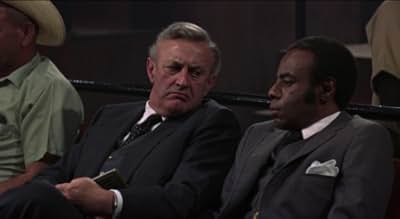
L. B. Jones happens to be the richest black man in the county and he is having problems with his wife. She's carrying on an affair with one of the cops and he's sick of it and wants a divorce. He seeks the help of a local lawyer (Lee J. Cobb) who at first refuses to take the case. But when his idealistic son-in-law shames him into taking it, he agrees...and spends much of the rest of the film perpetrating evil along with the local police department. What exactly did they do? See the film...but it certainly ain't nice!
The film came out after quite a few other race films had debuted and just before the big blacksploitation craze...so the timing was excellent. The film is brutal in the way it shows racism, as it's unflinching and will make you sick as you watch. This is a good thing...but a painful thing to see and hear. Well worth your time.
The story is set in Tennessee and racism in this county is rampant. You will probably never find a movie that uses the 'n' word more...which I appreciate because it just shows how ugly racism is. The cops are evil perverters of women and justice and the place is NOT a place any black person would enjoy visiting...as they certainly would not have been welcome.
L. B. Jones happens to be the richest black man in the county and he is having problems with his wife. She's carrying on an affair with one of the cops and he's sick of it and wants a divorce. He seeks the help of a local lawyer (Lee J. Cobb) who at first refuses to take the case. But when his idealistic son-in-law shames him into taking it, he agrees...and spends much of the rest of the film perpetrating evil along with the local police department. What exactly did they do? See the film...but it certainly ain't nice!
The film came out after quite a few other race films had debuted and just before the big blacksploitation craze...so the timing was excellent. The film is brutal in the way it shows racism, as it's unflinching and will make you sick as you watch. This is a good thing...but a painful thing to see and hear. Well worth your time.
the racial South
In small town Tennessee, Sonny Boy Mosby (Yaphet Kotto) jumps off the train with a pistol. Rich businessman L. B. Jones (Roscoe Lee Browne) is desperate to divorce his wife Emma who is having an affair with white police officer Willie Joe Worth. Emma intends to hold L. B. to ransom before giving him a divorce. Officer Worth wants him to drop the matter entirely. Lawyers Oman Hedgepath (Lee J. Cobb) and his nephew Steve Mundine (Lee Majors) also advise him to let it go. Officers Worth and Bumpas like to brutalize the black community.
This definitely has a feel of "In the Heat of the Night" except the story is messier and less iconic. A bit of simplification would make this more compelling. I know it's based on a book, but most of time, long books need to be chopped down in order to fit into a movie. It also pales in comparison with others of its genre.
Jim Crow style southern grit!!!
I've read the book liberties & omissions were taken, overall this movie is a true gem no sugar coating here I recommend you watch it & read the book you'll come full circle I guarantee it. I would also add a remake of this wouldn't hurt just too put more flesh on the characters & script it.
Pretty Powerful stuff
The "novel" this is based on was according to the author, almost entirely true, only the names were changed to protect the innocent and the guilty. This underlying truth plays out strongly here. I must stop to say the plot synopsis has nothing to do with the film. This is not a mystery with a "who did it" structure and it is not a courtroom justice or injustice movie. The events play out in sequence and we jump from character to character so that it remains, every bodies story, so to speak. We aren't allowed to distance ourselves from the story by taking the look from the good lawyer or cops perspective after the fact. Yaphet Kotto among many, probably gives the best performance. The photography and the score both seem a bit dated, though each have their strong moments, otherwise this doesn't date at all. The characters motives, good and bad, are clearly laid out and well performed. There are a few moments of technical slop, some optical blow ups of shots in the middle of dialog scenes and a couple of lazy zooms that would not have appeared in a Wyler film a few years before that, but in every other way this shows him still at the top of his game. It's a shame that he stopped making films after this. He himself considered it a strong film and he seems to have more or less expected that it would anger people (white ones that is) when it was released. His usual skill with actors is in evidence and there is some interesting use of sound to help tell the story at crucial moments. Very powerful stuff all around.
Black acting power
This is a sad film about personal weaknesses. The storyline has several weak points too, but on the whole I should think the movie does a great director like William Wyler justice and is still watchable today. There is a certain similarity with the Oscar winning In the Heat of the Night. The screenplay is by the same author, Stirling Silliphant.
The Liberation of L. B. Jones really belongs to the African American cast, the whites' performances do pale in comparison. Roscoe Lee Browne plays the well-to-do undertaker who is cheated by his wife with a white policeman. He gives his character a quiet dignity that lasts throughout the story, up to the bitter and sad end. Yaphet Kotto's portrayal of an angry young man who comes to town with a score to settle is equally intense and convincing. Both Browne and Kotto have a few very good scenes in which they act by themselves. They both seize the chance to give their characters real depth. Lola Falana is convincing as the amoral undertaker's wife and there is a good supporting cast. I fondly remember a small, well acted scene at the beginning with an elderly lady who regularly visits the undertaker's show room to have a look at the coffin for which she pays instalments.
The white population is, it seems to me, much more stereotypical. The only really interesting figure here is the town's most important lawyer, played somewhat stiffly by Lee J. Cobb. He is a racist against his better judgment. His unlawful actions to protect white criminals seem like a reflex, not coming from the brain but rather from the spinal cord.
The Liberation of L. B. Jones really belongs to the African American cast, the whites' performances do pale in comparison. Roscoe Lee Browne plays the well-to-do undertaker who is cheated by his wife with a white policeman. He gives his character a quiet dignity that lasts throughout the story, up to the bitter and sad end. Yaphet Kotto's portrayal of an angry young man who comes to town with a score to settle is equally intense and convincing. Both Browne and Kotto have a few very good scenes in which they act by themselves. They both seize the chance to give their characters real depth. Lola Falana is convincing as the amoral undertaker's wife and there is a good supporting cast. I fondly remember a small, well acted scene at the beginning with an elderly lady who regularly visits the undertaker's show room to have a look at the coffin for which she pays instalments.
The white population is, it seems to me, much more stereotypical. The only really interesting figure here is the town's most important lawyer, played somewhat stiffly by Lee J. Cobb. He is a racist against his better judgment. His unlawful actions to protect white criminals seem like a reflex, not coming from the brain but rather from the spinal cord.
Did you know
- TriviaFinal film of director William Wyler.
- Quotes
Emma Jones: It going be something. I can't let nobody rob my baby and I can't let my baby enter this world without a dime!
- ConnectionsFeatured in Classified X (2007)
Details
- Release date
- Country of origin
- Language
- Also known as
- The Liberation of Lord Byron Jones
- Filming locations
- Humboldt, Tennessee, USA(location shooting - used for Somerton, Tenn.)
- Production company
- See more company credits at IMDbPro
Box office
- Budget
- $3,500,000 (estimated)
Contribute to this page
Suggest an edit or add missing content