IMDb RATING
5.8/10
819
YOUR RATING

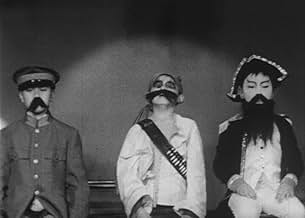
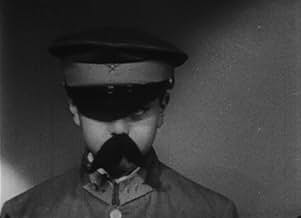
Set in a future in which children have overthrown adults, the film does not have a central narrative. It depicts a series of graphic tableaux in which children engage in cruel and abusive ac... Read allSet in a future in which children have overthrown adults, the film does not have a central narrative. It depicts a series of graphic tableaux in which children engage in cruel and abusive acts against the adults.Set in a future in which children have overthrown adults, the film does not have a central narrative. It depicts a series of graphic tableaux in which children engage in cruel and abusive acts against the adults.




- Director
- Writer
- All cast & crew
- Production, box office & more at IMDbPro
5.8819
1
2
3
4
5
6
7
8
9
10
Featured reviews
Strange, political, experimental, Yes, child porn, NO
In the post-war period Japan there was a new constitution which guaranteed new rights in terms of freedom of expression similar to those in the US, even arguably more "free". As a result experimental cinema blossomed and decreasing financial boundaries for entry into film-making allowed a renaissance in artistic and experimental cinema. Far from offensive, Emperor Tomato Ketchup uses the canvas of the moving image to explore political (anarchist movements), social issues, and sexual issues but at no point are the scenes intended for sexual stimulation. In fact the scenes which contain nudity do include a mature woman and young teenage boy, but what take place is not actual sex but more a nudist/naturalist depiction of humanity and playfulness. This film is not a depiction of reality but rather, befitting an avant garde film, the creation of another world where extremes and strangeness exist to point out issues in own own reality. Without experimental film there is no new film.
The Subversive Nature of The Tomato Ketchup
Shuji Terayama already had a reputation as a playwright and poet, but he decided to venture into filmmaking in 1964 with the short film "The Cage." In 1971, he and his theater group and associated artists, Tenjo Sajiki (The Curtain of Heaven), collaborated on a series of sketches with no factual connection other than the creation of a dystopian universe revolving around a revolution waged by children against an adult world: "Emperor Tomato Ketchup." It was released in two versions: a 30-minute short film and a longer, more complete 72-minute feature film - which has also spawned another short, "The War of Jan-Ken-Poh." I will focus here on the original feature film.
It's not a film for minors, much less for the most prudish, rule-shaving, and authoritarian. It's a cruel satire of authoritarianism in any form or stance. Terayama's poetics are of cruel satires, bringing an extreme perspective on revolutions triggered by totalitarian attitudes that, in reality, is that of adult infantilism. "Emperor Tomato Ketchup" is accurate in its critique, but highly controversial and questionable in its subversion. Everyone talks about the eroticization of children here - the "sexual" initiation that, in reality, is nothing more than a game without actually getting really sexual, while filmed in one long single take... but what about the decapitation of a chicken by a dwarf? And the crazy and comical jan-ken-po war, with actors deliberately injuring each other? (A brilliant single take, too.) And the child cosplaying as a dictator, begging a geisha for breast milk, to the sound of Franz Schubert's "Serenade"? (This is, for me, the best scene in the film and where the entire narrative axis of the film lies.)
Contrary to some detractors, I don't consider this a film that encourages pedophilia or child-porn, as Terayama's direction shows no intention to corrupt the children's spontaneous actions with or without adult presence. They are portrayed in a completely free, playful manner, clearly playing in front of the camera, following minimal instructions from the director. Terayama has a perfectly clear sense of theatrical guidance for his older actors, but the children here are clearly non-professional actors - or rather, they are not actors at all.
I believe this surrealist film is not merely a sardonic political commentary on the infantile nature of revolutions, while potentially aiming to respond to May 1968 and the countercultural movement that was spreading in Japan. I believe this is a highly relevant film for the debate on the very adultification of children that has been happening today (or always), unfortunately spread through social media. And there are good reasons for this. "Emperor Tomato Ketchup" is a fiercely ironic and incredibly visionary warning AGAINST the adultification of children made more than 50 years ago. And it is an unparalleled and unrepeatable effort.
I believe that, behind Terayama's subversive actions in this first feature, there are autobiographical motivations that he will reiterate and deepen thematically in even better produced and accomplished films, such as "Throw Away Your Books, Let's Go to the Streets" or "Pastoral: To Die in the Countryside."
It's not a film for minors, much less for the most prudish, rule-shaving, and authoritarian. It's a cruel satire of authoritarianism in any form or stance. Terayama's poetics are of cruel satires, bringing an extreme perspective on revolutions triggered by totalitarian attitudes that, in reality, is that of adult infantilism. "Emperor Tomato Ketchup" is accurate in its critique, but highly controversial and questionable in its subversion. Everyone talks about the eroticization of children here - the "sexual" initiation that, in reality, is nothing more than a game without actually getting really sexual, while filmed in one long single take... but what about the decapitation of a chicken by a dwarf? And the crazy and comical jan-ken-po war, with actors deliberately injuring each other? (A brilliant single take, too.) And the child cosplaying as a dictator, begging a geisha for breast milk, to the sound of Franz Schubert's "Serenade"? (This is, for me, the best scene in the film and where the entire narrative axis of the film lies.)
Contrary to some detractors, I don't consider this a film that encourages pedophilia or child-porn, as Terayama's direction shows no intention to corrupt the children's spontaneous actions with or without adult presence. They are portrayed in a completely free, playful manner, clearly playing in front of the camera, following minimal instructions from the director. Terayama has a perfectly clear sense of theatrical guidance for his older actors, but the children here are clearly non-professional actors - or rather, they are not actors at all.
I believe this surrealist film is not merely a sardonic political commentary on the infantile nature of revolutions, while potentially aiming to respond to May 1968 and the countercultural movement that was spreading in Japan. I believe this is a highly relevant film for the debate on the very adultification of children that has been happening today (or always), unfortunately spread through social media. And there are good reasons for this. "Emperor Tomato Ketchup" is a fiercely ironic and incredibly visionary warning AGAINST the adultification of children made more than 50 years ago. And it is an unparalleled and unrepeatable effort.
I believe that, behind Terayama's subversive actions in this first feature, there are autobiographical motivations that he will reiterate and deepen thematically in even better produced and accomplished films, such as "Throw Away Your Books, Let's Go to the Streets" or "Pastoral: To Die in the Countryside."
Two versions, not at all pornographic
First there are two versions of this film, one which was shown in 1970 and is 76 minutes long in sepia, and another which was produced in Germany for European audiences in 1971 and was 28 minutes long in black and white. If possible it is better to see the 76 minute version, the 28 minute is a chopped up "just the highlights" version that is not very true to terayama's original intentions. Unfortunately the 28 minute version is much more widely available outside Japan, and is what most people have seen.
Second: The film is not pornographic in the least bit. Terayama was not interested in pornography, which he saw as a tool of state oppression, but in creating a vision of erotic utopia. So it has naked children raping adults, BIG deal. The film was made in answer to Nazi Holocaust camps, the atomic bomb, the rape of Nanking, the Vietnam war etc. Terayama had lived through the firebombs that destroyed his town, leaving charred bodies of women and children littered about him when he was but 9 years old. A few naked children, especially in 1970, is no big deal, so grow up. If you can't handle it, then I guess yes, keep your eyes closed to the worlds horror and don't watch the film.
Third: It is not a feel good film, and is primarily about revolution and failed utopian dreams. It is a rejection of any meta-narrative progression, by which I mean there is no promise implied or given. No promise of good, or god or justice, as terayama sought to express a "vanished thought" Not that the film couldn't be better, but it got my back up to see the other review where they dismiss it so easily and without thought.
cheers
Second: The film is not pornographic in the least bit. Terayama was not interested in pornography, which he saw as a tool of state oppression, but in creating a vision of erotic utopia. So it has naked children raping adults, BIG deal. The film was made in answer to Nazi Holocaust camps, the atomic bomb, the rape of Nanking, the Vietnam war etc. Terayama had lived through the firebombs that destroyed his town, leaving charred bodies of women and children littered about him when he was but 9 years old. A few naked children, especially in 1970, is no big deal, so grow up. If you can't handle it, then I guess yes, keep your eyes closed to the worlds horror and don't watch the film.
Third: It is not a feel good film, and is primarily about revolution and failed utopian dreams. It is a rejection of any meta-narrative progression, by which I mean there is no promise implied or given. No promise of good, or god or justice, as terayama sought to express a "vanished thought" Not that the film couldn't be better, but it got my back up to see the other review where they dismiss it so easily and without thought.
cheers
Sick movie for sick people
I had read this was an experimental, controversial and interesting movie so I decided to watch it. What I found was a sick movie probably made by and for sick people. It's literally a torture. I don't mind about the nude children, but this was a bunch of stupid and random sequences put together. No writing, no direction... At some point I chose to put the x2 fast forward. At least I could get some laughs that way. Do film makers know movies are made for entertainment? And I don't mean comedy, I mean entertainment! And don't give me that "you didn't get the depth message" crap. I am sure even children in YouTube make better films.
Don't waste your time. If you want a good experimental surrealist film go and watch Eraserhead.
Don't waste your time. If you want a good experimental surrealist film go and watch Eraserhead.
Art or BS?
I have seen both versions of this film and I would have to say that the primary feeling I get afterwards is ambivalence. Now maybe the director was trying to say something and then again maybe he wasn't; ambiguity is often a sign of an artist trying to force the viewer to think, but it is even more often a sign of a lazy and pretentious CON-artist with nothing particularly cohesive to say and no particular idea on how to say it.
Not all that is Ambiguous is art; in just the same way that not everything that is yellow is cheese.
And then there's the whole child porn / not child porn argument, now whether you get turned on or not by watching badly acted scenes of children having sex with adults remains to be seen, and it doesn't alter the fact that there's a hell of a lot of people out there who do.
Now whether the director is trying to say something with full frontal child nudity and sex is up to others to argue about at length rather than me, but nothing makes a cult movie better that questionable content and there is nothing to say that the director wasn't simply being shocking to gain attention.
But I would also point out that we've only got the directors word for it that child porn wasn't his intent.
And for me that is just another reason to be turned off by this movie.
Not all that is Ambiguous is art; in just the same way that not everything that is yellow is cheese.
And then there's the whole child porn / not child porn argument, now whether you get turned on or not by watching badly acted scenes of children having sex with adults remains to be seen, and it doesn't alter the fact that there's a hell of a lot of people out there who do.
Now whether the director is trying to say something with full frontal child nudity and sex is up to others to argue about at length rather than me, but nothing makes a cult movie better that questionable content and there is nothing to say that the director wasn't simply being shocking to gain attention.
But I would also point out that we've only got the directors word for it that child porn wasn't his intent.
And for me that is just another reason to be turned off by this movie.


Did you know
- TriviaBritish alternative-rock band Stereolab, named their 1996 album Emperor Tomato Ketchup after this film
- Alternate versionsA 27-minute cut of the movie was released in 1971. A re-cut version, attempting to recreate the film as originally made in 1970, was released as a 75-minute, color-tinted feature in 1996.
- ConnectionsEdited from Janken sensô (1971)
- How long is Emperor Tomato Ketchup?Powered by Alexa
Details
- Release date
- Country of origin
- Language
- Also known as
- Tomato Kecchappu Kôtei
- Production companies
- See more company credits at IMDbPro
- Runtime
- 1h 12m(72 min)
- Color
- Aspect ratio
- 1.33 : 1
Contribute to this page
Suggest an edit or add missing content