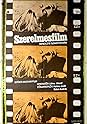
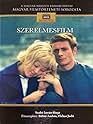
Jancsi reminiscences about Kata his childhood friend in WWII Budapest, They are separated as a result of 1956 revolution. Reunited as adults, they struggle with whether they will stay in eac... Read allJancsi reminiscences about Kata his childhood friend in WWII Budapest, They are separated as a result of 1956 revolution. Reunited as adults, they struggle with whether they will stay in each others lives.Jancsi reminiscences about Kata his childhood friend in WWII Budapest, They are separated as a result of 1956 revolution. Reunited as adults, they struggle with whether they will stay in each others lives.
Mária Boga
- Bözse
- (as Mária Baga)
Erika Kunszenti
- Jutka
- (as Erika Kúnszenti)
- Director
- Writer
- All cast & crew
- Production, box office & more at IMDbPro
Featured reviews
"Love film" is an early film from director Istvan Szabo, who is most widely known for "Mephisto" (1981). The Czech new wave ended abruptly with troops of the Warsaw pact knocking down the spring of Prague, but in Hungary innovative filmmaking went on for a while. Istvan Szabo followed in the footsteps of Miklos Jancso but was also influenced by the French Nouvelle vague.
Special about "Love film" is the way in which the story is told. It is not told in chronological order nor is it told in "reverse chronological order" such as in "Memento" (2000, Christopher Nolan). In stead the film leaps forwards and backwards in time in a seemingly random fashion. We do see some events a couple of times and from other events we have to guess whether they have happened in reality or only in the phantasy of the characters. We also see this sort of jumping back and forth through time in "Little women" (2019, Greta Gerwig) but most of all it reminds me of the Polish author Wieslaw Mysliwski, who is a real master in this way of storytelling.
The story of "Love film" itself has much in common with "The unbearable lightness of being" (1988, Philip Kaufman). A man and a woman, who seem to be lovers, are seperated from each other because one has left the country after a national uprising (in this instance Hungary 1956) has been suppressed by the Soviets. The other one stays in his homecountry. "Love film" is the more personal film of the two. The political message is much less explicit (but certainly not absent). The film is overwhelmingly about the personal relationship between the two main characters from their childhood on and what the seperations meant for this relationship.
Special about "Love film" is the way in which the story is told. It is not told in chronological order nor is it told in "reverse chronological order" such as in "Memento" (2000, Christopher Nolan). In stead the film leaps forwards and backwards in time in a seemingly random fashion. We do see some events a couple of times and from other events we have to guess whether they have happened in reality or only in the phantasy of the characters. We also see this sort of jumping back and forth through time in "Little women" (2019, Greta Gerwig) but most of all it reminds me of the Polish author Wieslaw Mysliwski, who is a real master in this way of storytelling.
The story of "Love film" itself has much in common with "The unbearable lightness of being" (1988, Philip Kaufman). A man and a woman, who seem to be lovers, are seperated from each other because one has left the country after a national uprising (in this instance Hungary 1956) has been suppressed by the Soviets. The other one stays in his homecountry. "Love film" is the more personal film of the two. The political message is much less explicit (but certainly not absent). The film is overwhelmingly about the personal relationship between the two main characters from their childhood on and what the seperations meant for this relationship.
This is supposed to be an unforgettable love story between two almost inseparable friends in their childhood, Kata and Jancsi. I am glad that all the previous six reviewers here agree wit that and find the movie fascinating. Alas, I struggled to finish the film and found it ultimately boring. Too many and too frequent jumps from past to present AND to fantasy land kill the whatever momentum the director tries to build. There are several scenes that are literally repeated, exactly the same, supposedly in different context, but they are just irritating. There is also overstuffed interspersed material like some mass shootings, pioneer council, bad hitlerists, good communists or whatever, each theme deserving a separate(and better) film. The dialogue between the protagonists is not particularly romantic either, there are sparks here and there, unfortunately not sufficient to light a big, warm and cozy fire. After all, I was left indifferent to the lovers' fate and almost fell asleep a couple of times, so at least I can recommend the film as a good sleeping pill.
10mad4u689
As an audience, watching with English subtitles, I was not particularly familiar with Hungarian culture or history beforehand, but nevertheless felt touched by this portrait of a love and an era. The film treats its subjects delicately, using history as both a backdrop and catalyst for the romantic plot line, and also allowing it to become a direct subject at times; the country and times are inseparable from the lives they contain.
The romance is... beautiful. It is built up to an almost unbearable degree, such that you feel the romantic tension gradually but forcefully. The chemistry between the two lead actors is brilliant.
The directing style also lends the film a unique flavour. Time and setting are interwoven, so that the only absolute is the love of the two protagonists. Flashbacks and asides are used to add to the dramatic mood of film, but don't overshadow it. All in all, a truly excellent film.
The romance is... beautiful. It is built up to an almost unbearable degree, such that you feel the romantic tension gradually but forcefully. The chemistry between the two lead actors is brilliant.
The directing style also lends the film a unique flavour. Time and setting are interwoven, so that the only absolute is the love of the two protagonists. Flashbacks and asides are used to add to the dramatic mood of film, but don't overshadow it. All in all, a truly excellent film.
It is a masterpiece of the young István Szabó from 1970, many years before worldwide-fame and Oscar Prize. A story of two young people in Hungary, Jancsi and Kata. First they are good friends, later lovers. Soon after the 56-Revolution Kata leaves Hungary, Jancsi stays there. After appr.10 years Jancsi is allowed to visit Kata in France, their love is reborn, but after a short, very happy period Jancsi has to return to Hungary and their love fades as years have gone by. It is unforgettable when Jancsi glances at Paris last time before leaving (perhaps) forever. The film is a fine memory of a not so nice past when two young people were separated from each other just because one of them lived in the "socialist" Hungary and the other in the "capitalist" France. Using flashback-system the director shows a human history of Hungary from the forties to the seventies as a mirror of the young lovers' life. Strongly recommended and not only for young lovers.
10ceeprod
I just saw this movie again yesterday, 30 years later than I first saw it as a kid (like 8-9 years old or sg), with my parents we were visiting a friend and while the adults were talking I had nothing better to do than to watch the only TV channel at that time, and this movie was on. I somehow got touched by it, most probably I fell in love with the child Kata and when we had to leave the place in the middle of the film the only thing I was hoping that we would catch at least the end at home. I was literally depressed for not being able to watch it, it was a very strange feeling for me at that age. As an adult I thought about this movie a lot of times but never got to watch it again, till it was aired on TV again yesterday. Speaking of time shifts, the music which of course I did not remember until I heard it again, now was completely familiar since I started to play piano a few years ago and Corelli's Sarabande was one of the first pieces I played. So this was a wonderful experience for me. Sorry for keeping it long with irrelevant stuff :)
In 1970 it must have been very difficult for Istvan Szabo to deal with the anti-communist revolution theme. Jancsi was isolated from his love because of the communists yet Szabo had to include scenes where revolutionists behave like Nazis rather than fighting for all youth and the future. And of course the story in Paris about bad Nazis like it was happening again in 1956. But it was probably the deal.
Did you know
- TriviaBesides acting in more than 60 films Judit Halász has a successful singing career in Hungary.
- ConnectionsFeatured in From Europe Into Europe (2003)
Details
- Runtime
- 2h 3m(123 min)
- Color
- Aspect ratio
- 1.66 : 1
Contribute to this page
Suggest an edit or add missing content