IMDb RATING
5.5/10
1.5K
YOUR RATING


A radio station in the Deep South becomes the focal point of a right-wing conspiracy.A radio station in the Deep South becomes the focal point of a right-wing conspiracy.A radio station in the Deep South becomes the focal point of a right-wing conspiracy.
- Awards
- 2 nominations total




- Director
- Writer
- All cast & crew
- Production, box office & more at IMDbPro
5.51.5K
1
2
3
4
5
6
7
8
9
10
Featured reviews
Underrated political gem!
I know this film bombed and has some platitudes that are unbelievable script-wise, but I can't believe the ratings people give this. I've been searching for this film for years (having seen in 1970) and it's haunted me. Newman, Woodward, and T. Perkins are awesome with an interesting character by Cloris Leachman. I love the script that has some holes, but 1970 was the perfect year for this type of story.
No matter what your political stance is OR was, this has something for everyone. Throw in Pat Hingle and Laurence Harvey as a preacher, it's Americana at it's most corrupt in a turbulent time (that I almost miss). If you can find this somewhere, give it a shot. An 8 out of 10. Best performance = Anthony Perkins.
No matter what your political stance is OR was, this has something for everyone. Throw in Pat Hingle and Laurence Harvey as a preacher, it's Americana at it's most corrupt in a turbulent time (that I almost miss). If you can find this somewhere, give it a shot. An 8 out of 10. Best performance = Anthony Perkins.
A case of potential untapped, but good to see something on this...
Whilst I would make it clear that I enjoyed much of this film, I would make it equally clear that I found a fair amount of it ill-developed and tediously clunky.
It is a ripe political melodrama, clearly borne out of passions and disappointments which arose from the particular year of 1968 and lingered long into the 1970s. I don't think I could make much argument with the previous commentator's view that the film is made from a certain left-liberal point of view. But a moderate left-liberal stance, and tacitly so. Despite saying that, Anthony Perkins' character - an embodiment in many ways of the "liberal" stereotype - is not made particularly sympathetic. Well-meaning, obsessive, anguished and humourless, I would agree with the Time Out reviewer that it was astute - if unimaginative - casting. Perkins comes across as if his Norman Bates persona has been relocated to late-sixties urban America and forcibly invested with a political conscience.
Paul Newman, who shares perhaps too few scenes with his nemesis Perkins, is also rather good, as the wanderer with a certain cocksure touch, who easily becomes an on-air "communicator" for this WUSA radio station - which is involved in fraudulent dealings and far-right preachings. Newman is every inch the tabloid professional; he is able to claim that he has no agenda and is 'just doing a job'. His political views are ambiguous; his final speech indeed suggesting he has no real belief in the "new right". It difficult to precisely gauge what makes the character tick, besides an vague cynicism; he is as flawed and formidable as Perkins, but diametrically opposite, with his rejection of abstract morality: his behaviour set on a course of mere self-aid. He proves to be the adept survivor, in contrast to genuine ideologues of left or right, but he has no moderation instinct, and turns out somewhat troubled, baffled even, at the film's appropriately frazzled conclusion.
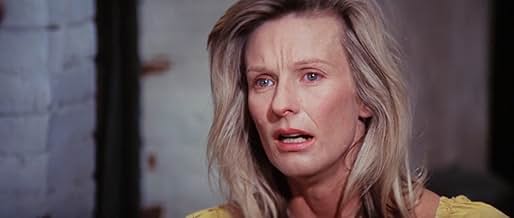
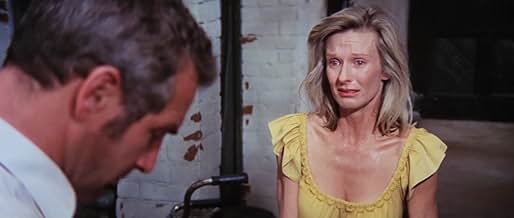
Then there is Joanne Woodward; first film I have seen her in, and one of I gather, many, with Newman. Her character is a trifle ineffectual, present, as if a chess piece, to engage the elusive Reinhardt's desires for a period, and to provide a more 'ordinary' site of audience identification, who does not have right or left-wing politics, and does have more endearing traits: at least compared with Reinhardt. Woodward is quite memorable, cutting a wilting, waning figure as this unfortunate woman, herself much as transitory as Newman at the film's beginning. If she convinces as a 'realistic' character, it is albeit as one implicitly used to condemn the excesses of the New Right and the confrontational politics of the time. Her sickly teariness near the close, and the fact of her being the only person in the riotous hall to listen to Newman's absurdest "we're o.k.!" irony, suggests an idealised 'ordinary person' wrapped up in harmful political events. This is all rather undignified and melodramatic to stand for one who is expected to take this overwrought stuff seriously, and merely serves to draw out some of Reinhardt's humanity for the ending.
Newman does invest Reinhardt with a portion of his customary charm, but this is largely and effectively shown to be a front. Woodward is taken in, like the general audience as it were, by this superficial charm, and she ends up broken both by Newman's inconsistent, careless attitude and by the rupturing of the society depicted.
The film does not go far enough with many of its themes, and I did expect rather more in the dramatic and comic departments - if melodrama is going to work it needs either grand force or a bathetic line in absurdity. The whole lacks humour: born of a self-consciously 'serious' grounding in the subjectivity of U.S. politics in the late-sixties era. On this point, note that Laurence Harvey is vastly under-used; and he of that deeply substantial and bizarre masterpiece of a political thriller, "The Manchurian Candidate"... And additionally, we never see enough of Newman's dealings and relationships with his Rightist colleagues - similarly to how we never see Perkins in the broader context of Left politics. Loose ends were certainly left untied as regards Perkins' character.
I did on the whole quite enjoy this, but it was not a particularly entertaining film: variable in its plotting, dialogue and tone. A case of potential untapped? Undoubtedly. But it is worth paying close attention to those central performances, and it is at least part of its era's Hollywood; markedly less 'safe' and conformist then than now.
It is a ripe political melodrama, clearly borne out of passions and disappointments which arose from the particular year of 1968 and lingered long into the 1970s. I don't think I could make much argument with the previous commentator's view that the film is made from a certain left-liberal point of view. But a moderate left-liberal stance, and tacitly so. Despite saying that, Anthony Perkins' character - an embodiment in many ways of the "liberal" stereotype - is not made particularly sympathetic. Well-meaning, obsessive, anguished and humourless, I would agree with the Time Out reviewer that it was astute - if unimaginative - casting. Perkins comes across as if his Norman Bates persona has been relocated to late-sixties urban America and forcibly invested with a political conscience.
Paul Newman, who shares perhaps too few scenes with his nemesis Perkins, is also rather good, as the wanderer with a certain cocksure touch, who easily becomes an on-air "communicator" for this WUSA radio station - which is involved in fraudulent dealings and far-right preachings. Newman is every inch the tabloid professional; he is able to claim that he has no agenda and is 'just doing a job'. His political views are ambiguous; his final speech indeed suggesting he has no real belief in the "new right". It difficult to precisely gauge what makes the character tick, besides an vague cynicism; he is as flawed and formidable as Perkins, but diametrically opposite, with his rejection of abstract morality: his behaviour set on a course of mere self-aid. He proves to be the adept survivor, in contrast to genuine ideologues of left or right, but he has no moderation instinct, and turns out somewhat troubled, baffled even, at the film's appropriately frazzled conclusion.
Then there is Joanne Woodward; first film I have seen her in, and one of I gather, many, with Newman. Her character is a trifle ineffectual, present, as if a chess piece, to engage the elusive Reinhardt's desires for a period, and to provide a more 'ordinary' site of audience identification, who does not have right or left-wing politics, and does have more endearing traits: at least compared with Reinhardt. Woodward is quite memorable, cutting a wilting, waning figure as this unfortunate woman, herself much as transitory as Newman at the film's beginning. If she convinces as a 'realistic' character, it is albeit as one implicitly used to condemn the excesses of the New Right and the confrontational politics of the time. Her sickly teariness near the close, and the fact of her being the only person in the riotous hall to listen to Newman's absurdest "we're o.k.!" irony, suggests an idealised 'ordinary person' wrapped up in harmful political events. This is all rather undignified and melodramatic to stand for one who is expected to take this overwrought stuff seriously, and merely serves to draw out some of Reinhardt's humanity for the ending.
Newman does invest Reinhardt with a portion of his customary charm, but this is largely and effectively shown to be a front. Woodward is taken in, like the general audience as it were, by this superficial charm, and she ends up broken both by Newman's inconsistent, careless attitude and by the rupturing of the society depicted.
The film does not go far enough with many of its themes, and I did expect rather more in the dramatic and comic departments - if melodrama is going to work it needs either grand force or a bathetic line in absurdity. The whole lacks humour: born of a self-consciously 'serious' grounding in the subjectivity of U.S. politics in the late-sixties era. On this point, note that Laurence Harvey is vastly under-used; and he of that deeply substantial and bizarre masterpiece of a political thriller, "The Manchurian Candidate"... And additionally, we never see enough of Newman's dealings and relationships with his Rightist colleagues - similarly to how we never see Perkins in the broader context of Left politics. Loose ends were certainly left untied as regards Perkins' character.
I did on the whole quite enjoy this, but it was not a particularly entertaining film: variable in its plotting, dialogue and tone. A case of potential untapped? Undoubtedly. But it is worth paying close attention to those central performances, and it is at least part of its era's Hollywood; markedly less 'safe' and conformist then than now.
A powerful piece
I have to agree with those who praise this film and realize that its not everyone's cup of tea. Although I appreciate the criticisms that some reviewers have leveled, it is wise to keep in mind that it is unfair to criticize a film 30+ years after its release through a contemporary lens. The sense of humor that some have found "lacking" is something that develops with the objectivity of lapsed time. During the late 1960's, many of us found little humor in the assassinations and general insanity that seemed to fill the political landscape. Like the previous reviewer, I, too, have been looking for this film for years and hope to see it on DVD one day soon. I found it to be a powerful piece.
American History and Oblivion
As a relatively recent resident of the US, I continue to be astonished at how quickly American audiences forget their own history. I saw WUSA many years ago when I still lived in my native Italy (the Italian version was titled "Un Uomo Oggi" = "A Man Today"!). Two snippets of the film have been with me for all these years. The first is the radio host that invites all to drop what they are doing, go to the window, open it, and start screaming something like "I am fed up and I will no longer put up with this!" The second snippet is the last line delivered in the movie by the character interpreted by Paul Newman -- and I will not say what it says to avoid spoiling it. The themes are big and understandably audiences nowadays are impatient of 'dialog that sounds like speeches' (to quote an unfair reviewer on this site). The south, the issues of bigotry, racism, the Seventies, civic disobedience. At least the dialog has something to say, unlike so many films of the past 30 years. There is so much recent American history in this movie that it should be a mandatory assignment for college-age kids. Most people happily ignore its existence. Is there a way to convince anyone to make this piece available in DVD? It is too important to be neglected. No matter what Roger Greenspun says in his review appeared in the New York Times of November 2, 1970. In those days the Vietnam War coverage in the media made every single political reference seem like another opportunity for constipated American audiences to launch into yet one more conspiracy theory. And the Grenspun review blames WUSA for being 'ponderously allusive'. Maybe, with the hiatus of the past thirty-something years, the allusiveness will seem by now much less allusive and, who knows, we might enjoy this beautiful rendition of Robert Stone's novel. Besides the big issues, however, the movie is quite enjoyable. My vote of 8 only evaluates the viewing pleasure as entertainment.
Almost a let down. Good but of minor relevance since it just repeats the obvious when it comes to politics
"WUSA" is extremely difficult on us in so many ways that to reach a final conclusion on why we like it or feel it relevant is something that demands a lot from viewers. You have a jaw dropping stellar cast (Paul Newman, Joanne Woodward, Anthony Perkins, Cloris Leachman, Laurence Harvey, Pat Hingle); a director who never extracted a bad performance with his films, the great Stuart Rosenberg ("Cool Hand Luke", "Voyage of the Damned", "Brubaker"); a story working with great basic elements involving the power of media, political and inner conflicts, rich vs. poor and more. What turned this perfect merge into a near let down was its writer Robert Stone, adapting his own novel, writing his first film screenplay and the blame is on him. That was exactly the problem. Stone didn't get the mechanics and language of cinema, over complicated a scenario that could and should be a little palatable to audiences, at least to generate interest for the characters. As said, "WUSA" is a near let down; gladly, we had the cast to save it from ruins and achieve a good cult status.
In it, Newman plays the cynical and drunk Rheinhardt, a drifter who accepts a job at a radio station controlled by influential politicians whose motto seems quite familiar in our current times (Make this country Great Again). The WUSA station is one with a point of view, says Hingle character and that distorted point of view destine to include only a certain parcel of New Orleans population and excludes the rest in the majority, it starts to raise some concerns on a fellow named Rainey (Perkins), an idealist survey worker trying to discover the welfare problems faced by the black communities of the place. Rheinhardt and Rainey are neighbors who frequently clash at each other (cynicism vs. idealism; reality vs. utopia) and their quarrels are meddled by Geraldine (Woodward), of whom Rheinhardt has a more intimate involvement, and one that seems to get a grip on this wild drunkard who fail to notice that his bosses are planning something bad as local politics in upcoming elections, and worst of all...his editorials during the radio program are the main force behind the power WASP's success.
Such overview of the film seems attractive, specially for those who love those kind of movies about inner conflicts and different schools of thoughts. However, the screenplay jumble up with practically every possible element and device needed to further the plot along with ones that doesn't add up to much. Examples: the radio thing takes an awful lot of time to happen and when it does, it's a huge disappointment that the film never shows what kind of material Newman's character presents to his listeners except "the future of America is up to you". The film allows us to see Rheinhardt shouting about being a liberal but blocks itself when it comes to present what are the actual plans of the powerful and their conservative speech. Perkins with the survey thing occupied a good portion of the film and could have been trimmed down just as much as some of the most tender scenes between the main couple (great chemistry though). Less with the romance, more with the politics and sinister plans, then we'd have a better film than what we've got.
And let's face it: the movie doesn't show anything new. If you think "WUSA" is explosive, daring and ahead of its time, then you know very little of this world. "WUSA" just show something called the system and the system is controlled by a minority with money and power on the top of the pyramid, and below there's everyone else following their orders, directly and indirectly; and to avoid giving the appearance of a fascist organization they throw something called democracy, divides itself into parties that look and think different, begs us to vote but whenever there's a shift in the power gear it's always the same corrupt and crooked thing. It never changes, only small fractions but it's always the same and it cannot be challenged because they always come back to haunt or kill your opposition (Rainey defies a businessman at a party in one of the greatest sequences). True in the 1970's and before that, and a more harmful truth now. Obviously the film isn't on the nose with such idea but it's there whenever Rheinhardt opens his mouth, specially when it comes to belittle Rainey, of whom he calls a whiner. But the film keeps it real: the cynic drowns himself under the liquor; the idealist finally does something after spending too much time on a lethargic state (but obviously a wrong act) and the mediator in between them couldn't find the strength in herself to join them, debate ideals and find possible solution to their problems and the ones from the community. But she also had a past and problems of her own, many of which she can't seem to escape.
The cast gathering is fine, despite the lack of involvement we have with the characters they play (no one gets saved, they're all critical but substantially real); the ideas carry some relevance but most of it gets torn apart and lost along the way making the experience of seeing "WUSA" a weary endeavor. The good qualities out-weight the bad at the end - I respected that conclusion despite being a predictable cliché. Watch with reservations and low expectations. 6/10
In it, Newman plays the cynical and drunk Rheinhardt, a drifter who accepts a job at a radio station controlled by influential politicians whose motto seems quite familiar in our current times (Make this country Great Again). The WUSA station is one with a point of view, says Hingle character and that distorted point of view destine to include only a certain parcel of New Orleans population and excludes the rest in the majority, it starts to raise some concerns on a fellow named Rainey (Perkins), an idealist survey worker trying to discover the welfare problems faced by the black communities of the place. Rheinhardt and Rainey are neighbors who frequently clash at each other (cynicism vs. idealism; reality vs. utopia) and their quarrels are meddled by Geraldine (Woodward), of whom Rheinhardt has a more intimate involvement, and one that seems to get a grip on this wild drunkard who fail to notice that his bosses are planning something bad as local politics in upcoming elections, and worst of all...his editorials during the radio program are the main force behind the power WASP's success.
Such overview of the film seems attractive, specially for those who love those kind of movies about inner conflicts and different schools of thoughts. However, the screenplay jumble up with practically every possible element and device needed to further the plot along with ones that doesn't add up to much. Examples: the radio thing takes an awful lot of time to happen and when it does, it's a huge disappointment that the film never shows what kind of material Newman's character presents to his listeners except "the future of America is up to you". The film allows us to see Rheinhardt shouting about being a liberal but blocks itself when it comes to present what are the actual plans of the powerful and their conservative speech. Perkins with the survey thing occupied a good portion of the film and could have been trimmed down just as much as some of the most tender scenes between the main couple (great chemistry though). Less with the romance, more with the politics and sinister plans, then we'd have a better film than what we've got.
And let's face it: the movie doesn't show anything new. If you think "WUSA" is explosive, daring and ahead of its time, then you know very little of this world. "WUSA" just show something called the system and the system is controlled by a minority with money and power on the top of the pyramid, and below there's everyone else following their orders, directly and indirectly; and to avoid giving the appearance of a fascist organization they throw something called democracy, divides itself into parties that look and think different, begs us to vote but whenever there's a shift in the power gear it's always the same corrupt and crooked thing. It never changes, only small fractions but it's always the same and it cannot be challenged because they always come back to haunt or kill your opposition (Rainey defies a businessman at a party in one of the greatest sequences). True in the 1970's and before that, and a more harmful truth now. Obviously the film isn't on the nose with such idea but it's there whenever Rheinhardt opens his mouth, specially when it comes to belittle Rainey, of whom he calls a whiner. But the film keeps it real: the cynic drowns himself under the liquor; the idealist finally does something after spending too much time on a lethargic state (but obviously a wrong act) and the mediator in between them couldn't find the strength in herself to join them, debate ideals and find possible solution to their problems and the ones from the community. But she also had a past and problems of her own, many of which she can't seem to escape.
The cast gathering is fine, despite the lack of involvement we have with the characters they play (no one gets saved, they're all critical but substantially real); the ideas carry some relevance but most of it gets torn apart and lost along the way making the experience of seeing "WUSA" a weary endeavor. The good qualities out-weight the bad at the end - I respected that conclusion despite being a predictable cliché. Watch with reservations and low expectations. 6/10


Did you know
- TriviaPaul Newman researched the role by spending time at radio station KMPC in Los Angeles. The teen intern assigned to show him the operation was Ken Levine, who became a disc jockey before going on to be a writer on Cheers (1982), Frasier (1993) and M*A*S*H (1972), and a producer and director of other TV shows. He win an Emmy in 1983 for Cin Cin for "Outstanding Comedy Series".
- Quotes
Rheinhardt: I'm a survivor. Ain't that great?
- Alternate versionsThe preview version ran 3hrs and 10 minutes according to cast member Robert Quarry. Much of his character and several other characters' motivation and dramatic development scenes were cut out before release.
- ConnectionsReferenced in The Zodiac Killer (1971)
- SoundtracksGlory Road
Composed and Performed by Neil Diamond
- How long is WUSA?Powered by Alexa
Details
Box office
- Budget
- $4,800,000 (estimated)
Contribute to this page
Suggest an edit or add missing content