IMDb RATING
6.7/10
3.2K
YOUR RATING


Jeff Gerber, a racist white man, wakes up one morning to discover that he has become black.Jeff Gerber, a racist white man, wakes up one morning to discover that he has become black.Jeff Gerber, a racist white man, wakes up one morning to discover that he has become black.
- Nominated for 1 BAFTA Award
- 1 win & 1 nomination total
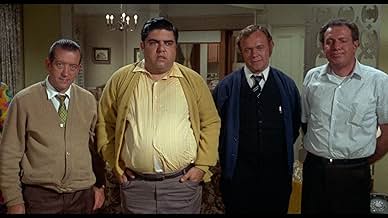
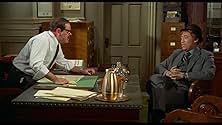


Paul Williams
- Employment Office Clerk
- (as Paul H. Williams)


- Director
- Writer
- All cast & crew
- Production, box office & more at IMDbPro
6.73.1K
1
2
3
4
5
6
7
8
9
10
Featured reviews
An important (if dated) comedy
First - WHO's Godfrey Cambridge?!?! Yeah - he was a comedian. And a VERY funny one. Sigh.
OK, now that I've said that, let me make a couple of things understood. A lot of people who've written comments about this are either too young to remember the 60's/70's or are trying to relate to this film from today's perspective.
This film was written/directed by Melvin Van Peebles, who - at the time - was (and, by some - unfortunately) considered a 'controversial (black) artist. Second; yes, the makeup is not as good as the wonderful job done on Eddie Murphy in various films/skits, or the Wayans' brothers, but - for the make-up tech of the day - it was VERY good (look at the scene in the beginning when Godfrey's exercising (naked!), and then going to the shower. I just watched it on HD, and it still holds up VERY well (and as an aside; I saw this film first when I was about 10 - on TV. I thought upon seeing it that REALLY was a white man who became black. So, just remember that while you might not think his make-up's up to snuff now, it sure did convince an earlier generation).
Understanding when this film was made, the 'situation' of race relations at the time, and the ability for a (black) artist like Mr. Van Peebles to MAKE this film is necessary in understanding how shocking this film was - in all those areas.
Yes - the film's a bit dated (but who isn't?). But watching this film - and understanding what I've just explained makes it all the more extraordinary. Alex P (miskatonic86), and Definitedoll (just to name a couple) are some of the few who understand this film's importance.
Mr. Cambridge is/was one of the best comics. His 'babbling' - or more accuratley, his riffing on a subject was part of his stand-up style (if you'd like to see Godfrey not as a 'babbling' person, but as a (slightly ominous - and funny) character, check him out in THE PRESIDENT'S ANALYST, or in COTTON COMES TO HARLEM. , amongst other appearances.
He's sorely missed, by me and many others who've seen him either on such shows as ED SULLIVAN, THE MERV GRIFFIN SHOW CAR 54 WHERE ARE YOU, THE DICK VAN DYKE SHOW, I SPY amongst MANY other shows. If not, you can see this huge talent's work on YouTube (YouTube's a GREAT resource for educating yourself about not current performers and artists. It's NOT just a place to look at ...cat's playing pianos, and other garbage).
As a glimpse (by a black artist!) into the 'white man's world,' and the world in general - at that time - Mr. Van Peebles should be given his deserved recognition (and Godfrey, we miss you!).
OK, now that I've said that, let me make a couple of things understood. A lot of people who've written comments about this are either too young to remember the 60's/70's or are trying to relate to this film from today's perspective.
This film was written/directed by Melvin Van Peebles, who - at the time - was (and, by some - unfortunately) considered a 'controversial (black) artist. Second; yes, the makeup is not as good as the wonderful job done on Eddie Murphy in various films/skits, or the Wayans' brothers, but - for the make-up tech of the day - it was VERY good (look at the scene in the beginning when Godfrey's exercising (naked!), and then going to the shower. I just watched it on HD, and it still holds up VERY well (and as an aside; I saw this film first when I was about 10 - on TV. I thought upon seeing it that REALLY was a white man who became black. So, just remember that while you might not think his make-up's up to snuff now, it sure did convince an earlier generation).
Understanding when this film was made, the 'situation' of race relations at the time, and the ability for a (black) artist like Mr. Van Peebles to MAKE this film is necessary in understanding how shocking this film was - in all those areas.
Yes - the film's a bit dated (but who isn't?). But watching this film - and understanding what I've just explained makes it all the more extraordinary. Alex P (miskatonic86), and Definitedoll (just to name a couple) are some of the few who understand this film's importance.
Mr. Cambridge is/was one of the best comics. His 'babbling' - or more accuratley, his riffing on a subject was part of his stand-up style (if you'd like to see Godfrey not as a 'babbling' person, but as a (slightly ominous - and funny) character, check him out in THE PRESIDENT'S ANALYST, or in COTTON COMES TO HARLEM. , amongst other appearances.
He's sorely missed, by me and many others who've seen him either on such shows as ED SULLIVAN, THE MERV GRIFFIN SHOW CAR 54 WHERE ARE YOU, THE DICK VAN DYKE SHOW, I SPY amongst MANY other shows. If not, you can see this huge talent's work on YouTube (YouTube's a GREAT resource for educating yourself about not current performers and artists. It's NOT just a place to look at ...cat's playing pianos, and other garbage).
As a glimpse (by a black artist!) into the 'white man's world,' and the world in general - at that time - Mr. Van Peebles should be given his deserved recognition (and Godfrey, we miss you!).
A pointed skewering of racism with yummy grotesque flavoring
In Watermelon Man, director Melvin Van Peebles expresses complex ideas about race and racism in a sophisticated but humorous way. At that, however, if you do not have a strong taste for grotesques--in a formal sense ("outlandish or bizarre; ludicrous or incongruous distortion")--you may not enjoy the film as much as I did. It is something of a surreal, occasionally psychedelic caricature, but as such, it does what all good caricature should do--it emphasizes the truth without being strict realism or "naturalism".
Watermelon Man is the story of Jeff Gerber (Godfrey Cambridge). He's something of a strange dweeb who nevertheless has a stereotypical white-bread suburban existence. He's got a wife, two preadolescent kids, a nice home with a manicured lawn, and so on. He's also something of a health nut (although humorously, Cambridge wasn't exactly in great shape when they shot the film). As the film opens, he's busy exercising while his wife is trying to capture a few more minutes of sleep. He regularly uses a sun lamp. He takes the bus to his insurance salesman job, but instead of catching it right down the street, he races it through the neighborhood every day, the goal being to beat it to the last stop before it gets on the highway.
Jeff presents himself as happy-go-lucky and quite a joker, but he's a bit obnoxious and boorish, plus he shows himself to be racist and a male chauvinist, although he's not exactly gung ho about sleeping with his wife.
Just as we're learning about Jeff's routine, something unusual happens--he wakes up in the middle of the night as a black man. At first he thinks it's a nightmare, but it doesn't go away. He blames it on the sun lamp. He blames it on food he's ingesting. The bulk of Watermelon Man has Jeff trying to at first conquer, then later deal with his newfound "problem".
If you've seen both films, you might find it odd that Van Peebles made Watermelon Man before Sweet Sweetback's Baadasssss Song (1971). Unlike Sweet Sweetback, which is intriguing in its own way, but not near as good of a film artistically and technically, the direction in Watermelon Man is finely nuanced and sophisticated, the cinematography is crisp and attractive and technical elements such as sound are superb. I suppose this might be an interesting lesson in how crucial budget and "legitimacy" can be for film-making. It gives access to the finest materials and resources, including a large stable of professionals with narrow specialties. At that, however, Watermelon Man is not nearly as respected now as Sweet Sweetback because of what Sweet Sweetback represents, both ideologically and influentially in the film industry. Sweet Sweetback was something of a revolutionary (and very psychedelic) cry for African-American rights, and it helped launch not only the blaxploitation craze of the 1970s, but also fiercely independent film-making.
Yet, Watermelon Man is just as unique and important in what it has to say about race, even if it's not violent or pornographic, and not bizarre in the same way. Once Jeff becomes black, everything about his life changes. There isn't a person around who doesn't relate to him differently, with many having a polar opposite reaction to him--both his white friends (and family, of course) and his black acquaintances (they weren't friends, exactly, when Jeff thought he was white). Everyone wants to exploit his newfound state, including his boss. Van Peebles makes a sly transition from the beginning to the end of the film that goes from white-bread sitcom to something of a militant blaxploitation flick in a way that you barely even notice.
A large part of what makes Watermelon Man so odd is Godfrey Cambridge. His performance is way over the top and consistently bizarre, but for some of us, in some contexts (such as for me in this context), this kind of bizarre, over the top material works extremely well--in fact, I tend to prefer this to realism. The other performances are at least interesting, even if they're not all good in a conventional wisdom evaluation, but Cambridge really carries the film.
Equally bizarre and a bit disturbing is Cambridge's make-up as a white man. The make-up is extremely well done--it's difficult to picture Cambridge as he really looks underneath it all, but given the character's disposition, Cambridge as a white man comes off as freakish to say the least.
Van Peebles' direction is extremely admirable. He's not afraid to take all kinds of thrilling chances, including such unusual moves as quick pans to go from character to character in a conversation and odd intrusions of psychedelia, such as the scene that suddenly starts flashing different negative exposure images, or the scene that stops to insert commentary that resembles silent film intertitles.
Van Peebles also did the music here, as he did in Sweet Sweetback, and it's just as weird. Near the end of the film, there's an extended version of a song that rips-off "Heard It Through The Grapevine" that features a vocal that even The Residents would raise an eyebrow to. Again, I love weird stuff, so I was happier than a pig in, um, mud.
If there's anything less than satisfactory about Watermelon Man, it's that it engenders sadness that Van Peebles wasn't able to talk the helm more often. He made a controversial move in this film by changing the ending in the original script, as he rightfully should have done (Columbia originally wanted an "it was all a dream" ending, which would have been ridiculous and insulting, to say the least), and that, combined with his independent production of Sweet Sweetback the following year, didn't exactly put him on Hollywood's successful brownnoser list.
Watermelon Man is the story of Jeff Gerber (Godfrey Cambridge). He's something of a strange dweeb who nevertheless has a stereotypical white-bread suburban existence. He's got a wife, two preadolescent kids, a nice home with a manicured lawn, and so on. He's also something of a health nut (although humorously, Cambridge wasn't exactly in great shape when they shot the film). As the film opens, he's busy exercising while his wife is trying to capture a few more minutes of sleep. He regularly uses a sun lamp. He takes the bus to his insurance salesman job, but instead of catching it right down the street, he races it through the neighborhood every day, the goal being to beat it to the last stop before it gets on the highway.
Jeff presents himself as happy-go-lucky and quite a joker, but he's a bit obnoxious and boorish, plus he shows himself to be racist and a male chauvinist, although he's not exactly gung ho about sleeping with his wife.
Just as we're learning about Jeff's routine, something unusual happens--he wakes up in the middle of the night as a black man. At first he thinks it's a nightmare, but it doesn't go away. He blames it on the sun lamp. He blames it on food he's ingesting. The bulk of Watermelon Man has Jeff trying to at first conquer, then later deal with his newfound "problem".
If you've seen both films, you might find it odd that Van Peebles made Watermelon Man before Sweet Sweetback's Baadasssss Song (1971). Unlike Sweet Sweetback, which is intriguing in its own way, but not near as good of a film artistically and technically, the direction in Watermelon Man is finely nuanced and sophisticated, the cinematography is crisp and attractive and technical elements such as sound are superb. I suppose this might be an interesting lesson in how crucial budget and "legitimacy" can be for film-making. It gives access to the finest materials and resources, including a large stable of professionals with narrow specialties. At that, however, Watermelon Man is not nearly as respected now as Sweet Sweetback because of what Sweet Sweetback represents, both ideologically and influentially in the film industry. Sweet Sweetback was something of a revolutionary (and very psychedelic) cry for African-American rights, and it helped launch not only the blaxploitation craze of the 1970s, but also fiercely independent film-making.
Yet, Watermelon Man is just as unique and important in what it has to say about race, even if it's not violent or pornographic, and not bizarre in the same way. Once Jeff becomes black, everything about his life changes. There isn't a person around who doesn't relate to him differently, with many having a polar opposite reaction to him--both his white friends (and family, of course) and his black acquaintances (they weren't friends, exactly, when Jeff thought he was white). Everyone wants to exploit his newfound state, including his boss. Van Peebles makes a sly transition from the beginning to the end of the film that goes from white-bread sitcom to something of a militant blaxploitation flick in a way that you barely even notice.
A large part of what makes Watermelon Man so odd is Godfrey Cambridge. His performance is way over the top and consistently bizarre, but for some of us, in some contexts (such as for me in this context), this kind of bizarre, over the top material works extremely well--in fact, I tend to prefer this to realism. The other performances are at least interesting, even if they're not all good in a conventional wisdom evaluation, but Cambridge really carries the film.
Equally bizarre and a bit disturbing is Cambridge's make-up as a white man. The make-up is extremely well done--it's difficult to picture Cambridge as he really looks underneath it all, but given the character's disposition, Cambridge as a white man comes off as freakish to say the least.
Van Peebles' direction is extremely admirable. He's not afraid to take all kinds of thrilling chances, including such unusual moves as quick pans to go from character to character in a conversation and odd intrusions of psychedelia, such as the scene that suddenly starts flashing different negative exposure images, or the scene that stops to insert commentary that resembles silent film intertitles.
Van Peebles also did the music here, as he did in Sweet Sweetback, and it's just as weird. Near the end of the film, there's an extended version of a song that rips-off "Heard It Through The Grapevine" that features a vocal that even The Residents would raise an eyebrow to. Again, I love weird stuff, so I was happier than a pig in, um, mud.
If there's anything less than satisfactory about Watermelon Man, it's that it engenders sadness that Van Peebles wasn't able to talk the helm more often. He made a controversial move in this film by changing the ending in the original script, as he rightfully should have done (Columbia originally wanted an "it was all a dream" ending, which would have been ridiculous and insulting, to say the least), and that, combined with his independent production of Sweet Sweetback the following year, didn't exactly put him on Hollywood's successful brownnoser list.
A very good, sadly forgotten satire
Melvin Van Peebles' big Hollywood film is a very smart, funny, and in the end tragic satire of race relations in America c. 1970. Today, it doesn't get nearly the hoopla that "Sweet Sweetback" does, but in a lot of ways it's a better movie. Biting satire is often a better way to express righteous anger than simply getting all righteous, and this is an example: under the laughs, this is a deeply angry film.
Godfrey Cambridge is magnificent in his two-tone role, and the supporting cast (including a couple of routines by the great Mantan Moreland) is also very fine. The rage underpinning the whole story doesn't find full, overt expression until the very last scene, which presages Van Peebles' leap into more obviously black revolutionary politics in "Sweetback." A very good, very funny, important film that deserves to be much better known today than it is.
Godfrey Cambridge is magnificent in his two-tone role, and the supporting cast (including a couple of routines by the great Mantan Moreland) is also very fine. The rage underpinning the whole story doesn't find full, overt expression until the very last scene, which presages Van Peebles' leap into more obviously black revolutionary politics in "Sweetback." A very good, very funny, important film that deserves to be much better known today than it is.
Essential movie. It's not perfect - but must be seen.
Cambridge does an interesting lob playing a white man turned into a black man, but Van Peebles evidently wanted to make some pejorative assessments of both cultures. The negativity of the film is offset by slapstick and schtik - like the moment of awareness of the transition when Gerber goes to the bathroom in the middle of the night and when he gets off the toilet, a big black rear end fills the screen. The transition, itself, is never adequately explained: recessive gene gone berserk, sardonic God teaching a lesson, who knows?
The sad part of the film is the inability to ever find purchase in the community. Not everyone is bigoted but they are all portrayed as one big cliché. Any normal unbiased people are immediately put off by the reprehensible actions of Cambridge - so there are no friends or allies except of the same race - or more purely - of the same anger.
How nice this movie could have been if Van Peebles had allowed Gerber to rise to the top in spite of everything - to showcase hope instead of futility.
The sad part of the film is the inability to ever find purchase in the community. Not everyone is bigoted but they are all portrayed as one big cliché. Any normal unbiased people are immediately put off by the reprehensible actions of Cambridge - so there are no friends or allies except of the same race - or more purely - of the same anger.
How nice this movie could have been if Van Peebles had allowed Gerber to rise to the top in spite of everything - to showcase hope instead of futility.
brilliant precursor to "Sweetback"
"Watermelon Man" might throw off quite a few people with its style of cinema. It's a work of the grandfather of American independent film, Melvin Van Peebles, and with that should come a certain measure of respect. Van Peebles may not have produced dozens of films, but he certainly turned the industry on its head 30 years ago. This is an interesting arrangement on the business side- hot off the European success of "The Story Of A Three Day Pass", Warner Brothers takes on filmmaker Van Peebles for a feature film. The story of Van Peebles versus the company in filming is a conte in itself, but the film remains poignant and striking in its cinematography and theme. Aggressive editing of both film and musical inserts highlight the subtle comedy and pure desperation of the story of a bigot who wakes up Black and watches the world turn against him.
It's something of a manic ride, but Cambridge gives it all the human character it can stand. His antagonist-cum-protagonist role gives you 360 degrees of frustration and forced humility. Van Peebles presses the more unreal moments into a sub-psychedelic form. Printed messages, color fills, choppy eye-effecting shots and that insistent score remind you that this absurdity is all too real. But ongoing themes such as "He stole something.. we don't know what yet," are darkly hilarious as is Cambridge's sharp wit.
"Watermelon Man" is serious film that will still make you laugh at times. This is not the kick-in-the-establishment-a** that "Sweetback" is, but it's an important step on the way. Alongside films such as "Cotton Comes To Harlem" (also with the superb Cambridge) and "Putney Swope," this is an important part of the early end of the Black film explosion.
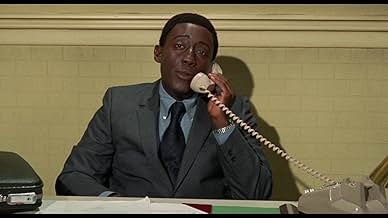
Look for cameos by songwriter-actor Paul Williams as an employer and Melvin Van Peebles himself as a painter. Black cast staple (and director of "Dolemite") D'Urville Martin is also on hand as a bus driver in some of the film's funniest scenes.
It's something of a manic ride, but Cambridge gives it all the human character it can stand. His antagonist-cum-protagonist role gives you 360 degrees of frustration and forced humility. Van Peebles presses the more unreal moments into a sub-psychedelic form. Printed messages, color fills, choppy eye-effecting shots and that insistent score remind you that this absurdity is all too real. But ongoing themes such as "He stole something.. we don't know what yet," are darkly hilarious as is Cambridge's sharp wit.
"Watermelon Man" is serious film that will still make you laugh at times. This is not the kick-in-the-establishment-a** that "Sweetback" is, but it's an important step on the way. Alongside films such as "Cotton Comes To Harlem" (also with the superb Cambridge) and "Putney Swope," this is an important part of the early end of the Black film explosion.
Look for cameos by songwriter-actor Paul Williams as an employer and Melvin Van Peebles himself as a painter. Black cast staple (and director of "Dolemite") D'Urville Martin is also on hand as a bus driver in some of the film's funniest scenes.


Did you know
- TriviaMelvin Van Peebles: The artist who letters Jeff Gerber's new office door.
- GoofsDr. Wainwright asks Jeff if he knows that the first man to die in an American war was Crispus Atticus. The man's name was actually Crispus Attucks, NOT Atticus. The doctor puts in an extra syllable.
- Quotes
Delivery Man: That guy needs a sun lamp like Fred Astaire needs dancing lessons.
- ConnectionsFeatured in The Real Deal: What It is (2003)
- SoundtracksLove, That's America
Written and performed by Melvin Van Peebles
- How long is Watermelon Man?Powered by Alexa
Details
- Release date
- Country of origin
- Language
- Also known as
- The Night the Sun Came Out
- Filming locations
- Burbank, California, USA(Studio)
- Production companies
- See more company credits at IMDbPro
Box office
- Budget
- $1,000,000 (estimated)
- Runtime
- 1h 40m(100 min)
- Sound mix
- Aspect ratio
- 1.85 : 1
Contribute to this page
Suggest an edit or add missing content