The Goalie's Anxiety at the Penalty Kick
Original title: Die Angst des Tormanns beim Elfmeter
- 1972
- 1h 41m
IMDb RATING
6.5/10
2.6K
YOUR RATING

Goalkeeper Josef Bloch is ejected during a game for foul play. He leaves the field and goes to spend the night with a cinema cashier.Goalkeeper Josef Bloch is ejected during a game for foul play. He leaves the field and goes to spend the night with a cinema cashier.Goalkeeper Josef Bloch is ejected during a game for foul play. He leaves the field and goes to spend the night with a cinema cashier.
- Awards
- 1 win total

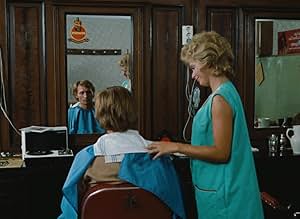



Monika Poeschl
- 1. Frisöse
- (as Monika Pöschl)

Maria Englstorfer
- Krämerin
- (as Maria Engelstorfer)
- Director
- Writers
- All cast & crew
- Production, box office & more at IMDbPro
6.52.5K
1
2
3
4
5
6
7
8
9
10
Featured reviews
Mesmeric, under-the-microscope probing of a psychopath
Wim Wenders was always the most cerebral, the most cinematic of the three Giants of New German cinema (albeit Giants enough to bear favourable comparison even to cinematic Giants-For All-Ages such as Fritz Lang, and FW Murnau). In his hands, even a work so clearly of its maker as Ripley's Game became a perhaps even greater work, even more clearly of its maker such as The American Friend was, or as the Sam Shephard-scripted Paris, Texas was. And perhaps, too, this adaptation of a German bestseller likely is.
This film, despite the directors acknowledgements of the influence of Alfred Hitchcock - evident throughout - is A Masterpiece of control and content - admirable in a mature work by an established director, astonishing as a feature debut.
The title is relevant only in a later, casual, conversation the eponymous character has with a provincial policeman, where the policeman innocently spills out his m.o. when confronted by a criminal, but such is the nature of this study that we can't immediately be sure the psychopath is taking everything in. The murder itself isn't even shown in its grisly intensity, merely its foreplay and aftermath. And there's nothing to forewarn us of the killer's intentions: no taunting, no leering looks, no stalkings. (I saw parallels in the murder scene with a similar scene in Hitchcock's underrated 'Frenzy', but only in the way it was shot, and the aforementioned foreplay).
His scanning of every subsequent news report might suggest he's worried, that the noose is tightening around him. But his immediately subsequent actions suggest otherwise. Like the prototype psychopath, compassion is conspicuous by its absence from his every thought and action. But yet, in best cinematic tradition, what 'he' doesn't know is that we can see his every action, can scrutinise his every thought. Can condemn him for his indifference.
Only by giving every frame of this masterly film your full attention will you get to truly 'enjoy' its final frame.
The title is relevant only in a later, casual, conversation the eponymous character has with a provincial policeman, where the policeman innocently spills out his m.o. when confronted by a criminal, but such is the nature of this study that we can't immediately be sure the psychopath is taking everything in. The murder itself isn't even shown in its grisly intensity, merely its foreplay and aftermath. And there's nothing to forewarn us of the killer's intentions: no taunting, no leering looks, no stalkings. (I saw parallels in the murder scene with a similar scene in Hitchcock's underrated 'Frenzy', but only in the way it was shot, and the aforementioned foreplay).
His scanning of every subsequent news report might suggest he's worried, that the noose is tightening around him. But his immediately subsequent actions suggest otherwise. Like the prototype psychopath, compassion is conspicuous by its absence from his every thought and action. But yet, in best cinematic tradition, what 'he' doesn't know is that we can see his every action, can scrutinise his every thought. Can condemn him for his indifference.
Only by giving every frame of this masterly film your full attention will you get to truly 'enjoy' its final frame.
Foul play
The Goalkeeper's Fear of the Penalty is a great title but an odd underwhelming film from Wim Wenders, his cinematic debut.
I only wish it was about a goalkeeper who went all wobbly when about to face a spot kick.
The film does display some of Wender's cinematic tastes. A liking of Americana, being on the road, a character being a person of few words maybe alienated and a languid pace. There is an existentialism about this film.
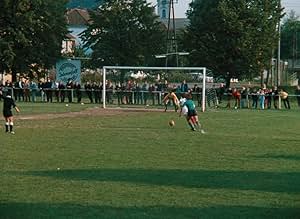
Joseph Bloch (Arthur Brauss) is a goalkeeper who gets angry when a goal is not called offside. It is a strangely shot sequence as Bloch does not concentrate on the play and makes no attempt to even save the shot. In fact we do not even see the build up to the play.
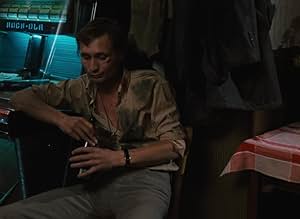
Bloch gets sent off and as his team was playing away, he makes his way to the city centre where he watches a film. Later he spends a night with the cinema cashier and he than strangles her. Bloch then leaves the city and spends times with an ex girlfriend in the countryside. Bloch constantly reads the newspaper to see what is happening about the murder, there is also a mute boy who has disappeared. Bloch spends time with his ex, listening to American rock n roll and getting involved in bar fights.
If Bloch is upset about the murder we do not get to know about it. The movie is bookended by a football match, at one point Bloch tells a spectator about the various thoughts that go through in a goalkeeper's mind when a penalty is about to be taken.
The lead character is an enigma, he goes about his normal life but he is a killer, maybe he has killed before, maybe he is a fantasist with his interest in American music and carrying US currency. It could just be that Bloch is contemplative about his existence.
In terms of tension, there is not much at all. Bloch gets on with his life, he is never in danger, no one is closing in on him. Critically lauded, age has not been kind to this film. Slow moving and boring.
I only wish it was about a goalkeeper who went all wobbly when about to face a spot kick.
The film does display some of Wender's cinematic tastes. A liking of Americana, being on the road, a character being a person of few words maybe alienated and a languid pace. There is an existentialism about this film.
Joseph Bloch (Arthur Brauss) is a goalkeeper who gets angry when a goal is not called offside. It is a strangely shot sequence as Bloch does not concentrate on the play and makes no attempt to even save the shot. In fact we do not even see the build up to the play.
Bloch gets sent off and as his team was playing away, he makes his way to the city centre where he watches a film. Later he spends a night with the cinema cashier and he than strangles her. Bloch then leaves the city and spends times with an ex girlfriend in the countryside. Bloch constantly reads the newspaper to see what is happening about the murder, there is also a mute boy who has disappeared. Bloch spends time with his ex, listening to American rock n roll and getting involved in bar fights.
If Bloch is upset about the murder we do not get to know about it. The movie is bookended by a football match, at one point Bloch tells a spectator about the various thoughts that go through in a goalkeeper's mind when a penalty is about to be taken.
The lead character is an enigma, he goes about his normal life but he is a killer, maybe he has killed before, maybe he is a fantasist with his interest in American music and carrying US currency. It could just be that Bloch is contemplative about his existence.
In terms of tension, there is not much at all. Bloch gets on with his life, he is never in danger, no one is closing in on him. Critically lauded, age has not been kind to this film. Slow moving and boring.
A Powerful and Unnerving Film
Based on the novel "Die Angst des Tormannes beim Elfmeter" by Austrian existentialist writer, Peter Handke, The Goalie's Anxiety at the Penalty Kick is a powerful and unnerving film by the great German director Wim Wenders (Wings of Desire, Paris, Texas). As the film opens, the goalie, Joseph Bloch, (Arthur Brauss) is suspended from a soccer game in Vienna for missing a penalty kick. Seemingly not upset, he goes into town, then commits an unplanned and seemingly unmotivated murder of a cinema cashier.
Presenting us with a world that does not fit our picture of what constitutes rational behavior, Wenders refuses to explain the goalie's senseless action. Bloch simply continues his life in a matter-of-fact way, although a great deal of emotion seems to be churning under the surface. He retreats to a country inn to find his old girl friend. Nothing much happens. He goes to the movies, converses with the local residents, drinks a lot, gets into a fight, and ostensibly waits for the police to close in. His expression remains the same no matter what he is doing. As stated by Adam Groves in his review in The Cutting Edge, "He may be a homicidal sociopath, but Joseph seems to fit in quite well with the world around him, which seems to be the whole point"
Bloch talks about his life as a goalie throughout the film. At the end, he wanders into to a local soccer game and explains to a visiting salesman the thoughts that go through a goalie's mind during a penalty kick, for example, how the goalie must outguess the shooter. Perhaps dramatizing the dehumanizing effects of modern society, Goalie's Anxiety at the Penalty Kick is a strange, intriguing, and complex film that definitely deserves repeated viewing to unlock the puzzle. A possible hint involves a repetitive theme of a lost boy who drowned because he couldn't communicate.
Presenting us with a world that does not fit our picture of what constitutes rational behavior, Wenders refuses to explain the goalie's senseless action. Bloch simply continues his life in a matter-of-fact way, although a great deal of emotion seems to be churning under the surface. He retreats to a country inn to find his old girl friend. Nothing much happens. He goes to the movies, converses with the local residents, drinks a lot, gets into a fight, and ostensibly waits for the police to close in. His expression remains the same no matter what he is doing. As stated by Adam Groves in his review in The Cutting Edge, "He may be a homicidal sociopath, but Joseph seems to fit in quite well with the world around him, which seems to be the whole point"
Bloch talks about his life as a goalie throughout the film. At the end, he wanders into to a local soccer game and explains to a visiting salesman the thoughts that go through a goalie's mind during a penalty kick, for example, how the goalie must outguess the shooter. Perhaps dramatizing the dehumanizing effects of modern society, Goalie's Anxiety at the Penalty Kick is a strange, intriguing, and complex film that definitely deserves repeated viewing to unlock the puzzle. A possible hint involves a repetitive theme of a lost boy who drowned because he couldn't communicate.
Great character study
Huh that Wenders guy really knows how to make a good movie. Who would've thought...
the unseen side of the goalkeepers
The final scene fully reveals the reason behind the film's title.
A goalkeeper, in the moment of a penalty, can become trapped in a sense of absurdity - and ultimately, in an endless, absolute, and unresolvable anxiety. The last scene of the film illustrates exactly that: Bloch is speaking with the man sitting in the stadium and tells him that, during a penalty, if the goalkeeper knows the penalty taker, he might think: "He always shoots to the right, but this time he'll probably go left." Yet at the same time, the penalty taker might think: "The goalkeeper knows I usually shoot right, so he'll expect me to go left. But he doesn't know that I know what he's thinking - so I'll shoot right again." This mental dialogue between the goalkeeper and the penalty taker could go on endlessly, and this infinite back-and-forth brings about a kind of existential void and silent anxiety for the goalkeeper, alone in that moment.
The film portrays the inner world of a goalkeeper living in the absurdity of his life - a life in which nothing has meaning anymore. Even on the football field, he is always the loneliest figure, and that very solitude brings its own sense of emptiness. In the opening scene, twenty-one players stand on one side while he stands alone, feeling an absolute isolation. Later, when the ball passes by him and he reacts with total indifference, it perfectly visualizes that same emptiness.
Over the film's one hour and forty minutes, we watch how deeply he has sunk into this meaninglessness - where anxiety no longer appears as a visible, violent tension, but as a quiet, muted state: an anxiety of indifference, not one of agitation or outburst.
That's why he strangles the woman so effortlessly - not out of anger, but with a cold neutrality, as if the act itself means nothing to him.
Another reflection of the connection between the penalty scene and his life lies in the fact that the goalkeeper's endless internal reasoning - the "what if..." chain of thoughts - leads to paralysis in that moment. Throughout the film, the same pattern appears: in his absurd world, there seems to be no right choice at all, and he is incapable even of choosing.
A goalkeeper, in the moment of a penalty, can become trapped in a sense of absurdity - and ultimately, in an endless, absolute, and unresolvable anxiety. The last scene of the film illustrates exactly that: Bloch is speaking with the man sitting in the stadium and tells him that, during a penalty, if the goalkeeper knows the penalty taker, he might think: "He always shoots to the right, but this time he'll probably go left." Yet at the same time, the penalty taker might think: "The goalkeeper knows I usually shoot right, so he'll expect me to go left. But he doesn't know that I know what he's thinking - so I'll shoot right again." This mental dialogue between the goalkeeper and the penalty taker could go on endlessly, and this infinite back-and-forth brings about a kind of existential void and silent anxiety for the goalkeeper, alone in that moment.
The film portrays the inner world of a goalkeeper living in the absurdity of his life - a life in which nothing has meaning anymore. Even on the football field, he is always the loneliest figure, and that very solitude brings its own sense of emptiness. In the opening scene, twenty-one players stand on one side while he stands alone, feeling an absolute isolation. Later, when the ball passes by him and he reacts with total indifference, it perfectly visualizes that same emptiness.
Over the film's one hour and forty minutes, we watch how deeply he has sunk into this meaninglessness - where anxiety no longer appears as a visible, violent tension, but as a quiet, muted state: an anxiety of indifference, not one of agitation or outburst.
That's why he strangles the woman so effortlessly - not out of anger, but with a cold neutrality, as if the act itself means nothing to him.
Another reflection of the connection between the penalty scene and his life lies in the fact that the goalkeeper's endless internal reasoning - the "what if..." chain of thoughts - leads to paralysis in that moment. Throughout the film, the same pattern appears: in his absurd world, there seems to be no right choice at all, and he is incapable even of choosing.


Did you know
- TriviaThe film remained unavailable for three decades for reasons of music rights. (The original soundtrack includes works of Elvis Presley and the Rolling Stones, which is more expensive than the production of the film itself. ) To make the film possible to view again, the director Wim Wenders obtains the right of several songs and replaces other pieces with new songs of lyrics. Those were produced using period instruments and analog techniques from the 1950s to imitate the sound of that time as faithful as possible.
- GoofsThe newspaper article "Heiße Spur im Mordfall Gloria T." (Firm lead in Gloria T. murder case) is actually a newspaper article about a car crash and has nothing whatsoever to do with the movie's plot. It seems that only the headline was changed for the purpose of filming.
- ConnectionsFeatured in Motion and Emotion: The Films of Wim Wenders (1990)
- How long is The Goalie's Anxiety at the Penalty Kick?Powered by Alexa
Details
- Release date
- Countries of origin
- Languages
- Also known as
- Die Angst des Tormanns beim Elfmeter
- Filming locations
- Production companies
- See more company credits at IMDbPro
Box office
- Budget
- DEM 620,000 (estimated)
Contribute to this page
Suggest an edit or add missing content