IMDb RATING
7.7/10
1.4K
YOUR RATING

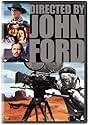
A documentary on the life and films of director John Ford.A documentary on the life and films of director John Ford.A documentary on the life and films of director John Ford.


Peter Bogdanovich
- Self - Interviewer
- (uncredited)

Orson Welles
- Self - Narrator
- (voice)


Harry Carey
- Self
- (archive footage)

Jeffrey Hunter
- Self
- (archive footage)

Richard Widmark
- Self
- (archive footage)

Harry Carey Jr.
- Self
- (uncredited)

Henry Fonda
- Self
- (uncredited)

James Stewart
- Self
- (uncredited)
- Director
- Writer
- All cast & crew
- Production, box office & more at IMDbPro
7.71.3K
1
2
3
4
5
6
7
8
9
10
Featured reviews
Significant and Informative
Extremely interesting. Captivating through the commentaries from such stalwarts as Spielberg and The Duke. Spielberg's studies of Ford's symbolic portrayals of traditional ceremonies and John Wayne, as eloquent as one might not expect, are worth the viewing. Truly, Wayne expresses a sincere admiration and fondness for the artist that Ford was. A moving piece delivered by Maureen O'Hara. Very interesting that her comments were read from a written speech, but after she finished reading the speech, she broke down in tears. Hank Fonda and Jimmy Stewart's recollections of Ford's gift for creating character was a brilliant entry by Bogdanovich. John Ford's career spanned 140 films, including the silent era. Thanks to this documentary, we realize what a divine national treasure American film had.
engrossing documentary about the great director
John Ford is one of our greatest American directors, and he is profiled in this 1971 documentary that features a hilarious interview with the man himself (Interviewer: How did you shoot that scene? Ford: With a camera) and actors who worked with him many times over the years: John Wayne, James Stewart, Henry Fonda, and Maureen O'Hara.
Narrated by Orson Welles, prominent directors talk about his influence on cinema and his gifts as a director: Martin Scorcese, Peter Bogdanovich, Steven Spielberg, and Clint Eastwood.
The most fascinating part of this documentary was the discussion - with clips - of how the master framed his shots like a painter, and the scenes shown were truly stunning.
The end of the documentary speaks to his sentimentality, belief in an afterlife and the family, demonstrated with heartwrenching scenes from "The Searchers," "How Green was My Valley," and others.
Finally there was a taped meeting between Katharine Hepburn and Ford in the year he died. The two had a great connection and perhaps even a relationship. It is most fascinating, particularly when Ford's son leaves the room and mistakenly leaves the tape recorder on.
Excellent all the way around.
Narrated by Orson Welles, prominent directors talk about his influence on cinema and his gifts as a director: Martin Scorcese, Peter Bogdanovich, Steven Spielberg, and Clint Eastwood.
The most fascinating part of this documentary was the discussion - with clips - of how the master framed his shots like a painter, and the scenes shown were truly stunning.
The end of the documentary speaks to his sentimentality, belief in an afterlife and the family, demonstrated with heartwrenching scenes from "The Searchers," "How Green was My Valley," and others.
Finally there was a taped meeting between Katharine Hepburn and Ford in the year he died. The two had a great connection and perhaps even a relationship. It is most fascinating, particularly when Ford's son leaves the room and mistakenly leaves the tape recorder on.
Excellent all the way around.
Lest We Forget...
"Directed By John Ford" is a moving, thoroughgoing, yet somehow incomplete look at that master of directors, John Ford, directed by Peter Bogdanovich, a hot young director himself when he first made this film, in 1971.
The version of "Directed By John Ford" I saw is not that version, but a retooled one made in 2006 featuring up-to-date commentary from Steven Spielberg, Clint Eastwood, Martin Scorsese, and Bogdanovich himself, among others. There's also surviving footage from the 1971 version, showing John Wayne, James Stewart, Henry Fonda, and Ford himself, all still alive at the time and willing to sit down and talk with Bogdanovich, though barely in the case of Ford himself.
Q: Mr. Ford, I've noticed your view of the West has become increasingly sad...Have you been aware of that change of mood? A: No.
Q: Now that I've pointed it out, is there anything you'd like to say about it? A: I don't know what you're talking about.
The others interviewed are more willing to share their views, not to mention their scars. "He dares you to do it right do it good," notes Stewart, adding "It's not a relaxed set." Ford was a rank sentimentalist and a bullying manic depressive, pressing every psychological button among his cast, crew, and himself. Wayne and Fonda note how hard-nosed Ford could be with the amused bewilderment of Catholic schoolboys discussing a crazy nun.
The modern-day interviews are interesting, too, though not nearly so. The result here is less a retrospective than an appreciation piece, and something of a disjointed one, with half the interviews discussing Ford in the present tense and half wistfully acknowledging the world Ford left behind.
"He's like Dickens or something," says Walter Hill, the guy behind "Deadwood" and "48 Hrs." "There's a whole frame of reference and horizon-line that's Fordian." The best thing to say about this documentary is that you get some concrete sense of what the adjective "Fordian" means. His films could be messy and emotional, but there was often a economical driving force at their heart, running through them tight as a clothesline.
You also see how Ford influenced directors who came after him. One scene from a 1961 film "Two Rode Together," shows Stewart and Richard Widmark sitting at a stream and having a long conversation about Stewart's love life. It's introduced by Scorsese as an influential scene in his own film-making, but there was nothing recognizably of Scorsese in the clip I see, which is amiable, drawn-out, and too whimsical by half for Scorsese's macho style. But it did remind me a lot of Quentin Tarantino, who it turns out is a huge Scorsese fan. Ford's roots run deep, and often past a lot of people, as with me.
The film loses steam in the second half, though, with a labored reflection on how Ford captured the story of America on a chronological basis. There's some brief audio of Ford talking to Katharine Hepburn that hints at a great romance between the two, but it's thrown up late and not tied in well to anything else.
But this is a fine overview of Ford's fantastic career, however unsettled as to its perspective. Ford himself was a little unsettled, too.
The version of "Directed By John Ford" I saw is not that version, but a retooled one made in 2006 featuring up-to-date commentary from Steven Spielberg, Clint Eastwood, Martin Scorsese, and Bogdanovich himself, among others. There's also surviving footage from the 1971 version, showing John Wayne, James Stewart, Henry Fonda, and Ford himself, all still alive at the time and willing to sit down and talk with Bogdanovich, though barely in the case of Ford himself.
Q: Mr. Ford, I've noticed your view of the West has become increasingly sad...Have you been aware of that change of mood? A: No.
Q: Now that I've pointed it out, is there anything you'd like to say about it? A: I don't know what you're talking about.
The others interviewed are more willing to share their views, not to mention their scars. "He dares you to do it right do it good," notes Stewart, adding "It's not a relaxed set." Ford was a rank sentimentalist and a bullying manic depressive, pressing every psychological button among his cast, crew, and himself. Wayne and Fonda note how hard-nosed Ford could be with the amused bewilderment of Catholic schoolboys discussing a crazy nun.
The modern-day interviews are interesting, too, though not nearly so. The result here is less a retrospective than an appreciation piece, and something of a disjointed one, with half the interviews discussing Ford in the present tense and half wistfully acknowledging the world Ford left behind.
"He's like Dickens or something," says Walter Hill, the guy behind "Deadwood" and "48 Hrs." "There's a whole frame of reference and horizon-line that's Fordian." The best thing to say about this documentary is that you get some concrete sense of what the adjective "Fordian" means. His films could be messy and emotional, but there was often a economical driving force at their heart, running through them tight as a clothesline.
You also see how Ford influenced directors who came after him. One scene from a 1961 film "Two Rode Together," shows Stewart and Richard Widmark sitting at a stream and having a long conversation about Stewart's love life. It's introduced by Scorsese as an influential scene in his own film-making, but there was nothing recognizably of Scorsese in the clip I see, which is amiable, drawn-out, and too whimsical by half for Scorsese's macho style. But it did remind me a lot of Quentin Tarantino, who it turns out is a huge Scorsese fan. Ford's roots run deep, and often past a lot of people, as with me.
The film loses steam in the second half, though, with a labored reflection on how Ford captured the story of America on a chronological basis. There's some brief audio of Ford talking to Katharine Hepburn that hints at a great romance between the two, but it's thrown up late and not tied in well to anything else.
But this is a fine overview of Ford's fantastic career, however unsettled as to its perspective. Ford himself was a little unsettled, too.
Great look at a mythical director
You get to hear why Ford was so great, see him be a cantankerous jerk to a young Peter Bogdonovich, and see loads of clips from classics. If anything, this movie leaves you wanting more, but you will certainly want to go and watch all of these movies again (or for the first time). A great summation.
Top directors look at the Fordian influence...
This is one of the best director bios I've ever seen, and I'm not even a huge John Ford fan. Personally, I've taken a dislike to the man himself after reading all the stories about his brutal treatment of people on the sets of his films. JOHN WAYNE and JAMES STEWART talk about some of the humiliating moments they suffered on Ford's sets and how he manipulated them into very embarrassing moments. Seems someone always had to be the fall guy on a Ford set. The JOHN AGAR incident during FORT APACHE is never mentioned, but Ford was notoriously unkind to the fledgling actor, addressing him on the set as "Mr. Temple."
As JAMES STEWART says: "A Ford set was never a relaxed set." And as HARRY CAREY, JR. says: "He told me I'd hate him by the time the film was over. He was wrong. I hated him after that first day." MAUREEN O'HARA has her own take on Ford, praising him for the work he accomplished but adding that he "could be the most aggravating man" and "mean and vindictive" during one of his moods.
The only thing they all agreed on: he was a master movie-maker. "He's a painter. A great painter," says Steven Spielberg who had a rather uncomfortable first meeting with Ford when Spielberg was a youngster telling the great man that some day he'd like to be a director.
The man who made over 135 films, won six Oscars and four New York Film Critics awards is certainly not an easy man to know, as anyone who has interviewed him finds out. Much can be traced to the unhappy family life in his background.
All of the incisive remarks on Ford's movie-making experiences, as related by stars and directors, are followed by clips illustrating the points they make. In fact, there's a very generous assortment of film clips from all his major films and even some from the lesser known works. All together, it's a fully rounded portrait of the man.
Highly recommended for anyone with an interest in what has to go on behind the camera, with insightful contributions from Clint Eastwood, Martin Scorsese and Steven Spielberg, especially.
As JAMES STEWART says: "A Ford set was never a relaxed set." And as HARRY CAREY, JR. says: "He told me I'd hate him by the time the film was over. He was wrong. I hated him after that first day." MAUREEN O'HARA has her own take on Ford, praising him for the work he accomplished but adding that he "could be the most aggravating man" and "mean and vindictive" during one of his moods.
The only thing they all agreed on: he was a master movie-maker. "He's a painter. A great painter," says Steven Spielberg who had a rather uncomfortable first meeting with Ford when Spielberg was a youngster telling the great man that some day he'd like to be a director.
The man who made over 135 films, won six Oscars and four New York Film Critics awards is certainly not an easy man to know, as anyone who has interviewed him finds out. Much can be traced to the unhappy family life in his background.
All of the incisive remarks on Ford's movie-making experiences, as related by stars and directors, are followed by clips illustrating the points they make. In fact, there's a very generous assortment of film clips from all his major films and even some from the lesser known works. All together, it's a fully rounded portrait of the man.
Highly recommended for anyone with an interest in what has to go on behind the camera, with insightful contributions from Clint Eastwood, Martin Scorsese and Steven Spielberg, especially.


Did you know
- TriviaSteven Spielberg's real account on how he met John Ford when he was a teenager was recreated in The Fabelmans (2022).
- Quotes
Self (2009): Ford, you know, will live forever, because his films will live forever.
Details
Contribute to this page
Suggest an edit or add missing content