IMDb RATING
7.7/10
1.4K
YOUR RATING

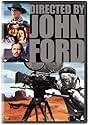
A documentary on the life and films of director John Ford.A documentary on the life and films of director John Ford.A documentary on the life and films of director John Ford.


Peter Bogdanovich
- Self - Interviewer
- (uncredited)

Orson Welles
- Self - Narrator
- (voice)


Harry Carey
- Self
- (archive footage)

Jeffrey Hunter
- Self
- (archive footage)

Richard Widmark
- Self
- (archive footage)

Harry Carey Jr.
- Self
- (uncredited)

Henry Fonda
- Self
- (uncredited)

James Stewart
- Self
- (uncredited)
- Director
- Writer
- All cast & crew
- Production, box office & more at IMDbPro
7.71.3K
1
2
3
4
5
6
7
8
9
10
Featured reviews
engrossing documentary about the great director
John Ford is one of our greatest American directors, and he is profiled in this 1971 documentary that features a hilarious interview with the man himself (Interviewer: How did you shoot that scene? Ford: With a camera) and actors who worked with him many times over the years: John Wayne, James Stewart, Henry Fonda, and Maureen O'Hara.
Narrated by Orson Welles, prominent directors talk about his influence on cinema and his gifts as a director: Martin Scorcese, Peter Bogdanovich, Steven Spielberg, and Clint Eastwood.
The most fascinating part of this documentary was the discussion - with clips - of how the master framed his shots like a painter, and the scenes shown were truly stunning.
The end of the documentary speaks to his sentimentality, belief in an afterlife and the family, demonstrated with heartwrenching scenes from "The Searchers," "How Green was My Valley," and others.
Finally there was a taped meeting between Katharine Hepburn and Ford in the year he died. The two had a great connection and perhaps even a relationship. It is most fascinating, particularly when Ford's son leaves the room and mistakenly leaves the tape recorder on.
Excellent all the way around.
Narrated by Orson Welles, prominent directors talk about his influence on cinema and his gifts as a director: Martin Scorcese, Peter Bogdanovich, Steven Spielberg, and Clint Eastwood.
The most fascinating part of this documentary was the discussion - with clips - of how the master framed his shots like a painter, and the scenes shown were truly stunning.
The end of the documentary speaks to his sentimentality, belief in an afterlife and the family, demonstrated with heartwrenching scenes from "The Searchers," "How Green was My Valley," and others.
Finally there was a taped meeting between Katharine Hepburn and Ford in the year he died. The two had a great connection and perhaps even a relationship. It is most fascinating, particularly when Ford's son leaves the room and mistakenly leaves the tape recorder on.
Excellent all the way around.
10PJK
Excellent
While print quality of the films it shows excerpts from, and some of the interviews is poor, the quality of the documentary itself still shines. It shows us how Ford got started in film, and what films made him a star. It also gives enough of an overview of the man, and enough complete scenes from his films, that a person like me who's only seen a handful of Ford's many many films, can respect the man and know he was one of the best. You also get to know what kind of a man he was through stories told by such Ford film regulars as John Wayne, Jimmy Stewart and Henry Fonda. Some are truly funny and let you know what a character the man himself was. There are also a few spots of interviews with Ford himself behind his famous backdrop of Monument Valley. They tool show you what a unique man Ford was. I was lucky enough to see this on AMC, if you have a chance of seeing it anywhere, I recommend it.
Lest We Forget...
"Directed By John Ford" is a moving, thoroughgoing, yet somehow incomplete look at that master of directors, John Ford, directed by Peter Bogdanovich, a hot young director himself when he first made this film, in 1971.
The version of "Directed By John Ford" I saw is not that version, but a retooled one made in 2006 featuring up-to-date commentary from Steven Spielberg, Clint Eastwood, Martin Scorsese, and Bogdanovich himself, among others. There's also surviving footage from the 1971 version, showing John Wayne, James Stewart, Henry Fonda, and Ford himself, all still alive at the time and willing to sit down and talk with Bogdanovich, though barely in the case of Ford himself.
Q: Mr. Ford, I've noticed your view of the West has become increasingly sad...Have you been aware of that change of mood? A: No.
Q: Now that I've pointed it out, is there anything you'd like to say about it? A: I don't know what you're talking about.
The others interviewed are more willing to share their views, not to mention their scars. "He dares you to do it right do it good," notes Stewart, adding "It's not a relaxed set." Ford was a rank sentimentalist and a bullying manic depressive, pressing every psychological button among his cast, crew, and himself. Wayne and Fonda note how hard-nosed Ford could be with the amused bewilderment of Catholic schoolboys discussing a crazy nun.
The modern-day interviews are interesting, too, though not nearly so. The result here is less a retrospective than an appreciation piece, and something of a disjointed one, with half the interviews discussing Ford in the present tense and half wistfully acknowledging the world Ford left behind.
"He's like Dickens or something," says Walter Hill, the guy behind "Deadwood" and "48 Hrs." "There's a whole frame of reference and horizon-line that's Fordian." The best thing to say about this documentary is that you get some concrete sense of what the adjective "Fordian" means. His films could be messy and emotional, but there was often a economical driving force at their heart, running through them tight as a clothesline.
You also see how Ford influenced directors who came after him. One scene from a 1961 film "Two Rode Together," shows Stewart and Richard Widmark sitting at a stream and having a long conversation about Stewart's love life. It's introduced by Scorsese as an influential scene in his own film-making, but there was nothing recognizably of Scorsese in the clip I see, which is amiable, drawn-out, and too whimsical by half for Scorsese's macho style. But it did remind me a lot of Quentin Tarantino, who it turns out is a huge Scorsese fan. Ford's roots run deep, and often past a lot of people, as with me.
The film loses steam in the second half, though, with a labored reflection on how Ford captured the story of America on a chronological basis. There's some brief audio of Ford talking to Katharine Hepburn that hints at a great romance between the two, but it's thrown up late and not tied in well to anything else.
But this is a fine overview of Ford's fantastic career, however unsettled as to its perspective. Ford himself was a little unsettled, too.
The version of "Directed By John Ford" I saw is not that version, but a retooled one made in 2006 featuring up-to-date commentary from Steven Spielberg, Clint Eastwood, Martin Scorsese, and Bogdanovich himself, among others. There's also surviving footage from the 1971 version, showing John Wayne, James Stewart, Henry Fonda, and Ford himself, all still alive at the time and willing to sit down and talk with Bogdanovich, though barely in the case of Ford himself.
Q: Mr. Ford, I've noticed your view of the West has become increasingly sad...Have you been aware of that change of mood? A: No.
Q: Now that I've pointed it out, is there anything you'd like to say about it? A: I don't know what you're talking about.
The others interviewed are more willing to share their views, not to mention their scars. "He dares you to do it right do it good," notes Stewart, adding "It's not a relaxed set." Ford was a rank sentimentalist and a bullying manic depressive, pressing every psychological button among his cast, crew, and himself. Wayne and Fonda note how hard-nosed Ford could be with the amused bewilderment of Catholic schoolboys discussing a crazy nun.
The modern-day interviews are interesting, too, though not nearly so. The result here is less a retrospective than an appreciation piece, and something of a disjointed one, with half the interviews discussing Ford in the present tense and half wistfully acknowledging the world Ford left behind.
"He's like Dickens or something," says Walter Hill, the guy behind "Deadwood" and "48 Hrs." "There's a whole frame of reference and horizon-line that's Fordian." The best thing to say about this documentary is that you get some concrete sense of what the adjective "Fordian" means. His films could be messy and emotional, but there was often a economical driving force at their heart, running through them tight as a clothesline.
You also see how Ford influenced directors who came after him. One scene from a 1961 film "Two Rode Together," shows Stewart and Richard Widmark sitting at a stream and having a long conversation about Stewart's love life. It's introduced by Scorsese as an influential scene in his own film-making, but there was nothing recognizably of Scorsese in the clip I see, which is amiable, drawn-out, and too whimsical by half for Scorsese's macho style. But it did remind me a lot of Quentin Tarantino, who it turns out is a huge Scorsese fan. Ford's roots run deep, and often past a lot of people, as with me.
The film loses steam in the second half, though, with a labored reflection on how Ford captured the story of America on a chronological basis. There's some brief audio of Ford talking to Katharine Hepburn that hints at a great romance between the two, but it's thrown up late and not tied in well to anything else.
But this is a fine overview of Ford's fantastic career, however unsettled as to its perspective. Ford himself was a little unsettled, too.
Great look at a mythical director
You get to hear why Ford was so great, see him be a cantankerous jerk to a young Peter Bogdonovich, and see loads of clips from classics. If anything, this movie leaves you wanting more, but you will certainly want to go and watch all of these movies again (or for the first time). A great summation.
A Master of the Cinema on a Master of the Cinema
Well. Old John was 76 when Peter B. fired up the cameras out in Monument Valley in '70. 76 in those days was more or less what we see in an 80- or 85-year-old now. They don't feel all that wonderful here and there. Their internal organs aren't hitting on all eight cylinders. Their joints ache. It's hard to care for all that long about what one used to care about. (He died two years later.)
So while this is a movie -about- John Ford, his own comments seem to reflect his stresses of the moment, and he's not all that worked up about telling -- or selling -- his own story. (This -is-, after all a man whose record speaks for itself: "The Informer," "Stagecoach," "The Grapes of Wrath," "My Darling Clementine," "Fort Apache," "Rio Grande," "Mr. Roberts," etc.)
Bogdanovich is clearly abused during his interview with The (unappreciative) Great Man, but what he makes of it -- and the other interviews -- is pret-near as good as many of the Great Man's own films.
We get to see the -man- through the eyes of icons like Stewart, Fonda, O'Hara and Wayne -- who worked directly with him -- from the '70 shoots. We get to see the significance of the man's -work- through the eyes of Eastwood, Scorcese, Hill, Spielberg, Lucas and Bogdanovich, arguably six of the most qualified observers one could hope to assemble.
Moreover, Bogdanovich selects cinematic evidence of the man's remarkable sense of how to present the story on a theater screen: Ward Bond cutting loose with John Wayne. Wayne and Jeffrey Hunter amid the tree branches in a snow storm. Richard Widmark and Jimmy Stewart on the stream's edge in a five-minute two-shot that's plain astonishing.
Spielberg makes the point that Ford knew and employed the rituals of American culture. Scorcese was surely watching closely when he did. Lucas makes the point that Ford knew how to seize the moment cinematically and stamp it indelibly upon our memories. Think of Henry Fonda as Wyatt Earp rocking on the porch with Linda Darnell in "...Clementine." Ford Knew Film. This is proof. Thanks, Pete. Thanks, -John-.
So while this is a movie -about- John Ford, his own comments seem to reflect his stresses of the moment, and he's not all that worked up about telling -- or selling -- his own story. (This -is-, after all a man whose record speaks for itself: "The Informer," "Stagecoach," "The Grapes of Wrath," "My Darling Clementine," "Fort Apache," "Rio Grande," "Mr. Roberts," etc.)
Bogdanovich is clearly abused during his interview with The (unappreciative) Great Man, but what he makes of it -- and the other interviews -- is pret-near as good as many of the Great Man's own films.
We get to see the -man- through the eyes of icons like Stewart, Fonda, O'Hara and Wayne -- who worked directly with him -- from the '70 shoots. We get to see the significance of the man's -work- through the eyes of Eastwood, Scorcese, Hill, Spielberg, Lucas and Bogdanovich, arguably six of the most qualified observers one could hope to assemble.
Moreover, Bogdanovich selects cinematic evidence of the man's remarkable sense of how to present the story on a theater screen: Ward Bond cutting loose with John Wayne. Wayne and Jeffrey Hunter amid the tree branches in a snow storm. Richard Widmark and Jimmy Stewart on the stream's edge in a five-minute two-shot that's plain astonishing.
Spielberg makes the point that Ford knew and employed the rituals of American culture. Scorcese was surely watching closely when he did. Lucas makes the point that Ford knew how to seize the moment cinematically and stamp it indelibly upon our memories. Think of Henry Fonda as Wyatt Earp rocking on the porch with Linda Darnell in "...Clementine." Ford Knew Film. This is proof. Thanks, Pete. Thanks, -John-.


Did you know
- TriviaSteven Spielberg's real account on how he met John Ford when he was a teenager was recreated in The Fabelmans (2022).
- Quotes
Self (2009): Ford, you know, will live forever, because his films will live forever.
Details
Contribute to this page
Suggest an edit or add missing content