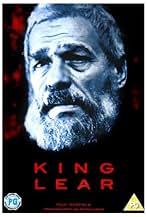
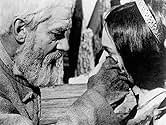
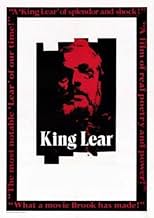
King Lear divides his kingdom among his daughters, giving great importance to their protestations of love for him. When Cordelia refuses to idly flatter the old man, he banishes her and turn... Read allKing Lear divides his kingdom among his daughters, giving great importance to their protestations of love for him. When Cordelia refuses to idly flatter the old man, he banishes her and turns for support to his remaining daughters.King Lear divides his kingdom among his daughters, giving great importance to their protestations of love for him. When Cordelia refuses to idly flatter the old man, he banishes her and turns for support to his remaining daughters.
- Director
- Writers
- Stars
- Awards
- 2 wins & 1 nomination total
- Director
- Writers
- All cast & crew
- Production, box office & more at IMDbPro
7.21K
1
2
3
4
5
6
7
8
9
10
Featured reviews
Exceptional
Peter Brook's film is a very bleak and barbaric interpretation of King Lear. He does a great job directing and whilst some of his experimentation doesn't pay off (such as very strange zooming with Kent at the beginning), when it does pay off it is fantastic (such as Lear's monologues)
Forget the Oscars...this is acting!
As has happened so many times with the Oscars, another great film-actor-ensemble has been neglected. Recognised nearly universally as the ultimate test of an actor's craft, Paul Scofield as Lear in this 1971 version could be deified for his performance, even more complex than his Oscar-winning Thomas More in 1966's best pic "A Man For All Seasons". Viewing this film should be a prerequisite not just for R.A.D.A. acting students. Incorporating as he did the essence of Lear so organically, Scofield sadly was not even nominated, another nod to the lowest common denominator public taste. This review, nearly forty years after the pic's release, was an on-the-spot spontaneous impulse after yet another viewing of the film. People are afraid of Shakespeare(a.l.a. DeVere); don't be. All, but especially any pained by their own offspring, will turn away from the screen with much more than a penny's worth of thought and a rediscovery of the art of Paul Scofield and ensemble. It is a cliché, but they just don't make movies like this one anymore.
The definition of bleakness
"King Lear" is not one of my favourite Shakespeare plays (sacrilege indeed!) but I must say I find this film version immensely impressive and the best film version of Shakespeare I have seen.
The key to this is the direction of Peter Brook. Unquestionably this is an "arty" avant-garde production that has echoes of Bergman and Beckett as other reviewers have noted. For me this works extremely well. The choice of a barren Danish landscape in winter, the use of black and white, and unusual decision to eschew music all contribute to a very dark and bleak atmosphere. The director keeps viewers on their toes and presents a despairing tragedy.
There is nothing theatrical about this - quite rightly as this is a film version. The performances are restrained and measured. The acting is very strong - Patrick Magee particularly stands out as a very menacing Cornwall while Susan Engel and Irene Worth are fine as the manipulative elder sisters.
My only real reservation is that the climax of the film is rather rushed, with the numerous deaths needing a little more reflection. The suicide of Goneril is though extremely powerful. Lear's death is always poignant but the direction of it doesn't work completely.
Opinions are very mixed on this film but I certainly think it deserves attention. It would especially appeal to followers of Bergman and anyone who is struck by a dark tale.
The key to this is the direction of Peter Brook. Unquestionably this is an "arty" avant-garde production that has echoes of Bergman and Beckett as other reviewers have noted. For me this works extremely well. The choice of a barren Danish landscape in winter, the use of black and white, and unusual decision to eschew music all contribute to a very dark and bleak atmosphere. The director keeps viewers on their toes and presents a despairing tragedy.
There is nothing theatrical about this - quite rightly as this is a film version. The performances are restrained and measured. The acting is very strong - Patrick Magee particularly stands out as a very menacing Cornwall while Susan Engel and Irene Worth are fine as the manipulative elder sisters.
My only real reservation is that the climax of the film is rather rushed, with the numerous deaths needing a little more reflection. The suicide of Goneril is though extremely powerful. Lear's death is always poignant but the direction of it doesn't work completely.
Opinions are very mixed on this film but I certainly think it deserves attention. It would especially appeal to followers of Bergman and anyone who is struck by a dark tale.
A great king and a foolish old man
Protagonists for William Shakespeare's plays run the gamut of age. From teenagers Romeo&Juliet to the ancient King Lear. Shakespeare was an ardent
observer of mankind at all ages.
I've often wondered if Shakespeare got the germ of an idea for Lear when in his lifetime he saw Emperor Charles V who had a lot of Europe and a lot of the new world under his control. Politics of the time dictated he divide his empire and half went to his son who became Philip II of Spain and the other half went to brother Maximilian of Austria. Charles died in a monastery 2 years later.
It might have been better for Lear if he had locked himself up in a monastery and stayed there. But he was a tired old man and he had daughters instead of suns. Two daughters flatter the old guy and they get two halves of the kingdom. The third doesn't play that game and he cuts her off.
Then instead of staying in a monastery, the daughters and their husbands make it real clear to Lear that his advice and counsel aren't needed or wanted. Quite a shock coming from his 'faithless' children.
Peter Brook directed and also augmented Shakespeare's plot with some of his own ideas. More than Bard purists denounced the production, but as I remember they fit into the play structure nicely.
Brook also shot the film on the bleak and craggy shores of the Danish coastline. You can hardly tell this is a color film. But that also fit in well with the bleak and moody atmosphere of the play itself.
One undeniable asset this King Lear has is Paul Scofield in the title role. He is nothing short of superb in the title role and he underplays a lot more than either Laurence Olivier or Orson Welles in the same part. His closeups tell a great deal of the story.
This is not the best King Lear, but for Paul Scofield fans an absolute must.
I've often wondered if Shakespeare got the germ of an idea for Lear when in his lifetime he saw Emperor Charles V who had a lot of Europe and a lot of the new world under his control. Politics of the time dictated he divide his empire and half went to his son who became Philip II of Spain and the other half went to brother Maximilian of Austria. Charles died in a monastery 2 years later.
It might have been better for Lear if he had locked himself up in a monastery and stayed there. But he was a tired old man and he had daughters instead of suns. Two daughters flatter the old guy and they get two halves of the kingdom. The third doesn't play that game and he cuts her off.
Then instead of staying in a monastery, the daughters and their husbands make it real clear to Lear that his advice and counsel aren't needed or wanted. Quite a shock coming from his 'faithless' children.
Peter Brook directed and also augmented Shakespeare's plot with some of his own ideas. More than Bard purists denounced the production, but as I remember they fit into the play structure nicely.
Brook also shot the film on the bleak and craggy shores of the Danish coastline. You can hardly tell this is a color film. But that also fit in well with the bleak and moody atmosphere of the play itself.
One undeniable asset this King Lear has is Paul Scofield in the title role. He is nothing short of superb in the title role and he underplays a lot more than either Laurence Olivier or Orson Welles in the same part. His closeups tell a great deal of the story.
This is not the best King Lear, but for Paul Scofield fans an absolute must.
Odd, perhaps awful, and amazing
Much reviled at the time of it's release, this heavily cut, Danish
co-production horrified critics with it's bleak as possible take on what
some consider the world's greatest play.
Obviously influenced by nortic flicks from Dryer to Bergman,
Peter Brook shot this as a midevil horror show; and Pauline Kael called
it his "Night Of The Living Dead."
While certainly unfair to the scope of the Bard's vision, the
film is undeniably facinating; though sometimes tedious too. In the best
parts it comes alive with a vivid wickedness, you can certainly see how
Lear's daughter's came to hate his guts!
So, even if it does mutilate a classic, this film is pretty
amazing and highly recommendable. A dark product of it's own time, you
will scarcely see a Lear like this again.
co-production horrified critics with it's bleak as possible take on what
some consider the world's greatest play.
Obviously influenced by nortic flicks from Dryer to Bergman,
Peter Brook shot this as a midevil horror show; and Pauline Kael called
it his "Night Of The Living Dead."
While certainly unfair to the scope of the Bard's vision, the
film is undeniably facinating; though sometimes tedious too. In the best
parts it comes alive with a vivid wickedness, you can certainly see how
Lear's daughter's came to hate his guts!
So, even if it does mutilate a classic, this film is pretty
amazing and highly recommendable. A dark product of it's own time, you
will scarcely see a Lear like this again.
Did you know
- TriviaBrook based this production on ideas expressed by Polish theater critic Jan Kott in the book "Shakespeare, Our Contemporary".
- Crazy creditsNot only is there no music in the film, but there are no "ambient sounds" at all during the opening credits, giving the impression that they were filmed using no soundtrack whatsoever.
- ConnectionsFeatured in Shakespeare: Rise of a Genius: Episode #1.3 (2023)
- How long is King Lear?Powered by Alexa
Details
- Runtime
- 2h 17m(137 min)
- Color
- Sound mix
- Aspect ratio
- 1.66 : 1
Contribute to this page
Suggest an edit or add missing content