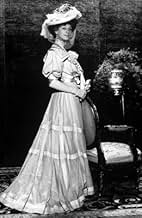
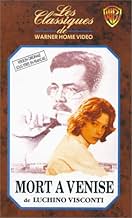
While recovering in Venice, sickly composer Gustav von Aschenbach becomes dangerously fixated with teenager Tadzio.While recovering in Venice, sickly composer Gustav von Aschenbach becomes dangerously fixated with teenager Tadzio.While recovering in Venice, sickly composer Gustav von Aschenbach becomes dangerously fixated with teenager Tadzio.
- Director
- Writers
- Stars
- Nominated for 1 Oscar
- 18 wins & 7 nominations total
Björn Andrésen
- Tadzio
- (as Björn Andresen)
Eva Axén
- Tadzio's Oldest Sister
- (uncredited)
Marcello Bonini Olas
- Nobleman at Hotel Party
- (uncredited)
- Director
- Writers
- All cast & crew
- Production, box office & more at IMDbPro
7.324.4K
1
2
3
4
5
6
7
8
9
10
Featured reviews
One of the greatest foreign films ever
Death in Venice is a must see for all of those interested in "great" film-making. I regard the film as essential watching. The final scene, in which the lovesick middle aged man watching a beautiful boy as his absurd makeup runs and he dies of the plague is one of the most horrific and sad in film history. Featuring the music of Gustav Mahler, we are visited by the dark, amber strains of his Fourth Symphony as we visit Venice, which has been beset with the plague. A middle aged man falls in love with a teenage boy, and is heartsick from afar. This is sumptuous, heartbreaking film-making. A must see.
"Death in Venice" after 30-plus years
I first saw "Death in Venice" when it was initially released in 1971. Today, I saw it again (by chance!) while I was channel-surfing. It had the same hypnotic effect on me that it had then. To wit: I sat down, vacuum cleaner in hand, and remained there. In 1971, at age 21, I recognized the film's poignancy but not in the way I was able to now, at age 56. Yes, it's slow-moving and not very much "happens". But its beauty, especially the wonderful close-ups and the use of Mahler's music, endures. Those familiar with Thomas Mann's novella of the same name,and other of his works (e.g., The Magic Mountain) will recall that nothing much "happens" in these stories, either. However, these classics (both in print and film) are apt to remain with us long after the latest special effects action film has disappeared.
Lacking plot
Don't get me wrong, I don't mind watching films with no plot, they're nice, but usually they have something else that compensates for it. A fixation on a little boy that does noting, but a 45° turn with his head and looks at you is so lacking. Also the subplots about the epidemic and his former life with a wife and child had brought a little more interest, but filled only a very little part.
Nonetheless I liked the cinematography, there was some really pretty stills, (even though they didn't fully exploit being in gorgeous Venice), the music was captivating and the dialogues with Alfred was interesting.
More and more beautiful as the years pass by
"Slow", "slow", "slow"... I read many people complain "it's slow"... slow what? This movie takes its time. All the most beautiful things in life take time. When you make sex with your girlfriend would you try to make it last five minutes? No you would like to make it last the whole night. When you eat good food in a good restaurant would you like to finish it in two minutes? No, you sit down, enjoy the place, the food, the company and the wine. When you visit an art museum, would you rush through the rooms? No, you would move slowly, pay attention, and stop at the artworks that mean more to you. So why should a movie be different?
If you want speed, then eat at McDonald's, rush in the tube, watch TV commercials, and pay a prostitute for a 5 minute work.
If you are looking for real emotions, deep feelings and thoughts that will last in your memory and heart for a long time, then you don't want to miss this movie.
One caveat: don't go watching it for the gay theme. This movie isn't about gay love, if you look at it through this point of view, it will let you down completely. This movie is symbolism from beginning to end, it does not speak of what you see. It speaks of the struggle of the artist to reach the beauty, so close, always unreachable, and, like another reader perfectly commented, so inevitably connected with death, because the only perfection that a living being can ever attain, is in the death. If you look at the movie from this point of view, it will show to you for what it is: a complete masterpiece, from beginning to end.
If you want speed, then eat at McDonald's, rush in the tube, watch TV commercials, and pay a prostitute for a 5 minute work.
If you are looking for real emotions, deep feelings and thoughts that will last in your memory and heart for a long time, then you don't want to miss this movie.
One caveat: don't go watching it for the gay theme. This movie isn't about gay love, if you look at it through this point of view, it will let you down completely. This movie is symbolism from beginning to end, it does not speak of what you see. It speaks of the struggle of the artist to reach the beauty, so close, always unreachable, and, like another reader perfectly commented, so inevitably connected with death, because the only perfection that a living being can ever attain, is in the death. If you look at the movie from this point of view, it will show to you for what it is: a complete masterpiece, from beginning to end.
Unforgettable romantic drama
Set in Venice mainly on the Lido, Visconti's "Death in Venice" is a triumph of filmmaking combining the excellence of Dirk Bogarde's characterisation and expert photography of the resort area in all its various daily moods. For those who love Venice, this is a film to cherish.
Mahler's music frequently heard throughout the film heightens the drama. The mood it creates is not always happy. But then what else would you expect with a title like that?
There is not a lot of dialogue in the film. Rather sparse in fact. It's mainly background noises and chatter and laughter among the hotel guests. The intriguing part is to interpret the exchange of glances between Gustav von Aschenbach a composer of some renown and a slim teenage youth Tadzio who see each other from time to time across the tables of the hotel dining room, on the beach and at odd unexpected places around Venice. They seem to acknowledge each other's presence shyly at first with little more than the suggestion of a smile but later with a strong and riveting and urgent gaze.
Each viewer will have his own interpretation. The composer has lost a child of his own. Is this behaviour an expression of yearning for the child he loved? Is it perhaps a sexual attraction towards this fragile young man with his dazed somewhat girlish stare? Could he be discovering some new inspiration for a yet unwritten musical masterpiece? Who knows?
From beginning to end this film captures the true spirit of 19th Century Venice. The elegance of the ladies, the deck chairs on the sand, the children frolicking in their neck-to-knee bathing costumes, the glow of sunsets and a general feeling of satisfaction with the world. While some may think the pace is rather slow at times, the film has an overall gentle quality, but with a simmering indecision between two repressed human beings. Be prepared for a sad and beautiful ending.
Mahler's music frequently heard throughout the film heightens the drama. The mood it creates is not always happy. But then what else would you expect with a title like that?
There is not a lot of dialogue in the film. Rather sparse in fact. It's mainly background noises and chatter and laughter among the hotel guests. The intriguing part is to interpret the exchange of glances between Gustav von Aschenbach a composer of some renown and a slim teenage youth Tadzio who see each other from time to time across the tables of the hotel dining room, on the beach and at odd unexpected places around Venice. They seem to acknowledge each other's presence shyly at first with little more than the suggestion of a smile but later with a strong and riveting and urgent gaze.
Each viewer will have his own interpretation. The composer has lost a child of his own. Is this behaviour an expression of yearning for the child he loved? Is it perhaps a sexual attraction towards this fragile young man with his dazed somewhat girlish stare? Could he be discovering some new inspiration for a yet unwritten musical masterpiece? Who knows?
From beginning to end this film captures the true spirit of 19th Century Venice. The elegance of the ladies, the deck chairs on the sand, the children frolicking in their neck-to-knee bathing costumes, the glow of sunsets and a general feeling of satisfaction with the world. While some may think the pace is rather slow at times, the film has an overall gentle quality, but with a simmering indecision between two repressed human beings. Be prepared for a sad and beautiful ending.
Did you know
- TriviaThe boy on whom Tadzio was based, Wladyslaw Gerard Jan Nepomuk Marya Moes, was only 10 in May 1911.
- GoofsTV aerials are clearly visible on Venetian rooftops in one scene.
- Alternate versionsThe 'pan and scan' VHS released in 1993 by Warner Home Video has an extended overture of music over black - and after the opening titles goes to a hard cut, mid-shot, of Bogarde sitting on the deck of a ship (totally omitting the opening establishing shot of the the ship at sea in long shot - and much of the subsequent establishing shot of Bogarde.)
- ConnectionsFeatured in Hunting Season (1988)
- SoundtracksSehr Langsam Misterioso from Symphony No.3
Written by Gustav Mahler
Performed by Orchestra dell'Accademia Nazionale di Santa Cecilia (as The Orchestra of the Academy of Saint Cecilia) and Lucretia West (alto)
Conducted by Franco Mannino
- How long is Death in Venice?Powered by Alexa
Details
- Release date
- Countries of origin
- Languages
- Also known as
- Smrt u Veneciji
- Filming locations
- Production companies
- See more company credits at IMDbPro
Box office
- Gross worldwide
- $14,133
Contribute to this page
Suggest an edit or add missing content