IMDb RATING
6.7/10
4.3K
YOUR RATING

A lone survivor from a British naval ship is obsessed with getting revenge on a German U-boat crew that massacred his shipmates in the water.A lone survivor from a British naval ship is obsessed with getting revenge on a German U-boat crew that massacred his shipmates in the water.A lone survivor from a British naval ship is obsessed with getting revenge on a German U-boat crew that massacred his shipmates in the water.
- Director
- Writers
- Stars





Siân Phillips
- Hayden
- (as Sian Phillips)


John Clifford
- Submarine Crewman
- (uncredited)

Harry Fielder
- German Sub Crewman
- (uncredited)

George Roubicek
- U-Boat Crewman
- (uncredited)

Bob Simmons
- member of German sub crew
- (uncredited)
- Director
- Writers
- All cast & crew
- Production, box office & more at IMDbPro
6.74.3K
1
2
3
4
5
6
7
8
9
10
Featured reviews
Murphy's Martial Law
The film stands as an intriguing yet flawed entry in the pantheon of World War II cinema. It boasts a unique perspective, one that eschews large-scale battles and grand military operations in favor of an intimate, singular vendetta. The choice of setting-a remote, desolate stretch of riverine wilderness-imbues the film with a sense of isolation and desperation, a fitting backdrop for the protagonist's one-man war. While this approach differentiates the movie from more conventional war films, it also limits the narrative's scope, which at times results in a sluggish pace that threatens to undermine the tension.
Visually, the cinematography does an admirable job of capturing both the beauty and the harshness of the natural environment. The interplay between the tranquil setting and the ever-present undercurrent of danger is one of the film's strongest elements. However, despite these striking visuals, the direction occasionally falters, particularly in sequences that demand a more dynamic sense of movement and urgency. In contrast to films like "Das Boot" or "The Enemy Below," which masterfully sustain tension through confined naval confrontations, this film sometimes struggles to maintain a consistent level of suspense, as certain sequences feel overly drawn out or lacking in dramatic escalation.
From a technical standpoint, the practical effects and stunts are commendable, particularly given the era of production. The reliance on real aircraft and ships lends the film a tangible authenticity that many contemporary war films struggle to replicate. However, the action choreography is uneven-some sequences are gripping and raw, while others suffer from an awkward execution that diminishes their impact. The sound design is serviceable, though not particularly noteworthy, missing the kind of auditory immersion that films like "Tora! Tora! Tora!" achieve so effectively.
Performance-wise, the lead actor delivers a committed and deeply personal portrayal, convincingly embodying a man consumed by vengeance and grief. The film rests heavily on his shoulders, and while he brings a rugged charisma to the role, there are moments where the performance borders on theatrical, especially in the absence of a strong supporting cast to balance it. Unlike war films that offer a nuanced ensemble dynamic-such as "Cross of Iron," where the interplay between characters enhances the psychological weight of the conflict-this film places nearly all emotional stakes on a single character, which can make some scenes feel repetitive or one-dimensional.
In many ways, the film belongs to the subgenre of war movies that glorify the lone hero against impossible odds, the near-mythical figure who defies all logic and probability to accomplish his mission, even at the cost of his own life. The idea of one man taking on an entire German U-boat and succeeding through sheer willpower and ingenuity borders on the propagandistic, echoing the well-worn trope of the invincible British or American soldier single-handedly defeating the enemy. While this storytelling device has been widely used in war cinema, it often strains credibility, reducing complex wartime realities to a simplified and exaggerated narrative of heroism. The film embraces this almost superhuman portrayal of its protagonist, which, while entertaining in a pulpy, action-driven sense, ultimately detracts from the realism that other war films of the era strive to maintain.
The film's greatest strength lies in its atmosphere and its unorthodox approach to the genre, yet this very quality also becomes its weakness. By focusing so intently on a single character's pursuit, it misses opportunities to explore broader wartime themes or deliver the kind of gripping, large-scale sequences that define many of the best World War II films. Where "The Guns of Navarone" or "Sink the Bismarck!" succeed in blending spectacle with character-driven drama, this film leans too heavily on the latter, at times to the detriment of its pacing and overall impact.
Ultimately, the film is a fascinating yet imperfect experiment in World War II storytelling. It offers moments of genuine intensity and a protagonist whose obsessive drive is compelling, but it also suffers from an uneven execution that prevents it from reaching the heights of the genre's best. It is an admirable effort that will intrigue dedicated fans of wartime cinema, though it may leave others wishing for a more refined balance between character study and action-driven storytelling.
Visually, the cinematography does an admirable job of capturing both the beauty and the harshness of the natural environment. The interplay between the tranquil setting and the ever-present undercurrent of danger is one of the film's strongest elements. However, despite these striking visuals, the direction occasionally falters, particularly in sequences that demand a more dynamic sense of movement and urgency. In contrast to films like "Das Boot" or "The Enemy Below," which masterfully sustain tension through confined naval confrontations, this film sometimes struggles to maintain a consistent level of suspense, as certain sequences feel overly drawn out or lacking in dramatic escalation.
From a technical standpoint, the practical effects and stunts are commendable, particularly given the era of production. The reliance on real aircraft and ships lends the film a tangible authenticity that many contemporary war films struggle to replicate. However, the action choreography is uneven-some sequences are gripping and raw, while others suffer from an awkward execution that diminishes their impact. The sound design is serviceable, though not particularly noteworthy, missing the kind of auditory immersion that films like "Tora! Tora! Tora!" achieve so effectively.
Performance-wise, the lead actor delivers a committed and deeply personal portrayal, convincingly embodying a man consumed by vengeance and grief. The film rests heavily on his shoulders, and while he brings a rugged charisma to the role, there are moments where the performance borders on theatrical, especially in the absence of a strong supporting cast to balance it. Unlike war films that offer a nuanced ensemble dynamic-such as "Cross of Iron," where the interplay between characters enhances the psychological weight of the conflict-this film places nearly all emotional stakes on a single character, which can make some scenes feel repetitive or one-dimensional.
In many ways, the film belongs to the subgenre of war movies that glorify the lone hero against impossible odds, the near-mythical figure who defies all logic and probability to accomplish his mission, even at the cost of his own life. The idea of one man taking on an entire German U-boat and succeeding through sheer willpower and ingenuity borders on the propagandistic, echoing the well-worn trope of the invincible British or American soldier single-handedly defeating the enemy. While this storytelling device has been widely used in war cinema, it often strains credibility, reducing complex wartime realities to a simplified and exaggerated narrative of heroism. The film embraces this almost superhuman portrayal of its protagonist, which, while entertaining in a pulpy, action-driven sense, ultimately detracts from the realism that other war films of the era strive to maintain.
The film's greatest strength lies in its atmosphere and its unorthodox approach to the genre, yet this very quality also becomes its weakness. By focusing so intently on a single character's pursuit, it misses opportunities to explore broader wartime themes or deliver the kind of gripping, large-scale sequences that define many of the best World War II films. Where "The Guns of Navarone" or "Sink the Bismarck!" succeed in blending spectacle with character-driven drama, this film leans too heavily on the latter, at times to the detriment of its pacing and overall impact.
Ultimately, the film is a fascinating yet imperfect experiment in World War II storytelling. It offers moments of genuine intensity and a protagonist whose obsessive drive is compelling, but it also suffers from an uneven execution that prevents it from reaching the heights of the genre's best. It is an admirable effort that will intrigue dedicated fans of wartime cinema, though it may leave others wishing for a more refined balance between character study and action-driven storytelling.
An old favorite of mine
In scanning through these reviews, I'm very pleased to see that this movie is well liked by many people.
I saw it first around the time it came out and even though I was only eleven or twelve, many things about this movie left an impression on me: the sunny, tropical locations, the excellent cast and the impeccable performances.
The very last scene where Murphy is literally consumed by his own revenge is at least as memorable and disturbing as the last scene in The Planet of the Apes (60's version) and drives home the whole point of the movie as perfectly as I've ever seen it done.
See it! You won't be disappointed.
I saw it first around the time it came out and even though I was only eleven or twelve, many things about this movie left an impression on me: the sunny, tropical locations, the excellent cast and the impeccable performances.
The very last scene where Murphy is literally consumed by his own revenge is at least as memorable and disturbing as the last scene in The Planet of the Apes (60's version) and drives home the whole point of the movie as perfectly as I've ever seen it done.
See it! You won't be disappointed.
Glad so many people like it
I saw this film first time round and, going by the date is was made, I must have been about seven years old. Our cinema in Lochgelly was rather lax about age restrictions.
Scenes still stick in my mind and its themes are still very much with me — the horror and dehumanizing impact of war and the futility of revenge.
I have since seen the film again and I was glad not to be disappointed. Being older and wiser, one is inevitably more critical, but there is so much to enjoy in this film. The performances, setting and story all work together to draw you into its dark and dangerous world.
Most notably of all, the U-boat commander and his men are portrayed as human beings. Efficient, determined, ruthless, but they too have feelings and hate the whole damn war just as much as Murphy. This was unusual in war films up until then, and its progressive, enlightened approach to the war enhances the story. We understand and even feel for Murphy, but we too must understand that sometimes we need to let go, accept our losses, be glad we survived and realise that our enemies are human too.
Scenes still stick in my mind and its themes are still very much with me — the horror and dehumanizing impact of war and the futility of revenge.
I have since seen the film again and I was glad not to be disappointed. Being older and wiser, one is inevitably more critical, but there is so much to enjoy in this film. The performances, setting and story all work together to draw you into its dark and dangerous world.
Most notably of all, the U-boat commander and his men are portrayed as human beings. Efficient, determined, ruthless, but they too have feelings and hate the whole damn war just as much as Murphy. This was unusual in war films up until then, and its progressive, enlightened approach to the war enhances the story. We understand and even feel for Murphy, but we too must understand that sometimes we need to let go, accept our losses, be glad we survived and realise that our enemies are human too.
Revenge, and the Lone Survivor
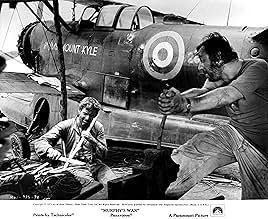
It arises in every war. Destruction on a grand scale and then a private battle on a more secular stage. "In every massacre" quotes the sage, "there is always a survivor." Such is the premise in the film "Murphy's War." During the final months of World War Two, a German U-Boat commander, (Horst Janson) cruising the South American coast line, attacks and sinks a British ship of war, killing all aboard. Examining the ship's wreckage, the German commander is satisfied he not only destroyed the English ship, but did in fact kill the entire crew. Leaving the carnage behind, the audience realizes an English sailor from the stricken ship, survived. His name is Murphy, brilliantly played by Peter O'Toole. Having lived through the terrifying ordeal, many would believe, one should be glad to be alive and to seek a safe distance between himself and the deadly submarine. That is not the conclusion of seaman Murphy who believes the only way he will be able to rid himself of the nightmarish screams of his dying comrades is to seek out and destroy the German U-Boat. This might be a death-wish to some, but not to Murphy who believes that regardless of the inevitable outcome of the war, his sole purpose in life is revenge. Trying to convince him of this mad adventure is Dr. Hayden (Sian Phillips) a female doctor working among the tribal people of the Amazon. In addition, Murphy not only discovers a repairable English sea-plane, but an amiable, aging and exhausted Oil company employee, named Louis Brezon. (Philippe Noiret) Louie has worked in the forgotten, backwaters of the Amazon for years, patiently waiting the end of the war. Now with Murphy seeking his help and relentless revenge, Louie offer's a bit of sound advice. "You're a small and lonely man Murphy, like me, the world will never build us a monument. The only difference is; I know that." Thus the confrontation between the obsessed man and the powerful Submarine easilly become classic drama. ****
The torpedo, oh yes, the torpedo.
Someone commented that this was 'a typical war movie'. It's not in any way though. Murphy's War is complete 100% unrestricted genius. I couldn't imagine going through life without seeing it. The entire foundation of this movie is captured in a deep focus shot of a trashed barge, a p***ed off soldier, and a beached torpedo. If your heart doesn't start beating faster and if you don't have a smile on your face when you see this shot; you need medical attention. Go rent this movie!


Did you know
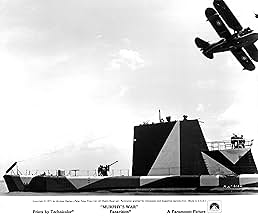
- TriviaThe part of the U-Boat was played by a Venezuelan submarine, the former USS Tilefish (SS-307). The floating crane was, itself, a former WW2 tank landing craft.
- Goofs(at around 1h 17 mins) There is modern-day traffic on the far right of the screen crossing a high bridge just above the tree-line.
- Alternate versionsThe original UK cinema version was cut by the BBFC to remove 2 uses of the word 'fuck' and to edit shots of bloody shootings and dead bodies for an 'A' (PG) certificate. The 12-rated UK DVD release restores the gunshot scenes but also has the swear words blanked out, and an inferior 4:3 transfer.
- ConnectionsFeatured in Entertainment This Week Salutes Paramount's 75th Anniversary (1987)
- SoundtracksMy Hat's on the Side of My Head
(uncredited)
Written by Harry M. Woods and Claude Hulbert
Performed by Roy Fox
Played on the gramophone
- How long is Murphy's War?Powered by Alexa
Details
Box office
- Budget
- $5,000,000 (estimated)
Contribute to this page
Suggest an edit or add missing content