IMDb RATING
6.7/10
4.3K
YOUR RATING

A lone survivor from a British naval ship is obsessed with getting revenge on a German U-boat crew that massacred his shipmates in the water.A lone survivor from a British naval ship is obsessed with getting revenge on a German U-boat crew that massacred his shipmates in the water.A lone survivor from a British naval ship is obsessed with getting revenge on a German U-boat crew that massacred his shipmates in the water.
- Director
- Writers
- Stars





Siân Phillips
- Hayden
- (as Sian Phillips)


John Clifford
- Submarine Crewman
- (uncredited)

Harry Fielder
- German Sub Crewman
- (uncredited)

George Roubicek
- U-Boat Crewman
- (uncredited)

Bob Simmons
- member of German sub crew
- (uncredited)
- Director
- Writers
- All cast & crew
- Production, box office & more at IMDbPro
6.74.3K
1
2
3
4
5
6
7
8
9
10
Featured reviews
Glad so many people like it
I saw this film first time round and, going by the date is was made, I must have been about seven years old. Our cinema in Lochgelly was rather lax about age restrictions.
Scenes still stick in my mind and its themes are still very much with me — the horror and dehumanizing impact of war and the futility of revenge.
I have since seen the film again and I was glad not to be disappointed. Being older and wiser, one is inevitably more critical, but there is so much to enjoy in this film. The performances, setting and story all work together to draw you into its dark and dangerous world.
Most notably of all, the U-boat commander and his men are portrayed as human beings. Efficient, determined, ruthless, but they too have feelings and hate the whole damn war just as much as Murphy. This was unusual in war films up until then, and its progressive, enlightened approach to the war enhances the story. We understand and even feel for Murphy, but we too must understand that sometimes we need to let go, accept our losses, be glad we survived and realise that our enemies are human too.
Scenes still stick in my mind and its themes are still very much with me — the horror and dehumanizing impact of war and the futility of revenge.
I have since seen the film again and I was glad not to be disappointed. Being older and wiser, one is inevitably more critical, but there is so much to enjoy in this film. The performances, setting and story all work together to draw you into its dark and dangerous world.
Most notably of all, the U-boat commander and his men are portrayed as human beings. Efficient, determined, ruthless, but they too have feelings and hate the whole damn war just as much as Murphy. This was unusual in war films up until then, and its progressive, enlightened approach to the war enhances the story. We understand and even feel for Murphy, but we too must understand that sometimes we need to let go, accept our losses, be glad we survived and realise that our enemies are human too.
Murphy's Martial Law
The film stands as an intriguing yet flawed entry in the pantheon of World War II cinema. It boasts a unique perspective, one that eschews large-scale battles and grand military operations in favor of an intimate, singular vendetta. The choice of setting-a remote, desolate stretch of riverine wilderness-imbues the film with a sense of isolation and desperation, a fitting backdrop for the protagonist's one-man war. While this approach differentiates the movie from more conventional war films, it also limits the narrative's scope, which at times results in a sluggish pace that threatens to undermine the tension.
Visually, the cinematography does an admirable job of capturing both the beauty and the harshness of the natural environment. The interplay between the tranquil setting and the ever-present undercurrent of danger is one of the film's strongest elements. However, despite these striking visuals, the direction occasionally falters, particularly in sequences that demand a more dynamic sense of movement and urgency. In contrast to films like "Das Boot" or "The Enemy Below," which masterfully sustain tension through confined naval confrontations, this film sometimes struggles to maintain a consistent level of suspense, as certain sequences feel overly drawn out or lacking in dramatic escalation.
From a technical standpoint, the practical effects and stunts are commendable, particularly given the era of production. The reliance on real aircraft and ships lends the film a tangible authenticity that many contemporary war films struggle to replicate. However, the action choreography is uneven-some sequences are gripping and raw, while others suffer from an awkward execution that diminishes their impact. The sound design is serviceable, though not particularly noteworthy, missing the kind of auditory immersion that films like "Tora! Tora! Tora!" achieve so effectively.
Performance-wise, the lead actor delivers a committed and deeply personal portrayal, convincingly embodying a man consumed by vengeance and grief. The film rests heavily on his shoulders, and while he brings a rugged charisma to the role, there are moments where the performance borders on theatrical, especially in the absence of a strong supporting cast to balance it. Unlike war films that offer a nuanced ensemble dynamic-such as "Cross of Iron," where the interplay between characters enhances the psychological weight of the conflict-this film places nearly all emotional stakes on a single character, which can make some scenes feel repetitive or one-dimensional.
In many ways, the film belongs to the subgenre of war movies that glorify the lone hero against impossible odds, the near-mythical figure who defies all logic and probability to accomplish his mission, even at the cost of his own life. The idea of one man taking on an entire German U-boat and succeeding through sheer willpower and ingenuity borders on the propagandistic, echoing the well-worn trope of the invincible British or American soldier single-handedly defeating the enemy. While this storytelling device has been widely used in war cinema, it often strains credibility, reducing complex wartime realities to a simplified and exaggerated narrative of heroism. The film embraces this almost superhuman portrayal of its protagonist, which, while entertaining in a pulpy, action-driven sense, ultimately detracts from the realism that other war films of the era strive to maintain.
The film's greatest strength lies in its atmosphere and its unorthodox approach to the genre, yet this very quality also becomes its weakness. By focusing so intently on a single character's pursuit, it misses opportunities to explore broader wartime themes or deliver the kind of gripping, large-scale sequences that define many of the best World War II films. Where "The Guns of Navarone" or "Sink the Bismarck!" succeed in blending spectacle with character-driven drama, this film leans too heavily on the latter, at times to the detriment of its pacing and overall impact.
Ultimately, the film is a fascinating yet imperfect experiment in World War II storytelling. It offers moments of genuine intensity and a protagonist whose obsessive drive is compelling, but it also suffers from an uneven execution that prevents it from reaching the heights of the genre's best. It is an admirable effort that will intrigue dedicated fans of wartime cinema, though it may leave others wishing for a more refined balance between character study and action-driven storytelling.
Visually, the cinematography does an admirable job of capturing both the beauty and the harshness of the natural environment. The interplay between the tranquil setting and the ever-present undercurrent of danger is one of the film's strongest elements. However, despite these striking visuals, the direction occasionally falters, particularly in sequences that demand a more dynamic sense of movement and urgency. In contrast to films like "Das Boot" or "The Enemy Below," which masterfully sustain tension through confined naval confrontations, this film sometimes struggles to maintain a consistent level of suspense, as certain sequences feel overly drawn out or lacking in dramatic escalation.
From a technical standpoint, the practical effects and stunts are commendable, particularly given the era of production. The reliance on real aircraft and ships lends the film a tangible authenticity that many contemporary war films struggle to replicate. However, the action choreography is uneven-some sequences are gripping and raw, while others suffer from an awkward execution that diminishes their impact. The sound design is serviceable, though not particularly noteworthy, missing the kind of auditory immersion that films like "Tora! Tora! Tora!" achieve so effectively.
Performance-wise, the lead actor delivers a committed and deeply personal portrayal, convincingly embodying a man consumed by vengeance and grief. The film rests heavily on his shoulders, and while he brings a rugged charisma to the role, there are moments where the performance borders on theatrical, especially in the absence of a strong supporting cast to balance it. Unlike war films that offer a nuanced ensemble dynamic-such as "Cross of Iron," where the interplay between characters enhances the psychological weight of the conflict-this film places nearly all emotional stakes on a single character, which can make some scenes feel repetitive or one-dimensional.
In many ways, the film belongs to the subgenre of war movies that glorify the lone hero against impossible odds, the near-mythical figure who defies all logic and probability to accomplish his mission, even at the cost of his own life. The idea of one man taking on an entire German U-boat and succeeding through sheer willpower and ingenuity borders on the propagandistic, echoing the well-worn trope of the invincible British or American soldier single-handedly defeating the enemy. While this storytelling device has been widely used in war cinema, it often strains credibility, reducing complex wartime realities to a simplified and exaggerated narrative of heroism. The film embraces this almost superhuman portrayal of its protagonist, which, while entertaining in a pulpy, action-driven sense, ultimately detracts from the realism that other war films of the era strive to maintain.
The film's greatest strength lies in its atmosphere and its unorthodox approach to the genre, yet this very quality also becomes its weakness. By focusing so intently on a single character's pursuit, it misses opportunities to explore broader wartime themes or deliver the kind of gripping, large-scale sequences that define many of the best World War II films. Where "The Guns of Navarone" or "Sink the Bismarck!" succeed in blending spectacle with character-driven drama, this film leans too heavily on the latter, at times to the detriment of its pacing and overall impact.
Ultimately, the film is a fascinating yet imperfect experiment in World War II storytelling. It offers moments of genuine intensity and a protagonist whose obsessive drive is compelling, but it also suffers from an uneven execution that prevents it from reaching the heights of the genre's best. It is an admirable effort that will intrigue dedicated fans of wartime cinema, though it may leave others wishing for a more refined balance between character study and action-driven storytelling.
Nobody wins.
Originally to be directed by Burt Kennedy and starring Frank Sinatra, both of whom opted for 'Dirty Dingus Magee'(!) this loose adaptation of Max Catto's novel has been inherited by Peter Yates and features Peter O'Toole, his wife at the time Sian Phillips, highly respected French actor Philippe Noiret and a strangely cast Horst Janson.
By all accounts this proved to be a difficult shoot not least because of disagreements between the director and producer Michael Deeley which resulted in the break up of their professional partnership and one cannot but feel that the finished product is a far cry from screenwriter Stirling Silliphant's original concept. As an actress whose sporadic film appearances have never done justice to her talent, Miss Phillips does her best with an undeveloped, underwritten role whilst Janson's submarine commander who offers a wounded British officer a cigarette prior to murdering him in his hospital bed does not entirely ring true.
This is essentially a vehicle for charismatic Mr. O'Toole who has a particular talent for portraying madness in its various forms. Here his character resembles a maniacal Oirish version of Bogart's Charlie Allnut in 'The African Queen'. Murphy's gung-ho, obsessive desire for vengeance despite knowing that Germany has surrended ultimately renders his character unsympathetic but this may very well have been the makers' intention.
Beautifully shot in Venezuela by veteran Douglas Slocombe, the aerial sequences are stunning whilst many scenes prove more effective without a score. All-in-all a pretty good adventure yarn which for this viewer at any rate could have been so much more.
The ending, which differs considerably fom Catto's novel, calls to mind Gandhi's 'An eye for an eye leaves the whole world blind'.
By all accounts this proved to be a difficult shoot not least because of disagreements between the director and producer Michael Deeley which resulted in the break up of their professional partnership and one cannot but feel that the finished product is a far cry from screenwriter Stirling Silliphant's original concept. As an actress whose sporadic film appearances have never done justice to her talent, Miss Phillips does her best with an undeveloped, underwritten role whilst Janson's submarine commander who offers a wounded British officer a cigarette prior to murdering him in his hospital bed does not entirely ring true.
This is essentially a vehicle for charismatic Mr. O'Toole who has a particular talent for portraying madness in its various forms. Here his character resembles a maniacal Oirish version of Bogart's Charlie Allnut in 'The African Queen'. Murphy's gung-ho, obsessive desire for vengeance despite knowing that Germany has surrended ultimately renders his character unsympathetic but this may very well have been the makers' intention.
Beautifully shot in Venezuela by veteran Douglas Slocombe, the aerial sequences are stunning whilst many scenes prove more effective without a score. All-in-all a pretty good adventure yarn which for this viewer at any rate could have been so much more.
The ending, which differs considerably fom Catto's novel, calls to mind Gandhi's 'An eye for an eye leaves the whole world blind'.
Excellent film
Peter O'Toole stars as Murphy, sole survivor of a ship torpedoed by a German U-boat at the close of WW2. He generates a lot of hatred towards the Germans and sets about to extract revenge for his fallen comrades. This is a story of hatred gone ballistic and obsession for revenge. It seems that Murphy has gone mad. Towards the end of the film, a means to get his revenge becomes available and he sets out to kill the U=boat. Will he succeed? A very good film!
sweet revenge for a mad Irishman
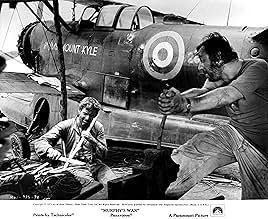
Some films are worth watching if for no other reason than a well-placed novelty that does not distract from the story, but complements it. While I found Murphy's War to be an engaging tale, the sight of an antique float plane in weathered condition humping up and down the river straining to get airborne was exciting (along the lines of a Curtiss Jenny in The Great Waldo Pepper or that '59 finned-automobile in Pink Cadillac). Whether one likes these movies or not, getting a look at a beautiful machine is matchless (unless that object of beauty is Sophia Loren). And how can anyone not be impressed with Mr. Murphy's single-mindedness. Yes, revenge is better left to deities and gods, but oh how sweet it is when realized.


Did you know
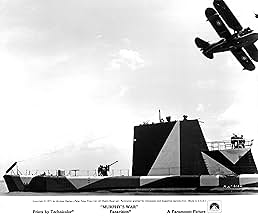
- TriviaThe part of the U-Boat was played by a Venezuelan submarine, the former USS Tilefish (SS-307). The floating crane was, itself, a former WW2 tank landing craft.
- Goofs(at around 1h 17 mins) There is modern-day traffic on the far right of the screen crossing a high bridge just above the tree-line.
- Alternate versionsThe original UK cinema version was cut by the BBFC to remove 2 uses of the word 'fuck' and to edit shots of bloody shootings and dead bodies for an 'A' (PG) certificate. The 12-rated UK DVD release restores the gunshot scenes but also has the swear words blanked out, and an inferior 4:3 transfer.
- ConnectionsFeatured in Entertainment This Week Salutes Paramount's 75th Anniversary (1987)
- SoundtracksMy Hat's on the Side of My Head
(uncredited)
Written by Harry M. Woods and Claude Hulbert
Performed by Roy Fox
Played on the gramophone
- How long is Murphy's War?Powered by Alexa
Details
Box office
- Budget
- $5,000,000 (estimated)
Contribute to this page
Suggest an edit or add missing content