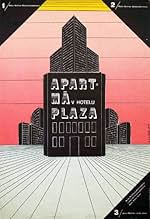
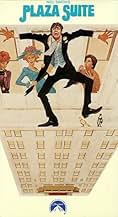
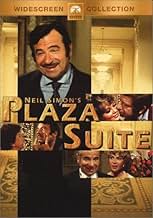
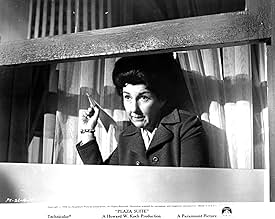
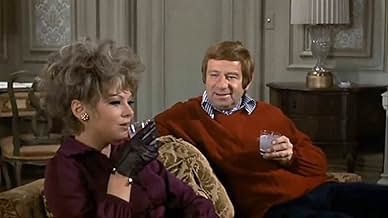
Three vignettes, each set in room 719 of New York's Plaza Hotel, make up this comedy.Three vignettes, each set in room 719 of New York's Plaza Hotel, make up this comedy.Three vignettes, each set in room 719 of New York's Plaza Hotel, make up this comedy.
- Awards
- 2 nominations total
José Ocasio
- Room Service Waiter
- (as Jose Ocasio)
Frank Albanese
- Parking Lot Attendant
- (uncredited)
Raina Barrett
- Girl in Lobby
- (uncredited)
Jack Beers
- Man in Hotel
- (uncredited)
James Bryson
- Doorman
- (uncredited)
Jordan Charney
- Jesse's Aide
- (uncredited)
Gordon B. Clarke
- Hotel Manager
- (uncredited)
Alan DeWitt
- Man in Lobby
- (uncredited)
- Director
- Writer
- All cast & crew
- Production, box office & more at IMDbPro
6.53K
1
2
3
4
5
6
7
8
9
10
Featured reviews
Dialogue heaven...
The old cliche applies to this brilliantly acted and wonderfully scripted film; they don't make them like this any more. The comedy, the intensity, the emotion is all in the dialogue and in the performances of the leading ladies and of course, that of Walter Matthau as the three lead male characters.
The dialogue crackles from start to finish. I don't think a script like this would ever get the green light in Hollywood today. Too much talk, not enough drama, nothing that really happens. In many ways it's more like a French film.
Walter Matthau is from that wonderful generation of fifties and sixties comic actors who could be over-the-top without overracting (Peter Sellers, Phil Silvers, Tony Hancock etc.). He manages to do this whilst never losing his grip on his characters and always managing to surprise with his subtle facial expressions and the comic timing of his movement.
Great performances and a great film.
The dialogue crackles from start to finish. I don't think a script like this would ever get the green light in Hollywood today. Too much talk, not enough drama, nothing that really happens. In many ways it's more like a French film.
Walter Matthau is from that wonderful generation of fifties and sixties comic actors who could be over-the-top without overracting (Peter Sellers, Phil Silvers, Tony Hancock etc.). He manages to do this whilst never losing his grip on his characters and always managing to surprise with his subtle facial expressions and the comic timing of his movement.
Great performances and a great film.
Plaza Suite
Matthau scores in all three vignettes from Neil Simon's long running triumph about different people who stay at a particular room in the posh New York hotel. His three ladies Stapelton, Harris and Grant are also wonderful. This is among the best of Simon's works to be adapted for the screen.
Dark and brilliant comedy gives food for thought
I expected this 1971 film to be a bright comedy. Instead I was presented with the filming of a very deep three-part stage play about the dark side of human relationships; only the last of the three stories could really be called funny.
A bride-to-be locks herself in the bathroom and her parents go through all kinds of hilarious slapstick agony trying to persuade her to come out. It is free of the darker undertones of the first two vignettes and has a cute surprise ending with a happy message. The other two, while being wry and witty in places, are really commentaries on the nature of man's unfaithfulness and exploitation of women, and women's culpability in allowing that state of affairs to develop and continue.
Walter Matthau plays the lead in each of the three stories, which take place in the same suite, 719, of the Plaza Hotel in Manhattan. He has different leading ladies in each one: Maureen Stapleton, Barbara Harris and Lee Grant. There are a few incidental characters but the stories revolve around the two main characters in each story. The dialogue is quite true to real life, even appearing to be repetitive and meaningless in places as real life conversations can be, but the playwright is taking us in each case to a specific understanding of the characters. There is nothing extraneous even though at first it appears to be cluttered with incidentals.
In the first story, a husband and wife check into the Plaza Hotel for their anniversary - and then things begin to fall apart. Maureen Stapleton as the seemingly scatterbrained wife is brilliant in playing both the tragic and comic aspects of this complicated role. As the story unfolds we realize things are not as they appear on the surface.
In the second story, a sleazy Hollywood businessman calls up various names in his little black book so that he can have some woman - any woman - come to his suite for sex from 2 to 4 between meetings. The woman from his past whom he persuades to show up is both afraid of the possible seduction and hoping he will talk her into it. This is all too painful and familiar a scenario and anyone will relate to the awkward dance between two individuals who have to try to save face while getting their needs met.
If you are looking for a light and fluffy comedy this is not the one to choose. It will disturb you and make you think about the tragic aspects of love, sex and marriage, long after it is over.
A bride-to-be locks herself in the bathroom and her parents go through all kinds of hilarious slapstick agony trying to persuade her to come out. It is free of the darker undertones of the first two vignettes and has a cute surprise ending with a happy message. The other two, while being wry and witty in places, are really commentaries on the nature of man's unfaithfulness and exploitation of women, and women's culpability in allowing that state of affairs to develop and continue.
Walter Matthau plays the lead in each of the three stories, which take place in the same suite, 719, of the Plaza Hotel in Manhattan. He has different leading ladies in each one: Maureen Stapleton, Barbara Harris and Lee Grant. There are a few incidental characters but the stories revolve around the two main characters in each story. The dialogue is quite true to real life, even appearing to be repetitive and meaningless in places as real life conversations can be, but the playwright is taking us in each case to a specific understanding of the characters. There is nothing extraneous even though at first it appears to be cluttered with incidentals.
In the first story, a husband and wife check into the Plaza Hotel for their anniversary - and then things begin to fall apart. Maureen Stapleton as the seemingly scatterbrained wife is brilliant in playing both the tragic and comic aspects of this complicated role. As the story unfolds we realize things are not as they appear on the surface.
In the second story, a sleazy Hollywood businessman calls up various names in his little black book so that he can have some woman - any woman - come to his suite for sex from 2 to 4 between meetings. The woman from his past whom he persuades to show up is both afraid of the possible seduction and hoping he will talk her into it. This is all too painful and familiar a scenario and anyone will relate to the awkward dance between two individuals who have to try to save face while getting their needs met.
If you are looking for a light and fluffy comedy this is not the one to choose. It will disturb you and make you think about the tragic aspects of love, sex and marriage, long after it is over.
not very funny
Not very funny or interesting. All three of the skits are pretty boring. I could hardly keep myself awake during the second one, I only watched the third one because i heard it was the best of the three, It was just as bad as the first two. Walter Matthau is a fine actor but not in here.
Stapleton Shines
I just watched this movie for the first time. And I have re-watched the first "act" a number of times now. I never gave Maureen Stapleton much of a thought, frankly. Until I watched this movie. I like this movie very much. It will be one of my "go-to's,"- those pictures that I can always watch and always enjoy. Matthau is effective throughout. Act 2 is played quite broadly, and it's a fun segment, but the weakest. Act 3 is (because I can't think of a better descriptor) conventionally funny - it follows the familiar pattern, and it's very good. But the best is the first act where the real focus is Stapleton. From the moment we first see her, she looks real. I wager that most people who watch this movie knows someone that is her character. Watch her closely, as she puts nuance into every scene - the expressions on her face, the gestures. There's a scene where she sits down on a bed, back to the camera as Matthau leaves the room. It's followed by her talking to herself. It's a brilliant bit of acting, that feels so real, and struck an emotional chord in me. I gave this an "8." If I had to grade each act separately, it would be: Act 1 - 10; Act 2 - 7; Act 3 - 8 Watch and enjoy.
Did you know
- TriviaThis film's screenwriter and source playwright Neil Simon once said of this movie: "I didn't like the cast. I didn't like the picture. I would only have used Walter in the last sequence and probably Lee Grant. I think Walter Matthau was wrong to play all three parts. That's a trick Peter Sellers can do. I have to accept some of the blame for the film. I kept all the action in one room. It was rather confining. We could have gone into other suites. I didn't think it out, but I learned from that."
- GoofsIn Act 3, Norma Hubley's hat gets soaking wet when she sticks her head out of the window. In the next shot it is dry again.
- Quotes
Norma Hubley: Promise me you won't get hysterical.
Roy Hubley: Why? What'd you do?
Norma Hubley: Just promise me.
Roy Hubley: Alright, I promise. what'd you do?
Norma Hubley: I broke my diamond ring.
Roy Hubley: Your good diamond ring?
Norma Hubley: How many do I have?
- ConnectionsFeatured in Paramount Presents (1974)
- SoundtracksTangerine
Written by Johnny Mercer and Victor Schertzinger
- How long is Plaza Suite?Powered by Alexa
Details
Box office
- Gross US & Canada
- $1,669,403
- Runtime
- 1h 54m(114 min)
- Sound mix
- Aspect ratio
- 1.85 : 1
Contribute to this page
Suggest an edit or add missing content