IMDb RATING
6.2/10
1.2K
YOUR RATING

A doctor investigates the murders of several women at a lakeside resort. His investigation leads him to believe that a vampire is responsible for the murders. He sets out to track the vampir... Read allA doctor investigates the murders of several women at a lakeside resort. His investigation leads him to believe that a vampire is responsible for the murders. He sets out to track the vampire down.A doctor investigates the murders of several women at a lakeside resort. His investigation leads him to believe that a vampire is responsible for the murders. He sets out to track the vampire down.
- Awards
- 1 nomination total

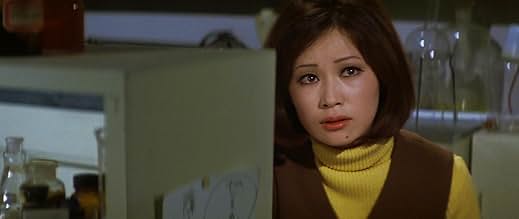

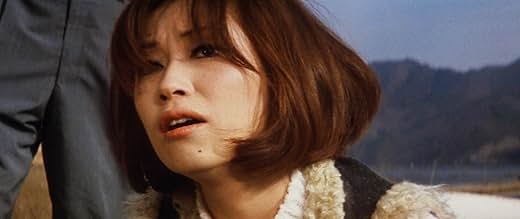
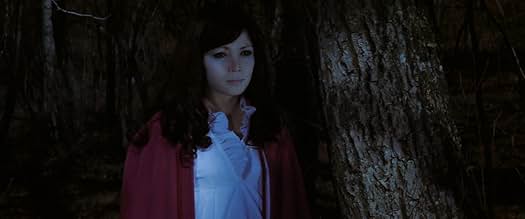


Shigeo Katô
- Guest at a coffee shop
- (uncredited)
- Director
- Writers
- All cast & crew
- Production, box office & more at IMDbPro
6.21.2K
1
2
3
4
5
6
7
8
9
10
Featured reviews
You won't forget the film's haunting second half
Lake of Dracula is the second entry in the Bloodthirsty Trilogy, a series of Japanese movies inspired by American and European horror cinema, literature and myths. The story revolves around school teacher Kashiwagi Akiko who lives near a peaceful lake. When a coffin is delivered to a local boathouse by a strange truck driver, strange events start to occur. Akiko believes the current events are somehow related to a traumatizing event she went through when she was only five years old. Her joyful sister Natsuko doesn't believe her but her fiancé Doctor Saeki Takashi starts to investigate when one of his patients who lived near the lake is brought to his hospital with two bite marks on her neck.
If compared to the first entry in the franchise, Lake of Dracula isn't as intense from start to finish as the creepy The Vampire Doll. There are a few too many dialogues in the middle section and scenes like the two sisters going shopping in a nearby town are irrelevant to the story. However, the opening flashback has a very eerie atmosphere and the first scene in the present when a mysterious coffin is delivered sets the tone for the rest of the movie. Things start getting really intense in the second half when the protagonist gets attacked at home and her fiancé in his car. From then on, the film has intense pace and ends very dramatically as well.
The settings are perfectly chosen. The beautiful town by the lake turns into a sinister trap. The vampire's strange house has an otherworldly vibe to it. The hospital the doctor works in looks sinsiter at night. The different locations add some diversity to an already entertaining movie.
The acting performances are also quite solid. Fujita Midori delivers the goods as lead actress in her very first film and it's a mystery to me why she only starred in six movies in her whole career. Her fragile yet determined nature is perfecrly balanced in this movie. She harmonizes well with her more rational and grounded partner Takahashi Chôei. Their chemistry is comparable to the couple in the first movie. The mysterious vampire is played by Kishida Shin and truly terrifying. It reminds of several classic American horror movies in a positive way.
The second half of the film might even be better than the one of The Vampire Doll but a slightly dragging middle section makes Lake of Dracula overall a little bit less enjoyable. Still, fans of classic horror cinema will dig the combination of Japanese culture and Western horror tropes. The idea that vampirism was brought to Japan by foreigners as explained in this movie is somewhat awkward but everything else fits together very fluidly. The movie looks a little bit dated nowadays but still convinces with very good acting performances, a lot of atmosphere and great locations.
If compared to the first entry in the franchise, Lake of Dracula isn't as intense from start to finish as the creepy The Vampire Doll. There are a few too many dialogues in the middle section and scenes like the two sisters going shopping in a nearby town are irrelevant to the story. However, the opening flashback has a very eerie atmosphere and the first scene in the present when a mysterious coffin is delivered sets the tone for the rest of the movie. Things start getting really intense in the second half when the protagonist gets attacked at home and her fiancé in his car. From then on, the film has intense pace and ends very dramatically as well.
The settings are perfectly chosen. The beautiful town by the lake turns into a sinister trap. The vampire's strange house has an otherworldly vibe to it. The hospital the doctor works in looks sinsiter at night. The different locations add some diversity to an already entertaining movie.
The acting performances are also quite solid. Fujita Midori delivers the goods as lead actress in her very first film and it's a mystery to me why she only starred in six movies in her whole career. Her fragile yet determined nature is perfecrly balanced in this movie. She harmonizes well with her more rational and grounded partner Takahashi Chôei. Their chemistry is comparable to the couple in the first movie. The mysterious vampire is played by Kishida Shin and truly terrifying. It reminds of several classic American horror movies in a positive way.
The second half of the film might even be better than the one of The Vampire Doll but a slightly dragging middle section makes Lake of Dracula overall a little bit less enjoyable. Still, fans of classic horror cinema will dig the combination of Japanese culture and Western horror tropes. The idea that vampirism was brought to Japan by foreigners as explained in this movie is somewhat awkward but everything else fits together very fluidly. The movie looks a little bit dated nowadays but still convinces with very good acting performances, a lot of atmosphere and great locations.
An Overall Eerie Atmosphere
As a child "Akiko Kashiwagi" (Midori Fujita) witnessed a horrible scene involving a vampire and has tried her best to repress it since then. Now in her mid-twenties certain strange events begin occurring which bring those memories front and center. The problem is that when she tries to tell her younger sister "Natsuko Kashiwagi" (Sanae Emi) about them she ends up sounding a little crazy and begins to question her sanity. Fortunately, her boyfriend "Dr. Takashi Saeki" (Choei Takahashi) is a bit more understanding. Even so, he still isn't quite able to make the connection when a patient is admitted to the emergency room totally drained of blood and with two bite marks on her neck. And then things really begin to happen. Now, rather than detail any more of the movie and risk spoiling it for those who haven't seen it I will just say that, even though this basic story has been told many times and in many ways, this particular film was somewhat unique due in large part to the Japanese setting. I especially liked the heavy use of makeup on some of the characters along with the fog which helped to create an overall eerie atmosphere. Likewise, having a pretty actress like the aforementioned Sanae Emi certainly didn't hurt either. In any case, while the movie was certainly no blockbuster I think it deserves at least an average rating.
Solid enough if a slight let down
Arriving at a small lake-side town, a new teacher comes to suspect that someone is behind the strange incidents and dead bodies piling up around town, and when she learns that a master vampire has moved into the area she sets out to stop his blood-soaked reign against the villagers.
This was a decent enough if slightly flawed vampire effort. One of the few solid points involved here comes from the way this goes about trying to instill the idea of the vampire in the area as the build- up here is somewhat credible. Building the strange crate delivery alongside her arrival at the same time is quite nicely handled, and the first attacks, as well as the discovery of their aftermath, all come off rather well as the mystery starts to unfold. Even some of the fine action scenes throughout here, from the abduction in the woods before being startled away and the hospital resurrection of the first body to the idea of the nightly romps through the woods where he's able to feast on her friend despite continually denying it all makes for a rather fun time here and sells the idea of her mental competence rather well which runs through the first half of the film. Once it's confirmed that there are vampires involved, things pick up far more here with the Gothic action scenes really enhancing this one from the ambush in the car at the same time the two of them trap her in the home and begin tormenting her or the hospital awakening sequence give this some really energetic and lively moments. However, it's really the big confrontation at the end which really works best here with the Gothic imagery and action really making for a great finish and gives this one a lot to really like here with the way it all wraps up inside the basement and spreading throughout the rest of the house. Still, while these are the film's good points there are a few negative issues. One of the main problems is the fact that the film really suffers from a stiff and dragged out beginning where not a whole lot really makes an impact. Despite the series of events that play out here detailing the emergence of the vampire around the village, it's still a somewhat dull and dragged-out effort where those brief spurts feel like exceptions to the bland dialogue-heavy sequences that are much more commonly featured so this one really feels like it takes a while to get going. By focusing on her burgeoning mental instability doesn't make for a fun time here regardless of how well the vampire storyline is built through these events, this one really takes more time than it should in letting loose with its story and comes across as somewhat duller than it should be considering what goes on. Likewise, there's also the rather economical manner this one manages to make the heroine think of her predicament and how she buys into it all, as a few throwaway lines regarding the Western methods of dealing with vampires and yet it's completely bought into without so much as a real questionable thought. This makes for a tough time overall, although it does still have its moments.
Rated Unrated/R: Violence, Language and violence-against-animal aftermath.
This was a decent enough if slightly flawed vampire effort. One of the few solid points involved here comes from the way this goes about trying to instill the idea of the vampire in the area as the build- up here is somewhat credible. Building the strange crate delivery alongside her arrival at the same time is quite nicely handled, and the first attacks, as well as the discovery of their aftermath, all come off rather well as the mystery starts to unfold. Even some of the fine action scenes throughout here, from the abduction in the woods before being startled away and the hospital resurrection of the first body to the idea of the nightly romps through the woods where he's able to feast on her friend despite continually denying it all makes for a rather fun time here and sells the idea of her mental competence rather well which runs through the first half of the film. Once it's confirmed that there are vampires involved, things pick up far more here with the Gothic action scenes really enhancing this one from the ambush in the car at the same time the two of them trap her in the home and begin tormenting her or the hospital awakening sequence give this some really energetic and lively moments. However, it's really the big confrontation at the end which really works best here with the Gothic imagery and action really making for a great finish and gives this one a lot to really like here with the way it all wraps up inside the basement and spreading throughout the rest of the house. Still, while these are the film's good points there are a few negative issues. One of the main problems is the fact that the film really suffers from a stiff and dragged out beginning where not a whole lot really makes an impact. Despite the series of events that play out here detailing the emergence of the vampire around the village, it's still a somewhat dull and dragged-out effort where those brief spurts feel like exceptions to the bland dialogue-heavy sequences that are much more commonly featured so this one really feels like it takes a while to get going. By focusing on her burgeoning mental instability doesn't make for a fun time here regardless of how well the vampire storyline is built through these events, this one really takes more time than it should in letting loose with its story and comes across as somewhat duller than it should be considering what goes on. Likewise, there's also the rather economical manner this one manages to make the heroine think of her predicament and how she buys into it all, as a few throwaway lines regarding the Western methods of dealing with vampires and yet it's completely bought into without so much as a real questionable thought. This makes for a tough time overall, although it does still have its moments.
Rated Unrated/R: Violence, Language and violence-against-animal aftermath.
I had some difficulty with this one
I had some difficulty with this one. Interesting as a Japanese version of a Hammer horror but although it looked fairly good, with all the expected cobwebs, old house, awkward fangs, multiple shots of bite marks (same every time and repeated?) and sounded okay, creaking doors, thunder and lightening and plenty of screams, this did creak a bit (pardon the pun). A leisurely start is basically followed by a wordy middle and amazingly a rather slow ending, just when things really should have been going bump. Some nice late 60s/early 70s costumes including some pretty English coats and suits plus an extensive use of scarves which were presumably to hide bite marks that weren't there. Colourful but slightly annoying in that the makers had clearly seen many Hammers yet the cast had not because they seemed oblivious to the end, when all had to be spelled out. Nice that it was made clear that these were not Japanese vampires but foreigners. Of course!
Effective vampire horror.
As I write, it's 69 years since Godzilla first stomped across our planet, causing the kind of destruction that is, even now, wowing audiences across the world. Toho films were originally (and subsequently) responsible for most of The Big G's attempts to save/destroy humanity. Perhaps less well known, particularly to Western audiences, is that Toho also enjoys a run of horror films. They were behind 1998's seminal Ringu, for example, which spawned a whole host of ghostly dark-haired children in horror films.
They flirted with the Prince of Darkness himself with this trilogy of films. Beginning with 1970's 'The Vampire Doll' and ending with ending with 'Evil of Dracula (1974)', 'Lake of Dracula' stars Shin Kishida as a thin glowing-eyed vampire and is more frightening than you might imagine. Nicely directed by Michio Yamamoto and bathed in abrasive colours, he is a force well up to the standing and style of other Draculas.
Any middle section of a trilogy has the most difficult job. No beginning and no end to speak of, it might ungraciously be regarded as 'filler' to any ongoing story. Happily, the stories are so loosely connected, 'Lake' is free to do as it pleases to a large degree.
There's a note of restrain with the horrors here, which isn't always the way with Toho films, and yet the finale is as horrifying as you could hope for. A triumph of lighting, tension and a generally eerie ambience, my score is 8 out of 10.
They flirted with the Prince of Darkness himself with this trilogy of films. Beginning with 1970's 'The Vampire Doll' and ending with ending with 'Evil of Dracula (1974)', 'Lake of Dracula' stars Shin Kishida as a thin glowing-eyed vampire and is more frightening than you might imagine. Nicely directed by Michio Yamamoto and bathed in abrasive colours, he is a force well up to the standing and style of other Draculas.
Any middle section of a trilogy has the most difficult job. No beginning and no end to speak of, it might ungraciously be regarded as 'filler' to any ongoing story. Happily, the stories are so loosely connected, 'Lake' is free to do as it pleases to a large degree.
There's a note of restrain with the horrors here, which isn't always the way with Toho films, and yet the finale is as horrifying as you could hope for. A triumph of lighting, tension and a generally eerie ambience, my score is 8 out of 10.


Did you know
- TriviaDespite the English title being "Lake of Dracula", the vampire in the film is not meant to be Dracula although the film does make allusions to the character.
- Alternate versionsIn the Japanese cut, the vampires are shown disintegrating at the end of the picture. The American version, as with Nosutoradamusu no Daiyogen (1974), is loaded with fadeouts for television.
- ConnectionsFollowed by Evil of Dracula (1974)
- How long is Lake of Dracula?Powered by Alexa
Details
- Release date
- Country of origin
- Language
- Also known as
- Dracula's Lust for Blood
- Production company
- See more company credits at IMDbPro
Contribute to this page
Suggest an edit or add missing content