IMDb RATING
7.8/10
67K
YOUR RATING


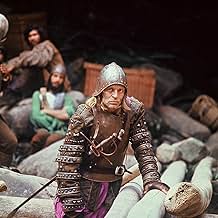
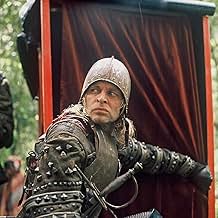
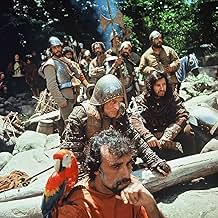
In the 16th century, the ruthless and insane Don Lope de Aguirre leads a Spanish expedition in search of El Dorado.In the 16th century, the ruthless and insane Don Lope de Aguirre leads a Spanish expedition in search of El Dorado.In the 16th century, the ruthless and insane Don Lope de Aguirre leads a Spanish expedition in search of El Dorado.
- Awards
- 4 wins & 3 nominations total







Claus Biederstaedt
- Brother Gaspar de Carvajal
- (voice)
- (uncredited)
Lothar Blumhagen
- Don Pedro de Ursua
- (voice)
- (uncredited)

Heinz Theo Branding
- Don Fernando de Guzman
- (voice)
- (uncredited)
Christian Brückner
- Balthasar
- (voice)
- (uncredited)
- Director
- Writer
- All cast & crew
- Production, box office & more at IMDbPro
7.866.8K
1
2
3
4
5
6
7
8
9
10
Featured reviews
Director Herzog is not a cheerleader for humans.
"Aguirre, the Wrath of God": Werner Herzog is one of my all-time favorite film makers, and this is one of my favorite films by him. Actually taken from the diary of the priest who accompanied Pizarro's expedition in 1560, Herzog recreates the pretentious and self-deluded search for the "Lost City of Gold - Eldorado".
Herzog likes true stories...ones that are bizarre in their own right, but with his direction and personal vision, they become profound (and never optimistic). The camera work is always interesting (he single-handedly "patented" camera shots that don't sweep - they ("you") stare and stare - and stare - at a thing or person or place until it becomes abstract, intense, beautiful, threatening, profound), the scoring is always appropriate yet never expected, and his casting, often using the unique talents of the late Klaus Kinski, guarantee nothing less than an intense experience...even in a film like "Aguirre", which SLOWLY claws and slogs it's way along each and every slippery, dangerous, foreign mile of jungle.
It is clear Herzog 'focuses' on the ridiculously high beliefs humans create for and hold of themselves - that they could actually "own" anything, "conquer" anything, outwit that which they do not understand, and by sheer Will cause anything they deem important, to exist. Herzog is NOT a cheerleader for the history of humans, but he is a ponderer... and we are fortunate he does it on film.
Herzog likes true stories...ones that are bizarre in their own right, but with his direction and personal vision, they become profound (and never optimistic). The camera work is always interesting (he single-handedly "patented" camera shots that don't sweep - they ("you") stare and stare - and stare - at a thing or person or place until it becomes abstract, intense, beautiful, threatening, profound), the scoring is always appropriate yet never expected, and his casting, often using the unique talents of the late Klaus Kinski, guarantee nothing less than an intense experience...even in a film like "Aguirre", which SLOWLY claws and slogs it's way along each and every slippery, dangerous, foreign mile of jungle.
It is clear Herzog 'focuses' on the ridiculously high beliefs humans create for and hold of themselves - that they could actually "own" anything, "conquer" anything, outwit that which they do not understand, and by sheer Will cause anything they deem important, to exist. Herzog is NOT a cheerleader for the history of humans, but he is a ponderer... and we are fortunate he does it on film.
A disappointment.
I definitely would not say that I find nothing about this film to recommend. The story is compelling, as is the script's exploration of Aguirre's character. When Aguirre says that he intends to stage history as some men do plays, I believe it is a moment of genius. But that is about all that interests me in this film.
As far as the direction goes, I was not impressed. The actors seem uncomfortable and the scenes come off as deliberately staged, which is in stark contrast to the filming style, which wants to try and capture everything as natural. The sound is natural and possibly untouched, the camera work is documentary style. The contrast between the home movie feel of the camera and sound and the awkwardness of the actors on scene is jarring.
I read in another review that many of the shots were first and only takes. This comes as no surprise when one sees the film. So much of it seems unnatural. This can certainly be used to good effect. David Lynch, for instance, uses styles that are very unnatural, but they fit in with his overall vision of the film. The acting, the blocking, the lighting, the sound, the camera work... it all fits together into a coherent hole, no matter how absurd the pacing of the dialogue in Lost Highway, for instance, may seem on its own. I got no such impression of cohesion from Aguirre: Der Zorn Gottes.
Worst of all, the film very suddenly gets quite silly towards the end, almost like a lost episode of Monty Python's Flying Circus. I am sure that many people would say that I missed the point, that the ridiculousness was meant to represent their hallucinations, and they may be right. But I still was put off by it.
This was my first experience with Werner Herzog, and perhaps later on I will regret typing this review, like the critics who tore into Psycho only later to put it on their Ten Best list for the decade of the sixties. But this was my impression of the movie. I can see certain attractive aspects, but I cannot say that I enjoyed it.
As far as the direction goes, I was not impressed. The actors seem uncomfortable and the scenes come off as deliberately staged, which is in stark contrast to the filming style, which wants to try and capture everything as natural. The sound is natural and possibly untouched, the camera work is documentary style. The contrast between the home movie feel of the camera and sound and the awkwardness of the actors on scene is jarring.
I read in another review that many of the shots were first and only takes. This comes as no surprise when one sees the film. So much of it seems unnatural. This can certainly be used to good effect. David Lynch, for instance, uses styles that are very unnatural, but they fit in with his overall vision of the film. The acting, the blocking, the lighting, the sound, the camera work... it all fits together into a coherent hole, no matter how absurd the pacing of the dialogue in Lost Highway, for instance, may seem on its own. I got no such impression of cohesion from Aguirre: Der Zorn Gottes.
Worst of all, the film very suddenly gets quite silly towards the end, almost like a lost episode of Monty Python's Flying Circus. I am sure that many people would say that I missed the point, that the ridiculousness was meant to represent their hallucinations, and they may be right. But I still was put off by it.
This was my first experience with Werner Herzog, and perhaps later on I will regret typing this review, like the critics who tore into Psycho only later to put it on their Ten Best list for the decade of the sixties. But this was my impression of the movie. I can see certain attractive aspects, but I cannot say that I enjoyed it.
some great moments and many flaws
This is neither the masterwork nor the garbage most people see in it. Sure, it has a lot of very strong points - Kinski's acting, a fascinating plot, the original settings, some good cinematography and an unforgettable closing scene. However, the movie seriously suffers from awkward cuts and terrible dramaturgy; and, worst of all, the stiff dialogues and the amateur-class acting of almost everybody besides Kinski (you will note both especially if you speak German) make some scenes unbearable. So all in all, while it may have the potential to be a really great movie, it delivers only sometimes, and in order to call it a masterpiece, you would have to be very generous and overlook many flaws ...
Herzog's masterpiece
AGUIRRE: THE WRATH OF GOD (1972) Spaniards in search of El Dorado descend down an intense mountain peak with barely a path on it. Men slosh through a wet jungle forest with cannibals, dragging horses, cannons and women on thrones with them. Rafts try to navigate harsh rapids with no end in sight, sending one of them into a whirlpool. This is the first ten minutes. And it is probably easier than what it took to make the film.
Werner Herzog's masterpiece follows Klaus Kinski as a conquistador leading a group of men through his personal madness in Peru, searching for the mythical city of gold. Kinski wasn't an actor, he was a time-traveller, and his performances for Herzog are his best. My favorite scene of all his work is in this film early-on: as the huge group of slaves struggle and burn their souls carrying a woman on a throne-chair against the unforgiving jungle mud and trees, Kinski suddenly appears in the middle to offer a helping hand. He writhes and morphs, grabbing the slaves and shoving them, screaming at the top of his lungs, "Fools!!! The sedan chair is stuck!"
AGUIRRE is what got Herzog noticed around the world as part of a new group of German filmmakers along with Fassbinder and Wenders. His previous film was EVEN DWARVES STARTED SMALL, which resulted in Kinski calling him, "A mere dwarf director." The battles between he and Kinski should be legendary by now. The final result in Herzog stating he will grab his gun and kill both himself and Kinski as the actor was threatening to leave the production. Kinski was convinced and finished the film.
This story and more is part of the excellent analog track by Herzog, covering all of the hardcore production that overwhelms the more famous Coppola problems making Apocalypse Now. Herzog didn't have millions of dollars, rather 300 grand, had to live on the rafts for months and deal with the jungle and Kinski. But he never bitches - you do what you have to do, and the film is never compromised, from the costumes, the beautiful real locations and the boat hanging in the tree to the eerie group of small monkeys at the end (which Herzog had to steal, even though he paid for them). The analog track is constant (many now seem to take pauses to watch the film) with background on the idea, actors, filming and philosophies. Yes, that is a real mummy in the cannibal camp, for which Herzog's brother had to buy a passenger ticket for the plane ride over.
The DVD is another fantastic release giving the nice treatment to a title that can't be making them millionaires. The image looks great and is not letterboxed, so I assume that that is how Herzog prefers it. The three trailers didn't add much to the presentation, but that's a minor point. When they are finished with the entire Herzog collection, it will be one of the most fascinating career studies on DVD.
Werner Herzog's masterpiece follows Klaus Kinski as a conquistador leading a group of men through his personal madness in Peru, searching for the mythical city of gold. Kinski wasn't an actor, he was a time-traveller, and his performances for Herzog are his best. My favorite scene of all his work is in this film early-on: as the huge group of slaves struggle and burn their souls carrying a woman on a throne-chair against the unforgiving jungle mud and trees, Kinski suddenly appears in the middle to offer a helping hand. He writhes and morphs, grabbing the slaves and shoving them, screaming at the top of his lungs, "Fools!!! The sedan chair is stuck!"
AGUIRRE is what got Herzog noticed around the world as part of a new group of German filmmakers along with Fassbinder and Wenders. His previous film was EVEN DWARVES STARTED SMALL, which resulted in Kinski calling him, "A mere dwarf director." The battles between he and Kinski should be legendary by now. The final result in Herzog stating he will grab his gun and kill both himself and Kinski as the actor was threatening to leave the production. Kinski was convinced and finished the film.
This story and more is part of the excellent analog track by Herzog, covering all of the hardcore production that overwhelms the more famous Coppola problems making Apocalypse Now. Herzog didn't have millions of dollars, rather 300 grand, had to live on the rafts for months and deal with the jungle and Kinski. But he never bitches - you do what you have to do, and the film is never compromised, from the costumes, the beautiful real locations and the boat hanging in the tree to the eerie group of small monkeys at the end (which Herzog had to steal, even though he paid for them). The analog track is constant (many now seem to take pauses to watch the film) with background on the idea, actors, filming and philosophies. Yes, that is a real mummy in the cannibal camp, for which Herzog's brother had to buy a passenger ticket for the plane ride over.
The DVD is another fantastic release giving the nice treatment to a title that can't be making them millionaires. The image looks great and is not letterboxed, so I assume that that is how Herzog prefers it. The three trailers didn't add much to the presentation, but that's a minor point. When they are finished with the entire Herzog collection, it will be one of the most fascinating career studies on DVD.
A fascinating and engaging descent into madness
A Spanish expedition is sent out to travel deep into the jungle and find the legendary city of El Dorado and recover its gold for the throne of Spain. Quickly the expedition gets into trouble and leader Don Pedro de Ursua decides that they must turn back. However to do this is not an option to Don Lope de Aguirre, who leads a violent rebellion, culling those loyal to Ursua and officially breaking off ties with Spain. The group continue down the river in search of their goal but conditions are hard and it is only the increasingly unrealistic aims of Aguirre that drives them onwards.
In both the film and the making of the film this is best sold as a medieval Apocalypse Now as it has a great collection of stories behind it while also being an interesting journey into the mouth of madness. The "making of" is told better other places than I can do here so I shan't bother, but suffice to say that at times the film feels like Herzog is just watching his cast to see what happens and not just following his characters. The plot sees them gradually fall from the pomp and civility that they start the film with and this is no surprise, but the manner in which it happens is still interesting and engaging. Some viewers may find it going where they expect it to, but this should not surprise anyone and it shouldn't stop the majority of people enjoying the journey.
Herzog's direction is strong throughout. He does well with what was a very difficult shoot and he gets plenty of strong shots out of it all of which still stand up as being impressive by today's standards. His direction of actors may not have been quite as good but the performances are still very good. Kinski is very strong in the lead role and, whether acting or not, he is totally convincing as he loses touch with reality. The support are all good, although Kinski is obviously where the picture is.
Overall an impressive film that is more worthwhile watching because of the stories behind it. The narrative may be simple and obvious enough but it is still very engaging as a journey or rather descent. Is maybe praised a little bit too highly by some but is a fascinating film regardless.
In both the film and the making of the film this is best sold as a medieval Apocalypse Now as it has a great collection of stories behind it while also being an interesting journey into the mouth of madness. The "making of" is told better other places than I can do here so I shan't bother, but suffice to say that at times the film feels like Herzog is just watching his cast to see what happens and not just following his characters. The plot sees them gradually fall from the pomp and civility that they start the film with and this is no surprise, but the manner in which it happens is still interesting and engaging. Some viewers may find it going where they expect it to, but this should not surprise anyone and it shouldn't stop the majority of people enjoying the journey.
Herzog's direction is strong throughout. He does well with what was a very difficult shoot and he gets plenty of strong shots out of it all of which still stand up as being impressive by today's standards. His direction of actors may not have been quite as good but the performances are still very good. Kinski is very strong in the lead role and, whether acting or not, he is totally convincing as he loses touch with reality. The support are all good, although Kinski is obviously where the picture is.
Overall an impressive film that is more worthwhile watching because of the stories behind it. The narrative may be simple and obvious enough but it is still very engaging as a journey or rather descent. Is maybe praised a little bit too highly by some but is a fascinating film regardless.


Did you know
- TriviaDuring a particularly rowdy night of production, Klaus Kinski, irritated by the noise from a hut where cast and crew were playing cards, repeatedly fired with a Winchester rifle into it. One of the bullets took the tip of an unnamed extra's finger off. Werner Herzog immediately confiscated the weapon and it remains his property to this day.
- GoofsThe indigenous Peruvians wear clothes that were imported by Europeans in the 19th century.
- Quotes
Don Lope de Aguirre: That man is a head taller than me. That may change.
- Alternate versionsThe early 2000's DVD release is missing the opening shot (after the text scroll) of the clouds parting to reveal the mountains. It simply opens on the shot following the line of people descending the narrow mountain trail. It also is missing the title credits over the river water. Earlier U.S. video versions were missing these titles as well, but kept the footage so that the film had several seemingly unmotivated long shots of the flowing water.
- ConnectionsEdited into Catalogue of Ships (2008)
- SoundtracksAguirre, Der Zorn Gottes (Lacrime Di Re)
Written by Florian Fricke
Performed by Popol Vuh
Published by Edition Intro Meisel
Courtesy of Gammarock Music
Details
- Release date
- Countries of origin
- Languages
- Also known as
- Aguirre, la ira de Dios
- Filming locations
- Huayna Picchu, Peru(mountain with stone stairway in the opening scene)
- Production companies
- See more company credits at IMDbPro
Box office
- Budget
- $370,000 (estimated)
- Gross worldwide
- $37,794
Contribute to this page
Suggest an edit or add missing content