IMDb RATING
6.1/10
596
YOUR RATING

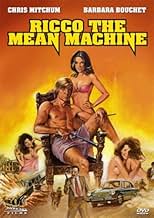
After a stint in prison, the son of a murdered Mafia Don teams up with a sexy con-woman to take revenge on the smuggler who usurped his father's empire and stole his girlfriend.After a stint in prison, the son of a murdered Mafia Don teams up with a sexy con-woman to take revenge on the smuggler who usurped his father's empire and stole his girlfriend.After a stint in prison, the son of a murdered Mafia Don teams up with a sexy con-woman to take revenge on the smuggler who usurped his father's empire and stole his girlfriend.
- Director
- Writers
- Stars


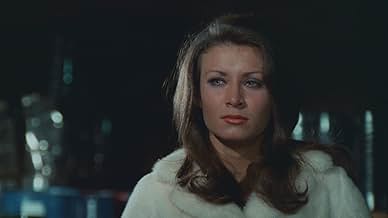
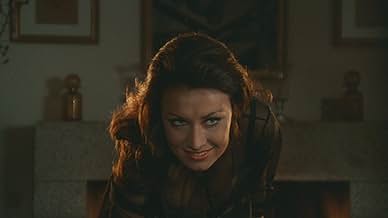


Antonio Mayans
- Nightclub Bartender
- (as Juan Antonio Mayans)
- Director
- Writers
- All cast & crew
- Production, box office & more at IMDbPro
6.1596
1
2
3
4
5
6
7
8
9
10
Featured reviews
A nasty little crime flick with the lovely Miss Bouchet
The title suggests that Cauldron of Death is going to be another Giallo-styled thriller (Italian marketing campaigns...), but it turns out that this film is actually a part of seventies Italy's other big export; the Dirty Harry-influenced cop flick! Cauldron of Death is a little more nasty than a lot of the genre, however, as it features plenty of grisly murders, including some unlucky victims that find themselves being thrown into a vat of acid, a la our featured criminals' favourite method of dealing with people that annoy them. The story doesn't actually focus on the police like a lot of these seventies Italian crime movies, and the centre of the plot is Rico; a young man recently released from jail and thirsty for revenge on the man that killed his father (which we see at the opening of the film). The guilty party is a mobster named Don Vito, and he's certainly an adversary to be reckoned with as Rico, two years since he was sentenced to jail, is forced to match wits and out everything on the line to get revenge on the vicious Don Vito.
The film benefits from a good female duo. I'll watch anything that features the lovely Barbara Bouchet, and she doesn't disappoint here as we get treated to one of the best striptease scenes in Italian cinema! The film also features Malisa Longo, who adds to the eye candy. The men aren't bad either, as while Robert Mitchum's son Christopher is a little too naive looking for my liking; he still plays his part well. Arthur Kennedy rounds off a good central cast as the vicious Don Vito. Director Tulio Demicheli succeeds at generating a fetid atmosphere for the film to take place in, and the nasty death scenes certainly don't feel out of place considering the look and nature of the movie. The main problem with the film stems from the plotting. You'd be a fool to go into a cheapo seventies Italian thriller expecting a thoroughly well thought out plot; but this one veers off course a bit too often, and it can become distracting after a while. It's not a fatal problem; however, as Cauldron of Death is an entertaining and gritty little thriller that is well worth seeing if you can find it!
The film benefits from a good female duo. I'll watch anything that features the lovely Barbara Bouchet, and she doesn't disappoint here as we get treated to one of the best striptease scenes in Italian cinema! The film also features Malisa Longo, who adds to the eye candy. The men aren't bad either, as while Robert Mitchum's son Christopher is a little too naive looking for my liking; he still plays his part well. Arthur Kennedy rounds off a good central cast as the vicious Don Vito. Director Tulio Demicheli succeeds at generating a fetid atmosphere for the film to take place in, and the nasty death scenes certainly don't feel out of place considering the look and nature of the movie. The main problem with the film stems from the plotting. You'd be a fool to go into a cheapo seventies Italian thriller expecting a thoroughly well thought out plot; but this one veers off course a bit too often, and it can become distracting after a while. It's not a fatal problem; however, as Cauldron of Death is an entertaining and gritty little thriller that is well worth seeing if you can find it!
Urban Vengeance Spills Dark, Gritty Blood 💥🔪🌃
The camera opens onto a greasy, overheated apartment where the light barely cuts through the cigarette smoke, immediately immersing the viewer in a palpable atmosphere of decay and simmering rage. You can almost feel the oppressive humidity clinging to the cheap leather upholstery, hearing the frantic click of heels on tiled floors, a soundtrack to the pervasive corruption gripping this urban landscape. Rico, or Un tipo con una faccia strana ti cerca per ucciderti, certainly delivers on its promise of gritty, unvarnished exploitation cinema from the Italian production pipeline of the era, offering a distinct kind of ugly beauty to those who appreciate the style.
Christopher Mitchum, portraying the reluctant avenger Rico Aversi, anchors the film with a necessary, if sometimes wooden, stoicism. While his performance is restrained, it provides a quiet counterpoint to the operatic hysteria surrounding him. Arthur Kennedy's Don Vito, conversely, is a captivating portrait of pure, sadistic evil, committing to the role with a memorable, chilling intensity. The film's striking visuals are less about traditional beauty and more about unsettling commitment to the grotesque, particularly in the unforgettable, stomach-churning sequence where a body is disposed of in a manner that becomes instantly, shockingly iconic. Director Gianfranco Demicheli consistently blends sex and violence with a shocking frankness, ensuring that certain scenes, such as Don Vito's cruel and unusual punishment of his distracted henchmen, linger long after the final shot.
Regarding the pacing and writing, the film moves with a propulsive, if sometimes uneven, energy characteristic of the poliziotteschi and giallo genres it borders. The narrative tension is undeniably high; you are constantly waiting for the next outrage or act of retaliation. Dialogue authenticity takes a backseat to delivering hardboiled, pulp-fiction exchanges, giving the film a clipped, tough-guy feel that fits the material's cynical worldview. However, the script occasionally struggles to logically justify the Don's inability to definitively deal with Rico earlier, introducing moments of convenient incompetence that slightly deflate the overall sense of menace. This narrative weakness requires some acceptance from the viewer.
The craft analysis reveals a preference for immediate, raw visual texture. Cinematography employs stark, high-contrast lighting that emphasizes shadows and sweat, perfectly capturing the moral squalor of the setting. The score, a hallmark of 70s Italian crime films, features driving, funky percussion and ominous orchestral stabs, underscoring the relentless forward momentum of the violence. This production design and soundscape effectively establish a world where life is cheap and morality is an abandoned luxury. Two specific beats that truly resonated after the credits were the transformation of Scilla into a self-possessed agent of chaos, resigning herself to and eventually embracing the darkness, and the sheer, uncompromising nihilism of the ending which leaves no one truly redeemed or victorious.
In its commitment to extreme subject matter, this film feels like a spiritual cousin to the transgressive narratives of 1970s filmmaking, sharing the kind of gleefully nasty edge found in early Italian horror, perhaps rubbing shoulders with the visceral intensity of a Last House on the Left or certain Euro-crime outings. Viewers who deeply appreciate exploitation cinema, the poliziotteschi genre, and films that make no effort to be palatable or contain a heroic center will likely connect with Rico's uncompromising energy and visceral shock value. Conversely, those seeking polished narrative coherence, character redemption, or films that avoid graphic sexual violence and extreme gore might find the experience challenging. Its relentless cynicism and brutal lack of restraint are its defining features, polarizing its audience between the appreciative cinephile and the genuinely disturbed spectator.
Christopher Mitchum, portraying the reluctant avenger Rico Aversi, anchors the film with a necessary, if sometimes wooden, stoicism. While his performance is restrained, it provides a quiet counterpoint to the operatic hysteria surrounding him. Arthur Kennedy's Don Vito, conversely, is a captivating portrait of pure, sadistic evil, committing to the role with a memorable, chilling intensity. The film's striking visuals are less about traditional beauty and more about unsettling commitment to the grotesque, particularly in the unforgettable, stomach-churning sequence where a body is disposed of in a manner that becomes instantly, shockingly iconic. Director Gianfranco Demicheli consistently blends sex and violence with a shocking frankness, ensuring that certain scenes, such as Don Vito's cruel and unusual punishment of his distracted henchmen, linger long after the final shot.
Regarding the pacing and writing, the film moves with a propulsive, if sometimes uneven, energy characteristic of the poliziotteschi and giallo genres it borders. The narrative tension is undeniably high; you are constantly waiting for the next outrage or act of retaliation. Dialogue authenticity takes a backseat to delivering hardboiled, pulp-fiction exchanges, giving the film a clipped, tough-guy feel that fits the material's cynical worldview. However, the script occasionally struggles to logically justify the Don's inability to definitively deal with Rico earlier, introducing moments of convenient incompetence that slightly deflate the overall sense of menace. This narrative weakness requires some acceptance from the viewer.
The craft analysis reveals a preference for immediate, raw visual texture. Cinematography employs stark, high-contrast lighting that emphasizes shadows and sweat, perfectly capturing the moral squalor of the setting. The score, a hallmark of 70s Italian crime films, features driving, funky percussion and ominous orchestral stabs, underscoring the relentless forward momentum of the violence. This production design and soundscape effectively establish a world where life is cheap and morality is an abandoned luxury. Two specific beats that truly resonated after the credits were the transformation of Scilla into a self-possessed agent of chaos, resigning herself to and eventually embracing the darkness, and the sheer, uncompromising nihilism of the ending which leaves no one truly redeemed or victorious.
In its commitment to extreme subject matter, this film feels like a spiritual cousin to the transgressive narratives of 1970s filmmaking, sharing the kind of gleefully nasty edge found in early Italian horror, perhaps rubbing shoulders with the visceral intensity of a Last House on the Left or certain Euro-crime outings. Viewers who deeply appreciate exploitation cinema, the poliziotteschi genre, and films that make no effort to be palatable or contain a heroic center will likely connect with Rico's uncompromising energy and visceral shock value. Conversely, those seeking polished narrative coherence, character redemption, or films that avoid graphic sexual violence and extreme gore might find the experience challenging. Its relentless cynicism and brutal lack of restraint are its defining features, polarizing its audience between the appreciative cinephile and the genuinely disturbed spectator.
10floyd-27
Not as it may seem!
If you have ever seen the title "Cauldron of Death" in your horror section, and it has the same cover or close to it as what's seen on this page, you are in for a definite surprise!
This is actually a very well made crime/revenge flick starring Chris Mitchum as Ricco. Who upon release from prison delves back into the underworld to seek revenge for his Mafia Chief fathers murder.
A great soundtrack and a hell wad of violence makes this a real winner for Italo/Crime buffs
This is actually a very well made crime/revenge flick starring Chris Mitchum as Ricco. Who upon release from prison delves back into the underworld to seek revenge for his Mafia Chief fathers murder.
A great soundtrack and a hell wad of violence makes this a real winner for Italo/Crime buffs
Over-the-top Italian crime flick is more Bond than Godfather
"Ricco", better known as "Ricco, the Mean Machine" is an outlier among Poliziotteschi for quite a few reasons. This sub-genre of Italian film was clearly inspired by American productions such as "Dirty Harry", "The French Connection", and perhaps most notably, "The Godfather".
Some have noted the difference in portrayal of the mafia in Italian flicks as opposed to American ones, ie. The portrayals being far less flattering in the country of la cosa nostra's birth. Italians had actually had run-ins with the real mafia, it was speculated, or perhaps they grew up hearing tales. They knew, better than anyone, that there was no honour among thieves.
So in its portrayal of this forever-famous, vaunted criminal organisation, how is "Ricco" different from other Italian flicks from the same time, about the same subject? For one thing, the movie lacks the relentlessly grim and self-serious tone that pretty much every other Italian mafia flick has. It's also not concerned with realism: in fact, it feels more like a Bond flick than a serious crime movie.
Christopher Mitchum is miscast as a guy who just got out of jail and is now on the warpath for some mafia boss - unoriginally named Don Vito - who he thinks killed his father. Though, of course, Christopher Mitchum is miscast as anything other than a surfer bum and the talentless son of a movie star. He inherited his dad's indifference to the craft of acting, but not much else.
Adding to the Bond villain comparison is the villain owning a factory with a pool full of acid he feeds people to. He, along with all the characters, seem like broad archetypes, ie. Good guy, bad guy, love interest, henchmen. None of this suits a mafia flick where shades of morality are absolutely necessary, especially when the "good guy" is a criminal too.
The biggest point of contrast between "Ricco" and other Poliziotteschi, though, and the only thing it seems to be remembered for, is its heavy violence. It's not the most violent Italian crime flick of this time - leave it to the gore-met, Lucio Fulci, to give us that with "Contraband". But the focus is on violence more than anything else. Look out for a shot where two guys have their heads smashed into the wall, and the camera zooms in so that we can see their distorted bloody faces at the moment of impact. The camera substitutes for the wall so it's like they're being bashed against its lens.
Probably the only scene that anybody will remember the movie for, though, is an unconvincing, though still garish, castration scene, which is followed by a more-graphic acid bath.
You know, I didn't know who was getting castrated, or who was getting burned. Does that surprise you? I mostly didn't follow the smaller details of this movie's silly story. Christopher Mitchum is definitely not one to watch when you want to go deep into a film, since his commitment to the role is barely more than Matt Hannon's in "Samurai Cop".
I still enjoyed "Ricco", though. It wasn't nearly as boring as most Poliziotteschi - there's yet another difference for you.
Some have noted the difference in portrayal of the mafia in Italian flicks as opposed to American ones, ie. The portrayals being far less flattering in the country of la cosa nostra's birth. Italians had actually had run-ins with the real mafia, it was speculated, or perhaps they grew up hearing tales. They knew, better than anyone, that there was no honour among thieves.
So in its portrayal of this forever-famous, vaunted criminal organisation, how is "Ricco" different from other Italian flicks from the same time, about the same subject? For one thing, the movie lacks the relentlessly grim and self-serious tone that pretty much every other Italian mafia flick has. It's also not concerned with realism: in fact, it feels more like a Bond flick than a serious crime movie.
Christopher Mitchum is miscast as a guy who just got out of jail and is now on the warpath for some mafia boss - unoriginally named Don Vito - who he thinks killed his father. Though, of course, Christopher Mitchum is miscast as anything other than a surfer bum and the talentless son of a movie star. He inherited his dad's indifference to the craft of acting, but not much else.
Adding to the Bond villain comparison is the villain owning a factory with a pool full of acid he feeds people to. He, along with all the characters, seem like broad archetypes, ie. Good guy, bad guy, love interest, henchmen. None of this suits a mafia flick where shades of morality are absolutely necessary, especially when the "good guy" is a criminal too.
The biggest point of contrast between "Ricco" and other Poliziotteschi, though, and the only thing it seems to be remembered for, is its heavy violence. It's not the most violent Italian crime flick of this time - leave it to the gore-met, Lucio Fulci, to give us that with "Contraband". But the focus is on violence more than anything else. Look out for a shot where two guys have their heads smashed into the wall, and the camera zooms in so that we can see their distorted bloody faces at the moment of impact. The camera substitutes for the wall so it's like they're being bashed against its lens.
Probably the only scene that anybody will remember the movie for, though, is an unconvincing, though still garish, castration scene, which is followed by a more-graphic acid bath.
You know, I didn't know who was getting castrated, or who was getting burned. Does that surprise you? I mostly didn't follow the smaller details of this movie's silly story. Christopher Mitchum is definitely not one to watch when you want to go deep into a film, since his commitment to the role is barely more than Matt Hannon's in "Samurai Cop".
I still enjoyed "Ricco", though. It wasn't nearly as boring as most Poliziotteschi - there's yet another difference for you.
Great Italian crime thriller.
Rico Aversi(Christopher Mitchum)is the son of a murdered mafia chief,who is slowly engulfed by a world of forgery and drugs in order to avenge his father's slaying.His adversary,Don Vito(an excellent Arthur Kennedy,who never achieved the recognition he deserved),is cruel,vicious and has years of gangland experience on his side.Here is a battle of wits,blood and violence that ends in a powerful and dramatic climax."Mean Machine" is a memorable Italian crime thriller.It has wall-to-wall nudity(supplied by Malisa Longo and Barbara Bouchet),plenty of gunplay and some nasty bits of gore for example the castration scene.The film is pretty hard to find,but you should search for it.My rating:7 out of 10.


Did you know
- TriviaRoger Ebert and Gene Siskel cited this movie as Dog of the Week on their TV show.
- ConnectionsFeatured in Ultimate Poliziotteschi Trailer Shoot-Out (2017)
- How long is Rico?Powered by Alexa
Details
- Runtime
- 1h 29m(89 min)
- Sound mix
- Aspect ratio
- 1.78 : 1
Contribute to this page
Suggest an edit or add missing content