IMDb RATING
6.1/10
596
YOUR RATING

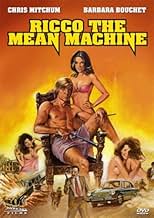
After a stint in prison, the son of a murdered Mafia Don teams up with a sexy con-woman to take revenge on the smuggler who usurped his father's empire and stole his girlfriend.After a stint in prison, the son of a murdered Mafia Don teams up with a sexy con-woman to take revenge on the smuggler who usurped his father's empire and stole his girlfriend.After a stint in prison, the son of a murdered Mafia Don teams up with a sexy con-woman to take revenge on the smuggler who usurped his father's empire and stole his girlfriend.
- Director
- Writers
- Stars




Antonio Mayans
- Nightclub Bartender
- (as Juan Antonio Mayans)
- Director
- Writers
- All cast & crew
- Production, box office & more at IMDbPro
6.1596
1
2
3
4
5
6
7
8
9
10
Featured reviews
Italian Crime Movie with Barbara BOUCHET and Christopher MITCHUM
Ultra-nasty gangster film from Italy with Christopher Mitchum and Barbara Bouchet
After his release from prison, young Ricco Aversi (Christopher Mitchum) has to cross a symbolically long highway bridge to get to his family's run-down gas station. There isn't much left for the Aversis since their father Gaspare (Luis Induni) was treacherously murdered by his competitor Don Vito (delightfully evil: the five-time ACADEMY AWARD nominee Arthur Kennedy). Ricco's sister Conchetta (Paola Senatore) and brother-in-law (Luigi Antonio Guerra) don't get to see much of anything other than the intensive mattress sports they do together. Due to their constant obsession with orgasm, they completely neglect the small gas station. It's only understandable that the wheelchair-bound mother (Rina Franchetti) puts her last hopes on Ricco. He should finally avenge Don Vito for his father's murder. But the long-haired milky face has other plans. Then, during a visit to downtown Turin, he meets the beautiful fraudster Scilla (Barbara Bouchet), who, in a breathtaking pants suit (only the fantastic Bouchet could wear that!!!), sells her uncle's (Angel Alvarez) counterfeit money to drooling guys. Ricco learns from the two that Don Vito also picked up his former bride Rosa (Malisa Longo). Although Ricco realizes that, despite her dislike for Don Vito, she has already adapted too much to the monster's behavior, he can't help but screw Don Vito in his business with the help of Scilla and the rogue Cirano (Eduardo Fajardo). To spit. The situation escalates when Don Vito catches his wife Rosa in bed with his hunky bodyguard Tony (Manolo Zarzo). Don Vito's anger no longer knows any bounds, and Ricco and his family will soon feel this too...
What a tough police officer! Tulio Demicheli's film is really a trip into human depths. Arthur Kennedy (1914-1990), the "nice" Dr. Quimper from the Miss Marple classic "4:50 p.m. From Paddington" (1961), convinces as a super nasty mafia boss. In the 1950s, the actor was nominated for an Oscar five times. The scene in which he cuts off a rival's best piece (close-up!!!) has long since become a cult! As a soap manufacturer, he can elegantly dispose of the remains in hot soapy water (made in the WELLA factory in Madrid). Scary! Barbara Bouchet (born in 1943 in the Sudetenland) is great as always! Her striptease on the hood is worth a viewing alone. Her fantastic pants suit has already been appreciated. The wonderful actress Barbara Bouchet can wear anything, but also play anything. The film's big flaw is Robert Mitchum's son Christopher in the lead role. He just seems too limp and too soft to be convincing in his role. Luc Merenda or Antonio Sabato would certainly have been too old for the role, but Marc Porel or Ray Lovelock would have fit the film much better.
In any case, this film, which is also extensively acknowledged in the "EuroCrime" documentary (2012), is a true exploitation classic among Italian gangster films. But beware! Some scenes could be extremely shocking!
After his release from prison, young Ricco Aversi (Christopher Mitchum) has to cross a symbolically long highway bridge to get to his family's run-down gas station. There isn't much left for the Aversis since their father Gaspare (Luis Induni) was treacherously murdered by his competitor Don Vito (delightfully evil: the five-time ACADEMY AWARD nominee Arthur Kennedy). Ricco's sister Conchetta (Paola Senatore) and brother-in-law (Luigi Antonio Guerra) don't get to see much of anything other than the intensive mattress sports they do together. Due to their constant obsession with orgasm, they completely neglect the small gas station. It's only understandable that the wheelchair-bound mother (Rina Franchetti) puts her last hopes on Ricco. He should finally avenge Don Vito for his father's murder. But the long-haired milky face has other plans. Then, during a visit to downtown Turin, he meets the beautiful fraudster Scilla (Barbara Bouchet), who, in a breathtaking pants suit (only the fantastic Bouchet could wear that!!!), sells her uncle's (Angel Alvarez) counterfeit money to drooling guys. Ricco learns from the two that Don Vito also picked up his former bride Rosa (Malisa Longo). Although Ricco realizes that, despite her dislike for Don Vito, she has already adapted too much to the monster's behavior, he can't help but screw Don Vito in his business with the help of Scilla and the rogue Cirano (Eduardo Fajardo). To spit. The situation escalates when Don Vito catches his wife Rosa in bed with his hunky bodyguard Tony (Manolo Zarzo). Don Vito's anger no longer knows any bounds, and Ricco and his family will soon feel this too...
What a tough police officer! Tulio Demicheli's film is really a trip into human depths. Arthur Kennedy (1914-1990), the "nice" Dr. Quimper from the Miss Marple classic "4:50 p.m. From Paddington" (1961), convinces as a super nasty mafia boss. In the 1950s, the actor was nominated for an Oscar five times. The scene in which he cuts off a rival's best piece (close-up!!!) has long since become a cult! As a soap manufacturer, he can elegantly dispose of the remains in hot soapy water (made in the WELLA factory in Madrid). Scary! Barbara Bouchet (born in 1943 in the Sudetenland) is great as always! Her striptease on the hood is worth a viewing alone. Her fantastic pants suit has already been appreciated. The wonderful actress Barbara Bouchet can wear anything, but also play anything. The film's big flaw is Robert Mitchum's son Christopher in the lead role. He just seems too limp and too soft to be convincing in his role. Luc Merenda or Antonio Sabato would certainly have been too old for the role, but Marc Porel or Ray Lovelock would have fit the film much better.
In any case, this film, which is also extensively acknowledged in the "EuroCrime" documentary (2012), is a true exploitation classic among Italian gangster films. But beware! Some scenes could be extremely shocking!
Urban Vengeance Spills Dark, Gritty Blood 💥🔪🌃
The camera opens onto a greasy, overheated apartment where the light barely cuts through the cigarette smoke, immediately immersing the viewer in a palpable atmosphere of decay and simmering rage. You can almost feel the oppressive humidity clinging to the cheap leather upholstery, hearing the frantic click of heels on tiled floors, a soundtrack to the pervasive corruption gripping this urban landscape. Rico, or Un tipo con una faccia strana ti cerca per ucciderti, certainly delivers on its promise of gritty, unvarnished exploitation cinema from the Italian production pipeline of the era, offering a distinct kind of ugly beauty to those who appreciate the style.
Christopher Mitchum, portraying the reluctant avenger Rico Aversi, anchors the film with a necessary, if sometimes wooden, stoicism. While his performance is restrained, it provides a quiet counterpoint to the operatic hysteria surrounding him. Arthur Kennedy's Don Vito, conversely, is a captivating portrait of pure, sadistic evil, committing to the role with a memorable, chilling intensity. The film's striking visuals are less about traditional beauty and more about unsettling commitment to the grotesque, particularly in the unforgettable, stomach-churning sequence where a body is disposed of in a manner that becomes instantly, shockingly iconic. Director Gianfranco Demicheli consistently blends sex and violence with a shocking frankness, ensuring that certain scenes, such as Don Vito's cruel and unusual punishment of his distracted henchmen, linger long after the final shot.
Regarding the pacing and writing, the film moves with a propulsive, if sometimes uneven, energy characteristic of the poliziotteschi and giallo genres it borders. The narrative tension is undeniably high; you are constantly waiting for the next outrage or act of retaliation. Dialogue authenticity takes a backseat to delivering hardboiled, pulp-fiction exchanges, giving the film a clipped, tough-guy feel that fits the material's cynical worldview. However, the script occasionally struggles to logically justify the Don's inability to definitively deal with Rico earlier, introducing moments of convenient incompetence that slightly deflate the overall sense of menace. This narrative weakness requires some acceptance from the viewer.
The craft analysis reveals a preference for immediate, raw visual texture. Cinematography employs stark, high-contrast lighting that emphasizes shadows and sweat, perfectly capturing the moral squalor of the setting. The score, a hallmark of 70s Italian crime films, features driving, funky percussion and ominous orchestral stabs, underscoring the relentless forward momentum of the violence. This production design and soundscape effectively establish a world where life is cheap and morality is an abandoned luxury. Two specific beats that truly resonated after the credits were the transformation of Scilla into a self-possessed agent of chaos, resigning herself to and eventually embracing the darkness, and the sheer, uncompromising nihilism of the ending which leaves no one truly redeemed or victorious.
In its commitment to extreme subject matter, this film feels like a spiritual cousin to the transgressive narratives of 1970s filmmaking, sharing the kind of gleefully nasty edge found in early Italian horror, perhaps rubbing shoulders with the visceral intensity of a Last House on the Left or certain Euro-crime outings. Viewers who deeply appreciate exploitation cinema, the poliziotteschi genre, and films that make no effort to be palatable or contain a heroic center will likely connect with Rico's uncompromising energy and visceral shock value. Conversely, those seeking polished narrative coherence, character redemption, or films that avoid graphic sexual violence and extreme gore might find the experience challenging. Its relentless cynicism and brutal lack of restraint are its defining features, polarizing its audience between the appreciative cinephile and the genuinely disturbed spectator.
Christopher Mitchum, portraying the reluctant avenger Rico Aversi, anchors the film with a necessary, if sometimes wooden, stoicism. While his performance is restrained, it provides a quiet counterpoint to the operatic hysteria surrounding him. Arthur Kennedy's Don Vito, conversely, is a captivating portrait of pure, sadistic evil, committing to the role with a memorable, chilling intensity. The film's striking visuals are less about traditional beauty and more about unsettling commitment to the grotesque, particularly in the unforgettable, stomach-churning sequence where a body is disposed of in a manner that becomes instantly, shockingly iconic. Director Gianfranco Demicheli consistently blends sex and violence with a shocking frankness, ensuring that certain scenes, such as Don Vito's cruel and unusual punishment of his distracted henchmen, linger long after the final shot.
Regarding the pacing and writing, the film moves with a propulsive, if sometimes uneven, energy characteristic of the poliziotteschi and giallo genres it borders. The narrative tension is undeniably high; you are constantly waiting for the next outrage or act of retaliation. Dialogue authenticity takes a backseat to delivering hardboiled, pulp-fiction exchanges, giving the film a clipped, tough-guy feel that fits the material's cynical worldview. However, the script occasionally struggles to logically justify the Don's inability to definitively deal with Rico earlier, introducing moments of convenient incompetence that slightly deflate the overall sense of menace. This narrative weakness requires some acceptance from the viewer.
The craft analysis reveals a preference for immediate, raw visual texture. Cinematography employs stark, high-contrast lighting that emphasizes shadows and sweat, perfectly capturing the moral squalor of the setting. The score, a hallmark of 70s Italian crime films, features driving, funky percussion and ominous orchestral stabs, underscoring the relentless forward momentum of the violence. This production design and soundscape effectively establish a world where life is cheap and morality is an abandoned luxury. Two specific beats that truly resonated after the credits were the transformation of Scilla into a self-possessed agent of chaos, resigning herself to and eventually embracing the darkness, and the sheer, uncompromising nihilism of the ending which leaves no one truly redeemed or victorious.
In its commitment to extreme subject matter, this film feels like a spiritual cousin to the transgressive narratives of 1970s filmmaking, sharing the kind of gleefully nasty edge found in early Italian horror, perhaps rubbing shoulders with the visceral intensity of a Last House on the Left or certain Euro-crime outings. Viewers who deeply appreciate exploitation cinema, the poliziotteschi genre, and films that make no effort to be palatable or contain a heroic center will likely connect with Rico's uncompromising energy and visceral shock value. Conversely, those seeking polished narrative coherence, character redemption, or films that avoid graphic sexual violence and extreme gore might find the experience challenging. Its relentless cynicism and brutal lack of restraint are its defining features, polarizing its audience between the appreciative cinephile and the genuinely disturbed spectator.
Efficient and effective if often stupid low budget Italian crime flick
Christopher Mitchum is woefully miscast as son of dead mafioso out of jail and out for revenge. He's pitched against evil soap factory owner/drug smuggle Arthur Kennedy, who dissolves his enemies in sodium hydroxide and turns them into soap. On the way we get a particularly graphic murder, an amusing face dissolving in an alkali vat special effect and plenty of people getting double crossed and/or shot. The plot is thin and at times stupid, the acting pretty dreadful, Barbara Bouchet is useless as ever as the love interest. But it has strengths - great urban and countryside visuals, a fair amount of sleaze, decent pacing. Most of all - it's clear that all involved seem to have had a fairly good understanding of quite how ludicrous the entire enterprise is and don't hold back from hamming it up where necessary. Most of all, despite the flaws, the whole thing barrels along sufficiently fast and efficiently to avoid boredom ever setting in. At the very least a fun watch if you're into this sort of thing.
Great Italian crime thriller.
Rico Aversi(Christopher Mitchum)is the son of a murdered mafia chief,who is slowly engulfed by a world of forgery and drugs in order to avenge his father's slaying.His adversary,Don Vito(an excellent Arthur Kennedy,who never achieved the recognition he deserved),is cruel,vicious and has years of gangland experience on his side.Here is a battle of wits,blood and violence that ends in a powerful and dramatic climax."Mean Machine" is a memorable Italian crime thriller.It has wall-to-wall nudity(supplied by Malisa Longo and Barbara Bouchet),plenty of gunplay and some nasty bits of gore for example the castration scene.The film is pretty hard to find,but you should search for it.My rating:7 out of 10.
Great Italian crime flick--definitely recommended
A young man (Chris Mitchum) gets out of prison to find that his mafia don father has been brutally murdered, and that the man that who did it (Arthur Kennedy)has also taken his fiancée (Malisa Longo). This sounds like the perfect set-up for a revenge movie, but this is actually a very atypical one. The young man had little respect for his gangster father and after years in prison is not all that desirous of revenge, but is drawn into it by his vengeful, invalid mother, his father's crooked business associates, his promiscuous former fiancée, and, above all, the utterly ruthless paranoia of the new don. This movie also takes the saying that "if you go seeking vengeance, dig two graves" to whole new extremes. The hero should have dug many, many graves since his vendetta gets practically everybody in the cast, sympathetic or evil, killed. Of course, digging graves is largely unnecessary since the evil don gets rid of most of HIS victims by putting them in an acid bath and turning them into soap for his soap factory (hilariously, he is therefore, afraid to use soap). This movie is VERY violent including graphic scenes of castration, a guy getting his face caved in with a rifle butt, ad infinitum. It was actually first released in the US as a horror movie called "Cauldron of Death".
What's interesting though, without giving away the end, is that the final revenge is strangely unsatisfying, and the movie ends up being more a tragedy like "Hamlet" than a revenge flick. It's more violent than your average American revenge flick, but also ironically a lot less fascist. Violence is not the answer to every problem and only begets more violence that ultimately stains the "good guys" as well as the "bad". (Also, even the ruthless don is humanized a bit in that he does seem to genuinely love his faithless mistress). Although certainly not all Italian crime/revenge movies are like this, I would still maintain that Italians seem to have learned something from their dark, fascist past that has been lost on many Americans.
But if all that's too left-wing for you, here's something that should appeal to ALL crime movie fans--the women. Barbara Bouchet does a sexy striptease that'll have your tongue unspooling onto the floor, but she also has an especially meaty role for a woman in one of these films as the protagonist's partner as well as his lover. Malisa Longo (whose body, uh, of work I was previously unfamiliar with) is a more the typical piece of meat (she's naked in every one of her scenes), but she does get to do some acting in her brief screen time. Ditto with future porn star Paola Senatore playing the protagonist's sister (who spends a hilariously amount of her time in bed with her husband)--I didn't even recognize her until the credits because I've never actually seen her actually ACT before. I would definitely recommend this one.
What's interesting though, without giving away the end, is that the final revenge is strangely unsatisfying, and the movie ends up being more a tragedy like "Hamlet" than a revenge flick. It's more violent than your average American revenge flick, but also ironically a lot less fascist. Violence is not the answer to every problem and only begets more violence that ultimately stains the "good guys" as well as the "bad". (Also, even the ruthless don is humanized a bit in that he does seem to genuinely love his faithless mistress). Although certainly not all Italian crime/revenge movies are like this, I would still maintain that Italians seem to have learned something from their dark, fascist past that has been lost on many Americans.
But if all that's too left-wing for you, here's something that should appeal to ALL crime movie fans--the women. Barbara Bouchet does a sexy striptease that'll have your tongue unspooling onto the floor, but she also has an especially meaty role for a woman in one of these films as the protagonist's partner as well as his lover. Malisa Longo (whose body, uh, of work I was previously unfamiliar with) is a more the typical piece of meat (she's naked in every one of her scenes), but she does get to do some acting in her brief screen time. Ditto with future porn star Paola Senatore playing the protagonist's sister (who spends a hilariously amount of her time in bed with her husband)--I didn't even recognize her until the credits because I've never actually seen her actually ACT before. I would definitely recommend this one.


Did you know
- TriviaRoger Ebert and Gene Siskel cited this movie as Dog of the Week on their TV show.
- ConnectionsFeatured in Ultimate Poliziotteschi Trailer Shoot-Out (2017)
- How long is Rico?Powered by Alexa
Details
- Runtime
- 1h 29m(89 min)
- Sound mix
- Aspect ratio
- 1.78 : 1
Contribute to this page
Suggest an edit or add missing content