IMDb RATING
5.4/10
1.4K
YOUR RATING

A respected psychologist who regularly works with the police becomes a suspect in a series of gruesome murders of young women.A respected psychologist who regularly works with the police becomes a suspect in a series of gruesome murders of young women.A respected psychologist who regularly works with the police becomes a suspect in a series of gruesome murders of young women.


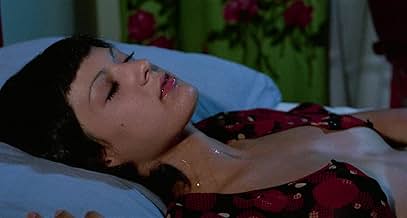
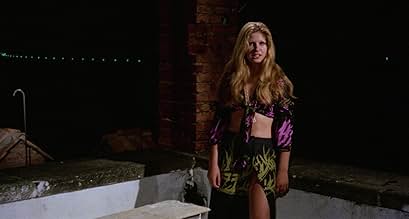


Raul Lovecchio
- Ispettore Edwards
- (as Raoul)

Stefania Fassio
- Prima vittima
- (as Steffy Steffen)
- Director
- Writer
- All cast & crew
- Production, box office & more at IMDbPro
5.41.3K
1
2
3
4
5
6
7
8
9
10
Featured reviews
Not exactly a movie for the kiddies...
Not exactly a movie for the kiddies, I would consider 1972's Delirium to be some what of a grade B Giallo. The production is okay, the acting not bad, the dialogue average, but the violence is over the top with several grisley murder scenes. There is also way more nudity than your average Giallo.
There are two versions, the American (85 minutes) and the European (102 minutes). The American version starts out with the main character, Herbert Lyutak, getting wounded in Vietnam. The movie mixes stock footage from the war with newly filmed scenes in a pretty ungraceful job of editing. But we
do learn that Herbert was born in Hungary and immigrated to the US in 1961 and joined the army in 1962. He has done three tours of duty in Vietnam and is a decorated, model soldier. He has been wounded and is being taken away in a helicopter. He is looking at a nurse and she changes into another woman who we soon find out is his wife, Marcia, played by the lovely Rita Calderoni (The Reincarnation of Isabel, Nude for Satan). Right after the credits we get to see Herbert pick up a girl in a bar and drive her out to a remote spot, chase her into a stream and then strip her and beat her to death. It's a pretty violent scene and not for the squeamish. Of course that could apply to almost every murder in this movie.
The European version really is quite different than the American release and I thought it had a more coherent story. Both versions are a bit confusing but the European version is more consistant. It also skips the whole Vietnam segment which wasn't very well done anyway. The endings are both quite different as well and a couple murders are filmed differently also.
I don't want to give away too much but we do know that Herbert murders a girl at the beginning of both versions and after that it is a bit of a cat and mouse with the cops who are trying to solve the murders along with Herbert who is a criminal psychologists and suposed to be helping them in the investigation. His wife starts having weird S&M dreams invloving her husband as the sadist and their maid and another woman who we later find out is her niece. Ther three women fondle and kiss each other while Herebert watches. The editing from the dreams to reality is a bit confusing and at one point early in the film Herbert does beat and cut Marcia as a substitution for sex which he can't perform with his wife. He does seem troubled about his violent tendencies and does not want to unleash his murderous ways on his wife. But he does like looking at her throat which is a very enticing part of female anatomy for him.
The picture on the European version looks fine and is presented in 1.85:1 widescreen. The American version however is missing a couple sections of the original so Anchor Bay had to take some Dutch footage from a VHS copy and splice it in. So you are watching and all of a sudden the picture gets worse and there are Dutch subtitles! But we are talking only a couple minutes worth so it is pretty minor actually. There is also a recently filmed 14 minute interview with director and writer Renato Polselli and Actor Mickey Hargitay which is pretty good really. I watched the US version, then the interview, and then the European version of the film. I did have more of an appreciation for the film after the watching the interview and as I said earlier, the European version is overall a better and more coherent storyline. The US version is dubbed in English and the European version is in Italian with English subtitles. Overall not too bad if you like extreme Giallo. Not nearly as good as say, What Have You Done With Solange, or most Bava's or Argento's, but certainly worthy of $15 or so.
There are two versions, the American (85 minutes) and the European (102 minutes). The American version starts out with the main character, Herbert Lyutak, getting wounded in Vietnam. The movie mixes stock footage from the war with newly filmed scenes in a pretty ungraceful job of editing. But we
do learn that Herbert was born in Hungary and immigrated to the US in 1961 and joined the army in 1962. He has done three tours of duty in Vietnam and is a decorated, model soldier. He has been wounded and is being taken away in a helicopter. He is looking at a nurse and she changes into another woman who we soon find out is his wife, Marcia, played by the lovely Rita Calderoni (The Reincarnation of Isabel, Nude for Satan). Right after the credits we get to see Herbert pick up a girl in a bar and drive her out to a remote spot, chase her into a stream and then strip her and beat her to death. It's a pretty violent scene and not for the squeamish. Of course that could apply to almost every murder in this movie.
The European version really is quite different than the American release and I thought it had a more coherent story. Both versions are a bit confusing but the European version is more consistant. It also skips the whole Vietnam segment which wasn't very well done anyway. The endings are both quite different as well and a couple murders are filmed differently also.
I don't want to give away too much but we do know that Herbert murders a girl at the beginning of both versions and after that it is a bit of a cat and mouse with the cops who are trying to solve the murders along with Herbert who is a criminal psychologists and suposed to be helping them in the investigation. His wife starts having weird S&M dreams invloving her husband as the sadist and their maid and another woman who we later find out is her niece. Ther three women fondle and kiss each other while Herebert watches. The editing from the dreams to reality is a bit confusing and at one point early in the film Herbert does beat and cut Marcia as a substitution for sex which he can't perform with his wife. He does seem troubled about his violent tendencies and does not want to unleash his murderous ways on his wife. But he does like looking at her throat which is a very enticing part of female anatomy for him.
The picture on the European version looks fine and is presented in 1.85:1 widescreen. The American version however is missing a couple sections of the original so Anchor Bay had to take some Dutch footage from a VHS copy and splice it in. So you are watching and all of a sudden the picture gets worse and there are Dutch subtitles! But we are talking only a couple minutes worth so it is pretty minor actually. There is also a recently filmed 14 minute interview with director and writer Renato Polselli and Actor Mickey Hargitay which is pretty good really. I watched the US version, then the interview, and then the European version of the film. I did have more of an appreciation for the film after the watching the interview and as I said earlier, the European version is overall a better and more coherent storyline. The US version is dubbed in English and the European version is in Italian with English subtitles. Overall not too bad if you like extreme Giallo. Not nearly as good as say, What Have You Done With Solange, or most Bava's or Argento's, but certainly worthy of $15 or so.
Avoid the American version
Thanks to a certain gray market outfit in south Florida that searches for obscure videos, I got stuck with the shorn American print of this movie, but it does have some very ridiculous added "Vietnam" footage which might make it the first movie ever to deal with the fallout from that war. A deranged Vietnam vet and forensic psychologist is driven by his traumatic war experiences (and implied impotence) to murder mini-skirted Italian co-eds (just like he did in 'Nam I'm sure). His loyal wife tries to cover up for him the only way she knows how. Mickey Hargitay is the name star. After seeing "Bloody Pit of Horror" I had no trouble buying him as a deranged killer, but a police psychologist?--c'mon. Mickey had apparently been making bad movies in Italy for so long by this point that he'd started speaking with an Italian accent. (Seriously, why did they cast third-rate American actors in these movies and then dub them when they're speaking English?). Rita Calderoni plays the wife. She wasn't a bad actress, but the enjoyment of her performance varies inversely with the amount of clothes she is wearing, and she's a little overdressed here (if you want to see a lot more of her check out the appropriately named "Nude for Satan"). There are also a lot of anonymous Italian girls in impossibly short minis (unfortunately, this is exactly the kind of sleazy movie that looks up their skirts while they're being strangled or shows them topless after they're dead). There's also a strange, recurring dream sequence where a shirtless Mickey strangles himself with a chain while his naked wife, maid(!),and college-age niece(!!) all writhe around on the floor at his feet.
Anchor Bay apparently has included both this version and the longer European version on their legitimate DVD and it costs half as much used as what the more unscrupulous bootleggers are charging. Avoid just getting the American version, but I would recommend this to moral degenerates who enjoy this kind of sleazy, Italian-made filth (you know who you are).
Anchor Bay apparently has included both this version and the longer European version on their legitimate DVD and it costs half as much used as what the more unscrupulous bootleggers are charging. Avoid just getting the American version, but I would recommend this to moral degenerates who enjoy this kind of sleazy, Italian-made filth (you know who you are).
A sleazy but lacklustre giallo.
In Renato Polselli's bonkers giallo Delrium, Mickey Hargitay plays Dr. Herbert Lyutak, an impotent deranged lunatic who cannot stop himself from murdering pretty young women. When his devoted wife, still a virgin due to her husband's 'problem', discovers his secret, she decides to help rather than inform the police.
Delirium certainly showed promise at the beginning, with a vicious murder scene that delivered both the requisite nudity and violence one expects from a 70s giallo. Unfortunately, what begins as a sleazy little thriller quickly descends into a mess of histrionics and incomprehensible craziness that ultimately leads to disappointment.
Polselli packs his film with tasty young totty, with nearly every woman either wearing a mini skirt or a pair of hot pants, and all willing to get their kit off at the drop of a hat, but even these pleasing visual distractions couldn't make me overlook the dreadful acting, poor plot and just plain silly ending. The usual red-herrings abound, and there's even more than one killer just to make things more confusing, but as giallos go this one is definitely second rate.
4.5 out of 10 (very generously rounded up to 5 for IMDb).
Delirium certainly showed promise at the beginning, with a vicious murder scene that delivered both the requisite nudity and violence one expects from a 70s giallo. Unfortunately, what begins as a sleazy little thriller quickly descends into a mess of histrionics and incomprehensible craziness that ultimately leads to disappointment.
Polselli packs his film with tasty young totty, with nearly every woman either wearing a mini skirt or a pair of hot pants, and all willing to get their kit off at the drop of a hat, but even these pleasing visual distractions couldn't make me overlook the dreadful acting, poor plot and just plain silly ending. The usual red-herrings abound, and there's even more than one killer just to make things more confusing, but as giallos go this one is definitely second rate.
4.5 out of 10 (very generously rounded up to 5 for IMDb).
Delirious
This is a somewhat crazed and depraved giallo. The Anchor Bay DVD contains both the international and the American versions of the film. Both are very different. The U.S. version has a Vietnam War framing device similar to that used in Jacob's Ladder almost 20 years later. It also contains two more murders and is slightly more coherent than the international version, despite being about 20 minutes shorter. But both versions of Delirium are, well, delirious.
The film concerns a homicidal doctor who is a serial murderer of young women. Just when he starts to be questioned by police for his involvement in the killings another maniac starts a murdering spree that confuses the issue.
The whodunit aspect of this movie is a little obvious. So the mystery element is less important. Instead, the film works best as a demented series of shock scenes, all strung together by a loose plot. The editing is not very good but it adds a bit to the haphazard nature of the film as we are jerked around from scene to scene. The music score by Gianfranco Reverberi is very effective in sustaining the delirious atmosphere.
This is a very sexually explicit giallo. There is a multitude of female full-frontal nudity on display. The murder scenes are often pretty misogynistic, not something uncommon to the genre, but a little more extreme here than normal. There are also some well shot S&M dream sequences that feature writhing naked women! The plot is a little over-convoluted. Once again, this is a common giallo feature but, again, more-so here than normal. It can be quite difficult to follow the narrative as the story is all over the place. This fact is made even more apparent when watching both versions of the movie, you will see that scenes are ordered quite differently.
Overall, this giallo movie is weak on narrative but compensates for that with, well, excess. The effect is a film that is true to it's title. It really is delirious.
The film concerns a homicidal doctor who is a serial murderer of young women. Just when he starts to be questioned by police for his involvement in the killings another maniac starts a murdering spree that confuses the issue.
The whodunit aspect of this movie is a little obvious. So the mystery element is less important. Instead, the film works best as a demented series of shock scenes, all strung together by a loose plot. The editing is not very good but it adds a bit to the haphazard nature of the film as we are jerked around from scene to scene. The music score by Gianfranco Reverberi is very effective in sustaining the delirious atmosphere.
This is a very sexually explicit giallo. There is a multitude of female full-frontal nudity on display. The murder scenes are often pretty misogynistic, not something uncommon to the genre, but a little more extreme here than normal. There are also some well shot S&M dream sequences that feature writhing naked women! The plot is a little over-convoluted. Once again, this is a common giallo feature but, again, more-so here than normal. It can be quite difficult to follow the narrative as the story is all over the place. This fact is made even more apparent when watching both versions of the movie, you will see that scenes are ordered quite differently.
Overall, this giallo movie is weak on narrative but compensates for that with, well, excess. The effect is a film that is true to it's title. It really is delirious.
renato polselli delivers again
I thought that the impious happenings in the Reincarnation of Isabelle couldn't be surpassed. Well I proved myself wrong after I witnessed this little picture. Although i enjoyed the film, I felt a little disappointed at times. I thought that the character of Rita Calderoni was a little over the top and i just expected more with the sexual content. The dialogue became a little risible at times and the plot to predictable. I didn't care for the ending either but overall it worked. Don't forget to check out the domestic release that is featured on the anchor bay dvd and witness for yourself how the Americans can destroy a film.


Did you know
- GoofsWhen the killer is whipping the woman in the bathtub, he turns away to get the sheet to smother her. It would be an opportunity for her to at least try to get out of the tub, but she just lies there, flailing around. instead.
- Quotes
Herbert Lyutak: Enough, Herbert! You are a hyena, hyena!
- Alternate versionsThe American Blue Underground DVD offers two distinctly different versions of the film. The full-length Italian version runs 102 minutes. The shorter American version runs 85 minutes. It begins and ends with scenes set in Vietnam with Mickey Hargitay as a wounded soldier and Rita Calderoni as a helicopter nurse. This version also features an extra killing and a different denouement.
- ConnectionsFeatured in The Theorem of Delirium (2002)
- How long is Delirium?Powered by Alexa
Details
- Runtime
- 1h 42m(102 min)
- Sound mix
- Aspect ratio
- 1.85 : 1
Contribute to this page
Suggest an edit or add missing content