IMDb RATING
5.7/10
1.9K
YOUR RATING

The star player of a college basketball team starts to go off the rails with an illicit love affair and his roommate going crazy to avoid the war draft.The star player of a college basketball team starts to go off the rails with an illicit love affair and his roommate going crazy to avoid the war draft.The star player of a college basketball team starts to go off the rails with an illicit love affair and his roommate going crazy to avoid the war draft.
- Awards
- 1 win & 1 nomination total



Michael Warren
- Easly
- (as Mike Warren)


Lynette Bernay
- Dance Instructor
- (as Lynn Bernay)

Joseph Walsh
- Announcer #1
- (as Joey Walsh)


David Ogden Stiers
- Pro Owner
- (as David Stiers)

Mireille Machu
- Secretary
- (as I.J. Jefferson)
5.71.8K
1
2
3
4
5
6
7
8
9
10
Featured reviews
Fair
Drive, He Said (1971)
** (out of 4)
Jack Nicholson's directorial debut is a confussing mess but here goes. The film deals with a troubled basketball star (William Tepper) who's caught in an affair with a teacher's wife (Karen Black). The only person trying to make him go straight is his coach (Bruce Dern) but outsiders keep stepping in the way. The film was also co-written by Nicholson and most of the blame can start right here. The film is all over the place and it seems there are enough story lines for at least five other movies. There's also a subplot with a friend who's trying to dodge the draft, which goes no where and leads to some pretty over the top, wannabe serious moments. The one thing going for the film are some pretty good performances, although it appears Dern is trying to give a Nicholson impersonation. Nicholson's direction hits a few good notes but in the end this seems like something that would have only been shown on TV. Needless to say it's never gotten an official release on home video.
** (out of 4)
Jack Nicholson's directorial debut is a confussing mess but here goes. The film deals with a troubled basketball star (William Tepper) who's caught in an affair with a teacher's wife (Karen Black). The only person trying to make him go straight is his coach (Bruce Dern) but outsiders keep stepping in the way. The film was also co-written by Nicholson and most of the blame can start right here. The film is all over the place and it seems there are enough story lines for at least five other movies. There's also a subplot with a friend who's trying to dodge the draft, which goes no where and leads to some pretty over the top, wannabe serious moments. The one thing going for the film are some pretty good performances, although it appears Dern is trying to give a Nicholson impersonation. Nicholson's direction hits a few good notes but in the end this seems like something that would have only been shown on TV. Needless to say it's never gotten an official release on home video.
An interesting premise, but unfinished product
One of the more unusual movies I've ever seen is "Drive, He Said." Made in 1971 made by the same production company that made "Easy Rider" and "Five Easy Pieces" that made Jack Nicholson a star a year or two earlier.
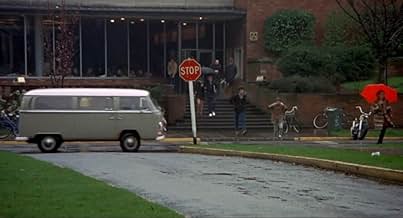
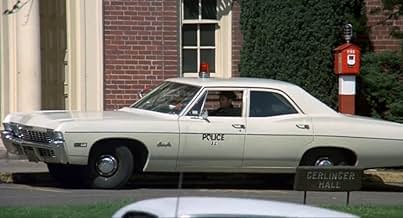
This was the first film directed by Jack Nicholson. It's a combination basketball, free love, anti-draft movie that was filmed on the campus of the University of Oregon. It was not well-received at the time, and was somewhat infamous for its male frontal nudity scenes. The basketball skill level seemed very high.
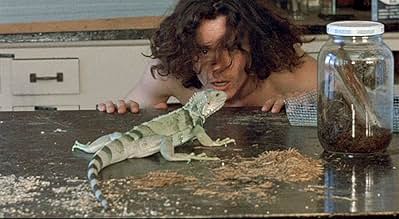
It's basically the story of two friends--one a basketball star and Greek major who's hormones are raging and is undecided about a pro career. The other is a guy taking drugs to try to stay out of the draft, and basically he flips out.
I thought it was an interesting premise, but I found the speech of the main characters to be stilted. In some ways it captured the ethos of U. S. campuses in the Vietnam War era pretty well.
This was the first film directed by Jack Nicholson. It's a combination basketball, free love, anti-draft movie that was filmed on the campus of the University of Oregon. It was not well-received at the time, and was somewhat infamous for its male frontal nudity scenes. The basketball skill level seemed very high.
It's basically the story of two friends--one a basketball star and Greek major who's hormones are raging and is undecided about a pro career. The other is a guy taking drugs to try to stay out of the draft, and basically he flips out.
I thought it was an interesting premise, but I found the speech of the main characters to be stilted. In some ways it captured the ethos of U. S. campuses in the Vietnam War era pretty well.
Hippy-Dippy Alley-Oopsie
Not much to make of this directorial debut by would-be star actor and frequent attendee of Los Angeles Lakers games Jack Nicholson, "Drive, He Said," which doesn't so much get its title from the basketball played in the film as it does from a poem, "I Know a Man," by Robert Creeley, which is recited at the beginning as the college hoops game is broadcast on a TV in the background. Soon thereafter, the poem-reciting, counterculture youths dressed in camouflage paramilitary regalia invade the gymnasium of the game to put on a bit of performance art that's as vaguely against, or agitated by, rather, American militarism--specifically the Vietnam War--as is the rest of the picture. Seems the war is such a weight on these young men's minds that it drives one to insanity and another to waffle over whether he wants to really play basketball or not.
Neither character arc is very compelling, and the crazy one is over-the-top ridiculous. There are easier ways to avoid a draft, guys, whether it's for the NBA or USA. And poor Karen Black having to put up with this tomfoolery and, worse, replaying an attempted-rape climax as old as D. W. Griffith silent films and the Victorian literature he in turn stole it from. The entire film is as muddled as its basketball footage with barely a narrative to be found, and it's undoubtedly dated as an independent film from the early '70s.
On the other hand, there's enough here, to use a cliché from another sport, out of left field to be at least bemusing. Plus, at least the actors evidently know how to dribble and shoot enough to keep up with apparent real former collegiate athletes. The Leopards team's mascot is a real, caged leopard that occupies the sidelines. A lot here concerning caged animals and letting them loose, which is the sort of motif that goes for symbolism in this picture. At one point, a montage of slow-motion basketball footage is played to "The Star-Spangled Banner." As the making-of-video included on the Criterion disc claims, it also includes some guerilla filmmaking exploiting a real riot that broke out during filming at the University of Oregon, which fits seamlessly within the rest of the picture's aesthetics. The remainder of the movie mostly seems to merely revel in the Sexual Revolution, including a considerable amount of focus on male genitalia. Nicholson claims he wanted a "symphony of dicks" during a locker-room shower scene, which supposedly he had to compromise on, but not by much.
Neither character arc is very compelling, and the crazy one is over-the-top ridiculous. There are easier ways to avoid a draft, guys, whether it's for the NBA or USA. And poor Karen Black having to put up with this tomfoolery and, worse, replaying an attempted-rape climax as old as D. W. Griffith silent films and the Victorian literature he in turn stole it from. The entire film is as muddled as its basketball footage with barely a narrative to be found, and it's undoubtedly dated as an independent film from the early '70s.
On the other hand, there's enough here, to use a cliché from another sport, out of left field to be at least bemusing. Plus, at least the actors evidently know how to dribble and shoot enough to keep up with apparent real former collegiate athletes. The Leopards team's mascot is a real, caged leopard that occupies the sidelines. A lot here concerning caged animals and letting them loose, which is the sort of motif that goes for symbolism in this picture. At one point, a montage of slow-motion basketball footage is played to "The Star-Spangled Banner." As the making-of-video included on the Criterion disc claims, it also includes some guerilla filmmaking exploiting a real riot that broke out during filming at the University of Oregon, which fits seamlessly within the rest of the picture's aesthetics. The remainder of the movie mostly seems to merely revel in the Sexual Revolution, including a considerable amount of focus on male genitalia. Nicholson claims he wanted a "symphony of dicks" during a locker-room shower scene, which supposedly he had to compromise on, but not by much.
Where can I get a copy?
This was a very interesting movie, as it was Jack Nicholson's directorial debut, and included several other stars before they "became big" such as Bruce Dern and Karen Black. I was an extra in this movie when filmed on the University of Oregon campus/in Eugene area in 1971. Before it came out in theaters, I had left the country for the Peace Corps. When I returned, it had come and gone but I never got a chance to see it.
I remember one of the scenes was filmed with a camera inside a basket ball, and was passed back and forth across the court running from one end to the other to "get a perspective from the ball's viewpoint".
Anyone seen any copies (vhs or other options for getting a copy)? Would love to see it, as I was in several scenes but again never saw it.
Thanks for any leads or ideas of where one would go to get more info.
Bob Petow (bobpetow@comcast.net)
I remember one of the scenes was filmed with a camera inside a basket ball, and was passed back and forth across the court running from one end to the other to "get a perspective from the ball's viewpoint".
Anyone seen any copies (vhs or other options for getting a copy)? Would love to see it, as I was in several scenes but again never saw it.
Thanks for any leads or ideas of where one would go to get more info.
Bob Petow (bobpetow@comcast.net)
A Different Look at Vietnam
Hector (William Tepper) is a star basketball player for the College basketball team he plays for, the Leopards. His girlfriend, Olive (Karen Black), does not know whether to stay with him or leave him. And his friend, Gabriel (Michael Margotta), who may have dropped out from school and become a protester, wants desperately not to get drafted for Vietnam.
This film marks Jack Nicholson's directorial debut, a chair he would not return to often. The casting was nothing special (though Karen Black is always great); the best part may be Bruce Dern as the coach. Some day he will get the full respect he deserves.
Roger Ebert found the film "disorganized", but also said it was "occasionally brilliant" with the performances being "the best thing in the movie", including the "laconic charm" of Tepper. This seems fair. For all the good things that can be said, it never really hits home hard enough, and may be dated.
This film marks Jack Nicholson's directorial debut, a chair he would not return to often. The casting was nothing special (though Karen Black is always great); the best part may be Bruce Dern as the coach. Some day he will get the full respect he deserves.
Roger Ebert found the film "disorganized", but also said it was "occasionally brilliant" with the performances being "the best thing in the movie", including the "laconic charm" of Tepper. This seems fair. For all the good things that can be said, it never really hits home hard enough, and may be dated.


Did you know
- TriviaJack Nicholson's solo directorial debut. It was one of two post-Easy Rider (1969) Nicholson films that weren't released on any kind of home video until 2010. That year, the Criterion Collection released this movie and A Safe Place (1971) on DVD and Blu-ray as part of their "America Lost And Found - The BBS Story" box set.
- GoofsDuring the second basketball game, the writing on the Ohio Leopards jerseys frequently changes from "Leopards" to "Ohio" on a shot by shot basis.
- Crazy creditsThe opening credits are typed so small, one can hardly read them. Sometimes the letters in the names are blurred because of their ultra-small size.
- ConnectionsFeatured in Skin: A History of Nudity in the Movies (2020)
- How long is Drive, He Said?Powered by Alexa
Details
Box office
- Budget
- $800,000 (estimated)
Contribute to this page
Suggest an edit or add missing content