
In the late 1960s, a pretentious, womanizing young cat drops out of college, starts a riot in Harlem, hits the road with an ex-girlfriend and gets mixed up with domestic terrorists.In the late 1960s, a pretentious, womanizing young cat drops out of college, starts a riot in Harlem, hits the road with an ex-girlfriend and gets mixed up with domestic terrorists.In the late 1960s, a pretentious, womanizing young cat drops out of college, starts a riot in Harlem, hits the road with an ex-girlfriend and gets mixed up with domestic terrorists.





Skip Hinnant
- Fritz the Cat
- (voice)

Rosetta LeNoire
- Bertha
- (voice)
- …
Judy Engles
- Winston Schwartz
- (voice)
- …
Phil Seuling
- Pig Cop #2
- (voice)

Ralph Bakshi
- Narrator
- (voice)
- (uncredited)
- …
Charles Spidar
- Bar Patron
- (voice)
- (uncredited)
- …
- Director
- Writers
- All cast & crew
- Production, box office & more at IMDbPro
6.215.7K
1
2
3
4
5
6
7
8
9
10
Featured reviews
This Adult Cartoon is Very Funny and has a Brain
I'll take back every negative thing I said about Ralph Bakshi. I gave "Wizards" a second chance and now, instead of saying it was "An Animated Mess," it is a cult classic that works as comedy. It took me a while to warm up to Bakshi, but the more I got used to him, I am now declaring him not only as "The Bad Boy of Animation," because that's what he always intended to be, but also as what I really want to think of him as - The Mel Brooks of animation - because his style is really hilarious, whether he intended on this or not. Take this as a compliment, Ralph, you are a very funny guy. Your work seems angry, but you make me laugh.
As for his movies, many of them are not for children, especially young ones. "Fritz the Cat" is his first, his foremost, and one of his best. But it is rated X, and the first theatrical cartoon to be rated X with all the cartoon nudity, graphic violence, and foul language. Here's a piece of trivia: Would anyone guess that the man doing the voice of Fritz the cat is actually Skip Hinnant, the same guy from the children's PBS educational show "The Electric Company" who played Fargo North, Decoder, and Hinnant worked on "Fritz" and "The Electric Company" in the same year? It's true, two vastly different worlds, but Hinnant has pleased both children and adults, and not necessarily at the same time.
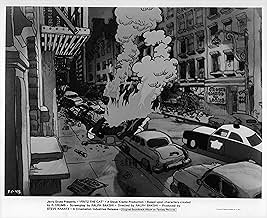
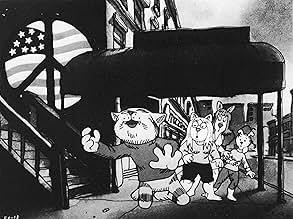
Now let's cut to the movie. It may seem like a dumb adult cartoon, but it does make a statement about the hedonistic lifestyles of the 1960's and there is a lot of allegorical symbolism. Fritz and his fellow felines (looks at his three females in the bathtub scene) represents the sexual revolution, the crows represent low-life Negroes who engage in crime, rioting in Harlem, and pot-smoking, the pigs represent cops who chase Fritz everywhere and are out to bust Fritz, and there's a sadistic witch-like lizard who represents radical culture of the hippies and enjoys watching her rabbit friend beat up Fritz and his donkey girlfriend Harriet with a chain in a sanctuary.
There's something to offend everyone in Fritz, right down to the bathtub orgy in the beginning of the film, heavy dosages of full frontal nudity, hallucinations of bare breasts, Big Bertha, the floozy black crow who seduces Fritz by stuffing marijuana into his mouth, rabbis who get interrupted by Fritz fleeing from the police, a typical 1960's riot in Harlem started by big-mouthed Fritz, pigs as rogue cops (Notice that Ralph Bakshi does the voice of one of the cops who says "Duh. In fact, he mentioned he does all the "Duh" voices in his movies as part of his commentary track from "Wizards." In "Fritz," Bakshi calls his fellow partner, "Ralph," so no one will think that Bakshi is doing the voice of "Ralph," so to speak.), lizards as evil witches, and the list goes on.
The best thing about "Fritz" is that Bakshi seemed to have a lot of fun doing this, and everything worked. He really added the fun to "Heavy Traffic" and "Wizards." When Bakshi really wanted to do an adult animated film, it can work. It only got deadening with latter overproduced efforts such as "Lord of the Rings" and "Cool World," and one can easily see that Bakshi labored everything, rather than the naturalism in "Fritz," "Heavy Traffic" and "Wizards."
Today, adult animation is popular now on TV. In the 1970's, adult animation was used for the theater. Younger animators such as Trey Parker and Matt Stone, the creators of "South Park," and Seth McFarlane, the creator of "Family Guy," appear to be working under the influence of Bakshi, incorporating every bit of lewdness they could think of for their shows and characters. But it is really Bakshi who fathered adult animation, and Parker, Stone, and McFarlane are like his sons, and father knew best.
As for his movies, many of them are not for children, especially young ones. "Fritz the Cat" is his first, his foremost, and one of his best. But it is rated X, and the first theatrical cartoon to be rated X with all the cartoon nudity, graphic violence, and foul language. Here's a piece of trivia: Would anyone guess that the man doing the voice of Fritz the cat is actually Skip Hinnant, the same guy from the children's PBS educational show "The Electric Company" who played Fargo North, Decoder, and Hinnant worked on "Fritz" and "The Electric Company" in the same year? It's true, two vastly different worlds, but Hinnant has pleased both children and adults, and not necessarily at the same time.
Now let's cut to the movie. It may seem like a dumb adult cartoon, but it does make a statement about the hedonistic lifestyles of the 1960's and there is a lot of allegorical symbolism. Fritz and his fellow felines (looks at his three females in the bathtub scene) represents the sexual revolution, the crows represent low-life Negroes who engage in crime, rioting in Harlem, and pot-smoking, the pigs represent cops who chase Fritz everywhere and are out to bust Fritz, and there's a sadistic witch-like lizard who represents radical culture of the hippies and enjoys watching her rabbit friend beat up Fritz and his donkey girlfriend Harriet with a chain in a sanctuary.
There's something to offend everyone in Fritz, right down to the bathtub orgy in the beginning of the film, heavy dosages of full frontal nudity, hallucinations of bare breasts, Big Bertha, the floozy black crow who seduces Fritz by stuffing marijuana into his mouth, rabbis who get interrupted by Fritz fleeing from the police, a typical 1960's riot in Harlem started by big-mouthed Fritz, pigs as rogue cops (Notice that Ralph Bakshi does the voice of one of the cops who says "Duh. In fact, he mentioned he does all the "Duh" voices in his movies as part of his commentary track from "Wizards." In "Fritz," Bakshi calls his fellow partner, "Ralph," so no one will think that Bakshi is doing the voice of "Ralph," so to speak.), lizards as evil witches, and the list goes on.
The best thing about "Fritz" is that Bakshi seemed to have a lot of fun doing this, and everything worked. He really added the fun to "Heavy Traffic" and "Wizards." When Bakshi really wanted to do an adult animated film, it can work. It only got deadening with latter overproduced efforts such as "Lord of the Rings" and "Cool World," and one can easily see that Bakshi labored everything, rather than the naturalism in "Fritz," "Heavy Traffic" and "Wizards."
Today, adult animation is popular now on TV. In the 1970's, adult animation was used for the theater. Younger animators such as Trey Parker and Matt Stone, the creators of "South Park," and Seth McFarlane, the creator of "Family Guy," appear to be working under the influence of Bakshi, incorporating every bit of lewdness they could think of for their shows and characters. But it is really Bakshi who fathered adult animation, and Parker, Stone, and McFarlane are like his sons, and father knew best.
A shocking but very entertaining film
The story concerns a classic 60's hero, Fritz, and his adventures through the urban underground
He loves sex and constantly claims and declares the glories of revolution
At first he is happy with just sex, but as the story moves through exotic adventures he discovers that the only way he can truly be a revolutionary is to join up with one of the militant groups
There, he's over his head
In sharp contrast to Walt Disney's soft characters, Fritz is seen providing a bunch of screaming female cats, placing drugs, and having lots of fun We are taken through Harlem where, in this case, the blacks are portrayed as jive-talking crows Fritz is not a fantasy, but an animation venture into super-reality, at least as Bakshi sees it
The animation is unpolished, graceless, but very effective It has an unrefined or unfinished, renewable energy that brings out some of the social results of the confused sixties
In sharp contrast to Walt Disney's soft characters, Fritz is seen providing a bunch of screaming female cats, placing drugs, and having lots of fun We are taken through Harlem where, in this case, the blacks are portrayed as jive-talking crows Fritz is not a fantasy, but an animation venture into super-reality, at least as Bakshi sees it
The animation is unpolished, graceless, but very effective It has an unrefined or unfinished, renewable energy that brings out some of the social results of the confused sixties
Happy Times - Heavy Times
That is how the 1960s were described by the narrator in the beginning of this film. Fritz the Cat is a famous movie for a number of reasons, most stemming from it being the first feature-length adult cartoon and having an "X" rating. There were controversies surrounding its creation with director Ralph Bakshi and character creator Robert Crumb. The film is like nothing I have ever seen before. It has a unique animation process that makes everything reek seediness, despair, and cry for social change. Bakshi wrote the script which really is nothing more than the knife that cuts through all the 60's BS - from existentialism to the drug culture to the love generation to African-American perspectives to militancy. Nothing is spared as the counterculture is laid bared and examined through the eyes, ears, fears, and desires of Fritz the Cat. Along the way, Fritz experiments with just about anything - including lots of sex, drugs, and sex. While the film definitely is quite vulgar in many ways with some of the most odious characterizations of otherwise cute and cuddly animals and depicting lots of strong sexual situations(though in no way deserving the "X" by today's standards), Fritz the Cat is also an intelligent look at one character's drive to find himself and meaning in his life - perhaps a symbol for the whole decade the film is examining. The end result is nothing conclusive - also perhaps a symbol. Bakshi's script is in some ways profound and thought-provoking and in some ways infantile and vile - his obvious dislike of police just one example. But what had my attention more than anything else was the animation - particularly in exterior shots not containing characters. There is one scene where the slums of Harlem are integral to the story. Bakshi uses his camera to zoom in on quite an impressive animated background shot of a field lost amongst the slums of Harlem. It is the very essence of seedy existence in an uncaring world. There are many other shots too that have that same power, but let's not forget that even with the intelligent at times script and the animation, much of Fritz the Cat is used solely to arouse - either arouse some primal feelings or arouse offense. A landmark film at any rate whether for good or for bad.
Bad Trip
The bad thing about the past is that it is designed to fool you.
The idea is supposed to be that the past stays fixed, as a sort of "truth." And we change. But viewed from ourselves, often the illusion or even the truth is the reverse. We know who we are. We think we recall who we were -- which we envision is some state on the way to who we are. Something relatively static, which means that the past changes. Radically.
Or at least artifacts from the past change, artifacts like movies. All this is complicated by the fact that movies are a key tool we use to define ourselves.
So it is a strange trip indeed to encounter something that DID define us, that we allowed to tell us who we were. And to find it so vacuous, so superficial it shocks.
If you were not a hippie in that era you may need to know the great schisms at work. (I mean the era depicted here -- 1969 -- not the actual date of the movie.)
You had the east coast hippies who were the sons and daughters of the beat generation. We were interested in ideas and art, and life as both. You had the "political" hippies, who were motivated by unhappiness and determined to change what they didn't like in the name of the values of more "genuine" hippies.
And then you had the west coast hippies. These were the ones captured by drugs, "free" sex and dropping out. To differentiate themselves, they adopted the icons of death.
At the time, there was as much confusion among these three as between any one of them and the Nixonites. (This was in the days of the "moral majority" and before the rise of the religious right which evolved from it.)
And where there is is identity confusion, art rushes in. The Beatles of course, and central. Eastern "religions."
And R Crumb.
Crumb was a magnet, pulling many from the other camps into the west coast sphere. He made it seem less radical than it was -- more about cruising (which he called "truckin") and simply enjoying the cornucopia of round women God places there only for pleasure.
We bought it, all of us. It was a sort of commercial identity, sort of like what you see today that surrounds Valentine's day. A vague notion of self and others and satisfied living.
Now, we look at this and it seems the past has moved away from us, away from truth. Was this ever good, or did we only pretend it so because we were so hungry to be defined?
I recently saw a Mickey Rooney movie where he introduces himself to Judy Garland as "white, free and available." I recoiled. I rejected that past. I had nearly the same feeling when watching this, even though it is/was my past.
Ted's Evaluation -- 1 of 3: You can find something better to do with this part of your life.
The idea is supposed to be that the past stays fixed, as a sort of "truth." And we change. But viewed from ourselves, often the illusion or even the truth is the reverse. We know who we are. We think we recall who we were -- which we envision is some state on the way to who we are. Something relatively static, which means that the past changes. Radically.
Or at least artifacts from the past change, artifacts like movies. All this is complicated by the fact that movies are a key tool we use to define ourselves.
So it is a strange trip indeed to encounter something that DID define us, that we allowed to tell us who we were. And to find it so vacuous, so superficial it shocks.
If you were not a hippie in that era you may need to know the great schisms at work. (I mean the era depicted here -- 1969 -- not the actual date of the movie.)
You had the east coast hippies who were the sons and daughters of the beat generation. We were interested in ideas and art, and life as both. You had the "political" hippies, who were motivated by unhappiness and determined to change what they didn't like in the name of the values of more "genuine" hippies.
And then you had the west coast hippies. These were the ones captured by drugs, "free" sex and dropping out. To differentiate themselves, they adopted the icons of death.
At the time, there was as much confusion among these three as between any one of them and the Nixonites. (This was in the days of the "moral majority" and before the rise of the religious right which evolved from it.)
And where there is is identity confusion, art rushes in. The Beatles of course, and central. Eastern "religions."
And R Crumb.
Crumb was a magnet, pulling many from the other camps into the west coast sphere. He made it seem less radical than it was -- more about cruising (which he called "truckin") and simply enjoying the cornucopia of round women God places there only for pleasure.
We bought it, all of us. It was a sort of commercial identity, sort of like what you see today that surrounds Valentine's day. A vague notion of self and others and satisfied living.
Now, we look at this and it seems the past has moved away from us, away from truth. Was this ever good, or did we only pretend it so because we were so hungry to be defined?
I recently saw a Mickey Rooney movie where he introduces himself to Judy Garland as "white, free and available." I recoiled. I rejected that past. I had nearly the same feeling when watching this, even though it is/was my past.
Ted's Evaluation -- 1 of 3: You can find something better to do with this part of your life.
It's my favorite cartoon-movie. Here I'll tell you why :
I'm not particularly a cartoon-fan. I saw " Fritz the cat" in an obscure movie theatre in Ghent (Belgium)in the early seventies. There were about 5 people in the theatre and 2 left after half an hour.
I enjoyed the story: it's about a young guy who discovers the "real" world with all his odd aspects, as the situation was in the late sixties.
The music in this film is super: I discovered the great Charles Earland (Black talk), Duke's Theme from Ray Shanklin, Mamblues (Cal Tjader), Bertha's theme (Ray Shanklin) and even Billy Holiday 's wonderful "yesterdays".
Those who believe there are racist tendencies in the movie don't dig anything about "Jewish" humour.
After having watched this movie, I left the cinema with the conviction:" Hey, in fact I am Fritz the cat ", and believe me, at that time, I was!
I enjoyed the story: it's about a young guy who discovers the "real" world with all his odd aspects, as the situation was in the late sixties.
The music in this film is super: I discovered the great Charles Earland (Black talk), Duke's Theme from Ray Shanklin, Mamblues (Cal Tjader), Bertha's theme (Ray Shanklin) and even Billy Holiday 's wonderful "yesterdays".
Those who believe there are racist tendencies in the movie don't dig anything about "Jewish" humour.
After having watched this movie, I left the cinema with the conviction:" Hey, in fact I am Fritz the cat ", and believe me, at that time, I was!


Did you know
- TriviaThere is no evidence that Robert Crumb filed suit to have his name removed from the film's credits. Contradictory to this claim, Crumb's name continues to appear in the credits, even on home media releases. His name, however, does not appear in the credits for The Nine Lives of Fritz the Cat (1974).
- GoofsWhen he emerges from the trash can, Fritz's outfit changes color from red to blue to red again between shots.
- Alternate versionsWhen aired during the Groundbreakers block on Playboy, the scene of Harriet's rape is heavily edited. The movie is otherwise uncut.
- ConnectionsFeatured in Precious Images (1986)
- How long is Fritz the Cat?Powered by Alexa
Details
Box office
- Budget
- $700,000 (estimated)
- Runtime
- 1h 18m(78 min)
- Color
Contribute to this page
Suggest an edit or add missing content