IMDb RATING
7.0/10
8.5K
YOUR RATING


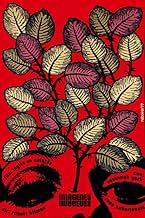
Whilst writing a children's book, a woman is interrupted by images, unsure if they may or may not be real.Whilst writing a children's book, a woman is interrupted by images, unsure if they may or may not be real.Whilst writing a children's book, a woman is interrupted by images, unsure if they may or may not be real.
- Director
- Writers
- Stars
- Nominated for 1 Oscar
- 1 win & 7 nominations total



- Director
- Writers
- All cast & crew
- Production, box office & more at IMDbPro
7.08.4K
1
2
3
4
5
6
7
8
9
10
Featured reviews
May have got good ratings, but it didn't do much for me!
Robert Altman isn't a director that you would usually associate with the horror genre - but that was what made this film all the more intriguing for yours truly. However, while Altman takes obvious influence from Roman Polanski's Repulsion - an idea good enough to spawn a good horror film and ambiguous enough to be given a different slant to the original - Altman's film really didn't do much for me. The plot concerns Cathryn; a housewife who visits a 'weekend cottage' with her husband. However, while at this tranquil location; she begins seeing various apparitions, and proceeds to kill them off one by one. The film slots into the 'slow burn horror' niche, and while this sort of film can often produce good results, this one doesn't generate a great deal of interest and as intrigue is key to the plot, it all falls down. The film deserves some plaudits for the fact that it's all of a very high quality; Altman's direction is generally strong and he gets good performances out of his cast, but this doesn't count for much when the film moves at a snail's pace. Images tends to get good ratings across the board, so perhaps I've missed something and my criticism is misplaced - but I doubt it!
Imperfect, but fascinating, complex early Altman
This is a a film I'll definitely watch again. I have the feeling it could feel even stronger on repeated viewings. A character study of a schizophrenic from inside her subjective point of view, so the whole story is told by an unreliable narrator. Some fascinating moments, and good tense twists as we (and she) wonder what's real. The film isn't wildly stylized, so the line between hallucination and reality is truly, effectively blurry. On the other hand a lot of the style feels awkwardly dated, and some story elements feel manipulative and not easy to believe. For example, she's very obviously a potentially dangerously disturbed woman, but her husband seems to barely take that in. Even if he's the supercilious prig that Rene Abougenois plays him as, his complete ignoring of her state feels like a cheat. And some twists just feel like they were 'a cool idea' at the time, but not rooted in deeper character or story elements. A little like Nic Roeg, but not at his very best. All that said, certainly a must see for any Altman fans - it's not quite like anything else he ever did - although '3 Women' could be seen in some ways as a more mature follow up.
IMAGES (Robert Altman, 1972) ***
An arty horror movie is the last thing one expects from Robert Altman - although, apparently, he had already tried it out with his earlier, little-seen THAT COLD DAY IN THE PARK (1969). The writer/director (itself an unusual combination for Altman, but it shows how strongly he felt about the project) himself does not think of it as such and, in any case, reviews at the time were decidedly mixed.
Even if he was "inspired" by Ingmar Bergman's PERSONA (1966), the film actually feels closer plot-wise to Roman Polanski's REPULSION (1965). Originally intended to be shot in Milan with Sophia Loren, the film definitely benefits from its picturesque Irish locations and Susannah York's fragile performance (which eventually earned her the Best Actress Award at Cannes) as a schizophrenic; she, too, was unusually committed and actually allowed a story for kids she had written - called "In Search Of Unicorns" - to be incorporated into the narrative!
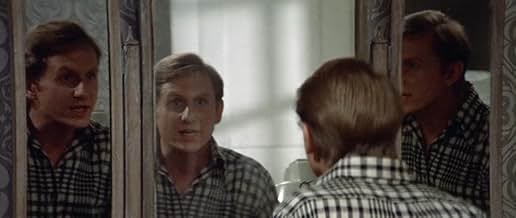
The film features only five major characters and, interestingly, these are named after each of the actors themselves: so Susannah York plays Cathryn just as Cathryn Harrison (Rex's daughter, a very natural performer who later featured in another strange film - Louis Malle's BLACK MOON [1975]) plays Susannah; Marcel Bozzuffi's character is named Rene', Rene' Auberjonois is Hugh and Hugh Millais is Marcel! Of course, all this fits perfectly well with the film's theme and the characters' penchant to exchange 'faces' with each other in the mind of the disturbed protagonist; actually, this concept is pretty frightening because the lead character at one point decides to get rid of her 'ghosts' - but, not having a complete grasp on reality, one is never sure whether the victims are mere figments of her imagination or else real people!
Also essential to establishing the film's unique mood is Vilmos Zsigmond's stylish cinematography and John Williams' stark yet evocative score (interspersed with eerie sounds provided by Stomu Yamash'ta, a Japanese sound designer); even though his work here is galaxies away from Williams' renowned anthemic scores for the likes of Steven Spielberg and George Lucas, he still managed to earn an Oscar nomination for it!
Even if he was "inspired" by Ingmar Bergman's PERSONA (1966), the film actually feels closer plot-wise to Roman Polanski's REPULSION (1965). Originally intended to be shot in Milan with Sophia Loren, the film definitely benefits from its picturesque Irish locations and Susannah York's fragile performance (which eventually earned her the Best Actress Award at Cannes) as a schizophrenic; she, too, was unusually committed and actually allowed a story for kids she had written - called "In Search Of Unicorns" - to be incorporated into the narrative!
The film features only five major characters and, interestingly, these are named after each of the actors themselves: so Susannah York plays Cathryn just as Cathryn Harrison (Rex's daughter, a very natural performer who later featured in another strange film - Louis Malle's BLACK MOON [1975]) plays Susannah; Marcel Bozzuffi's character is named Rene', Rene' Auberjonois is Hugh and Hugh Millais is Marcel! Of course, all this fits perfectly well with the film's theme and the characters' penchant to exchange 'faces' with each other in the mind of the disturbed protagonist; actually, this concept is pretty frightening because the lead character at one point decides to get rid of her 'ghosts' - but, not having a complete grasp on reality, one is never sure whether the victims are mere figments of her imagination or else real people!
Also essential to establishing the film's unique mood is Vilmos Zsigmond's stylish cinematography and John Williams' stark yet evocative score (interspersed with eerie sounds provided by Stomu Yamash'ta, a Japanese sound designer); even though his work here is galaxies away from Williams' renowned anthemic scores for the likes of Steven Spielberg and George Lucas, he still managed to earn an Oscar nomination for it!
schizophrenic dream
This film does not represent what Altman is well-known for - community mosaic or documentary style films such as "MASH", "Nashville", and "A Prairie Home Companion". Instead, Altman extended what he tried in "That Cold Day In the Park (1969)" depicting the inner world of a psychopathic woman, but his approach here is more complex. In fact, the fragmented style of the film is quite appropriate to portrait the shuttered mind of heroine.
The use of sound and the twin image of the character somewhat reminded me of "Meshes of the Afternoon (1943)" by Maya Deren. However, the visual style of this film is distinctively the seventies - beautifully shot by Vilmos Zsigmond. A mesmerizing film.
The use of sound and the twin image of the character somewhat reminded me of "Meshes of the Afternoon (1943)" by Maya Deren. However, the visual style of this film is distinctively the seventies - beautifully shot by Vilmos Zsigmond. A mesmerizing film.
Altman's lost dream sonata
I have spent a grown lifetime seeking this 1972 Altman dreamscape, and lost all hope when a friend reported that the director told a Q-and-A audience that Columbia had mistakenly destroyed the negative. A specialty store in Santa Monica somehow found a video copy, and it was worth fifteen years' wait.
Suggestive of the tinkling, misted-over fugue states of QUINTET and THREE WOMEN, IMAGES riffs lyrically off Polanski's REPULSION. Where Polanski's film is pitched somewhere between sixties horror and the dry joke-telling of Bunuel, Altman's version is lush, druglike, sensuously baroque. Susannah York plays a children's writer in a remote Irish cottage who seems to be spending too much time indoors. (Were the movie not lost in obscurity, you might think her an antecedent for Jack Torrance and Barton Fink.) As she copes with the would-be-regular-guy puttering of her schmucky husband (Rene Auberjonois, in a role rightly intended for Michael Murphy), two other loathsome men flit into her life--the husband's buddy, an Irish lecher played by Hugh Millais, and a seemingly dead ex-lover, played by Marcel Bozzufi. As these men appear to bleed into one another in York's mind, so do they soon start bleeding into the cottage's Persian rugs.
IMAGES defines Altman as the freest and most fearless of all American moviemakers. Most critics only stand behind Altman's we-are-the-people movies--his community mosaics. But he clearly is as passionate about mapping inner worlds as outer ones, and these Expressionist chamber pieces are his most feckless works. The movie is also a reminder of what Altman lost when he stopped hiring Vilmos Zsigmond to shoot his movies. Almost no one on the planet has such an intuitively graceful and expressive shooting style, but Zsigmond's stunning work here--among his finest--reveals that it's a long walk downstairs from Zsigmond to the likes of Jean Lapine. And note should be made of the work of the youngish composer who wrote the elegant, sinewy, restrained score--a decidedly non-bombastic, anti-symphonic fellow whom we now know as John Williams.
Suggestive of the tinkling, misted-over fugue states of QUINTET and THREE WOMEN, IMAGES riffs lyrically off Polanski's REPULSION. Where Polanski's film is pitched somewhere between sixties horror and the dry joke-telling of Bunuel, Altman's version is lush, druglike, sensuously baroque. Susannah York plays a children's writer in a remote Irish cottage who seems to be spending too much time indoors. (Were the movie not lost in obscurity, you might think her an antecedent for Jack Torrance and Barton Fink.) As she copes with the would-be-regular-guy puttering of her schmucky husband (Rene Auberjonois, in a role rightly intended for Michael Murphy), two other loathsome men flit into her life--the husband's buddy, an Irish lecher played by Hugh Millais, and a seemingly dead ex-lover, played by Marcel Bozzufi. As these men appear to bleed into one another in York's mind, so do they soon start bleeding into the cottage's Persian rugs.
IMAGES defines Altman as the freest and most fearless of all American moviemakers. Most critics only stand behind Altman's we-are-the-people movies--his community mosaics. But he clearly is as passionate about mapping inner worlds as outer ones, and these Expressionist chamber pieces are his most feckless works. The movie is also a reminder of what Altman lost when he stopped hiring Vilmos Zsigmond to shoot his movies. Almost no one on the planet has such an intuitively graceful and expressive shooting style, but Zsigmond's stunning work here--among his finest--reveals that it's a long walk downstairs from Zsigmond to the likes of Jean Lapine. And note should be made of the work of the youngish composer who wrote the elegant, sinewy, restrained score--a decidedly non-bombastic, anti-symphonic fellow whom we now know as John Williams.


Did you know
- TriviaActress Susannah York mentioned to director Robert Altman during one of the films pre-shooting sessions how she was writing a children's book called "In Search of Unicorns". Altman asked to read it. By the time he had finished the tale, Altman had decided to make York's character in the film a writer of children's' tales and asked York to quote parts of the fairy-tale in the movie. York received a writing credit for the film as the text was from her book. As such, the film represents actress York's film debut as a writer.
- GoofsTowards the end of the film when Catherine is dropping off Susannah, the Jaguar has a Jaguar sticker on the driver's side of the windshield. After Catherine finds herself by the cliff, the Jaguar sticker disappears.
- How long is Images?Powered by Alexa
Details
Box office
- Budget
- $807,000 (estimated)
- Gross worldwide
- $1,422
- Runtime
- 1h 44m(104 min)
- Sound mix
- Aspect ratio
- 2.35 : 1
Contribute to this page
Suggest an edit or add missing content