IMDb RATING
6.3/10
3.9K
YOUR RATING


An inspector investigates a string of murders, which are committed by paralyzing the victims before eviscerating them - the same way a wasp kills a tarantula - and are connected to a spa.An inspector investigates a string of murders, which are committed by paralyzing the victims before eviscerating them - the same way a wasp kills a tarantula - and are connected to a spa.An inspector investigates a string of murders, which are committed by paralyzing the victims before eviscerating them - the same way a wasp kills a tarantula - and are connected to a spa.
- Director
- Writers
- Stars


Eugene Walter
- Ginetto - Waiter
- (as Walter Eugene)


- Director
- Writers
- All cast & crew
- Production, box office & more at IMDbPro
6.33.9K
1
2
3
4
5
6
7
8
9
10
Featured reviews
Serial Acupuncturist...
After an opening sequence featuring a beautiful woman enjoying a lovely massage, BLACK BELLY OF THE TARANTULA finds the woman and her husband fighting over her having an affair and subsequent blackmail. This leads to a rubber-gloved, mask-wearing murderer using a unique method to dispatch the unwary, unfaithful wife.
Inspector Tellini (Giancarlo Giannini) suspects the husband, that is, until more, identical murders follow. As Tellini delves deeper into the case, he finds himself the target of the maniac he's trying to catch.
Stylish and suspenseful, this is a classic giallo from the genre's high point. Giannini's character is more human than the typical cop role. He plays a man ready to chuck his whole career, just as the vicious killer gets going, making Tellini more believable.
Co-stars Barbara Bach as the unfortunate Jenny...
Inspector Tellini (Giancarlo Giannini) suspects the husband, that is, until more, identical murders follow. As Tellini delves deeper into the case, he finds himself the target of the maniac he's trying to catch.
Stylish and suspenseful, this is a classic giallo from the genre's high point. Giannini's character is more human than the typical cop role. He plays a man ready to chuck his whole career, just as the vicious killer gets going, making Tellini more believable.
Co-stars Barbara Bach as the unfortunate Jenny...
Another fine Giallo!
Inspector Tellini (Giancarlo Giannini) must investigate the bizarre murder of two seemingly unconnected women, paralysed by their killer so that they may be horrifically violated while conscious.
It has often been said that Italian cinema is all style and no plot but here is a definite example to the contrary. 'The Black Belly of the Tarantula' is indeed a stylish Italian offering laced with some truly exquisite photography and novel camera trickery but it also consists of a strong plot that surprises and captivates while maintaining a profound aura of trepidation. It is, however, perhaps the most apparent downfall in the film that the plot becomes the central focal point as several aspects to the story are left unexplored, subsequently leaving no acceptable closure of the respective plot aspect. Unfortunately because of this, the prevalent incoherency of Italian cinema is once again revisited and due to the nature of the film it is perhaps more difficult than usual to ignore. With this in mind, one should realise that the central storyline is stark enough to arouse and preserve viewer interest while only the sub-plots weaken the overall presentation of the film.
Despite the mainly superficial criticisms one can direct at the film, 'The Black Belly of the Tarantula' still takes a firm position as one of the finer examples of this particular brand of Italian film-making. Unquestionably, the opening thirty minutes are immensely powerful, offering some of the most intimidating murder sequences ever confined to the cinematic medium. The use of gloomy visuals, point-of-view shots, intentionally disorientating photography, a wonderful musical score blending both prominence and subtlety and a lavish use of dark colours and shadows creates an almost unsurpassed eerie and brutal ambiance to accompany the violent actions depicted on screen and the shrill, short, terrifying shrieks of the killer's victims seek only to underline the artistic craftsmanship of the picture. The brusque transition to silence that immediately follows the first attack of the murderer in each individual case is so overwhelmingly haunting that the following actions are immeasurably disturbing in their tranquillity. Undoubtedly, these sequences are the pinnacle of creativity from Paolo Carvara in this picture; sublime in their splendour and disconcerting in their substance.
The most apt way to summarise 'The Black Belly of the Tarantula' would be to simply describe it as flawed genius. Arguably too plot-heavy and with an unmistakably clichéd outcome, the superlative qualities fortunately shine through and leave the film as impressive, not disappointing. Perhaps those more highly versed in the Italian Giallo will appreciate the effort and artistry slightly more than others, but in any case, 'The Black Belly of the Tarantula' is worthy viewing for all fans of cinema. 7½/10
It has often been said that Italian cinema is all style and no plot but here is a definite example to the contrary. 'The Black Belly of the Tarantula' is indeed a stylish Italian offering laced with some truly exquisite photography and novel camera trickery but it also consists of a strong plot that surprises and captivates while maintaining a profound aura of trepidation. It is, however, perhaps the most apparent downfall in the film that the plot becomes the central focal point as several aspects to the story are left unexplored, subsequently leaving no acceptable closure of the respective plot aspect. Unfortunately because of this, the prevalent incoherency of Italian cinema is once again revisited and due to the nature of the film it is perhaps more difficult than usual to ignore. With this in mind, one should realise that the central storyline is stark enough to arouse and preserve viewer interest while only the sub-plots weaken the overall presentation of the film.
Despite the mainly superficial criticisms one can direct at the film, 'The Black Belly of the Tarantula' still takes a firm position as one of the finer examples of this particular brand of Italian film-making. Unquestionably, the opening thirty minutes are immensely powerful, offering some of the most intimidating murder sequences ever confined to the cinematic medium. The use of gloomy visuals, point-of-view shots, intentionally disorientating photography, a wonderful musical score blending both prominence and subtlety and a lavish use of dark colours and shadows creates an almost unsurpassed eerie and brutal ambiance to accompany the violent actions depicted on screen and the shrill, short, terrifying shrieks of the killer's victims seek only to underline the artistic craftsmanship of the picture. The brusque transition to silence that immediately follows the first attack of the murderer in each individual case is so overwhelmingly haunting that the following actions are immeasurably disturbing in their tranquillity. Undoubtedly, these sequences are the pinnacle of creativity from Paolo Carvara in this picture; sublime in their splendour and disconcerting in their substance.
The most apt way to summarise 'The Black Belly of the Tarantula' would be to simply describe it as flawed genius. Arguably too plot-heavy and with an unmistakably clichéd outcome, the superlative qualities fortunately shine through and leave the film as impressive, not disappointing. Perhaps those more highly versed in the Italian Giallo will appreciate the effort and artistry slightly more than others, but in any case, 'The Black Belly of the Tarantula' is worthy viewing for all fans of cinema. 7½/10
The Black Belly Of The Tarantula (Paolo Cavara, 1971) ***
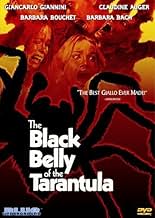
From the recent spate of giallo releases via the Blue Underground label, this was the one I was most looking forward to; still, now that I've watched the film, the proclamation on the DVD sleeve of its being "The Best Giallo Ever Made" is an exaggeration - as it's not quite in the same league as the best of Mario Bava, Dario Argento, or even Lucio Fulci!
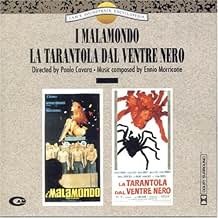
Despite being made by people not usually associated with the sub-genre (director Cavara had started out in "Mondo" documentaries!), most of the requisite elements are present - and this, I have to say, is its major weakness: though the killer's modus operandi here is undeniably original and particularly vicious, the settings, (mostly irrelevant) plot complications and the unconvincing explanation at the end are all-too-typical, thus making the whole somewhat predictable (down to the identity of the murderer!), if never less than enjoyable and occasionally exciting (the rooftop chase scene above all). Still, as shot by Marcello Gatti, the film is stylish enough (even if the technique isn't really pushed to the limit as in, say, the films of Argento) and, in any case, it has two major assets in the performance of Giancarlo Giannini (as bewildered a giallo protagonist as one can get though, for once, he is a cop and a fairly intelligent, albeit disillusioned, one at that) and a typically unforgettable, indeed irresistible soundtrack courtesy of the tireless and ever-inspired Ennio Morricone.
One can't have a giallo without the presence of a bevy of beauties - most of whom get to shed their clothes and are soon shown on the receiving end of the killer's paralyzing poison-tipped needle: Barbara Bouchet (appearing, all-too-briefly, as the first victim in one of the most effortlessly erotic openings to any film!), Barbara Bach and Stefania Sandrelli (who, alas, is too often left by the wayside - though she does share a love scene with Giannini - and whose voice, as far as I can tell, was dubbed even in the Italian version!). The notable cast also features Claudine Auger, Silvano Tranquilli, Rossella Falk and Eugene Walter (as a patronizing gay waiter, whose vaguely androgynous features were later utilized to startling effect in another solid giallo, Pupi Avati's THE HOUSE WITH LAUGHING WINDOWS [1976]). Trivia note: I got to see Giannini, Sandrelli and Bouchet at the 2004 Venice Film Festival (the latter on more than one occasion, since she was a guest of honor during the Italian B-movie retrospective!).
Despite being made by people not usually associated with the sub-genre (director Cavara had started out in "Mondo" documentaries!), most of the requisite elements are present - and this, I have to say, is its major weakness: though the killer's modus operandi here is undeniably original and particularly vicious, the settings, (mostly irrelevant) plot complications and the unconvincing explanation at the end are all-too-typical, thus making the whole somewhat predictable (down to the identity of the murderer!), if never less than enjoyable and occasionally exciting (the rooftop chase scene above all). Still, as shot by Marcello Gatti, the film is stylish enough (even if the technique isn't really pushed to the limit as in, say, the films of Argento) and, in any case, it has two major assets in the performance of Giancarlo Giannini (as bewildered a giallo protagonist as one can get though, for once, he is a cop and a fairly intelligent, albeit disillusioned, one at that) and a typically unforgettable, indeed irresistible soundtrack courtesy of the tireless and ever-inspired Ennio Morricone.
One can't have a giallo without the presence of a bevy of beauties - most of whom get to shed their clothes and are soon shown on the receiving end of the killer's paralyzing poison-tipped needle: Barbara Bouchet (appearing, all-too-briefly, as the first victim in one of the most effortlessly erotic openings to any film!), Barbara Bach and Stefania Sandrelli (who, alas, is too often left by the wayside - though she does share a love scene with Giannini - and whose voice, as far as I can tell, was dubbed even in the Italian version!). The notable cast also features Claudine Auger, Silvano Tranquilli, Rossella Falk and Eugene Walter (as a patronizing gay waiter, whose vaguely androgynous features were later utilized to startling effect in another solid giallo, Pupi Avati's THE HOUSE WITH LAUGHING WINDOWS [1976]). Trivia note: I got to see Giannini, Sandrelli and Bouchet at the 2004 Venice Film Festival (the latter on more than one occasion, since she was a guest of honor during the Italian B-movie retrospective!).
Adequate,but not special
In most of the Giallo movies I have seen so far,there was always this gimmick that made the movie distinguish itself in the genre. While there is such a gimmick used here it nearly isn't as interesting as it sounded. The gimmick of course is the killer using acupuncture needles to paralyze the victims like this special wasp does to the black tarantula. And that is it. The title sounds more intriguing than it is. The movie contains enough moments to maintain a certain tension. But without red herrings it is actually pretty easy to pick out the killer. In good Giallos they often give hints and clues in making you think who the suspect is and then hit you with this amazing twist that turns everything upside down and still make sense. "Black Belly..." lacks serious suspects so basically everyone could be the killer. Very sloppy or lazy and no fun whatsoever. This movie doesn't even try to make sense of the killer's actions which usually should be the key element in unfolding the killer's identity. Apart from the beautiful women this movie isn't special. Is it a waste of time then? No,not really. But one familiar with the genre does expect more creativity. The main character also starred as Matis in the last two Bond movies which sort of gives this movie more glamour. Overall this movie just lacks the punch I expect to be in a giallo movie.
A Unique And Exciting Giallo Experience
In the 1971 Italian giallo thriller "The Black Belly of the Tarantula," we meet a very unusual policeman, Inspector Tellini. He is unusual, insofar as these gialli are concerned, because he's unsure of himself, not certain if he should stay with his job, and makes many mistakes. Then again, his adversary here is a bit unusual, too: a killer who paralyzes his victims with an acupuncturist's needle in the back of the neck before ever so slowly (and excruciatingly...for this viewer, anyway) slicing their abdomens open. For the life of me, I could not figure out where this picture was headed or what it had on its mind; forget about figuring out the identity of the killer! Thus, I just sat back and enjoyed the ride, and was pleased when everything did congeal, plotwise, at the end. And there ARE many things to enjoy here. Tellini is played by Giancarlo Giannini, a year before he would commence a string of some half dozen hits with director Lina Wertmuller that would catapult him to international stardom. He is as fine an actor as has ever appeared in a giallo film, and he is here surrounded by some truly gorgeous women, including no less than three former/future Bond girls: Barbara Bouchet (whose exposed, superperky buttocks automatically earn this film 5 stars!), Claudine "Domino" Auger and Barbara Bach, here looking younger than I've ever seen her. Other things to enjoy: a creepy, arrhythmic, discordant score by the great Ennio Morricone, flashy direction by Paolo Cavara, some good action scenes (I love that three-way rooftop chase) and, like I mentioned, a meaty story to sink your mental teeth into. Not to mention those grisly murders! Don't believe the Maltin book, which gives a paltry 1 1/2 stars to the cut, 88-minute version of this film. Check out this fine-looking, uncut DVD from Blue Underground, with excellent subtitles and extras, for a unique and exciting giallo experience.


Did you know
- TriviaThree Bond girls appeared in this film. They were 1. Claudine Auger, who had the female lead in Thunderball (1965). 2. Barbara Bach, who went on to have the female lead in The Spy Who Loved Me (1977). 3. Barbara Bouchet, who appeared in Casino Royale (1967). The first two appeared in Eon Bond movies, while the third appeared in a non Eon Bond movie which was a spoof.
- GoofsThe scientist who is arrested for drug smuggling refers to the tarantula as an insect. Spiders have 8 legs and belong to the class of arachnids. No scientist would make such an error.
- Quotes
Inspector Tellini: So, to sum it up: Crime victim number one--a nymphomaniac.
- ConnectionsFeatured in Celluloid Bloodbath: More Prevues from Hell (2012)
- How long is Black Belly of the Tarantula?Powered by Alexa
Details
- Release date
- Countries of origin
- Language
- Also known as
- Strele otrovnog pauka
- Filming locations
- Roma, Lazio, Italy(location)
- Production companies
- See more company credits at IMDbPro
- Runtime
- 1h 29m(89 min)
- Sound mix
- Aspect ratio
- 1.85 : 1
Contribute to this page
Suggest an edit or add missing content