IMDb RATING
7.0/10
1.4K
YOUR RATING

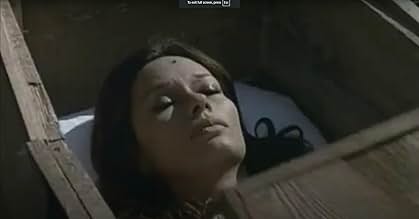
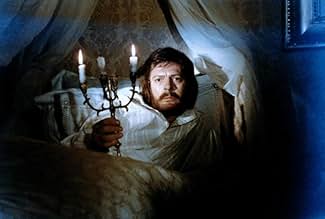
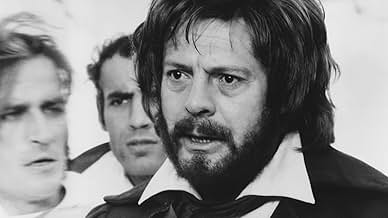
A anarchist leader (Fulvio) wishes to retire, as he is old and tired. He tries to hide himself, but his friends find him and insist he carries on helping them.A anarchist leader (Fulvio) wishes to retire, as he is old and tired. He tries to hide himself, but his friends find him and insist he carries on helping them.A anarchist leader (Fulvio) wishes to retire, as he is old and tired. He tries to hide himself, but his friends find him and insist he carries on helping them.
- Directors
- Writers
- Stars
- Awards
- 3 nominations total


- Directors
- Writers
- All cast & crew
- Production, box office & more at IMDbPro
7.01.4K
1
2
3
4
5
6
7
8
9
10
Featured reviews
Visual psychology in a tale of the battle between self-interest and communal interest
In early 19th century Italy a middle aged radical called Fulvio Imbriani (Marcello Mastroianni) finds his loyalty and commitment to his political comrades being tested after he is released by the Italian regime. Released in1974 writer/directors Paolo and Vittorio Taviani's feature film is a historical melodrama set during 'The Restoration', and filmed in a mix of opulent settings, and at times bare landscapes and lakes. Dealing with a similar theme to the Taviani's previous film 'St. Michael Had a Rooster', like that film it has a certain amount of comparatively complex psychologising and irony about the mental trauma of a revolutionary whose faith in the cause is slipping. It's a story of the ties of family and the past, the corruption of class, self-interest, and the power of money and position, versus political commitment and conviction, and general communal interest. A lot of the film's effect is achieved through a kind of 'visual psychology' encompassing colour, landscape, set, composition, movement, and other visual devices ( this is a good visual film with cinematography by Giuseppe Ruzzolini), combined with music, to create a film parts of which almost seem like a kind of train of thought. In the words of 'La Marseillaise' - 'Allons Enfants/Arise Children', from the lies and fantasy of your world.
Not entirely boring..
On the video box of Allonsafan, I noticed that someone had written in small letters, "Boreing". So, was it? On the whole, I am not the biggest fan of Italian films, and Marcello Mastrianni I always feel is his and miss. But actually, Ansofan isn't as bad a film that many people perceive it to be, although it essentially goes all over the place, the film is somewhat entertaining. Mastrianni is certainly OUT there playing a member of a criminal gang. He wants to go straight, but members of his gang keep showing up every time he's trying to go straight. He also has a son to think about! And his love life! Nevertheless, the gang members seem to follow him like a bad rash, even when he tries to kill the annoying pests. What this all is supposed to mean is rather confusing, and the ending is pretty predictable if you've been paying attention to this love/hate relationship thing Mastrionni has got going. Not entirely boring, but then again, not entirely comprehensible either.
A film like that of Miklos Jancso and Ettore Scola ! ! ! ! !
Allonsanfan is one of those rare foreign language films about which dedicated viewers know a lot without having gotten a chance to see it. It is rather unfortunate that this classic film directed by Taviani brothers has neither been shown repeatedly on TV screens around the world nor its DVD is as easily available as that of "Braveheart".If we look closely at the productivity of Italian cinema,we will come to know that there is only an Italian film ("La nuit de Varennes" directed by Ettore Scola) which similar to it in terms of style and content.Allonsanfan is quite similar to a Hungarian auteur Miklos Jancso's film but with no nudity,no brutality and no humiliation.At the core of this film is a detailed description of the tough life of a determined revolutionary.Sometimes he is trusted by his followers, sometimes he is not.Family ties are of great importance for him as any other aristocrat.The only unusual aspect of his behavior is that he does not know how to maintain them.Betrayal is a repetitive element of this film as there are plenty of disloyal souls linked to our strongman.This is the reason why he fails to remain neither a true revolutionary nor a true aristocrat.The portrayal of incest is rather out of place for this film.It loses its credibility because of prevalence of dramatic situations.It is true that "Allonsanfan" is visually exquisite but it is somewhat difficult to follow the film's flow as not much of historical context is provided to the viewer.One can say that events happen of their own accord.It is only after reaching the halfway mark that viewers comprehend that Allonsanfan is one of the this film's important protagonists.A positive thing about it is its star cast with remarkable performances by Marcello Mastroianni.A must see for all the admirers of auteur cinema especially of Vittorio and Paulo Taviani.
this is no Italian comedy, it's a political movie
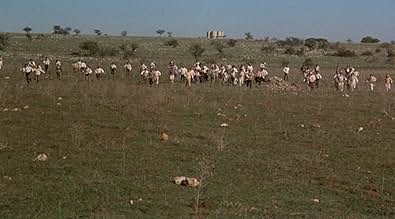
This movie is a quite open metaphor for the attitude of many leftists in Italy (and elsewhere) in the 70s. It's about Fulvio, a man who left his house and loving and wealthy family (and also an illegitimate son) in order to free the poor and oppressed and to become a full-time revolutionary agitator, and who - after only 3 months in prison and the suicide of a comrade - decides that it was all a mistake and that he should go back and live with his brother and sister in their villa, where he is pampered by old, mama-like servants, seeking happiness in family life. But his past thwarts his project, first when his ex-lover (an emancipated, passionate, Hungarian revolutionary woman, beautifully played by Lea Massari) appears at his home, mocking his family and shocking the servants with her manners, then when the whole bunch of revolutionary, Utopian friends of Fulvio tries to involve him in a crazy plan: initiate a revolution in poor, backward, oppressed Southern Italy. Fulvio gets involved in the plot against his will. The more he tries to get away from his former comrades, the more - ironically - he gets deep into the plot, till the sad, grotesque end. Taking place during the Restoration which followed the fall of Napoleon and seemed to mark the defeat of ideals created by the French Revolution, the movie is a bitter reflection about the fact that in everyone, even in the most revolutionary and idealist persons, there is a part which is counter-revolutionary and anti-idealistic. Fulvio is willing to betray his friends and comrades in order to live a quiet life, having lost every interest and hope in fighting injustice and oppression. It's a movie about political engagement and the following delusion, about a suicidal courage in pursuing ideas which are absolutely unrealizable and the cowardice of those who just want to enjoy life (as long as they are on the sunny side of it...), about individualism and blind dedication to THE cause and to the party/group/revolution etc. It's a sad movie in which the main figures oscillates between appeasement with the existing injustice (Fulvio's private, inner Restoration) and empty, finally pointless revolutionary beau gestes (like his comrades). We follow Fulvio and his friend from a lovely, rich Lombardy (with its villas, lakes, hills), in which men and Nature seem to harmonize perfectly, to a bare, sun battered countryside of Southern Italy (with its extremely poor towns), in which the unnaturally red jackets of the revolutionaries stand out as something which do not belong there at all. When still in Lombardy, Fulvio seeks villas and palaces, but his friends force him always to go to abandoned places, ruins, warehouses. They offer him nocturnal bivouacs instead of well furnished dining rooms like the one he brings once his illegitimate son. But they act in the name of an ideal, he in the name of his individual happiness. Is a conciliation of both motives possible? The ending of the movie seems to give a deluded, cynical answer to the question.
Fulvio should have made them an offer they couldn't refuse...
Marcello Mastroianni's story is never simple. He is released from prison in hopes that he would lead authorities to the underground resistance, but instead he finds himself torn between wealthy and a family he once had, and the opportunity to help his brethren save others from the dreaded cholera. It is a tough choice, and in the end Mastroianni (as in previous films) has done a great job of building tension within his character. The moral dilemma he is faced with is a tough one, kill those he was once involved with in essence betray them, or forever be chased by his past sins. He chooses the latter, and uses trickery and trust to break this small group of bandits. "Allonsanfan" can be spliced into three different distinct films, each with amazing imagery, but lacking the development needed to really bring the audience further into the film. The first is with Mastroianni heading home, overcoming sickness, finding his girlfriend, and all the while plotting an ambush. Great scenes, could have been a great moment, but we know nothing about his family or girlfriend outside of what they mutter or what the subtitles give us. We needed to see more of his interaction with these random characters. The second part involves his son, good, but was again cut short and strange because we knew nothing about it outside of the fact that he had a son. I can't even go further into the entire frog scene, I am still trying to wrap my brain around that. The incident on the lake was another example of having a strong cinematographer, but a apathetic storyteller. Finally, there was the scene in the South where we see why this film is entitled "Allonsanfan", but by this point the excitement has died, and we are just waiting for a finale.
This film did involve hard work and dedication by the entire crew to make, with that said; I cannot just fully say that this film was a failure. There were those that worked hard on this project like the cinematographer and the amazing score by Ennio Morricone. These elements alone brought this film out of one that would make any viewer fall asleep into one worth viewing at least once. The story is where most of the trouble laid, and again, I cannot state that it was one of those cases where there were too many ideas and not enough time or conjoining scenes. We would begin a thought, but end elsewhere in the story (again, see the segment with the frog). Perhaps some of it was done to try to bring sympathy to Mastroianni, but it could have been done without the random acts of history or perhaps more history. There was a moment in this film where I thought we could have used more history devoted to the story. That is what was missing from scene to scene. At times our characters were moving without a motive, and history could have interjected to help the audience better see the motives and reasoning. Perhaps it was my lack of knowledge of what Italy was like at the end of Napoleon's era, but more explanation could have been used do develop our bandits, or the motives behind Mastroianni's deeds.
On a small note, if you decide to watch this film on VHS, beware of the subtitles. I am very good at reading subtitles on a foreign film, I hate the sound of dubbed voices, but with "Allonsanfan", the subtitles were all over the place. There were several occasions where they were missing from conversations, where one character would have a three-minute speech and the only word to come up in the subtitle would be "yes", or when half the words were missing from the side of the television. It was troublesome to read and watch at the same time, so to get the full effect of the film, I found myself turning off the sound and reading to the best of my ability. Probably lessoned the film, but kept me in check with the meager characters.
Overall, I cannot say this was a horrible film, but it won't be viewed again by yours truly. I may challenge myself to see it again on DVD if it ever is released, but for now, it needs to tighten up its story and used a bold marker on its characters. Mastroianni was superb in his role, but nobody could keep up with him. They were all overacting, overbearing, boring, or just plain unknown. There were other characters in this film, but if you asked me to name one well, maybe Charlotte, but that is it I don't think I could. The Taviani's had some great ideas, but the execution is where they lacked. There could have been more A to B to C structure with the story, instead it was as if they built three separate stories and hastily glued them together. If you were forced to watch this film, I think you could pull away by just seeing the end and knowing everything you missed. It is a sharp ending, one wishes only that the rest of the film were that way. One viewing, if you dare if not you are not missing anything. There are better Italian films out there.
Whew, this one took me back to when I watched Topol's "Gallileo". Too stagy for my enjoyment.
Grade: ** out of *****
This film did involve hard work and dedication by the entire crew to make, with that said; I cannot just fully say that this film was a failure. There were those that worked hard on this project like the cinematographer and the amazing score by Ennio Morricone. These elements alone brought this film out of one that would make any viewer fall asleep into one worth viewing at least once. The story is where most of the trouble laid, and again, I cannot state that it was one of those cases where there were too many ideas and not enough time or conjoining scenes. We would begin a thought, but end elsewhere in the story (again, see the segment with the frog). Perhaps some of it was done to try to bring sympathy to Mastroianni, but it could have been done without the random acts of history or perhaps more history. There was a moment in this film where I thought we could have used more history devoted to the story. That is what was missing from scene to scene. At times our characters were moving without a motive, and history could have interjected to help the audience better see the motives and reasoning. Perhaps it was my lack of knowledge of what Italy was like at the end of Napoleon's era, but more explanation could have been used do develop our bandits, or the motives behind Mastroianni's deeds.
On a small note, if you decide to watch this film on VHS, beware of the subtitles. I am very good at reading subtitles on a foreign film, I hate the sound of dubbed voices, but with "Allonsanfan", the subtitles were all over the place. There were several occasions where they were missing from conversations, where one character would have a three-minute speech and the only word to come up in the subtitle would be "yes", or when half the words were missing from the side of the television. It was troublesome to read and watch at the same time, so to get the full effect of the film, I found myself turning off the sound and reading to the best of my ability. Probably lessoned the film, but kept me in check with the meager characters.
Overall, I cannot say this was a horrible film, but it won't be viewed again by yours truly. I may challenge myself to see it again on DVD if it ever is released, but for now, it needs to tighten up its story and used a bold marker on its characters. Mastroianni was superb in his role, but nobody could keep up with him. They were all overacting, overbearing, boring, or just plain unknown. There were other characters in this film, but if you asked me to name one well, maybe Charlotte, but that is it I don't think I could. The Taviani's had some great ideas, but the execution is where they lacked. There could have been more A to B to C structure with the story, instead it was as if they built three separate stories and hastily glued them together. If you were forced to watch this film, I think you could pull away by just seeing the end and knowing everything you missed. It is a sharp ending, one wishes only that the rest of the film were that way. One viewing, if you dare if not you are not missing anything. There are better Italian films out there.
Whew, this one took me back to when I watched Topol's "Gallileo". Too stagy for my enjoyment.
Grade: ** out of *****


Did you know
- TriviaTitle derived from the first two words of the French national anthem.
- ConnectionsEdited into Marcello, una vita dolce (2006)
- How long is Allonsanfan?Powered by Alexa
Details
Box office
- Gross worldwide
- $782
- Runtime
- 1h 55m(115 min)
- Sound mix
- Aspect ratio
- 1.85 : 1
Contribute to this page
Suggest an edit or add missing content