

Two Navy petty officers are ordered to escort a young enlisted sailor to prison, but decide to treat him to a few entertaining diversions along the way.Two Navy petty officers are ordered to escort a young enlisted sailor to prison, but decide to treat him to a few entertaining diversions along the way.Two Navy petty officers are ordered to escort a young enlisted sailor to prison, but decide to treat him to a few entertaining diversions along the way.
- Nominated for 3 Oscars
- 6 wins & 9 nominations total





Patricia Hamilton
- Madame
- (as Pat Hamilton)


- Director
- Writers
- All cast & crew
- Production, box office & more at IMDbPro
7.530.6K
1
2
3
4
5
6
7
8
9
10
Featured reviews
The Real Deal, Ship-Over Music and All
Though the film's storyline diverges from the more existential theme of the Darryl Ponicsan novel from which it was adapted, 'The Last Detail' was, is, and remains the only real deal film about navy enlisted men. Hollywood never did sailors so well as it does them here.
If you don't care for testosterone-impelled behavior, parochial esprit de corps, scatology, and profanity - well, never mind: the dialogue here is true-to-life sailorese, and the hi- and low-jinks antics are too. If you can't take the heat, get the hell out of the galley.
Gritty cinematography of the earthy, low-rent world of enlisted sailors (for example, watching the "decent peoples' world" pass by the filth-streaked windows of a worn, smelly railway car) communicates much of the characters' experience of life in the margins and their ethos and how they came by them. The Johnny Mandel score is often oddly, and too-cheerfully irrelevant, though one suspects its breezy take on nautical marches and ditties was meant to be satirical; but it's often discordant with the serious themes - 'the individual versus society', existential choice and haplessness - of 'The Last Detail'.
In a role that could have been tailor-made for him Jack Nicholson's acting is perhaps the best of his career - a superior foreshadowing of his later turn in 'One Flew Over the Cuckoo's Nest'. But without Otis Young as his fellow seasoned petty officer and Randy Quaid as the naive young, brig-bound seaman, Nicholson's tour de force would have fallen as flat as a flathat (for all you landlubbers: the navy blue "Donald Duck" US NAVY-ribbon bound winter sailors' hats, which sailors hated intensely, that were abolished in the early 60's).
Politically correct left-leaning folks should discover in Gunners Mate 1st Class "Mule" Mulhall a perfect example of an African American professional sailor: serious yet fun-loving; jocular but no-nonsense; competent and quietly self-assured: in short, a sailor among sailors, a man among men. I know because I served, and when the chips were up or down no sailor cared about color, and each of us cared only that he or she could rely, or not, on our shipmates. Though it has its arcane rules, written and unwritten, the naval service is remarkably egalitarian in opportunity - and it is so without all the hue and cry of civilian "social consciousness".
Though it's a marvel of a film, 'The Last Detail' could not cram into its running time all the humor and pathos of the eponymous, tough-tender Ponicsan novel (in which petty officer Mulhall's character looms quite a bit larger than he does in the movie, and Billy Buddusky's reflexive resorting to signalling with his Signalman's semaphoring hands spells out apt clues to his worldview); and the novel (which, incidentally, I read while on active duty, before the film had been made) turns out with a dramatically different ending - with a true denouement absent from the screenplay's conclusion that left me wanting, and which is the film's only grave, if quibbling, flaw. But the screenplay incorporates characters, scenes (Carol Kane as the careworn young whore providing Quaid's Seaman Meadows his first experience of coupling), and dialogue that might also have helped the novel to better flesh out and plumb the characters and their experience. Small matter, really: the book and the film contrast and complement each other perfectly.
Anyone considering enlistment should see 'The Last Detail' because it tells enlisted sailors' life like it is. If you can take life like it is, with or without the occasional fix ('An Officer and a Gentleman' anyone?) of kitschy, unrealizable romantic fantasy, then 'The Last Detail' is your meat.
The Real Deal. Chow Call, Chow Call - All hands lay to the messdeck! Take all you want - Eat all you take. Down to 'The Last Detail'.
If you don't care for testosterone-impelled behavior, parochial esprit de corps, scatology, and profanity - well, never mind: the dialogue here is true-to-life sailorese, and the hi- and low-jinks antics are too. If you can't take the heat, get the hell out of the galley.
Gritty cinematography of the earthy, low-rent world of enlisted sailors (for example, watching the "decent peoples' world" pass by the filth-streaked windows of a worn, smelly railway car) communicates much of the characters' experience of life in the margins and their ethos and how they came by them. The Johnny Mandel score is often oddly, and too-cheerfully irrelevant, though one suspects its breezy take on nautical marches and ditties was meant to be satirical; but it's often discordant with the serious themes - 'the individual versus society', existential choice and haplessness - of 'The Last Detail'.
In a role that could have been tailor-made for him Jack Nicholson's acting is perhaps the best of his career - a superior foreshadowing of his later turn in 'One Flew Over the Cuckoo's Nest'. But without Otis Young as his fellow seasoned petty officer and Randy Quaid as the naive young, brig-bound seaman, Nicholson's tour de force would have fallen as flat as a flathat (for all you landlubbers: the navy blue "Donald Duck" US NAVY-ribbon bound winter sailors' hats, which sailors hated intensely, that were abolished in the early 60's).
Politically correct left-leaning folks should discover in Gunners Mate 1st Class "Mule" Mulhall a perfect example of an African American professional sailor: serious yet fun-loving; jocular but no-nonsense; competent and quietly self-assured: in short, a sailor among sailors, a man among men. I know because I served, and when the chips were up or down no sailor cared about color, and each of us cared only that he or she could rely, or not, on our shipmates. Though it has its arcane rules, written and unwritten, the naval service is remarkably egalitarian in opportunity - and it is so without all the hue and cry of civilian "social consciousness".
Though it's a marvel of a film, 'The Last Detail' could not cram into its running time all the humor and pathos of the eponymous, tough-tender Ponicsan novel (in which petty officer Mulhall's character looms quite a bit larger than he does in the movie, and Billy Buddusky's reflexive resorting to signalling with his Signalman's semaphoring hands spells out apt clues to his worldview); and the novel (which, incidentally, I read while on active duty, before the film had been made) turns out with a dramatically different ending - with a true denouement absent from the screenplay's conclusion that left me wanting, and which is the film's only grave, if quibbling, flaw. But the screenplay incorporates characters, scenes (Carol Kane as the careworn young whore providing Quaid's Seaman Meadows his first experience of coupling), and dialogue that might also have helped the novel to better flesh out and plumb the characters and their experience. Small matter, really: the book and the film contrast and complement each other perfectly.
Anyone considering enlistment should see 'The Last Detail' because it tells enlisted sailors' life like it is. If you can take life like it is, with or without the occasional fix ('An Officer and a Gentleman' anyone?) of kitschy, unrealizable romantic fantasy, then 'The Last Detail' is your meat.
The Real Deal. Chow Call, Chow Call - All hands lay to the messdeck! Take all you want - Eat all you take. Down to 'The Last Detail'.
The Navy the Navy still doesn't want us to see
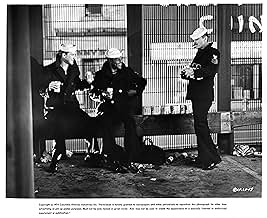
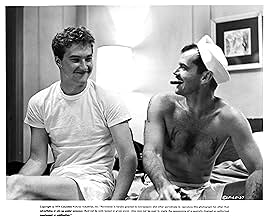
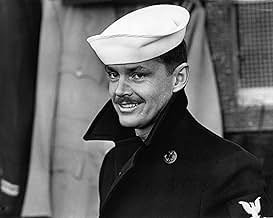
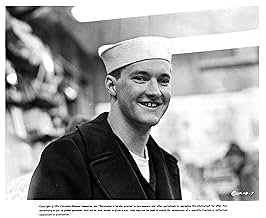
Jack Nicholson is a performer with the rare ability to completely immerse himself in a chosen role and convince the audience of the stark reality of his performance. Playing Navy Signalman First Class Billy "Badass" Buddusky in Hal Ashby's 1973 film rendition of Darryl Ponicsan's novel, "The Last Detail" is a sterling example of that uncommon talent. Rough-edged but understanding, crude but compassionate, Buddusky and fellow "lifer" Gunner's Mate First Class "Mule" Mulhall (skillfully portrayed by Otis Young) are "detailed" as armed Shore Patrol guards to escort a young sailor, Larry Meadows (Randy Quaid) from Norfolk, Va. to a naval prison in Portsmouth, NH in order to serve an eight-year sentence after being convicted at a court-martial of petty theft.
The five-day journey northward is an adventure for all three. Sympathizing with Meadows's plight, apprised of his utter naivete and realizing his sentence far exceeds the severity of the offense, Buddusky and Mulhall conduct their version of a cram course in traditional male rights of passage--ranging from a drunken spree in Washington, D.C. to duking it out with Marines in New York City and getting their charge sexually initiated with a Boston prostitute--if for no other reason than to give him some taste of what he will not be experiencing for a long time and to teach him in some small way to assert himself as an individual.
Darryl Ponicsan's novel (which hit the racks at practically the same time the film had been released--the book's ending is quite different and, to me, is much less believable than the film's) was initially hailed as a polemic against what many believed was the cold indifference of the military establishment. However, since that time, it has been judged more a compelling "slice of life" drama about the complexities of everyday human behavior and how it is shaped by our own decisions and by entities beyond our immediate purview. And, more importantly, it forces us to think about how our ever-more-complicated society is increasingly unable to find ways to help its young people constructively mark transition into adulthood.
"The Last Detail" is a sadly overlooked but superb blend of pathos, ribald bittersweet humor, hard-edged '70s realism and insightful and subtle human drama, one that brashly and subtly brought back many personal memories of my Navy hitch and a work that says something to all of us by merely focusing upon a small "detail" of a sadly overlooked and unappreciated decade that was alternately (and simultaneously) bleak yet hopeful.
The five-day journey northward is an adventure for all three. Sympathizing with Meadows's plight, apprised of his utter naivete and realizing his sentence far exceeds the severity of the offense, Buddusky and Mulhall conduct their version of a cram course in traditional male rights of passage--ranging from a drunken spree in Washington, D.C. to duking it out with Marines in New York City and getting their charge sexually initiated with a Boston prostitute--if for no other reason than to give him some taste of what he will not be experiencing for a long time and to teach him in some small way to assert himself as an individual.
Darryl Ponicsan's novel (which hit the racks at practically the same time the film had been released--the book's ending is quite different and, to me, is much less believable than the film's) was initially hailed as a polemic against what many believed was the cold indifference of the military establishment. However, since that time, it has been judged more a compelling "slice of life" drama about the complexities of everyday human behavior and how it is shaped by our own decisions and by entities beyond our immediate purview. And, more importantly, it forces us to think about how our ever-more-complicated society is increasingly unable to find ways to help its young people constructively mark transition into adulthood.
"The Last Detail" is a sadly overlooked but superb blend of pathos, ribald bittersweet humor, hard-edged '70s realism and insightful and subtle human drama, one that brashly and subtly brought back many personal memories of my Navy hitch and a work that says something to all of us by merely focusing upon a small "detail" of a sadly overlooked and unappreciated decade that was alternately (and simultaneously) bleak yet hopeful.
A Week In The Life Of Two Lifers
My absolutely favorite Jack Nicholson film has always and forever will be The Last Detail. I don't think he was ever better on the screen as William Baddusky of the United States Navy. I enjoyed his performance and the film itself on so many levels. Probably not surprising since the script was done by Robert Towne who would soon be teaming with Nicholson again for the critical and popular success Chinatown.
It's a simple story, not really any plot to the film. Two sailors, Jack Nicholson and Otis Young, both of them lifers in the Navy are stationed in Norfolk and get themselves an assignment to escort a prisoner to the Naval Stockade at Portsmouth. Of course with the per diem allowance for the two men and the prisoner and five days to travel in, Nicholson and Young are thinking of a mini-spree at government expense.
It comes to that and a lot more. the prisoner is newcomer Randy Quaid whose big crime is that he attempted to steal $40.00 from a charity collection box. For that he's getting eight years in military prison and a dishonorable discharge. A dishonorable discharge even today is not a good thing for one's resume.
As Nicholson and Young both remark, someone really stuck it to him. Let's face it what Quaid did in civilian life would probably be considered petty larceny and his jail time might be measured in days. Turned out it was the base commander's wife's favorite charity so it got stuck to him good. Sad because the indications we get is that Quaid was a troubled kid in civilian life and probably military service offered him a chance to straighten up and fly right.
It's done that for many others including Nicholson and Young who make it very clear even on this disagreeable detail they do like the Navy and like serving in it.
They've got five days to deliver Quaid to Portsmouth so the journey becomes quite the odyssey for the three of them up the Atlantic coast. The three men have a great chemistry between them, you get involved with their lives and really feel for young Quaid and his plight. Quaid gets shown a good time and maybe that's not such a good thing considering what he is facing.
The Last Detail is a nice realistic look at the military both its flaws and good points. A lot of similarity here in the issues raised to From Here to Eternity and if I mention The Last Detail in the same sentence favorably as From Here to Eternity, you know how good it must be.
It's a simple story, not really any plot to the film. Two sailors, Jack Nicholson and Otis Young, both of them lifers in the Navy are stationed in Norfolk and get themselves an assignment to escort a prisoner to the Naval Stockade at Portsmouth. Of course with the per diem allowance for the two men and the prisoner and five days to travel in, Nicholson and Young are thinking of a mini-spree at government expense.
It comes to that and a lot more. the prisoner is newcomer Randy Quaid whose big crime is that he attempted to steal $40.00 from a charity collection box. For that he's getting eight years in military prison and a dishonorable discharge. A dishonorable discharge even today is not a good thing for one's resume.
As Nicholson and Young both remark, someone really stuck it to him. Let's face it what Quaid did in civilian life would probably be considered petty larceny and his jail time might be measured in days. Turned out it was the base commander's wife's favorite charity so it got stuck to him good. Sad because the indications we get is that Quaid was a troubled kid in civilian life and probably military service offered him a chance to straighten up and fly right.
It's done that for many others including Nicholson and Young who make it very clear even on this disagreeable detail they do like the Navy and like serving in it.
They've got five days to deliver Quaid to Portsmouth so the journey becomes quite the odyssey for the three of them up the Atlantic coast. The three men have a great chemistry between them, you get involved with their lives and really feel for young Quaid and his plight. Quaid gets shown a good time and maybe that's not such a good thing considering what he is facing.
The Last Detail is a nice realistic look at the military both its flaws and good points. A lot of similarity here in the issues raised to From Here to Eternity and if I mention The Last Detail in the same sentence favorably as From Here to Eternity, you know how good it must be.
Hal Ashby's classic
If you respond to this film, you will probably go all the way and love it as much as I do. It is probably the high point of the drama of social realism started back by the like of "Marty."
It is Nicholson's film, yet Quaid and Otis Young(in his only good movie) really shine as well. It is the most heartbreaking of material played without sap or sentiment. Obscenity like this was still pretty new to movies back in 73, be sure to avoid edited T.V. versions. Reading the comments, it is sad that todays movie fans, spoonfed sledgehammer crappola, really can't respond to a drama played with the kind of subtle grace of "The Last Detail." Give it a shot. Ten out of ten.
It is Nicholson's film, yet Quaid and Otis Young(in his only good movie) really shine as well. It is the most heartbreaking of material played without sap or sentiment. Obscenity like this was still pretty new to movies back in 73, be sure to avoid edited T.V. versions. Reading the comments, it is sad that todays movie fans, spoonfed sledgehammer crappola, really can't respond to a drama played with the kind of subtle grace of "The Last Detail." Give it a shot. Ten out of ten.
A Well Acted, Sober Film About Unpleasant Responsibilities
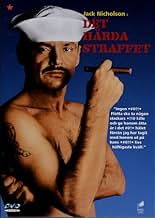
Don't let the fact that the DVD cover makes this movie look like gay porn keep you from seeing it.
Director Hal Ashby made a string of unfussy but very, very good films throughout the 1970s, and "The Last Detail" is one them. The story doesn't sound like much: two Navy officers are assigned to escort a third to the prison where he will be serving time. Along the way, the requisite male bonding ensues, and the older, jaded officer (Jack Nicholson) has a chance to reflect upon his own fortune and misfortune and be a sort of father figure, for better or worse, to his young and troubled charge (played extremely well by Randy Quaid).
Like all of Ashby's films, "The Last Detail" challenges things like duty and institutional authority, which made Ashby one of the most vocal of the anti-establishment directors from a volatile period of American history. But also like all of his films, it poses challenges in a low-key, non-confrontational way, without sacrificing its bite.
Well done.
Grade: A
Director Hal Ashby made a string of unfussy but very, very good films throughout the 1970s, and "The Last Detail" is one them. The story doesn't sound like much: two Navy officers are assigned to escort a third to the prison where he will be serving time. Along the way, the requisite male bonding ensues, and the older, jaded officer (Jack Nicholson) has a chance to reflect upon his own fortune and misfortune and be a sort of father figure, for better or worse, to his young and troubled charge (played extremely well by Randy Quaid).
Like all of Ashby's films, "The Last Detail" challenges things like duty and institutional authority, which made Ashby one of the most vocal of the anti-establishment directors from a volatile period of American history. But also like all of his films, it poses challenges in a low-key, non-confrontational way, without sacrificing its bite.
Well done.
Grade: A


Did you know
- TriviaThe script was completed in 1970 but contained too much profanity to be shot as written. Columbia Pictures waited for two years trying to get writer Robert Towne to tone down the language. Instead, by 1972, the standards for foul language relaxed so much that all the profanity was left in.
- GoofsThe MAA Master Chief is not wearing a Master-at-Arms rating badge; he is wearing a Boatswain mate rating badge.
The Master At Arms rating was disestablished in 1921, but was officially re-established on 1 August 1973. Therefore, as the story takes place, a Master Chief Boatswain's Mate being assigned the collateral duty of MAA is entirely accurate.
- SoundtracksNever Let The Left Hand Know
by Jack Goga
- How long is The Last Detail?Powered by Alexa
Details
- Release date
- Country of origin
- Official sites
- Language
- Also known as
- El último deber
- Filming locations
- Production companies
- See more company credits at IMDbPro
Box office
- Budget
- $2,300,000 (estimated)
Contribute to this page
Suggest an edit or add missing content