IMDb RATING
6.9/10
8.9K
YOUR RATING

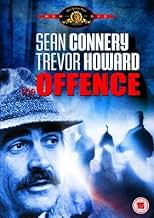
A burnt-out British police detective finally snaps whilst interrogating a suspected child molester.A burnt-out British police detective finally snaps whilst interrogating a suspected child molester.A burnt-out British police detective finally snaps whilst interrogating a suspected child molester.
- Nominated for 1 BAFTA Award
- 1 nomination total


John Cannon
- Police Constable
- (uncredited)
Les Conrad
- Detective
- (uncredited)
Timothy Craven
- Ambulance Man
- (uncredited)
- Director
- Writer
- All cast & crew
- Production, box office & more at IMDbPro
6.98.8K
1
2
3
4
5
6
7
8
9
10
Featured reviews
The Unmaking Of A Detective
What happens when a cop is finally pushed over the edge? When all the depravity he's seen throughout his decades on the force, all the sick, violent images rolling around in his head inevitably become intolerable? In this adaptation of John Hopkins play 'This Story of Yours,' you'll see, and witness one of Sean Connery's finest pieces of acting, as well another cinematic triumph from director Sidney Lumet.
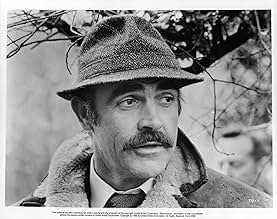
Connery stars as Detective Johnson, a tough-as-nails cop investigating the rape of a young child. It's routine for him, as he specialises in the violent and the brutal. He's been doing it for twenty years and has seen everything that can be seen. However, when confronted with a strange man- masterfully played by Ian Bannen- who was picked up near the crime scene, he snaps, cascading into a tangled web of memories, violence and insanity.
Connery and Lumet first joined forces for 1965's 'The Hill', a powerful, intriguing war drama set in a North African military prison. They then reteamed in 1971 on the slick crime caper 'The Anderson Tapes.' The two evidently enjoyed a positive experience working together, and for their third collaboration decided to try something a little darker and more abstract: 'The Offence.' (They made two more films, 1974's brilliant 'Murder on the Orient Express' and 'Family Business,' in 1989; but the less said about that mis-cast, unfunny crime comedy the better).
'The Offence' is a fascinating study about the effect of violence on one's mental state, a dark police procedural and a riveting drama all at once. Anchored by a career best Connery, the film moves at a brisk pace, rapidly establishing a paranoid, seedy atmosphere of psychological malfunction. John Victor Smith's tight editing is outstanding, and under Lumet's direction brings us some very frightening, expertly cut sequences.
In a long and varied career, this may be cinematographer Gerry Fisher's finest hour. Due to his composition and framing, scenes look and feel claustrophobic (whether indoors or out), which adds to the tense atmosphere running throughout the film. He captures the growing madness of Connery's character masterfully and has an artful touch when it comes to shooting scenes of violence that is striking and understated.
Connery has never disappeared inside a character as thoroughly as he does here (with the possible exception of Daniel Dravot in John Huston's 'The Man Who Would Be King'): never once can you spot him acting. His Detective Johnson is an unbalanced, frightened, occasionally cruel man who has seen too much violence in his life to continue on as normal. Memories of murder and mayhem overwhelm him, and Connery captures the PTSD-like effects the character experiences with great sympathy, depth and understanding- it's one of his finest on-screen performances.
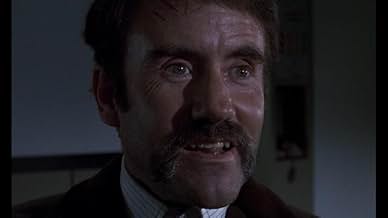
The supporting cast is filled with talented actors- Trevor Howard has a small but meaty role, and Vivien Merchant steals her all too brief scene as Johnson's long-suffering wife Maureen- but Ian Bannen stands apart from the pack. As an odd character who may or may not be a child molester, he is slick and seedy; like a snake-oil salesman for the devil's brew. His scenes with Connery are some of the darkest and morally vague you're ever likely to see. His performance rivals Dennis Hopper's in 'Blue Velvet' as one of cinema's most entertaining and insidious creeps.
The film goes to some very sinister places, but never becomes painful to watch. The story is handled with care and intelligence- Hopkins's screenplay is just as powerful as his original theatrical production- and has some unforgettable moments. Lumet and Connery together were a force to be reckoned with, as this obsidian-dark, clever crime drama proves. It's a fantastic, well-written and devastatingly entertaining piece of filmmaking.
Connery stars as Detective Johnson, a tough-as-nails cop investigating the rape of a young child. It's routine for him, as he specialises in the violent and the brutal. He's been doing it for twenty years and has seen everything that can be seen. However, when confronted with a strange man- masterfully played by Ian Bannen- who was picked up near the crime scene, he snaps, cascading into a tangled web of memories, violence and insanity.
Connery and Lumet first joined forces for 1965's 'The Hill', a powerful, intriguing war drama set in a North African military prison. They then reteamed in 1971 on the slick crime caper 'The Anderson Tapes.' The two evidently enjoyed a positive experience working together, and for their third collaboration decided to try something a little darker and more abstract: 'The Offence.' (They made two more films, 1974's brilliant 'Murder on the Orient Express' and 'Family Business,' in 1989; but the less said about that mis-cast, unfunny crime comedy the better).
'The Offence' is a fascinating study about the effect of violence on one's mental state, a dark police procedural and a riveting drama all at once. Anchored by a career best Connery, the film moves at a brisk pace, rapidly establishing a paranoid, seedy atmosphere of psychological malfunction. John Victor Smith's tight editing is outstanding, and under Lumet's direction brings us some very frightening, expertly cut sequences.
In a long and varied career, this may be cinematographer Gerry Fisher's finest hour. Due to his composition and framing, scenes look and feel claustrophobic (whether indoors or out), which adds to the tense atmosphere running throughout the film. He captures the growing madness of Connery's character masterfully and has an artful touch when it comes to shooting scenes of violence that is striking and understated.
Connery has never disappeared inside a character as thoroughly as he does here (with the possible exception of Daniel Dravot in John Huston's 'The Man Who Would Be King'): never once can you spot him acting. His Detective Johnson is an unbalanced, frightened, occasionally cruel man who has seen too much violence in his life to continue on as normal. Memories of murder and mayhem overwhelm him, and Connery captures the PTSD-like effects the character experiences with great sympathy, depth and understanding- it's one of his finest on-screen performances.
The supporting cast is filled with talented actors- Trevor Howard has a small but meaty role, and Vivien Merchant steals her all too brief scene as Johnson's long-suffering wife Maureen- but Ian Bannen stands apart from the pack. As an odd character who may or may not be a child molester, he is slick and seedy; like a snake-oil salesman for the devil's brew. His scenes with Connery are some of the darkest and morally vague you're ever likely to see. His performance rivals Dennis Hopper's in 'Blue Velvet' as one of cinema's most entertaining and insidious creeps.
The film goes to some very sinister places, but never becomes painful to watch. The story is handled with care and intelligence- Hopkins's screenplay is just as powerful as his original theatrical production- and has some unforgettable moments. Lumet and Connery together were a force to be reckoned with, as this obsidian-dark, clever crime drama proves. It's a fantastic, well-written and devastatingly entertaining piece of filmmaking.
Not likely to be anyone's favorite movie, but a dynamite acting showpiece for Connery
British film adaptation of John Hopkins' play "This Story of Yours", penned by the playwright, concerns a troubled 20-year veteran of the police force privately interrogating a suspicious-seeming man picked up the same night a schoolgirl was found molested in the woods. The accused almost inadvertently manages to get inside the other man's head until the tables are turned and it's the cop who is suddenly examining his own dark, turbulent thoughts (he's forced to see the ugly truth, that the two men are not unlike each other). Extremely heavy (as it must be) and unrelievedly talky, the film, directed by Sidney Lumet, is a psychological think-piece, one that was very important to its star, Sean Connery. Erasing all traces of James Bond, Connery sinks deep into this tortured character, with Ian Bannen riveting as the suspect. The film begins confusingly, and audiences must get over another hurdle: a second-act argument between Connery and his wife that eats up a lot of time on the clock. Those who stick with it, however, will find the adult material tense, intriguing and haunting. **1/2 from ****
Connery and Lumet at their peak
To me "The offence" is a must. I think this film deserves to be rediscovered and reaprecciated, because it shows two giants of the cinema at their peak.
Actually the film stars Sean Connery -here in his first role after quitting the official James Bond series-, he's directed by his long time friend Sidney Lumet, one of the most talented American directors. The movie is like a theatrical piece, there's not much action. Everything stands on the actors and their expressions, the atmosphere is dark and depressing. But this is is the goal of the story. Sean is a 40 years old policeman, who faces again with a case of child abuse. He's used to deal with the most miserable stories of humanity... But this time his rage and frustrations explode: he beats a suspected person (Ian Bannen) and loses the control, he kills him. He's suspended from the service.
The movie is a psychological study of a hard man, who loses his dignity and understands too late he's a disturbed man as well. "The offence" is a small British film, a big contrast to the lavish 007 productions. We have not a hero here, we have an actor who proves once more to be a wonderful performer -here the desperation of his character is really deep.
In 1972 the movie didn't enjoy a big success, it has been revalued with the time. (maybe the story was too sad and disturbing for being a hit). Today it's considered a milestone in Connery's career. Of course it is.
Actually the film stars Sean Connery -here in his first role after quitting the official James Bond series-, he's directed by his long time friend Sidney Lumet, one of the most talented American directors. The movie is like a theatrical piece, there's not much action. Everything stands on the actors and their expressions, the atmosphere is dark and depressing. But this is is the goal of the story. Sean is a 40 years old policeman, who faces again with a case of child abuse. He's used to deal with the most miserable stories of humanity... But this time his rage and frustrations explode: he beats a suspected person (Ian Bannen) and loses the control, he kills him. He's suspended from the service.
The movie is a psychological study of a hard man, who loses his dignity and understands too late he's a disturbed man as well. "The offence" is a small British film, a big contrast to the lavish 007 productions. We have not a hero here, we have an actor who proves once more to be a wonderful performer -here the desperation of his character is really deep.
In 1972 the movie didn't enjoy a big success, it has been revalued with the time. (maybe the story was too sad and disturbing for being a hit). Today it's considered a milestone in Connery's career. Of course it is.
Bleak but powerful forgotten gem from Sidney Lumet
Sean Connery is more a superstar than an actor. Although his talents have been recognised by the Academy (for his rather unconvincing turn as an Irish cop in The Untouchables (1987)) and remembered for his role as the first James Bond, he is high up on his own pedestal, a gift for voice actors and one of the handsomest faces ever to have graced the screen. But anyone in doubt of his ability as a proper thespian need look no further than his grim, tormented portrayal of a cop who has seen one too many dead bodies in Sidney Lumet's The Offence, a huge flop at the box office and a film now faded into memory, ripe for a re-discovery.
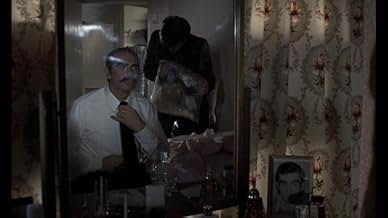
Playing with time Rashomon (1950)-style, the film begins in slow motion, where an unknown disturbance at a police station has a few officers panicked. It is revealed to be Detective Sergeant Johnson (Connery) standing over the bloodied body of suspect Kenneth Baxter (Ian Bannen), with fellow police officers scattered on the floor. It then goes back, and we are in a grey, miserable city gripped in panic as a child-killing paedophile roams free. The latest disappearance of a young girl has Johnson riled, and officers cruising the street pick up Baxter, who is wandering alone in the night covered in mud. The young girl is found raped but alive by Johnson himself, who insists on spending some time alone with the suspect.
Based on John Hopkins' stage play This Story of Yours, Connery fought tooth-and-nail to adapt it for the big screen, eventually reprising his role as Bond in Diamond Are Forever (1971) in return for the green-light. Although the film consists of long, talky scenes, Lumet uses stylish editing in order to avoid being stagy and to delve further into his anti-hero's head. His reputation as a no- nonsense director betrays him here, as scenes of gruesome murders, body parts, and a host of other atrocities Johnson has witnessed flash before our eyes. The use of slow motion in the flashback moments also employs a sort of circular filter at the centre of the screen, reflecting Johnson's disconnection from his actions but getting slightly tiresome in the process.
There are three long, outstanding scenes. The first is Johnson returning home to his wife (Vivien Merchant) following his interrogation of Baxter, drinking heavily and exploding at the one person who could possibly help him. The second is Johnson's own interrogation with superintendent Cartwright (the ever-excellent Trevor Howard), a man who has witnessed the same level of horror himself, but has learnt to separate his work from his life, something Johnson is unable to do. The third is the extended interrogation of Baxter, where Bannen's creepy turn surely must have been an inspiration for the Joker-Batman verbal showdown in The Dark Knight (2008). It's incredibly bleak stuff, but the raw honesty of the script and performances makes this powerful stuff.
www.the-wrath-of-blog.blogspot.com
Playing with time Rashomon (1950)-style, the film begins in slow motion, where an unknown disturbance at a police station has a few officers panicked. It is revealed to be Detective Sergeant Johnson (Connery) standing over the bloodied body of suspect Kenneth Baxter (Ian Bannen), with fellow police officers scattered on the floor. It then goes back, and we are in a grey, miserable city gripped in panic as a child-killing paedophile roams free. The latest disappearance of a young girl has Johnson riled, and officers cruising the street pick up Baxter, who is wandering alone in the night covered in mud. The young girl is found raped but alive by Johnson himself, who insists on spending some time alone with the suspect.
Based on John Hopkins' stage play This Story of Yours, Connery fought tooth-and-nail to adapt it for the big screen, eventually reprising his role as Bond in Diamond Are Forever (1971) in return for the green-light. Although the film consists of long, talky scenes, Lumet uses stylish editing in order to avoid being stagy and to delve further into his anti-hero's head. His reputation as a no- nonsense director betrays him here, as scenes of gruesome murders, body parts, and a host of other atrocities Johnson has witnessed flash before our eyes. The use of slow motion in the flashback moments also employs a sort of circular filter at the centre of the screen, reflecting Johnson's disconnection from his actions but getting slightly tiresome in the process.
There are three long, outstanding scenes. The first is Johnson returning home to his wife (Vivien Merchant) following his interrogation of Baxter, drinking heavily and exploding at the one person who could possibly help him. The second is Johnson's own interrogation with superintendent Cartwright (the ever-excellent Trevor Howard), a man who has witnessed the same level of horror himself, but has learnt to separate his work from his life, something Johnson is unable to do. The third is the extended interrogation of Baxter, where Bannen's creepy turn surely must have been an inspiration for the Joker-Batman verbal showdown in The Dark Knight (2008). It's incredibly bleak stuff, but the raw honesty of the script and performances makes this powerful stuff.
www.the-wrath-of-blog.blogspot.com
Grim but rewarding character study with a great Connery performance.
Arguably the best of Sidney Lumet's British films, this one benefits from a brilliant script by John Hopkins and a tour-de-force performance by Sean Connery as a cop who's been pushed too far. The interrogation scenes between him and an excellent Ian Bannen, as the prime suspect in a child molestation case, are riveting. Hopkins' dialogue is uncannily subtle in its gradual illumination of the psychological states of its two antagonists. Vivien Merchant is exceptional as Connery's emotionally-drained spouse. Gerry Fisher's cold, muted photography perfectly captures the sterility and bleakness of post-modern England. This is not a fun film, but its truths about the fragility of the human psyche are eloquently conveyed.


Did you know
- TriviaWhen Sean Connery agreed to return as James Bond in Diamonds Are Forever (1971), as part of his deal, United Artists had to back two movies of his choice that would cost $2 million or less. This was to be the first; a Connery-directed version of "Macbeth" was to be the second. When this movie failed at the box office and Roman Polanski beat Connery to the screen with Macbeth (1971), Connery's version of "Macbeth" was cancelled.
- GoofsA ladder leaning against the wall in the hallway outside of the police interrogation room is clearly labeled "TFS" for "Twickenham Film Studios."
- Quotes
Kenneth Baxter: Nothing I have done can be one half as bad as the thoughts in your head.
- ConnectionsFeatured in The Battle of the Bonds (1998)
- How long is The Offence?Powered by Alexa
Details
- Release date
- Countries of origin
- Language
- Also known as
- Sein Leben in meiner Gewalt
- Filming locations
- The Carnival Public House, Battersea, London, England, UK(pub scene: interior)
- Production company
- See more company credits at IMDbPro
Box office
- Budget
- $900,000 (estimated)
Contribute to this page
Suggest an edit or add missing content