
Rita, a middle aged New York City homemaker, finds herself in an emotional crisis which forces her to re-examine her life, as well as her relationships with her mother, her eye doctor husban... Read allRita, a middle aged New York City homemaker, finds herself in an emotional crisis which forces her to re-examine her life, as well as her relationships with her mother, her eye doctor husband, her alienated daughter and estranged son.Rita, a middle aged New York City homemaker, finds herself in an emotional crisis which forces her to re-examine her life, as well as her relationships with her mother, her eye doctor husband, her alienated daughter and estranged son.
- Nominated for 2 Oscars
- 5 wins & 8 nominations total
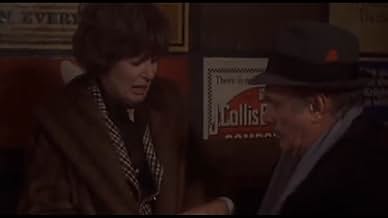
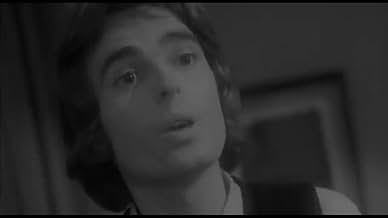
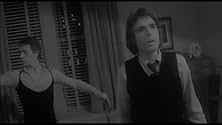


Nancy Andrews
- Mrs. Hungerford
- (voice)
Charlotte Oberley
- Waitress
- (as Charlet Oberley)
- Director
- Writer
- All cast & crew
- Production, box office & more at IMDbPro
6.3906
1
2
3
4
5
6
7
8
9
10
Featured reviews
Beautiful, but studio interference lessened its impact
Having worked on "Summer Wishes, Winter Dreams" 50 years ago as the Unit Publicist (that's the person who is in charge of a movie's publicity while it is being filmed), this was only my third job in this field, and remains my absolute favorite. During the 3-month shoot, I actually became friends with several members of the cast and crew, the nicest, most harmonious group of people I had ever worked with. I had always been a fan of Joanne Woodward, who went out of her way to be kind to me and we kept in touch for several years after the movie wrapped. She was completely down-to-earth, warm-hearted, had a terrific sense of humor, and was far more beautiful in person than she was ever allowed to be in most of her movies. Stewart Stern was a lovely man, a brilliant writer, and we also remained friends. The director, Gil Cates, gave everyone a beautiful sterling-silver Tiffanys key chain at the wrap party and when he screened the movie for us after he had finished editing it, I honestly thought it would be acclaimed as one of 1973's finest, award-winning films. The running time of Cates' cut was 112 minutes which, to me, seemed perfect. Unfortunately, as was a custom in those bygone days, the studio had a "sneak preview" of the movie at a theater in New Jersey that was showing a raucous slapstick comedy so the audience was in no mood to watch a serious, emotional drama like SWWD and the cards they filled out were mostly unfavorable. But Columbia took this nonsense seriously and ordered the movie's creative team to cut the movie down to a more "palatable" 90 minutes. Reluctantly, the director and writer (Cates & Stern) went back to the editing room and when I saw the 92-minute release print, I was horrified. Far too many crucial scenes had either been deleted or shortened, and Sylvia Sidney's scenes were so drastically shortened that her screen time now amounted to little more than 5 minutes! Of course I was thrilled to receive my first screen credit, but somehow the fact that my name was misspelled seemed appropriate! Despite the studio's butchery, "Summer Wishes, Winter Dreams" still pleased most critics and won a few awards, but I still can't help think how much more enthusiastic its reception would have been had the far more nuanced 112-minute version been released. Scott MacDonough 1/28/2023
January 29, 2023 at 3:29 AM.
January 29, 2023 at 3:29 AM.
Marvelous acting
By the early 1970's, films had become more personal and character studies were emerging on the screen. Such is the case with "Summer Wishes, Winter Dreams." At first glance, the film seems to be about Rita (Joanne Woodward) coping with the sudden and awful death of her mother (the wonderful Sylvia Sidney). The film then shifts to the apparently empty marriage between Rita and her husband Harry (Martin Balsam). They travel to Europe, where emotions and past resentments come to the foreground. Rita has much guilt about her son, who apparently wants nothing to do with her or Harry - we find out he is gay, but never the exact reasons why he can't stand either of them! (The son is seen only in flashbacks). Harry has a very emotional reaction while visiting Bastogne, where he fought in WWII. Rita has a breakdown in a London subway tunnel, apparently imaging she has seen her dead mother. Harry and Rita's daughter seems to have no purpose in the film except to be sanctimonious and shrill. This is not a perfect film, and at times the script jumps around. There are a few things that don't quite jive. There seems to be a lot of Freudian type psycho babble in the film (which was popular at the time). But it is the fine performance of Joanne Woodward that shines here. Ms. Woodward is one of the best actresses ever to grace the American cinema. Martin Balsam is in fine form here too. A quiet little film worth watching.
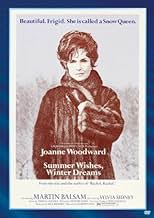
Rita, the snow queen
Rita, the "snow queen" is another of Joanne Woodward's aging spinster virgin frumps, that she seemed to specialise in the early 1970's. Depressed and discontent, her mental state is symbolised by the nightmare plane crash that director Gilbert Cates opens the film with. Writer Stewart Stern - who also wrote Rachel, Rachel - loads on the psycho-baggage. She has a demanding mother (Sylvia Sydney), a fat daughter (Doris Brenner), a gay son, and has married a man she did not love (Martin Balsam). All this would be unbearable with anyone but Woodward playing the role since she lightens it with her natural intelligence and sly sense of humour. It's amusing to see Balsam and Woodward argue in their middle-class educated way, though Rita's wearing a mink clues you that she isn't about to scream abuse. Balsam's subtlety, in particular makes you regret his few screen appearances. The only character that isn't redeemed by the acting is that of the gay son, since he is a cypher, and Cates presents his coming out in a homophobic black-and-white expressionistic sequence. Cates is fond of these kind of theatrical flourishes. There is a death at a screening of Wild Strawberries, a spirited chase at a former European battlefield, a family bickering at a graveyard, and Rita has a breakdown in a crowded London subway, which is probably the most believable of them all. Johnny Mandel provides a lovely theme, in his understated way, and then embarasses himself with trumpets in the battlefield sequence.
Great movie
This is a great movie showing Joanne Woodward and her husband in the film, Martin Balsam, dealing with their feelings and memories of the past and the events that have shaped them. I found this movie moving. Joanne Woodward's memories of she and her mother are memorable! I wish I had seen this movie when my mother was still living. Balsam's memories of his war experiences are insightful and moving. We are all shaped by our experiences!
Intimate strangers, unfamiliar relations...
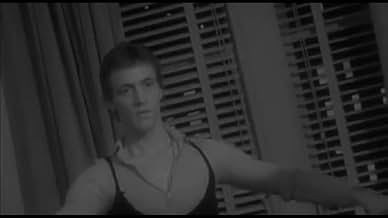
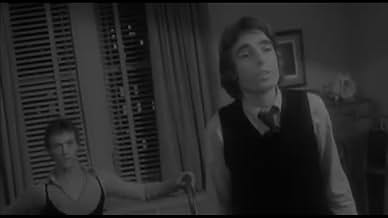
Uptight, possibly frigid, panic-stricken middle-aged New York housewife has to learn to let go of the past, a refuge which doesn't necessarily bring her happiness but does provide her life with some kind of stability. Joanne Woodward gives a good performance here; not at all vain, and unafraid to let herself be pinchy, selfish, or even annoyingly helpless, Woodward overcomes this rather dreary "woman's picture" material with thoughtful touches and nuances. It's a heavy load however, and she doesn't have much help until the final reel when her needling, provoking matron takes a European trip with her husband (Martin Balsam, also doing fine work) and she comes to see her humanity as something she can work with as opposed to frittering it away. Screenwriter Stewart Stern's dialogue is heavy with a writer's pretensions, and often the chit-chat is pedantic, forced and unreal. Near the beginning, Woodward gets a phone call from her mother and asks, "Who is this?" A few scenes later, Woodward becomes exasperated with her husband and asks, "How many years have we been married?" These moldy exchanges are lazy outs for a writer wanting to introduce us to the characters; instead of letting us discover these people and their hang-ups for ourselves, everything is spelled out (and poorly so). We are to understand that Joanne's estranged son is gay after she has a dream in which a male dancer is caught in the boy's bedroom--in ballet tights! The 'colorless' color cinematography is a mix of putrid browns and greens, and director Gilbert Cates begins each new sequence with a big wind-up, as if the movie were starting all over again. The rhythm is off, and with lines like "You approach every new relationship like you would a toll-booth, Mrs. Santa Claus!", one doesn't know how to respond to the characters. It's possible that some of Woodward's jaunts to her past, both real and imaginary, will strike some viewers as very personal, but the film isn't especially moving, at least not until the final third. **1/2 from ****


Did you know
- TriviaFeatures Sylvia Sidney's only Oscar-nominated performance.
- GoofsWhen the gurney is wheeled out of the ER, the sheet over the body is relatively flat. When Rita is next to the gurney, the sheet is elevated due to the body's arms being across the body.
- Quotes
Mrs. Pritchard - Rita's Mother: I thought I was having a heart attack.
- ConnectionsFeatured in Oscars, Actors and The Exorcist (1974)
- SoundtracksWhere is your Heart
(Moulin Rouge)
Music by Georges Auric
French lyrics by Jacques Larue
English lyrics by William Engvick
- How long is Summer Wishes, Winter Dreams?Powered by Alexa
Details
Contribute to this page
Suggest an edit or add missing content