
A well-to-do London businesswoman gives up her comfortable life, including the man who loves her, to become a cloistered Benedictine nun.A well-to-do London businesswoman gives up her comfortable life, including the man who loves her, to become a cloistered Benedictine nun.A well-to-do London businesswoman gives up her comfortable life, including the man who loves her, to become a cloistered Benedictine nun.
- Nominated for 1 Primetime Emmy
- 1 nomination total




Fanny Rowe
- Miss Bowman
- (as Frances Rowe)


Dearbhla Molloy
- Dame Beatrice
- (as Dervla Molloy)
Yasuko Nagazumi
- Mariko
- (as Yasuko Magazumi)


- Director
- Writers
- All cast & crew
- Production, box office & more at IMDbPro
7.8336
1
2
3
4
5
6
7
8
9
10
Featured reviews
Spiritual Conflict - Benedictine Style
Diana Rigg has always been one of my favourite actresses, going way back to 1960's "The Avengers" television series. I had originally seen this film when it was first released to American television in the 1970's, enjoyed it, and then as the years passed, and the film went out of distribution, forgot about it.
When "Brede" was reissued on VHS, I watched the movie again, and remembered how much I enjoyed it. Coincidentally, I managed to find a copy of Rumer Godden's novel, In This House of Brede and set down to read it. There are many plot differences between the novel and the film (I spent 200 pages reading waiting for the "movie" to start), but the central themes remain intact - the quest for individual spirituality, grief, loneliness, the questioning of one's personal decisions, jealousy, envy, discipline, and most importantly, love.
The character of Dame Phillipa (Diana Rigg) is one who feels deeply, but builds up very thick walls for her own protection. What impressed me most about Rigg's performance is that she manages to express her pain, grief, and inner turmoil while holding back the tears... just as I imagine Dame Phillipa would.
Dame Agnes (Pamela Brown) is extraordinary. (Having gone to a Catholic grade school run by Benedictine nuns, I can assure you that there are a few like Dame Agnes out there!) She reminds me very much of Gladys Cooper's character, Sister Maria Therese in The Song of Bernadette. She is of the "old school", resisting change, new ideas, people of worldly experience, and terribly jealous of Dame Phillipa. In the final reel, we do understand what makes Dame Agnes tick, and with that realisation, we can forgive her uncharitable behaviour.
My complaints about the film are few. It looks very much like a dated made-for-tv film from the 1970's today. The music score, which is a symphonic-pop amalgamation, does not hold up well and is at times intrusive. There was also much left out of the book when it was transformed into the screenplay that could have been filmed with an additional 30-40 minutes running time.
The beauties of this film far outweigh its shortcomings. After viewing it, I suggest you find a copy of the novel (if you can, it's currently out of print in the United States) and enjoy the author's original, and more extensive story.
When "Brede" was reissued on VHS, I watched the movie again, and remembered how much I enjoyed it. Coincidentally, I managed to find a copy of Rumer Godden's novel, In This House of Brede and set down to read it. There are many plot differences between the novel and the film (I spent 200 pages reading waiting for the "movie" to start), but the central themes remain intact - the quest for individual spirituality, grief, loneliness, the questioning of one's personal decisions, jealousy, envy, discipline, and most importantly, love.
The character of Dame Phillipa (Diana Rigg) is one who feels deeply, but builds up very thick walls for her own protection. What impressed me most about Rigg's performance is that she manages to express her pain, grief, and inner turmoil while holding back the tears... just as I imagine Dame Phillipa would.
Dame Agnes (Pamela Brown) is extraordinary. (Having gone to a Catholic grade school run by Benedictine nuns, I can assure you that there are a few like Dame Agnes out there!) She reminds me very much of Gladys Cooper's character, Sister Maria Therese in The Song of Bernadette. She is of the "old school", resisting change, new ideas, people of worldly experience, and terribly jealous of Dame Phillipa. In the final reel, we do understand what makes Dame Agnes tick, and with that realisation, we can forgive her uncharitable behaviour.
My complaints about the film are few. It looks very much like a dated made-for-tv film from the 1970's today. The music score, which is a symphonic-pop amalgamation, does not hold up well and is at times intrusive. There was also much left out of the book when it was transformed into the screenplay that could have been filmed with an additional 30-40 minutes running time.
The beauties of this film far outweigh its shortcomings. After viewing it, I suggest you find a copy of the novel (if you can, it's currently out of print in the United States) and enjoy the author's original, and more extensive story.
A copy of this wonderful film
This was one of those films that remains in your mind many years after it has been watched. I saw it quite some years ago and I still think back to it fondly. I think it is because Diana Rigg is such a consummate actress and lends integrity to the role. This was a super film and I would very much like to own a copy for myself.
Can anyone please help me locate a copy of this film? I have tried on Amazon but the price is extraordinary! Is £69 used a reasonable price to pay? I think that is dreadful. How can a film such as this command such a high price (as excellent as it was)? I would really like to find a copy for a reasonable price that I can add to my DVD collection. If anyone knows where or how to find a copy I would be very grateful to hear about it.
Many thanks
Can anyone please help me locate a copy of this film? I have tried on Amazon but the price is extraordinary! Is £69 used a reasonable price to pay? I think that is dreadful. How can a film such as this command such a high price (as excellent as it was)? I would really like to find a copy for a reasonable price that I can add to my DVD collection. If anyone knows where or how to find a copy I would be very grateful to hear about it.
Many thanks
A different kind of challenge
Diana Rigg made a peerlessly suave secret agent. For the 60's British TV series "The Avengers," she never won a single Emmy (They always went to Martin Landau's wife-at-the-time Barbara Bain for "Mission Impossible.), but there was no one who matched the simmering confidence and shimmering elegance of Mrs. Emma Peel. No matter what the challenge put before her, Rigg remained unshaken.
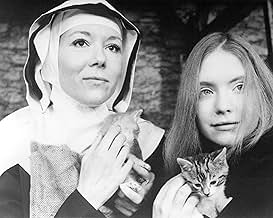
"In This House of Brede" posed a much different challenge than the ones to which Rigg was accustomed: doffing the miniskirts and knee-length boots and playing a woman who had lost both husband and daughter and decides to leave her successes in the workplace for life as a Benedictine nun. Her Dame Philippa is well-schooled (She already knows Latin before entering the convent.); experienced in the business world (So she intimidates Dame Agnes (Pamela Brown), one of the senior nuns who feels her advanced age poses a serious problem at being settled in the cloister.), and very determined (although she has barely recovered from the loss of her daughter in a car accident). The superior of Brede who encouraged Philippa to consider religious life dies as she enters the postulancy. She's lucky, however, that the congregation has the good sense to elect a kind, fair-minded woman (Gwen Watford) to lead them, and help Philippa through the most trying times of her novitiate. It's the challenge to form a loving, but disinterested life at Brede that threatens to capsize Philippa's hard-earned equanimity, when a beautiful, young prospect (Judy Bowker who was equally as captivating in "The Shooting Party") arrives. Memories of her daughter well up to recall feelings she thought she had put behind her years ago.
It's easy to become impatient with this movie's prudence; the in-fighting and petulance among the nuns are dispelled without much fuss. "In This House of Brede" never makes much of these women's triumphs. To find any dramatic tension, you need to look to Rigg's pale, drawn face or Brown's wide, but tired and stricken eyes. Yet the combination of this even mindedness and struggle is simultaneously calming and tonic. The gaggle of giggling novices Dame Philippa ushers back to their native Japan bring a sense of renewed hope to the order. Even Dame Agnes with her rankled nerves, and hurt feelings, and petty jealousies finds peace in the end. It gives the rest of us cause for celebration: that, with God's help, any of us can conquer ourselves--and, we hope, as these women do--elegantly.
"In This House of Brede" posed a much different challenge than the ones to which Rigg was accustomed: doffing the miniskirts and knee-length boots and playing a woman who had lost both husband and daughter and decides to leave her successes in the workplace for life as a Benedictine nun. Her Dame Philippa is well-schooled (She already knows Latin before entering the convent.); experienced in the business world (So she intimidates Dame Agnes (Pamela Brown), one of the senior nuns who feels her advanced age poses a serious problem at being settled in the cloister.), and very determined (although she has barely recovered from the loss of her daughter in a car accident). The superior of Brede who encouraged Philippa to consider religious life dies as she enters the postulancy. She's lucky, however, that the congregation has the good sense to elect a kind, fair-minded woman (Gwen Watford) to lead them, and help Philippa through the most trying times of her novitiate. It's the challenge to form a loving, but disinterested life at Brede that threatens to capsize Philippa's hard-earned equanimity, when a beautiful, young prospect (Judy Bowker who was equally as captivating in "The Shooting Party") arrives. Memories of her daughter well up to recall feelings she thought she had put behind her years ago.
It's easy to become impatient with this movie's prudence; the in-fighting and petulance among the nuns are dispelled without much fuss. "In This House of Brede" never makes much of these women's triumphs. To find any dramatic tension, you need to look to Rigg's pale, drawn face or Brown's wide, but tired and stricken eyes. Yet the combination of this even mindedness and struggle is simultaneously calming and tonic. The gaggle of giggling novices Dame Philippa ushers back to their native Japan bring a sense of renewed hope to the order. Even Dame Agnes with her rankled nerves, and hurt feelings, and petty jealousies finds peace in the end. It gives the rest of us cause for celebration: that, with God's help, any of us can conquer ourselves--and, we hope, as these women do--elegantly.
Mixed feelings...
If I had never read the novel (and loved it), and if I had never lived the cloistered religious life (which I have), I would recommend this film without reserve.
My reservations are based on the following: Having lived in a cloister for over two years, I can tell you that, even in these post-Vatican II times, a postulant or novice would never be permitted to speak freely with another sister, especially an elder, without permission from her novice mistress. Recreations are not "free time", as depicted in the film; it is a daily get-together of the community as a whole, and it is encouraged that you converse in groups of at least three (you can talk to one other sister if you feel you have to, but certainly not for the whole recreation period). Also, silence being an essential and necessary aspect of contemplative monasticism, a sister, no matter what rank, would not sing out loud whenever and wherever she felt moved to do so, and especially not during work time. I could go on... but suffice it to say that this film is not an accurate depiction of cloistered life.
However, I do have positive feelings about this film. Even though it bears little resemblance in plot to the novel, it's still a good basic story in itself and is very well acted by an ensemble of wonderful actors. And, inaccurate of the life as it is, the film still evokes in me a nostalgic longing for the monastery, and I admit that I watch it for mainly that reason.
Oh, that the BBC would produce a mini-series of Godden's wonderful novel! That would be something to see. Godden was herself a Benedictine Oblate (lay persons connected by vows to a religious order), and her book is a loving and faithful tribute to Benedictine nuns everywhere.
My reservations are based on the following: Having lived in a cloister for over two years, I can tell you that, even in these post-Vatican II times, a postulant or novice would never be permitted to speak freely with another sister, especially an elder, without permission from her novice mistress. Recreations are not "free time", as depicted in the film; it is a daily get-together of the community as a whole, and it is encouraged that you converse in groups of at least three (you can talk to one other sister if you feel you have to, but certainly not for the whole recreation period). Also, silence being an essential and necessary aspect of contemplative monasticism, a sister, no matter what rank, would not sing out loud whenever and wherever she felt moved to do so, and especially not during work time. I could go on... but suffice it to say that this film is not an accurate depiction of cloistered life.
However, I do have positive feelings about this film. Even though it bears little resemblance in plot to the novel, it's still a good basic story in itself and is very well acted by an ensemble of wonderful actors. And, inaccurate of the life as it is, the film still evokes in me a nostalgic longing for the monastery, and I admit that I watch it for mainly that reason.
Oh, that the BBC would produce a mini-series of Godden's wonderful novel! That would be something to see. Godden was herself a Benedictine Oblate (lay persons connected by vows to a religious order), and her book is a loving and faithful tribute to Benedictine nuns everywhere.
Dame Is The Name Of The Game
Almost 20 years before being proclaimed a Dame Commander of the Order of the British Empire, Diana Rigg was portraying a dame of a very different order--that of a fully inducted member of a Benedictine abbey--in the 1975 TV film "In This House of Brede." Perhaps I should mention here that I have not read (Margaret) Rumer Godden's 1969 source novel, and can only comment on the film that I have seen. Many of my fellow reviewers here seem to feel that this televised version cannot hold a vestal candle to its original source, and that does not surprise me; isn't the book always fuller, richer, deeper? Still, what HAS been put on screen still offers much. Here, Diana plays Philippa Talbot, a British businesswoman who has suffered some genuine tragedies in her life and who finds her current lot empty and meaningless. Thus, her application to Brede, where we follow her, over the course of nine years, as she progresses from postulant to novice to junior to dame. Her life at Brede is made complicated by the jealousy and mistrust of elderly Sister Agnes, by the arrival of a group of Japanese girls whom she must instruct, and most especially by the advent of Joanna, a young postulant (well played by Judi Bowker) who arouses Philippa's maternal instincts. Although all the actresses on display here are quite good, it is Diana Rigg, naturally, who takes top honors. How exceptional she is, especially in her emotionally conflicted scenes with Joanna, in her final moments with Agnes, and in her touching scenes with (head Mother) Catherine (again, nicely played by Gwen Watford). Dame Philippa is about as different a role as can be imagined from a certain supersexy secret agent that Rigg had popularized eight years earlier, and to the actress' great credit, she makes a very convincing job of it. Only...just one question from this Jewish reviewer: Do all cloistered nuns wear so much freakin' lipstick?!?


Did you know
- TriviaDiana Rigg, Dennis Quilley and Nicholas Clay also appeared together in "Evil Under the Sun"
- ConnectionsFeatured in The 27th Annual Primetime Emmy Awards (1975)
Details
Contribute to this page
Suggest an edit or add missing content