IMDb RATING
7.8/10
4.7K
YOUR RATING

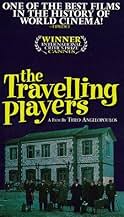
Greece, 1939-1952: Fascist, Nazi, and Communist conflict, as seen through the eyes of a family of travelling provincial players.Greece, 1939-1952: Fascist, Nazi, and Communist conflict, as seen through the eyes of a family of travelling provincial players.Greece, 1939-1952: Fascist, Nazi, and Communist conflict, as seen through the eyes of a family of travelling provincial players.
- Director
- Writer
- Stars
- Awards
- 12 wins & 2 nominations total




- Director
- Writer
- All cast & crew
- Production, box office & more at IMDbPro
7.84.6K
1
2
3
4
5
6
7
8
9
10
Featured reviews
The Actors
This was a long Angelopoulos war movie...
Necessary to underline the long battle of the country to preserve its roots in a time of transition and also to show its slow resolve. In its first half the identity of the country stays in its actors that, during a war, are still trying to entertain with subversive messages but also make a living. They are the resistance, keeping the past alive through the folklore plays, keeping the culture alive in these times filled with turmoil.
Actors are like soldiers in the first half and are fighting the nazis with folklore ideology and metaphors. When one is captured or killed the ones that remain have to fight even harder, but still smartly, low-key. In the second half we have the same but the actors on the other side have changed, with different ideologies but who also want one thing - to eradicate the culture that was there originally and replace it by force with a foreign one. There were two forces who fought for the soul of Greece, the communists (Russia) and the imperialists (UK). All the while, its people, being split, are trying to keep the soul alive. Fundamentals of a war, after all.
All of these big-picture events have a small-picture effect on its citizens, the theatre troupe, in this case, where the changing of generations and mentality takes place...also by force.
It's a long one, one that has to interest you to keep you engaged because Theo's style are these sweeping shots, long takes, silent scenes where nothing much is happening but volumes are written about the meaning.
Necessary to underline the long battle of the country to preserve its roots in a time of transition and also to show its slow resolve. In its first half the identity of the country stays in its actors that, during a war, are still trying to entertain with subversive messages but also make a living. They are the resistance, keeping the past alive through the folklore plays, keeping the culture alive in these times filled with turmoil.
Actors are like soldiers in the first half and are fighting the nazis with folklore ideology and metaphors. When one is captured or killed the ones that remain have to fight even harder, but still smartly, low-key. In the second half we have the same but the actors on the other side have changed, with different ideologies but who also want one thing - to eradicate the culture that was there originally and replace it by force with a foreign one. There were two forces who fought for the soul of Greece, the communists (Russia) and the imperialists (UK). All the while, its people, being split, are trying to keep the soul alive. Fundamentals of a war, after all.
All of these big-picture events have a small-picture effect on its citizens, the theatre troupe, in this case, where the changing of generations and mentality takes place...also by force.
It's a long one, one that has to interest you to keep you engaged because Theo's style are these sweeping shots, long takes, silent scenes where nothing much is happening but volumes are written about the meaning.
Travelling players in life..
"The Travelling Players", one of the early films of Theo Angelopoulos, shows the vast difference between the talented rising director of 1975 that had something to say, and of the bourgeois famous director of 1998 ("Eternity And A Day") that won the Cannes award but had nothing left to say.
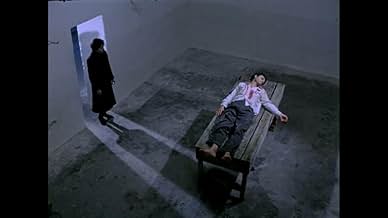
A sprawling epic running at around 4 hours, the film follows a group of touring actors performing a theatrical play across Greece between 1939 and 1952. The focus is on the troubled modern history of Greece during the period (a fascist dictatorship, resistance against the Italians, German occupation, civil war), seen through a series of warped desolate sequences drenched in languor, and also an apotheosis of traditional folklore, music, theater, rural and urban landscapes. Most of these scenes exhibit a rare poetical sensibility, while a few are a bit clumsy, but still interesting.
Couple that with the drama that unfolds within the group of players, and you've got a true masterpiece. Basically what we see is a loose adaptation of Aeschylus' ancient tragedy "Oresteia" (the father Agamemnon, the adulterous mother Clytamnestra, her lover Aegisthus, the avenging daughter Elektra, the avenging son Orestes etc). In the end, the group of actors stands severely rearranged through a painful and dividing historical period, shadows of themselves in a shadow of a country. The film ends as a perfect circle just the way it began, a metaphor for life itself.
A sprawling epic running at around 4 hours, the film follows a group of touring actors performing a theatrical play across Greece between 1939 and 1952. The focus is on the troubled modern history of Greece during the period (a fascist dictatorship, resistance against the Italians, German occupation, civil war), seen through a series of warped desolate sequences drenched in languor, and also an apotheosis of traditional folklore, music, theater, rural and urban landscapes. Most of these scenes exhibit a rare poetical sensibility, while a few are a bit clumsy, but still interesting.
Couple that with the drama that unfolds within the group of players, and you've got a true masterpiece. Basically what we see is a loose adaptation of Aeschylus' ancient tragedy "Oresteia" (the father Agamemnon, the adulterous mother Clytamnestra, her lover Aegisthus, the avenging daughter Elektra, the avenging son Orestes etc). In the end, the group of actors stands severely rearranged through a painful and dividing historical period, shadows of themselves in a shadow of a country. The film ends as a perfect circle just the way it began, a metaphor for life itself.
A great but ponderous work; covers modern Greek history by retelling ancient Greek tragedy.
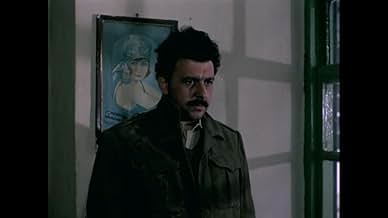
This is a landmark film, a must see for anyone that wishes to understand modern Greek history and politics. The plot is a loose retelling of the Oresteia cycle of tragedies by Aeschylus--the names of the characters (Orestes, Electra, Chrysothemis) are an obvious hint. Betrayal, revenge and redemption are only part of the story. It takes place in Greece between 1936 and 1952, years filled with fascist dictatorship, war, Axis occupation, civil war and repression. Greece's traumatic history is seen through the eyes of a traveling company of actors, who travel all around provincial towns to perform a single play: "Golfo", a pastoral tragedy told in folk-song-inspired rhyming couplets.
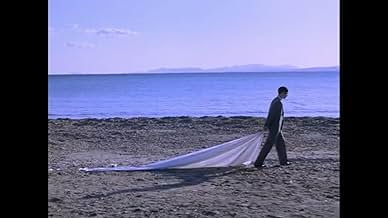
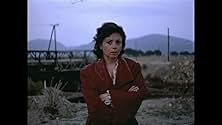
This is not a movie for action-loving, short-attention-span viewers. Angelopoulos and his long-time collaborator, renowned cinematographer Arvanitis, have developed a very distinctive style, and "O Thiassos" is an uncompromising example. There are no close-ups, very little panning, some slow tracking; shots are long (both in point of view and time); almost every shot is filmed in overcast conditions; actors are dwarfed by their surroundings, which are all unglamorous, even depressing in their wartime run-down look. One could say that the purpose is to accentuate the tragic, the sense that the characters are cogs in the machine of history; but ancient tragedy did the same in big style, opulent costumes, and terrifying masks. Angelopoulos' politics induces him to focus on ordinary people in ordinary surroundings instead. The result is strangely, hauntingly lyrical to many; a real downer for some.
The film came out in 1975, a year after the end of the dictatorial right-wing regime of the "colonels" (1967-74), and after decades of repression of communists and their sympathisers. Angelopoulos' point of view is sympathetic to the left/communist side. Under full democracy, it was finally allowed to be expressed. The film helped shape the political sensibilities of a whole generation of Greek baby boomers. Its sixteen-year trek (plod, some would say) through Greek history will probably bewilder non-Greek viewers, but it is a deeply affecting crash-course in what shaped contemporary Greece. It is also an impressive re-interpretation of tragedy, as original as any I have seen on film.
This is not a movie for action-loving, short-attention-span viewers. Angelopoulos and his long-time collaborator, renowned cinematographer Arvanitis, have developed a very distinctive style, and "O Thiassos" is an uncompromising example. There are no close-ups, very little panning, some slow tracking; shots are long (both in point of view and time); almost every shot is filmed in overcast conditions; actors are dwarfed by their surroundings, which are all unglamorous, even depressing in their wartime run-down look. One could say that the purpose is to accentuate the tragic, the sense that the characters are cogs in the machine of history; but ancient tragedy did the same in big style, opulent costumes, and terrifying masks. Angelopoulos' politics induces him to focus on ordinary people in ordinary surroundings instead. The result is strangely, hauntingly lyrical to many; a real downer for some.
The film came out in 1975, a year after the end of the dictatorial right-wing regime of the "colonels" (1967-74), and after decades of repression of communists and their sympathisers. Angelopoulos' point of view is sympathetic to the left/communist side. Under full democracy, it was finally allowed to be expressed. The film helped shape the political sensibilities of a whole generation of Greek baby boomers. Its sixteen-year trek (plod, some would say) through Greek history will probably bewilder non-Greek viewers, but it is a deeply affecting crash-course in what shaped contemporary Greece. It is also an impressive re-interpretation of tragedy, as original as any I have seen on film.
A rare masterpiece
O Thiasos is one of those cerebral and omphaloskeptic movies that just do not happen anymore, shamelessly demanding from the viewer to attune to its eccentric pace. Space and time become pawns in the director's hands, who in effect accomplishes their operatic tranquility in contrast to the static directorial style. In rejecting all conventions of academic narrativity it sustains its formulaic enigma throughout its considerable length, persistently (and obsessively) questioning the freedom of man in a world domineered by irreversible occurrences. Boosted equally by grandeur, mystifying symbolism and pictorial lyricism the film comes to its redeeming conclusion. Enchanting, liberating, revolutionary, focused and precise. Both coldly objective and passionately subjective. A rare masterpiece.
The essential Greek movie
Not only is O thiasos arguably the greatest Greek movie of all time, it is also a movie that breathes Greece in every possible way: Greek history (the movie covers the period of 1939-1952), Greek mythology (clear parallels are drawn between the modern day events and Oresteia, a tragedy written by Aeschylus) Greek folk tradition (the main arc of the movie revolves around a theatrical troupe trying to perform a standard Greek play, Golfo The Shepherdess, full of folk songs), Greek politics (the origin of evil, every conflict is founded on political reasons and each time forces the group to stop their performance), Greek landscapes (the scenery matches the overall mood, for every glimpse of beauty, we abruptly return to the harsh reality and get reminded of all the ugliness, as poverty and war have left behind endless ruins) they all blend together in a four hour epic.
Be prepared that this is by no means an easy movie, it plays by its own rules. Apart from the fact that its gigantic conception would be better understood through some familiarity with the aspects of Greek culture I described above, the narration runs on multiple levels and is full of symbolisms. Also, it seamlessly flows through space and time, demanding the audience's full attention in order to follow the story. At the same time, the slow pace and the long shots make it hard for the viewer to get emotionally involved, the main characters remain abstract figures, all the pain and fear is portrayed in a distanced, non-sentimental way.
The movie ends where it began, a painful metaphor for the endless circle of blood and violence that the travelling players - and Greece - can't escape.
All in all, I'd highly recommend this movie to anyone no matter his taste and preferences. It's a different ball game compared to the average movie, it will open a new world that one might or might not enjoy and might or might not choose to explore futher. I don't mean to imply that this type of cinema is inherently better, but you have to give yourself the chance before deciding, it's quite the experience.
Be prepared that this is by no means an easy movie, it plays by its own rules. Apart from the fact that its gigantic conception would be better understood through some familiarity with the aspects of Greek culture I described above, the narration runs on multiple levels and is full of symbolisms. Also, it seamlessly flows through space and time, demanding the audience's full attention in order to follow the story. At the same time, the slow pace and the long shots make it hard for the viewer to get emotionally involved, the main characters remain abstract figures, all the pain and fear is portrayed in a distanced, non-sentimental way.
The movie ends where it began, a painful metaphor for the endless circle of blood and violence that the travelling players - and Greece - can't escape.
All in all, I'd highly recommend this movie to anyone no matter his taste and preferences. It's a different ball game compared to the average movie, it will open a new world that one might or might not enjoy and might or might not choose to explore futher. I don't mean to imply that this type of cinema is inherently better, but you have to give yourself the chance before deciding, it's quite the experience.


Did you know
- TriviaThe whole film is accomplished in around 80 shots.
- Quotes
Elektra's Father: [before he is executed by the Germans] I came cross the sea, from Ionia. Where did you come from?
- How long is The Travelling Players?Powered by Alexa
Details
- Release date
- Country of origin
- Languages
- Also known as
- Die Wanderschauspieler
- Filming locations
- Production company
- See more company credits at IMDbPro
Contribute to this page
Suggest an edit or add missing content