IMDb RATING
7.8/10
4.7K
YOUR RATING

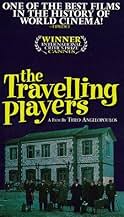
Greece, 1939-1952: Fascist, Nazi, and Communist conflict, as seen through the eyes of a family of travelling provincial players.Greece, 1939-1952: Fascist, Nazi, and Communist conflict, as seen through the eyes of a family of travelling provincial players.Greece, 1939-1952: Fascist, Nazi, and Communist conflict, as seen through the eyes of a family of travelling provincial players.
- Director
- Writer
- Stars
- Awards
- 12 wins & 2 nominations total




- Director
- Writer
- All cast & crew
- Production, box office & more at IMDbPro
7.84.6K
1
2
3
4
5
6
7
8
9
10
Featured reviews
The Actors
This was a long Angelopoulos war movie...
Necessary to underline the long battle of the country to preserve its roots in a time of transition and also to show its slow resolve. In its first half the identity of the country stays in its actors that, during a war, are still trying to entertain with subversive messages but also make a living. They are the resistance, keeping the past alive through the folklore plays, keeping the culture alive in these times filled with turmoil.
Actors are like soldiers in the first half and are fighting the nazis with folklore ideology and metaphors. When one is captured or killed the ones that remain have to fight even harder, but still smartly, low-key. In the second half we have the same but the actors on the other side have changed, with different ideologies but who also want one thing - to eradicate the culture that was there originally and replace it by force with a foreign one. There were two forces who fought for the soul of Greece, the communists (Russia) and the imperialists (UK). All the while, its people, being split, are trying to keep the soul alive. Fundamentals of a war, after all.
All of these big-picture events have a small-picture effect on its citizens, the theatre troupe, in this case, where the changing of generations and mentality takes place...also by force.
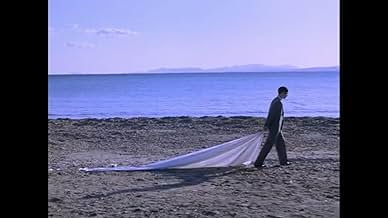
It's a long one, one that has to interest you to keep you engaged because Theo's style are these sweeping shots, long takes, silent scenes where nothing much is happening but volumes are written about the meaning.
Necessary to underline the long battle of the country to preserve its roots in a time of transition and also to show its slow resolve. In its first half the identity of the country stays in its actors that, during a war, are still trying to entertain with subversive messages but also make a living. They are the resistance, keeping the past alive through the folklore plays, keeping the culture alive in these times filled with turmoil.
Actors are like soldiers in the first half and are fighting the nazis with folklore ideology and metaphors. When one is captured or killed the ones that remain have to fight even harder, but still smartly, low-key. In the second half we have the same but the actors on the other side have changed, with different ideologies but who also want one thing - to eradicate the culture that was there originally and replace it by force with a foreign one. There were two forces who fought for the soul of Greece, the communists (Russia) and the imperialists (UK). All the while, its people, being split, are trying to keep the soul alive. Fundamentals of a war, after all.
All of these big-picture events have a small-picture effect on its citizens, the theatre troupe, in this case, where the changing of generations and mentality takes place...also by force.
It's a long one, one that has to interest you to keep you engaged because Theo's style are these sweeping shots, long takes, silent scenes where nothing much is happening but volumes are written about the meaning.
A remarkable, if difficult, film
A flawed masterpiece from Angelopoulos, the first of a number of great films of his you can pick at if you want.
First and foremost, it is a technical achievement; almost 4 hours and only about 80 cuts! It goes against all we've gotten used to in film story-telling, and does it brilliantly.
The story follows a troupe of actors back and forth through the years 1939 to 1952. They're thrown about by the violent, sometimes absurd tides of Greek history, with victory over the Nazi's giving way to the rise of local fascists at home.
The film is very Brechtian and distanced in style. We hardly get to know the characters at all, despite the running time. It's much more interested in the great tides of politics and time than individuals - which is both its strength and its weakness. I was always interested, sometimes horrified, but rarely touched emotionally. Also, some of the good/bad of the politics felt simplistic.
That said, despite its length, I will re-watch it. I suspect I'll appreciate the amazing scope of it's vision and the bravery of it's style even more without expecting to get caught up in the people in a conventional way.
If you have the chance, get ahold of the 'New Star' DVD, which was only in release a short time. The transfer was supervised and approved by Angelopoulos, and certainly looks wildly better than the commonly found VHS tape.
First and foremost, it is a technical achievement; almost 4 hours and only about 80 cuts! It goes against all we've gotten used to in film story-telling, and does it brilliantly.
The story follows a troupe of actors back and forth through the years 1939 to 1952. They're thrown about by the violent, sometimes absurd tides of Greek history, with victory over the Nazi's giving way to the rise of local fascists at home.
The film is very Brechtian and distanced in style. We hardly get to know the characters at all, despite the running time. It's much more interested in the great tides of politics and time than individuals - which is both its strength and its weakness. I was always interested, sometimes horrified, but rarely touched emotionally. Also, some of the good/bad of the politics felt simplistic.
That said, despite its length, I will re-watch it. I suspect I'll appreciate the amazing scope of it's vision and the bravery of it's style even more without expecting to get caught up in the people in a conventional way.
If you have the chance, get ahold of the 'New Star' DVD, which was only in release a short time. The transfer was supervised and approved by Angelopoulos, and certainly looks wildly better than the commonly found VHS tape.
10kaljic
The Beauty of Banality
We watch movies to forget the true banality of life. Movies are packed with witty, non-stop dialogue, head-spinning action which takes place in a short period of time, and, of course, beautiful, drop-dead gorgeous women. We are so conditioned by contemporary movies, we forget or want to forget ordinarily life.
The Traveling Players by Angelopoulos has none of this. The dialogue is ordinary, spoken by ordinary people, by ordinary men and women. When they speak it is not rapid-fire, non-stop delivery, but ordinary speech most times separated by long periods of silence.
The beauty of The Traveling Players - or any film by Angelopoulos - the ordinary is beautiful. The sweeping, long scenes in this movie are stunning. We quickly identify with one or more of the traveling players. In the dialogue we can hear words spoken by a close friend or acquaintance. When the film ends nearly four hours later, you will want to see more.
This movie should not be missed.
The Traveling Players by Angelopoulos has none of this. The dialogue is ordinary, spoken by ordinary people, by ordinary men and women. When they speak it is not rapid-fire, non-stop delivery, but ordinary speech most times separated by long periods of silence.
The beauty of The Traveling Players - or any film by Angelopoulos - the ordinary is beautiful. The sweeping, long scenes in this movie are stunning. We quickly identify with one or more of the traveling players. In the dialogue we can hear words spoken by a close friend or acquaintance. When the film ends nearly four hours later, you will want to see more.
This movie should not be missed.
The essential Greek movie
Not only is O thiasos arguably the greatest Greek movie of all time, it is also a movie that breathes Greece in every possible way: Greek history (the movie covers the period of 1939-1952), Greek mythology (clear parallels are drawn between the modern day events and Oresteia, a tragedy written by Aeschylus) Greek folk tradition (the main arc of the movie revolves around a theatrical troupe trying to perform a standard Greek play, Golfo The Shepherdess, full of folk songs), Greek politics (the origin of evil, every conflict is founded on political reasons and each time forces the group to stop their performance), Greek landscapes (the scenery matches the overall mood, for every glimpse of beauty, we abruptly return to the harsh reality and get reminded of all the ugliness, as poverty and war have left behind endless ruins) they all blend together in a four hour epic.
Be prepared that this is by no means an easy movie, it plays by its own rules. Apart from the fact that its gigantic conception would be better understood through some familiarity with the aspects of Greek culture I described above, the narration runs on multiple levels and is full of symbolisms. Also, it seamlessly flows through space and time, demanding the audience's full attention in order to follow the story. At the same time, the slow pace and the long shots make it hard for the viewer to get emotionally involved, the main characters remain abstract figures, all the pain and fear is portrayed in a distanced, non-sentimental way.
The movie ends where it began, a painful metaphor for the endless circle of blood and violence that the travelling players - and Greece - can't escape.
All in all, I'd highly recommend this movie to anyone no matter his taste and preferences. It's a different ball game compared to the average movie, it will open a new world that one might or might not enjoy and might or might not choose to explore futher. I don't mean to imply that this type of cinema is inherently better, but you have to give yourself the chance before deciding, it's quite the experience.
Be prepared that this is by no means an easy movie, it plays by its own rules. Apart from the fact that its gigantic conception would be better understood through some familiarity with the aspects of Greek culture I described above, the narration runs on multiple levels and is full of symbolisms. Also, it seamlessly flows through space and time, demanding the audience's full attention in order to follow the story. At the same time, the slow pace and the long shots make it hard for the viewer to get emotionally involved, the main characters remain abstract figures, all the pain and fear is portrayed in a distanced, non-sentimental way.
The movie ends where it began, a painful metaphor for the endless circle of blood and violence that the travelling players - and Greece - can't escape.
All in all, I'd highly recommend this movie to anyone no matter his taste and preferences. It's a different ball game compared to the average movie, it will open a new world that one might or might not enjoy and might or might not choose to explore futher. I don't mean to imply that this type of cinema is inherently better, but you have to give yourself the chance before deciding, it's quite the experience.
A hypnotic masterpiece.
This is my second time watching this film and it's just as great as I remember it being. In regards to Angelopoulous, the only other film I've seen from him is "Landscape in the Mist", which I also really enjoyed, but I like this one much more. "Landscape in the Mist" is definitely the more accessible of the two films since it has a greater emphasis on characterization, but while I enjoyed that film quite a bit, I prefer this film for its greater focus on its mysterious charm.
I stopped caring about the story and the characters about half an hour into this film and instead focused on the film's style. Angelopoulos seamlessly blends personal and political history in a number of hypnotic ways in just about every single sequence. And this is accomplished despite the film being almost four hours long! Throughout all the long takes in the film, Angelopoulos managed to drop my jaw a number of times. For one, he found all kinds of creative ways for the various political figures and set pieces to creep into the frame and intrude on or interrupt the characters lives. For example, the film sometimes showed the sounds of a patrol of Nazis or a political march in the distance get louder and louder until the characters eventually entered the frame. Also, sometimes when the characters would exit from the frame of a shot, it would linger in that location for a while until a soldier or a military vehicle would enter the frame, often indicating the film is jumping from past to present. This unconventional shooting style gave a hypnotic style to the film which I found quite mesmerizing and poetic.
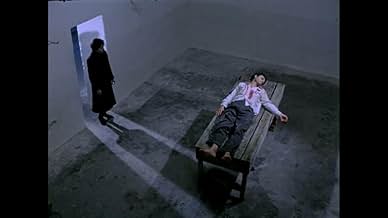
The way violence is shown in this film is also impressive, specifically in regards to which bits are shown onscreen and which are shown offscreen. A recurring aspect to the violence was that, right when a violent bit would start, the characters would run away from the frame and the sounds of gunfire, explosions, or screaming could be heard in the distance, creating a strong sense of claustrophobia and (at times) fear of the unknown in the process. In many other cases, the violence served to prevent the actors from performing time and time again. The main highlight to the violence though is a lengthy sequence in the middle where the actors come across a gunfight between a patrol of Nazis and a group of Communists while sneaking through a town at night. The way the violence and the military units in this sequence are framed (they're only shown through the gaps between various houses and stores), in addition to a dose of surrealism, is nothing short of perfect.
Really, this film kept me glued to the screen from beginning to end in a way that few films have accomplished, and that it accomplishes this in spite of its length makes me all the more impressed by it. Some people may take issue with its lack of characterization, but I didn't mind that at all since it contributed to the film's mysterious power. Of course, I understand that many people will be intimidated by this film's length (which is understandable as I was worried it would be a chore to get through when I first watched it), but I still recommend giving it a chance anyways.
I stopped caring about the story and the characters about half an hour into this film and instead focused on the film's style. Angelopoulos seamlessly blends personal and political history in a number of hypnotic ways in just about every single sequence. And this is accomplished despite the film being almost four hours long! Throughout all the long takes in the film, Angelopoulos managed to drop my jaw a number of times. For one, he found all kinds of creative ways for the various political figures and set pieces to creep into the frame and intrude on or interrupt the characters lives. For example, the film sometimes showed the sounds of a patrol of Nazis or a political march in the distance get louder and louder until the characters eventually entered the frame. Also, sometimes when the characters would exit from the frame of a shot, it would linger in that location for a while until a soldier or a military vehicle would enter the frame, often indicating the film is jumping from past to present. This unconventional shooting style gave a hypnotic style to the film which I found quite mesmerizing and poetic.
The way violence is shown in this film is also impressive, specifically in regards to which bits are shown onscreen and which are shown offscreen. A recurring aspect to the violence was that, right when a violent bit would start, the characters would run away from the frame and the sounds of gunfire, explosions, or screaming could be heard in the distance, creating a strong sense of claustrophobia and (at times) fear of the unknown in the process. In many other cases, the violence served to prevent the actors from performing time and time again. The main highlight to the violence though is a lengthy sequence in the middle where the actors come across a gunfight between a patrol of Nazis and a group of Communists while sneaking through a town at night. The way the violence and the military units in this sequence are framed (they're only shown through the gaps between various houses and stores), in addition to a dose of surrealism, is nothing short of perfect.
Really, this film kept me glued to the screen from beginning to end in a way that few films have accomplished, and that it accomplishes this in spite of its length makes me all the more impressed by it. Some people may take issue with its lack of characterization, but I didn't mind that at all since it contributed to the film's mysterious power. Of course, I understand that many people will be intimidated by this film's length (which is understandable as I was worried it would be a chore to get through when I first watched it), but I still recommend giving it a chance anyways.


Did you know
- TriviaThe whole film is accomplished in around 80 shots.
- Quotes
Elektra's Father: [before he is executed by the Germans] I came cross the sea, from Ionia. Where did you come from?
- How long is The Travelling Players?Powered by Alexa
Details
- Release date
- Country of origin
- Languages
- Also known as
- Die Wanderschauspieler
- Filming locations
- Production company
- See more company credits at IMDbPro
Contribute to this page
Suggest an edit or add missing content