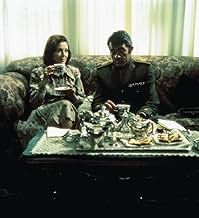
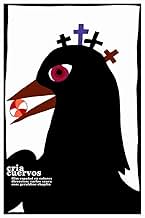
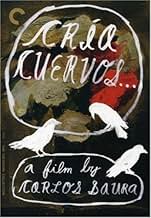
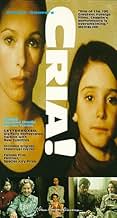
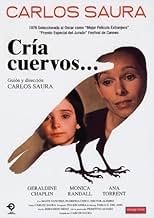
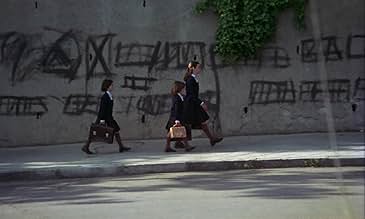
In the twilight of Francisco Franco's dictatorship, an 8-year-old orphan and her two sisters find shelter in the house of their stern aunt and try their best to acclimatize to a new reality.... Read allIn the twilight of Francisco Franco's dictatorship, an 8-year-old orphan and her two sisters find shelter in the house of their stern aunt and try their best to acclimatize to a new reality. Can they summon up the courage to grow up?In the twilight of Francisco Franco's dictatorship, an 8-year-old orphan and her two sisters find shelter in the house of their stern aunt and try their best to acclimatize to a new reality. Can they summon up the courage to grow up?
- Awards
- 8 wins & 4 nominations total
Conchita Pérez
- Irene
- (as Conchi Perez)
Mayte Sanchez
- Maite
- (as Maite Sánchez)
Mónica Randall
- Paulina
- (as Monica Randall)
Josefina Díaz
- Abuela
- (as Josefina Diaz)
Germán Cobos
- Nicolás Garontes
- (as German Cobos)
Héctor Alterio
- Anselmo
- (as Hector Alterio)
Julieta Serrano
- Ana
- (voice)
- Director
- Writer
- All cast & crew
- Production, box office & more at IMDbPro
7.912K
1
2
3
4
5
6
7
8
9
10
Featured reviews
10fern-2
Wonderful childhood memories
What a wonderful movie! Saura has succeeded showing us the inside of childhood. One has to be a great artist to be able to reflect the true feelings of a child thrown in the turmoil of life. Little Ana's eyes are a world of suffering, of understanding, of emotions. This child has seen death, she has known it directly and she has no fear. Either to experience it or to give it or to see it. Thank you Mr Saura, after 23 years, you still give us these great moments of life.
My favourite film of all time
I have seen several thousand films in my life and this one became the top one almost instantly. Ever since I have watched it several times and it has never failed to impress and delight me - it even increases the sense of mystery undelying in its baroque and compelling history. On my opinion, it is Carlos Saura's masterpiece and perhaps the best film ever made about the mysterious inner world children live in and create. There is so much to be enjoyed in this film, that a conventional review will not make it justice.
Perspectives
This film is such a splendid experience that it's difficult to really describe objectively why. The plot, the characters are revealed at a perfect tempo, keeping the audience engrossed and anticipating what's next. Any film with such sparse dialogue needs to make the rare lines worthwhile, and Saura certainly does, probably learning from Erice, the master of indispensable dialogue. Ana Torrent invites all sorts of Erice comparisons, but I see Saura taking a step beyond him here visually.
"Beehive" was a landmark film, and unlike anything that had been made. But the camera maintained the same distance and the story was fundamentally allegorical. Saura experiments with distance, sometimes following the characters closely, sometimes giving an omniscient birds eye view of the area. Sometimes remaining a mere witness to what's happening. It's very carefully calculated to best enhance the scene and keep these extraordinary events within the realm of possibility.
If there's such a film as a director's film, this is it. Although it is certainly worthwhile for the performances as well.
5 out of 5 - Essential
"Beehive" was a landmark film, and unlike anything that had been made. But the camera maintained the same distance and the story was fundamentally allegorical. Saura experiments with distance, sometimes following the characters closely, sometimes giving an omniscient birds eye view of the area. Sometimes remaining a mere witness to what's happening. It's very carefully calculated to best enhance the scene and keep these extraordinary events within the realm of possibility.
If there's such a film as a director's film, this is it. Although it is certainly worthwhile for the performances as well.
5 out of 5 - Essential
10Efzed
the 2nd level
Like almost everyone i found this movie extraordinary touching and beautiful when i first saw it. I watched it several times and i realized something, it's really about Spain under Franco's dictatorship. Every character is a metaphor of Spain , the beautiful mother killed, cheated on by her military husband, the collaborating auntie who tries to educate the children, the old mute grand mother, who only wants to remember the old days (the republic) etc... every line in the movie can be heard in a completely different. The young rebel Ana is a true symbol of the spanish youth who can't stand anymore the military oppression, and who wanna be free to see the outside world (the song is reggae !). and the final scene with the hope of a new era coming (when the kids are arriving at school as a new year is beginning) is the reflection of what was about to happen in Spain (Franco died the same year). Anyway, whether you want to see its political message or not, it's just a wonderful movie, one of my favorite.
A criminally overlooked classic of Spanish cinema
As yet unavailable on DVD in the UK, this brilliant Spanish classic is now back on the big screen in a beautifully restored print. Thirty five years after it was made, Cria Cuervos is (by and large) just as potent and relevant as it was when first released.
There is a scene, quite early on in the film, where a young girl called Ana, and her two sisters, walk into their aunt's bedroom and start playing with her makeup and wardrobe, rouging their cheeks and applying lipstick in copious amounts. I think, at that point, almost everyone in the screening, tried to hide a sardonic smile.
However, it is not for its ironies when seen in the present day that we remember this film most. We remember it because it offers us something we very rarely see in cinema: an honest, sincere evocation of childhood and the gradual, warped loss of innocence. That is the premise of dozens of films, I realise, but seldom is anything like this achieved; movies of this type are either cloying and sentimental, or else sensationalised and melodramatic. Neither obtains the poignant sense of disquiet that 'Cria Cuervos' generates.
The film begins with Ana losing her father. Her mother, we quickly learn, died a few years ago, and Ana is left an orphan. She and her two sisters are sent to live with their aunt – a fundamentally kind, but authoritarian guardian who Ana, yearning for her own mother, instinctively rebels against. We follow Ana's story from the time of her father's death to the end of the summer holidays, after which she will start school with her sisters.
This, I hasten to add, is a very simplified, desiccated overview of the plot. It is a film packed with nuance and subtlety. We learn that Ana's father was in fact a soldier under Franco's regime, and had at one time fought alongside the Nazis. In one of the most memorable scenes in the film, Ana finds her father's gun, still loaded, leading to a tense scene with her aunt and her aunt's lover.
Ana is a fascinating child. The eagle eyed film buff might remember the actress who plays her from 'The Spirit of the Beehive', another Spanish classic which deals with similar themes, albeit in a different way. Most striking are those large, brown eyes of hers; Ana is a quiet, observant child, disturbed by her brief glimpses into the adult world, gradually accumulating as she grows older. How much does she understand? Obviously, when Ana grows into an adult and narrates the story through flashback, hindsight will let her comprehend the things she has seen. But what of when she is younger? The answer is largely subjective. The film draws many comparisons between Ana's grandmother and the young Ana herself – the old woman is paralysed, in a wheelchair. She is capable of hearing and seeing – and understanding the things other people say. But she never says anything. Whether this is part of her affliction, or a conscious choice, is left deliberately ambiguous. What we can see is that Ana sympathises with her grandmother, and a gentle, compassionate relationship evolves between the two.
I could go on. Perhaps the most impressive thing about the film is the way it seamlessly blends fact, fiction and memory so beautifully and precisely, without ever losing sight of its ultimate goal; indeed, this very blending lends the film an incredible authenticity. Ana feels isolated and alone – her fantasies, from the shocking to the seemingly banal, are desperate and painful. The opening montage, as well, of a collection of family photographs, is extremely subtle and masterful in the way it has us beginning to formulate questions and suspicions – some of which are assuaged, some of which aren't.
What a treat this is for any film fan! Carlos Saura (the director), was of course one of the great opponents of the Franco regime, while also rated as one of the most important Spanish directors of the 1970s. This is probably his most well known and powerful film. Childhood can be a frightening, confusing, and sad time, and Saura, with what is arguably his masterpiece, has captured that beautifully. Don't miss!
There is a scene, quite early on in the film, where a young girl called Ana, and her two sisters, walk into their aunt's bedroom and start playing with her makeup and wardrobe, rouging their cheeks and applying lipstick in copious amounts. I think, at that point, almost everyone in the screening, tried to hide a sardonic smile.
However, it is not for its ironies when seen in the present day that we remember this film most. We remember it because it offers us something we very rarely see in cinema: an honest, sincere evocation of childhood and the gradual, warped loss of innocence. That is the premise of dozens of films, I realise, but seldom is anything like this achieved; movies of this type are either cloying and sentimental, or else sensationalised and melodramatic. Neither obtains the poignant sense of disquiet that 'Cria Cuervos' generates.
The film begins with Ana losing her father. Her mother, we quickly learn, died a few years ago, and Ana is left an orphan. She and her two sisters are sent to live with their aunt – a fundamentally kind, but authoritarian guardian who Ana, yearning for her own mother, instinctively rebels against. We follow Ana's story from the time of her father's death to the end of the summer holidays, after which she will start school with her sisters.
This, I hasten to add, is a very simplified, desiccated overview of the plot. It is a film packed with nuance and subtlety. We learn that Ana's father was in fact a soldier under Franco's regime, and had at one time fought alongside the Nazis. In one of the most memorable scenes in the film, Ana finds her father's gun, still loaded, leading to a tense scene with her aunt and her aunt's lover.
Ana is a fascinating child. The eagle eyed film buff might remember the actress who plays her from 'The Spirit of the Beehive', another Spanish classic which deals with similar themes, albeit in a different way. Most striking are those large, brown eyes of hers; Ana is a quiet, observant child, disturbed by her brief glimpses into the adult world, gradually accumulating as she grows older. How much does she understand? Obviously, when Ana grows into an adult and narrates the story through flashback, hindsight will let her comprehend the things she has seen. But what of when she is younger? The answer is largely subjective. The film draws many comparisons between Ana's grandmother and the young Ana herself – the old woman is paralysed, in a wheelchair. She is capable of hearing and seeing – and understanding the things other people say. But she never says anything. Whether this is part of her affliction, or a conscious choice, is left deliberately ambiguous. What we can see is that Ana sympathises with her grandmother, and a gentle, compassionate relationship evolves between the two.
I could go on. Perhaps the most impressive thing about the film is the way it seamlessly blends fact, fiction and memory so beautifully and precisely, without ever losing sight of its ultimate goal; indeed, this very blending lends the film an incredible authenticity. Ana feels isolated and alone – her fantasies, from the shocking to the seemingly banal, are desperate and painful. The opening montage, as well, of a collection of family photographs, is extremely subtle and masterful in the way it has us beginning to formulate questions and suspicions – some of which are assuaged, some of which aren't.
What a treat this is for any film fan! Carlos Saura (the director), was of course one of the great opponents of the Franco regime, while also rated as one of the most important Spanish directors of the 1970s. This is probably his most well known and powerful film. Childhood can be a frightening, confusing, and sad time, and Saura, with what is arguably his masterpiece, has captured that beautifully. Don't miss!
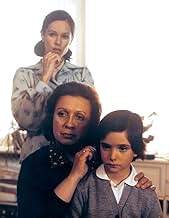
Did you know
- TriviaThe title in Spanish stems from the phrase "Raise ravens and they'll pluck out your eyes." The equivalent phrase in English would be "you reap what you sow."
- Crazy creditsThe closing credits identify Cancion y Danzas Number 5 of Frederic Mompou. But it was definitely Number 6 that we heard.
- ConnectionsFeatured in Zomergasten: Episode #4.1 (1991)
- SoundtracksCanción y Danzas N.6
Composed by Frederic Mompou (as Federico Mompou)
- How long is Cría Cuervos?Powered by Alexa
Details
- Release date
- Country of origin
- Official site
- Language
- Also known as
- Cria!
- Filming locations
- 15 Calle de María de Molina, Madrid, Spain(family house)
- Production companies
- See more company credits at IMDbPro
Box office
- Gross worldwide
- $14,548
- Runtime
- 1h 45m(105 min)
- Sound mix
- Aspect ratio
- 1.66 : 1
Contribute to this page
Suggest an edit or add missing content