IMDb RATING
6.2/10
1.8K
YOUR RATING

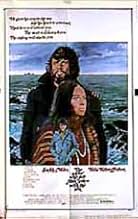
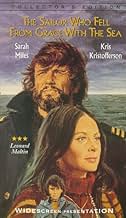
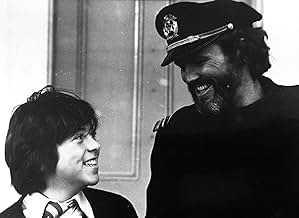
After his father dies, a disturbed young boy plots to take revenge on the new man in his mother's life.After his father dies, a disturbed young boy plots to take revenge on the new man in his mother's life.After his father dies, a disturbed young boy plots to take revenge on the new man in his mother's life.
- Director
- Writers
- Stars
- Awards
- 2 nominations total



Charles Adey-Grey
- Man in Tea Room
- (uncredited)
Mabel Etherington
- Woman in Tea Room
- (uncredited)

Juba Kennerley
- Man in Tea Room
- (uncredited)
- Director
- Writers
- All cast & crew
- Production, box office & more at IMDbPro
6.21.8K
1
2
3
4
5
6
7
8
9
10
Featured reviews
Completely misses the point from the nov
First off, I'd like to say that the movie itself wasn't bad. If we completely disregard the novel that is.
I'm sorry but about 50% of what made the novel as good as it is, is the duality between old Japan and the then new western influence. But no!! We just had to move the story to the western world, and completely ignore the Japanese aspects. The samurai code which translates to Noboru's (in this adaptation now named Jonathan) sense of glory is now completely absent too. The average viewer has now clue why Jonathan and the boys act the way they do. Theres no character building around the sailor, and the beauty of Fusako's (Anne) "independence" is lost.
Overall a decently fine film, but loses the point of the novel.
I was left dissapointing and longing for the true bittersweet taste of glory.
But!! If you haven't read the novel and just want to watch a nice slow movie with a slight hint of disturbance and beautiful imagery, I could definitely recommend it.
I'm sorry but about 50% of what made the novel as good as it is, is the duality between old Japan and the then new western influence. But no!! We just had to move the story to the western world, and completely ignore the Japanese aspects. The samurai code which translates to Noboru's (in this adaptation now named Jonathan) sense of glory is now completely absent too. The average viewer has now clue why Jonathan and the boys act the way they do. Theres no character building around the sailor, and the beauty of Fusako's (Anne) "independence" is lost.
Overall a decently fine film, but loses the point of the novel.
I was left dissapointing and longing for the true bittersweet taste of glory.
But!! If you haven't read the novel and just want to watch a nice slow movie with a slight hint of disturbance and beautiful imagery, I could definitely recommend it.
Haunting and Unforgettable
This is a very chilling movie based on an even more chilling novel. It does seem to be a cross between "Oedipus Rex" and "Lord of the Flies" as some reviewers have astutely pointed out, but it is actually based on an obscure Japanese novella. The original story had a Japanes protagonist and was set in a Japanese fishing village. The filmmakers don't entirely succeed in transplanting the action to rural England and casting a Kris Kristoferson in the lead role, but an international film never could have gotten made at the time with a Japanese lead, and once they cast Kristoferson, setting the movie in a Japanese fishing village would have drawn the inevitable charges of racism from the perpetually outraged idiots in the "PC" crowd.
Besides the awkwardness of the adaptation is redeemed by some great acting. This is probably Kristoferson's second best role after "Pat Garret and Billy the Kid". Sarah Miles is also very good as the lonely widow. Her sex scenes with Kristoferson are very erotic if very perverse (you see them only through a peephole as her disturbed son watches). The British child actors are also very good for a change, particularly the very disturbed but nevertheless sympathetic son and the truly psychopathic leader of the gang of schoolboys he runs with (who make the "Children of the Damned" look cute and cuddly by comparison). The scene where the gang eviscerates a live cat is almost unbearable to watch. And the final scene on a hill overlooking the sea is chilling, tragic, fatalistic, beautiful, and mythic all at once. This is and haunting and unforgettable movie.
Besides the awkwardness of the adaptation is redeemed by some great acting. This is probably Kristoferson's second best role after "Pat Garret and Billy the Kid". Sarah Miles is also very good as the lonely widow. Her sex scenes with Kristoferson are very erotic if very perverse (you see them only through a peephole as her disturbed son watches). The British child actors are also very good for a change, particularly the very disturbed but nevertheless sympathetic son and the truly psychopathic leader of the gang of schoolboys he runs with (who make the "Children of the Damned" look cute and cuddly by comparison). The scene where the gang eviscerates a live cat is almost unbearable to watch. And the final scene on a hill overlooking the sea is chilling, tragic, fatalistic, beautiful, and mythic all at once. This is and haunting and unforgettable movie.
When a sailor falls in love and decides to stay on land, it has violent consequences.
The movie is indeed an adaptation of a novel by Yukio Mishima. Just to clarify, the novel is not an obscure work. Mishima is amongst Japan's most famous writers and was nominated for the Nobel Prize for Literature three times. Also, the plot of the original Japanese story does not happen in a remote fishing village; it happens in Yokohama, which is one of Japan's largest cities. Lastly, it does not happen in feudal Japan, a fact that would be very evident had someone read the book.
Now that that's been said, I've watched the movie since I very much enjoyed the novel. While I agree with most comments concerning the movie itself, I actually very much enjoyed the ending. Not only would have supplying an ending would have been taking too much liberty, but also it allows the viewer to imagine what would happen. Furthermore, to challenge another commenter, this sort of ending does work in movies and was a common motif of films during this era. Some other notable movies with endings similar to this include Francis Ford Coppola's "The Conversation" and "Parallax View."
Now that that's been said, I've watched the movie since I very much enjoyed the novel. While I agree with most comments concerning the movie itself, I actually very much enjoyed the ending. Not only would have supplying an ending would have been taking too much liberty, but also it allows the viewer to imagine what would happen. Furthermore, to challenge another commenter, this sort of ending does work in movies and was a common motif of films during this era. Some other notable movies with endings similar to this include Francis Ford Coppola's "The Conversation" and "Parallax View."
Disturbing and Atmospheric Drama
An unforgettable and profoundly disturbing story centered on a widow, Anne, and her only son, Jonathan, in a remote English seaside town. Jonathan belongs to a gang led by a precociously intelligent sociopath known only as Chief, who through sheer force of will and intellect, indoctrinates them with a quasi-Neitzchean philosophy of ultimate superiority and the non-existence of morality. When Kris Kristofferson's Captain Jim arrives in town, and strikes up a passionate relationship with the lonely Anne, Jonathan sees him as a heroic masculine prototype, removed from society and living a 'true' life on the open sea. But when the Captain decides to settle down and marry Anne, Jonathan takes it as an ultimate and unforgivable betrayal, and exacts a terrible revenge.
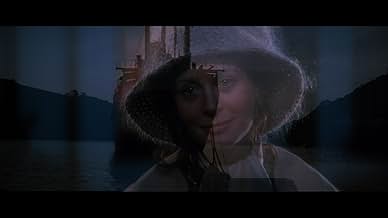
Based on the 1963 Mishima novel, "The Sailor Who Fell From Grace With The Sea" hints at many themes, from Jonathan's Oedipal obsession with spying on his mother's bedroom to his physical admiration of the Captain that verges on latent homosexuality. The atmosphere, masterfully created by veteran cinematographer Douglas Slocombe, is one of darkly brooding clouds, gray seas, and an air that constantly threatens rain. The (in)famous sex scenes are really not that explicit, and the casual violence exhibited by the children is far more shocking than any glimpse of breast or buttock.
The film, for all its brilliantly evocative atmosphere, excellent performances, and quietly brooding menace, is not without its flaws. The score is terrible, all mawkish piano and sickly clarinet. It is often overly intrusive and distracts from the overall sense of ripe stillness that director Carlino conjures throughout the film. But in general, the film is a remarkable experience, and one that any viewer is unlikely to forget quickly.
Based on the 1963 Mishima novel, "The Sailor Who Fell From Grace With The Sea" hints at many themes, from Jonathan's Oedipal obsession with spying on his mother's bedroom to his physical admiration of the Captain that verges on latent homosexuality. The atmosphere, masterfully created by veteran cinematographer Douglas Slocombe, is one of darkly brooding clouds, gray seas, and an air that constantly threatens rain. The (in)famous sex scenes are really not that explicit, and the casual violence exhibited by the children is far more shocking than any glimpse of breast or buttock.
The film, for all its brilliantly evocative atmosphere, excellent performances, and quietly brooding menace, is not without its flaws. The score is terrible, all mawkish piano and sickly clarinet. It is often overly intrusive and distracts from the overall sense of ripe stillness that director Carlino conjures throughout the film. But in general, the film is a remarkable experience, and one that any viewer is unlikely to forget quickly.
Good
The script and direction meld into a strong movie. With charm and humor to spare, this film was among the top echelon of movies from 1976. The characters in this film have a lot of depth, and that makes all the difference. In the end, the audience gets a casserole of film elements and little of the satisfaction that comes from watching these types of movies. I guess if I was in a bad mood, this movie wouldn't be half as good, but I thought it to be enjoyable and would recommend it. This is a story about a place most people might not be able to conceive. It is a powerful film. Many scenes do not feel believable, but good performances help to enhance this story.


Did you know
- TriviaFirst English language filmed adaptation of a novel by Japanese writer Yukio Mishima.
- Alternate versionsUS DVD version is cut. Sex scenes of Sarah Miles are tamed down in US version.
- ConnectionsReferenced in Fantasm Comes Again (1977)
- How long is The Sailor Who Fell from Grace with the Sea?Powered by Alexa
Details
Contribute to this page
Suggest an edit or add missing content