

Has-been singing idol John Norman Howard falls in love with young, up-and-coming songstress Esther Hoffman in Frank Pierson's version of the classic love story updated to the rock and roll e... Read allHas-been singing idol John Norman Howard falls in love with young, up-and-coming songstress Esther Hoffman in Frank Pierson's version of the classic love story updated to the rock and roll era.Has-been singing idol John Norman Howard falls in love with young, up-and-coming songstress Esther Hoffman in Frank Pierson's version of the classic love story updated to the rock and roll era.
- Won 1 Oscar
- 7 wins & 7 nominations total





Sammy Lee Creason
- The Speedway
- (as Sam Creason)

6.114.1K
1
2
3
4
5
6
7
8
9
10
Featured reviews
Horrible remake of a classic.
Horrible remake of an A+ classic remake. The acting is bottom of the barrel, as well the direction and production values. Paul Williams' 'Evergreen,' now seriously dated, was best part of the film. Everyone involved has done better, but none have done worse. Rent the Judy Garland/James Mason version and see what quality movie making is all about.
My A STAR IS BORN
This was the A STAR IS BORN I knew, released in 1976. It was the third of four (1937, 1954, 1976 and, now, 2018). I'm pretty sure I had the soundtrack on repeat, the songs still stir memories of my college years. Streisand vocals are spectacular. Kris Kristofferson was beautiful. This version made a complete contextual leap from Movie Star to Rock Star. It garnered 4 Oscar nominations, all for music and sound, and won for Best Song. Now, rewatching it, I see it had some rough spots, in terms of acting and writing, but I'll still go with a rating that harkens back to my first experience of it, making it a 7.5 (sweet good) out of 10. {Drama, Music, Romance}
The third and least workable version of the classic Hollywood tale.
The anticipation for this musical film was huge. It seemed the perfect star vehicle for Barbra Streisand and she hadn't had a hit for almost three years ("The Way We Were"). Janet Gaynor and Judy Garland were superlative in their creations of the classic tale of the Hollywood couple -- one star on the rise, the other on the skids. Could Streisand put her own indelible mark on this material as well and reestablish herself as a triple-threat performer?
Nope. Not even close. This third version (actually fourth, if you include 1932's "What Price Hollywood" starring Constance Bennett and Lowell Sherman) stalls early in the game by transposing the dramatic setting of Hollywood movie-making to the brash, uncouth pop/rock music scene... and it is only one of many fundamental mistakes this movie makes.
The rags-to-riches story of Esther Hoffman Howard ain't believable for one second. Streisand the struggling artist? She plays Barbra the hard-assed star from the very first scene, lacking the courage or ability to immerse herself into a fully-realized character. She brays and bullies from the onset, showing no emotional colors whatsoever in a performance bereft of weakness, vulnerability and, as a result, sympathy. Ironically, she played this part to perfection ten years before -- as Fanny Brice, the gawky chorus girl who became a Ziegfeld Follies legend. Well, somewhere in those ten years, is a big star who has forgotten how to laugh at herself.
Its been said that Elvis Presley was briefly considered for the part of John Norman Howard, the singer on the skids, but turned it down for fear of being upstage by Streisand. All the same, one wonders what "The King" might have done with a too-close-to-reality role like this. In the hands of Kris Kristofferson, he tosses in a performance so lackadaisical and careless that one wonders if he was sober at all during the film's shoot. They appear to be performing in two different movies. Neither one interesting.
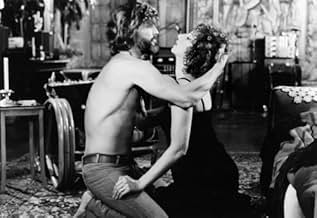
The screenplay is hopeless trite and corny, fueling some of the most unintentionally funny scenes in recent memory. Streisand's fight scene with Kristofferson after she catches him in the sack with some chippy and her emotional cassette-ripping scene in the mansion after John Howard's death are just plain embarrassing. If she's such a perfectionist in real life, how did these two scenes ever get by the editor's scissors.
The one thing Streisand did right in this movie is the one thing she can never do wrong. Sing. Possessing arguably the finest vocal instrument known to man, she weaves absolute magic in her singing scenes, notably "Woman in the Moon" and especially her heart-breaking finale number, "Are You Watching Me Now." Here, and only here, does she seize an emotional connection to Esther that evaded her throughout the film.
Alas, it is not enough to save this film dud. But, if you must see this, I'd advise you to skip the acting scenes and fast-forward to each Streisand number. Better yet, buy the CD.
Nope. Not even close. This third version (actually fourth, if you include 1932's "What Price Hollywood" starring Constance Bennett and Lowell Sherman) stalls early in the game by transposing the dramatic setting of Hollywood movie-making to the brash, uncouth pop/rock music scene... and it is only one of many fundamental mistakes this movie makes.
The rags-to-riches story of Esther Hoffman Howard ain't believable for one second. Streisand the struggling artist? She plays Barbra the hard-assed star from the very first scene, lacking the courage or ability to immerse herself into a fully-realized character. She brays and bullies from the onset, showing no emotional colors whatsoever in a performance bereft of weakness, vulnerability and, as a result, sympathy. Ironically, she played this part to perfection ten years before -- as Fanny Brice, the gawky chorus girl who became a Ziegfeld Follies legend. Well, somewhere in those ten years, is a big star who has forgotten how to laugh at herself.
Its been said that Elvis Presley was briefly considered for the part of John Norman Howard, the singer on the skids, but turned it down for fear of being upstage by Streisand. All the same, one wonders what "The King" might have done with a too-close-to-reality role like this. In the hands of Kris Kristofferson, he tosses in a performance so lackadaisical and careless that one wonders if he was sober at all during the film's shoot. They appear to be performing in two different movies. Neither one interesting.
The screenplay is hopeless trite and corny, fueling some of the most unintentionally funny scenes in recent memory. Streisand's fight scene with Kristofferson after she catches him in the sack with some chippy and her emotional cassette-ripping scene in the mansion after John Howard's death are just plain embarrassing. If she's such a perfectionist in real life, how did these two scenes ever get by the editor's scissors.
The one thing Streisand did right in this movie is the one thing she can never do wrong. Sing. Possessing arguably the finest vocal instrument known to man, she weaves absolute magic in her singing scenes, notably "Woman in the Moon" and especially her heart-breaking finale number, "Are You Watching Me Now." Here, and only here, does she seize an emotional connection to Esther that evaded her throughout the film.
Alas, it is not enough to save this film dud. But, if you must see this, I'd advise you to skip the acting scenes and fast-forward to each Streisand number. Better yet, buy the CD.
When you want the best version, see this last!
This is the best version of this story, no matter how many times it is made over. Save the best for last.
A convincing human drama
It's always been many people's dreams to become famous. Who could resist having tons of fans, lots of money and being able to do anything you want? It's a big change for anyone who makes this transition and most of the time, they end up cracking under pressure. Once this happens, frequently, the newly discovered celebrity will turn to drugs and other means to escape reality to find peace among themselves. But how often does someone discover the right person that'll keep him or her from going down the wrong path while in this state of glory? Now a days, it happens often enough that nobody thinks about it. Back then though, probably was a different story.
Audiences will be introduced to artist John Norman Howard (Kris Kristofferson), an entertainer who's stardom is beginning to die among his fans. He takes drugs, drinks constantly, and sings the same hits every time he's on tour. Until one night, he goes out on the town, decides to sit at a local bar and discover someone who can sing just as good if not better than him. That singer is Esther Hoffman (Barbra Streisand), a girl just trying to make a living, seeking love and hoping to make it big in show biz. It's John who's going to help her get there. Thus allowing Esther to as John puts it - "Getting small piece of the American Dream". Ergo the title of the movie.
The movie is directed by Frank Pierson who also wrote for Cool Hand Luke (1967) and Dog Day Afternoon (1975). Pierson also wrote the screenplay with two other writers who formed a fairly solid story. The only weak point is the unclear characterization Kristofferson's character. There are some motivations of John Norman Howard that aren't exactly explained. He'll do actions that should require explanations to but doesn't give one. It's understood that he's a wild and free man but every action has a motive behind it. They don't just go unexplained. Other than that, Kristofferson's performance is well acted. It's even more coincidental that a lot of the scenes displayed throughout the running time depict rather closely to what Kristofferson himself was going through at the time of his life.
Barbra Streisand also puts in a good performance as the unknowing upcoming celebrity that is forced into the life of popularity and paparazzi. Of course, when Streisand and Kristofferson are together, their chemistry feels natural. This is also displayed when these actual artists perform together as well. Audiences should appreciate that Streisand had the singing scenes filmed without voice-over work. It makes the performances and singing that much more believable and emotional. There's also a few other actors who pop in from time to time. Tony Orlando and Kristofferson's future spouse Rita Coolidge have a scene together. A very young and what appears to be sane Gary Busey plays John Norman Howard's head collaborator. Even Robert Englund from A Nightmare on Elm Street (1984) has a brief scene.
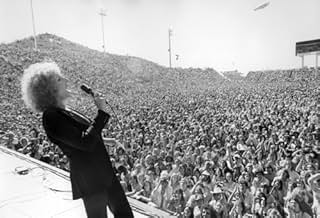
Although the films running time is about as long as your normal Michael Bay summer blockbuster (which may bore some viewers), these last few pieces help make the film as entertaining as it can be. Assisting to condense the movie as much as it could and make scenes flow was editor Peter Zinner who also edited for The Godfather (1972). Then there's Roger Kellaway's score to the film, which does try to keep the emotions high. However, it's not always present because half of the emotion is shown in the singing done by the main leads, which should satisfy most score aficionados. Lastly is Robert Surtees' cinematography where he captures very large concert audience shoots and some very beautiful rural landscape. It's an entertaining human drama with some flaws.
It lacks a little characterization and might be long for some, but the actors portray raw emotion and real performances to boot. The story is also a good representation of how quickly popularity can fall or soar.
Audiences will be introduced to artist John Norman Howard (Kris Kristofferson), an entertainer who's stardom is beginning to die among his fans. He takes drugs, drinks constantly, and sings the same hits every time he's on tour. Until one night, he goes out on the town, decides to sit at a local bar and discover someone who can sing just as good if not better than him. That singer is Esther Hoffman (Barbra Streisand), a girl just trying to make a living, seeking love and hoping to make it big in show biz. It's John who's going to help her get there. Thus allowing Esther to as John puts it - "Getting small piece of the American Dream". Ergo the title of the movie.
The movie is directed by Frank Pierson who also wrote for Cool Hand Luke (1967) and Dog Day Afternoon (1975). Pierson also wrote the screenplay with two other writers who formed a fairly solid story. The only weak point is the unclear characterization Kristofferson's character. There are some motivations of John Norman Howard that aren't exactly explained. He'll do actions that should require explanations to but doesn't give one. It's understood that he's a wild and free man but every action has a motive behind it. They don't just go unexplained. Other than that, Kristofferson's performance is well acted. It's even more coincidental that a lot of the scenes displayed throughout the running time depict rather closely to what Kristofferson himself was going through at the time of his life.
Barbra Streisand also puts in a good performance as the unknowing upcoming celebrity that is forced into the life of popularity and paparazzi. Of course, when Streisand and Kristofferson are together, their chemistry feels natural. This is also displayed when these actual artists perform together as well. Audiences should appreciate that Streisand had the singing scenes filmed without voice-over work. It makes the performances and singing that much more believable and emotional. There's also a few other actors who pop in from time to time. Tony Orlando and Kristofferson's future spouse Rita Coolidge have a scene together. A very young and what appears to be sane Gary Busey plays John Norman Howard's head collaborator. Even Robert Englund from A Nightmare on Elm Street (1984) has a brief scene.
Although the films running time is about as long as your normal Michael Bay summer blockbuster (which may bore some viewers), these last few pieces help make the film as entertaining as it can be. Assisting to condense the movie as much as it could and make scenes flow was editor Peter Zinner who also edited for The Godfather (1972). Then there's Roger Kellaway's score to the film, which does try to keep the emotions high. However, it's not always present because half of the emotion is shown in the singing done by the main leads, which should satisfy most score aficionados. Lastly is Robert Surtees' cinematography where he captures very large concert audience shoots and some very beautiful rural landscape. It's an entertaining human drama with some flaws.
It lacks a little characterization and might be long for some, but the actors portray raw emotion and real performances to boot. The story is also a good representation of how quickly popularity can fall or soar.


Did you know
- TriviaKris Kristofferson said, "Filming with Barbra Streisand is an experience which may have cured me of the movies."
- GoofsAfter John Norman crashes his motorcycle, and Esther runs to him, there are dirty hand prints on the back of her blouse before John Norman pulls her down in the dirt and puts his hands on her back.
- Quotes
Esther Hoffman: You can trash your life but you're not going to trash mine.
- Crazy creditsMs. Streisand's clothes from ... Her Closet.
- Alternate versionsStreisand interpolated previously unused footage for the film's 2018 release on Netflix. Original footage restored a guitar version of "Evergreen" previously cut to condense the film. The finale "With One More Look at You/Watch Closely Now" was re-edit from a single take to a more enhanced visual.
- ConnectionsEdited into Barbra Streisand: Woman in Love (1981)
- How long is A Star Is Born?Powered by Alexa
Details
- Release date
- Country of origin
- Language
- Also known as
- Nace una estrella
- Filming locations
- Empire Ranch, Sonoita, Arizona, USA(newly built honeymoon home)
- Production companies
- See more company credits at IMDbPro
Box office
- Budget
- $6,000,000 (estimated)
- Gross US & Canada
- $80,000,000
- Gross worldwide
- $80,000,115
- Runtime
- 2h 19m(139 min)
- Sound mix
- Aspect ratio
- 1.85 : 1
Contribute to this page
Suggest an edit or add missing content