IMDb RATING
4.8/10
909
YOUR RATING
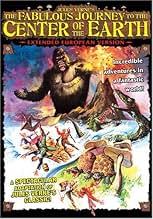
Also known as "The Fabulous Journey to the Centre of the Earth" in the UK. The film is partially dubbed in English, but it has good cinematography.Also known as "The Fabulous Journey to the Centre of the Earth" in the UK. The film is partially dubbed in English, but it has good cinematography.Also known as "The Fabulous Journey to the Centre of the Earth" in the UK. The film is partially dubbed in English, but it has good cinematography.
José María Caffarel
- Professor Fridleson
- (as Jose Mª Caffarel)
Fabián Conde
- Professor
- (as Fabian Conde)
Ángel Álvarez
- Professor
- (as Angel Alvarez)
Ángel Menéndez
- Professor
- (as Angel Menendez)
4.8909
1
2
3
4
5
6
7
8
9
10
Featured reviews
Great opening credits!
Essentially a recasting of the 1959 version as opposed to a remake (think a traveling version of your favorite Broadway play and you get the picture). Now that video allows us to experience the original over and over again, this film becomes less unique. The overall film is not so bad (considering the genre) if it weren't for the fact that this film was done so much better twenty years earlier. As far as casting Kenneth More in the James Mason role...what can I say? More is Less. This film was made during the time when films such as THE LAND THAT TIME FORGOT, THE PEOPLE THAT TIME FORGOT, and AT THE EARTH'S CORE were successful, and this version shares much with those films regarding style. I think if I were a kid in 1977 watching this in a theater and never seeing the original I would have thought it would be great. If only the director would have introduced new themes or viewpoints to the familiar story it could be enjoyed today. The film can be recommended however for a great gimmick for it's opening credits...a montage of the original Georges Melies silent films of Jules Verne's works set to the film's theme song. I've never seen them used in any other adaptation and it was a nice tribute.
Obscure Version.
Based on the popular novel by Jules Verne originally called "Journey To The Center Of The Earth", and filmed previously under that title by 20th Century Fox in 1959, this version stars Kenneth More as a scientist who has discovered a way to enter the center of the Earth through Iceland. He takes with him his niece and her fiancée, along with a helper called Hans. Once there, they encounter the usual menaces one can expect, like dinosaurs on the land and sea, as well as a mysterious human named Olsen who will play an important part later... Mediocre film isn't bad but is pretty forgettable; saw this on DVD as a double feature paired with the superior "Encounter With The Unknown".
A shonky adaptation of Jules Verne's classic.
Very nearly qualifying for 'so bad, it's good' status, Spanish director Juan Piquer Simon's take on Jules Verne's classic tale is poorly acted, has some truly awful effects, and features the most inept bunch of explorers ever to be committed to celluloid. With a touch more manky monster action, and its tongue a bit further in cheek, this one could have rivalled 70s favourite At the Earth's Core for schlock value; as it stands, it is a fairly entertaining low budget adventure flick that is just about enough fun for it to warrant a viewing.
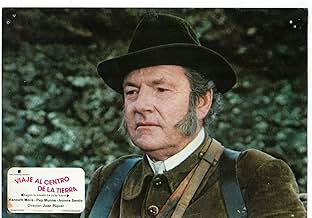
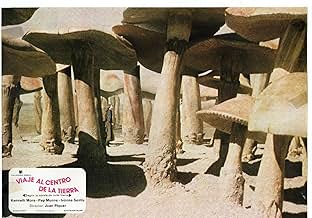
Kenneth More plays Prof. Otto Lindenbrock, a geologist who sets out on an expedition after discovering a secret route to the centre of the Earth. Together with his niece Glauben (Ivonne Sentis), a Prussian soldier, Axel (Pep Munné), and a shepherd named Hans (Frank Braña), Otto braves dangerous cave-ins, poisonous mushrooms, a perilous sea journey and prehistoric creatures.
Unlike James Mason's more than capable Oliver Lindenbrook (in the far superior 1959 movie Journey to the Center of the Earth), More's character is something of a bumbling fool. He is totally unprepared for the trip he undertakes and doesn't seem at all fazed by any setbacks (he loses his guidebook and water supply along the way, but continues regardless). His companions, who all seem quite happy to tag along, are equally irresponsible; they frequently wander off on their own with absolutely no regard for their own safety.
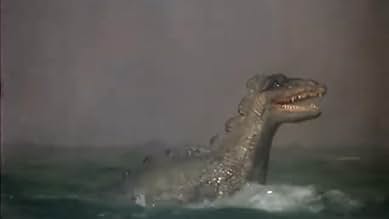
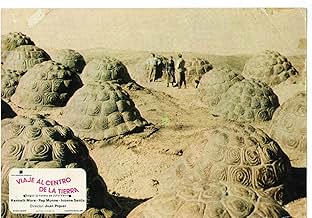
On discovering a huge underground ocean, the travellers build a raft, bump into some sea monsters (rubber glove puppets filmed in a bath), visit an island full of man-eating tortoises (the world's slowest predators) and get attacked by a giant ape (played by a man in a fancy-dress monkey suit). They eventually emerge from an erupting Stromboli, none the worse for wear.
All of this, believe it or not, is fairly faithful to Verne's novel, but Juan Piquer Simon, apparently not content with its level of silliness, ramps up the ridiculousness even further. Halfway through their journey, our intrepid gang meet a mysterious stranger called Olsen, who eventually turns out to be a time-travelling scientist! Fans of bad monster movies and silly 70s sci-fi cinema will probably want to check this film out; everyone else would be better off giving it a miss.
Kenneth More plays Prof. Otto Lindenbrock, a geologist who sets out on an expedition after discovering a secret route to the centre of the Earth. Together with his niece Glauben (Ivonne Sentis), a Prussian soldier, Axel (Pep Munné), and a shepherd named Hans (Frank Braña), Otto braves dangerous cave-ins, poisonous mushrooms, a perilous sea journey and prehistoric creatures.
Unlike James Mason's more than capable Oliver Lindenbrook (in the far superior 1959 movie Journey to the Center of the Earth), More's character is something of a bumbling fool. He is totally unprepared for the trip he undertakes and doesn't seem at all fazed by any setbacks (he loses his guidebook and water supply along the way, but continues regardless). His companions, who all seem quite happy to tag along, are equally irresponsible; they frequently wander off on their own with absolutely no regard for their own safety.
On discovering a huge underground ocean, the travellers build a raft, bump into some sea monsters (rubber glove puppets filmed in a bath), visit an island full of man-eating tortoises (the world's slowest predators) and get attacked by a giant ape (played by a man in a fancy-dress monkey suit). They eventually emerge from an erupting Stromboli, none the worse for wear.
All of this, believe it or not, is fairly faithful to Verne's novel, but Juan Piquer Simon, apparently not content with its level of silliness, ramps up the ridiculousness even further. Halfway through their journey, our intrepid gang meet a mysterious stranger called Olsen, who eventually turns out to be a time-travelling scientist! Fans of bad monster movies and silly 70s sci-fi cinema will probably want to check this film out; everyone else would be better off giving it a miss.
Journey to the Centre of the Earth
Until very recently, this remake of the famous Jules Verne story had completely passed me by. Though not a patch on the James Mason version (1959), it's not a complete write-off. Kenneth More takes on the role of the explorer "Prof. Lindenbrock" - this time an eminent German rather than Scottish scholar (there were some Deutsche Marks involved in the production here) and he and his small team set off down an Icelandic volcano on the adventure of any lifetime. The rest of the cast are completely unremarkable - a truly international mix of C-list collaborators, with Jack Taylor's young "Olsen" reminding me (audibly) a lot of Roddy McDowall. Anyway, it is a good, strong story and even the most mediocre of directors can't really screw that up too badly. The special effects - especially the prehistoric creatures - are the stuff of a school project (even then) but it is intercut with some fine volcanic actuality and it's paced well enough for More to just about have sufficient gravitas to carry it off. Memorable? No. Good? No. I still quite enjoyed it, though.
campy but not all that bad
"Where Time Began" is an adaptation of Jules Verne's "Journey to the Center of the Earth", with some variations to make it more salable (such as a love interest). It seems to have been aimed at a juvenile audience and is in the same vein as the Kevin Connors/Amicus Studios adaptations of Edgar Rice Burroughs. Like many genre films, "Where Time Began" has very hokey characters and dialogue. The ineptitude with which the journey to the center of the earth is conducted is quite startling, in fact. The stupidity of their dialogue (especially the exchanges between Glauben and her idiotic fiancee Axel) gives the film a strong tone of campiness and unintentional humor. When Olsen shows up to rescue them midway through and complains that he's had to listen to their stupid chatter for the past ten miles, the viewer can commiserate. However, given the fact that it is a low budget film, the sets, photography and giant creature special effects are actually pretty good, and they manage to maintain some atmosphere throughout the production. Once the characters arrive in the pseudo-prehistoric world at the center of the earth, the film especially picks up, and the revelation of the origin of Olsen provides an interesting twist. For this reason, "Where Time Began" is a reasonable entry in the journey-to-a-lost-world genre.
Did you know
- TriviaNever released in British cinemas. This film was first seen in the UK when broadcast on ITV during Christmas Day, 1978.
- Goofs(at about four minutes and 56 seconds into the film) In the film's English dubbed version, Professor Kristoff uses different measurement units in three consecutive sentences: "Because the distance between the Earth's crust and its core is over 6,500 KILOMETERS. And no man has ever descended to a depth of more than THREE MILES. So it's obvious we'll never have a glimmer of true knowledge until we are able to reach a depth of at least a HUNDRED LEAGUES."
- ConnectionsFeatures A Trip to the Moon (1902)
- How long is Where Time Began?Powered by Alexa
Details
- Release date
- Country of origin
- Languages
- Also known as
- Journey to the Center of the Earth
- Filming locations
- Production company
- See more company credits at IMDbPro
- Runtime
- 1h 27m(87 min)
- Sound mix
- Aspect ratio
- 1.66 : 1
Contribute to this page
Suggest an edit or add missing content