IMDb RATING
6.4/10
1.7K
YOUR RATING

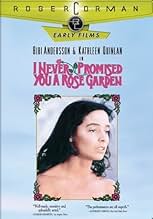
A disturbed, institutionalized 16-year-old girl struggles between fantasy and reality.A disturbed, institutionalized 16-year-old girl struggles between fantasy and reality.A disturbed, institutionalized 16-year-old girl struggles between fantasy and reality.
- Director
- Writers
- Stars
- Nominated for 1 Oscar
- 4 nominations total




Karin Collison
- Nurse
- (as Elizabeth Dartmoor)


Barbara Steele
- Idat
- (scenes deleted)
- Director
- Writers
- All cast & crew
- Production, box office & more at IMDbPro
6.41.6K
1
2
3
4
5
6
7
8
9
10
Featured reviews
Every Rose has its Thorn
Deborah Blake (Kathleen Quinlan) is admitted to a country institution by her high street parents, unable to cope with the ignominy brought upon them, by her erratic, anti-social behaviour.
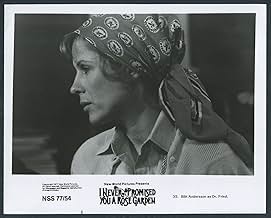
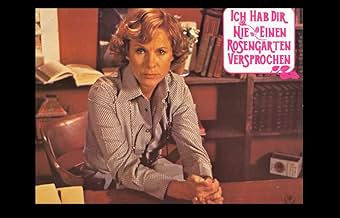
Taunted by her inner-demons (to which we're treated inventively from the mind's eye perspective), she's gradually cajoled from her psychosis by the unassuming, yet fiercely determined treating doctor - Bibi Andersson delivering a warm, sympathetic performance and headlining an impressive female cast that includes Signe Hasso, Susan Tyrrell, Diane Varsi, Silvia Sidney, screenwriter /actress Darlene Craviotto and taking a short break from her maternal duties on Martha's Vineyard, Lorraine Gary.
Along the journey, there's a couple of plot diversions, some poignant, others hackneyed and exploitative, but then would New World Pictures ever have distributed this movie without a stereotypical bully nurse scenario? Unlikely.
The Roger Corman production combines cinematic liberties with an at-times reverent translation of the Hannah Green novel, creating a compelling B-movie possessing an unusual dramatic-fantasy film tone. A cynical viewer might postulate that Corman saw a payday following the success of "One Flew Over the Cukoo's Nest", and to a large extent, this remains exploitative cinema. That said, Quinlan's performance clearly defies that brand, her characterisation personifies trauma and whilst often intense, isn't overcooked.
You have to commend New World Pictures for taking the plunge with this release against type, especially when you consider the other titles in their production line and catalogue at the time; 'Rose Garden' is a very different breed to your typical locally made New World Picture. Not perfect by any means and does have a tendency to stigmatise the subject matter, nevertheless an enjoyable film in spite of its flaws.
Taunted by her inner-demons (to which we're treated inventively from the mind's eye perspective), she's gradually cajoled from her psychosis by the unassuming, yet fiercely determined treating doctor - Bibi Andersson delivering a warm, sympathetic performance and headlining an impressive female cast that includes Signe Hasso, Susan Tyrrell, Diane Varsi, Silvia Sidney, screenwriter /actress Darlene Craviotto and taking a short break from her maternal duties on Martha's Vineyard, Lorraine Gary.
Along the journey, there's a couple of plot diversions, some poignant, others hackneyed and exploitative, but then would New World Pictures ever have distributed this movie without a stereotypical bully nurse scenario? Unlikely.
The Roger Corman production combines cinematic liberties with an at-times reverent translation of the Hannah Green novel, creating a compelling B-movie possessing an unusual dramatic-fantasy film tone. A cynical viewer might postulate that Corman saw a payday following the success of "One Flew Over the Cukoo's Nest", and to a large extent, this remains exploitative cinema. That said, Quinlan's performance clearly defies that brand, her characterisation personifies trauma and whilst often intense, isn't overcooked.
You have to commend New World Pictures for taking the plunge with this release against type, especially when you consider the other titles in their production line and catalogue at the time; 'Rose Garden' is a very different breed to your typical locally made New World Picture. Not perfect by any means and does have a tendency to stigmatise the subject matter, nevertheless an enjoyable film in spite of its flaws.
"You won't cure me with words, Doctor"
This isn't a film that always works, but when it does, it finds its way so deep under your skin that the pain is surprising. The acting is what stands above everything else here. I suppose I'd seen Kathleen Quinlan before, but I can't say I've ever really noticed her. Maybe it's because she's so young, so human here that it stands out amongst everything else she did before and after this. Her performance is wild, heartbreaking, intensely realized. Other performances, like Bibi Andersson, are great, but not as essential as Quinlan.
This is ground that has been covered with perhaps more consistency (in a cinematic sense) with films like "Girl, Interrupted" but never with the same emotional depth as here. Anthony Page makes a lot of strange, even bad directorial decisions perhaps, but he captures a crazed, uneasy tone in the cinematography and performances that brings it all together. The only odd points are the off-center dreams/hallucination sequences and out-of-place soundtrack. If you can overlook these, this is a truly great film. It really tore my heart out.
This is ground that has been covered with perhaps more consistency (in a cinematic sense) with films like "Girl, Interrupted" but never with the same emotional depth as here. Anthony Page makes a lot of strange, even bad directorial decisions perhaps, but he captures a crazed, uneasy tone in the cinematography and performances that brings it all together. The only odd points are the off-center dreams/hallucination sequences and out-of-place soundtrack. If you can overlook these, this is a truly great film. It really tore my heart out.
Interesting for the cast...
This is a film which came too late.Anybody who sees it is going to compare it to Anatole Litvak's "the snake pit" (1948).But that was then and this is now and the evolution is barely discernible.If "snake pit" was (unfairly) dismissed as obsolete,what can we say of a movie which was produced thirty years later and (roughly) depicts the same milieu? The most interesting thing in that average-to-good foray into psychiatry is its cast.Bergmanian Bibi Anderson is ideally cast as the shrink who tells the disappointed heroine "I've never promised you a rose garden".But there are also former glories such as Signe Hasso and Sylvia Sydney and future stars (Dennis Quaid).
A Riveting Central Core
Not a movie to catch if you're feeling down. Those scenes in the dayroom where the afflicted patients mingle are almost scary. Each woman acts out her own version of mental derangement, from hollering, to yelling in-your-face, to grabbing and shoving. Looks to me like the Pittsburgh Steelers are needed to keep order. In fact, I can't understand why therapeutic science would allow such intermingling among the psychologically afflicted. Just what the therapeutic effects might be is beyond me. Actually the tormented images brought back similar ones from the 1948 flick, The Snake Pit, that scared the heck out of me as a kid, except this 1977 epic should maybe be called The Demon Pit. I guess this movie's ironic title was so as not to scare off prospective viewers.
Actually what holds the movie together are outstanding performances by the two leading actresses, Quinlan and Andersson. I don't think I've seen a more emotionally affecting turn than Quinlan's, as her teenage Deborah poignantly struggles with inner demons she imagines as some kind of tyrannical barbarians. Aside from that inner struggle, we unfortunately know little about her or why she has lost her grip. Or for that matter do we know much about any of the many characters roaming the halls. Coming to Debbie's aid is psychiatrist Dr. Fried portrayed winningly by Swedish actress Andersson. She's low-key in her methods and between the two there's a growing magnetism that brings us back from the scenes of torment. To me, Quinlan at least deserved an Oscar nomination as I don't think I've been so moved in 70 years of movie watching as by her huggable presence. Also, it's good to see vintage actress Sylvia Sydney picking up a payday. Forty years earlier and that fine soulful actress could have succeeded as the poignant young Deborah.
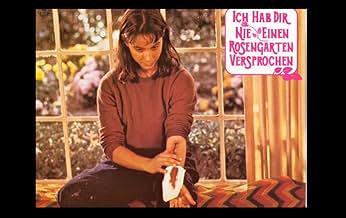
(In Passing: Though it passes by quickly, note Deborah's unconventionally hairy armpit, showing her rejection of a significant gender norm. It also shows production's careful attention to minor detail.)
All in all, the movie's too exotic for me to rate on the usual scale. But, despite the histrionics and foggy chairacter backgrounds, you may want to catch its engagingly sensitive core.
Actually what holds the movie together are outstanding performances by the two leading actresses, Quinlan and Andersson. I don't think I've seen a more emotionally affecting turn than Quinlan's, as her teenage Deborah poignantly struggles with inner demons she imagines as some kind of tyrannical barbarians. Aside from that inner struggle, we unfortunately know little about her or why she has lost her grip. Or for that matter do we know much about any of the many characters roaming the halls. Coming to Debbie's aid is psychiatrist Dr. Fried portrayed winningly by Swedish actress Andersson. She's low-key in her methods and between the two there's a growing magnetism that brings us back from the scenes of torment. To me, Quinlan at least deserved an Oscar nomination as I don't think I've been so moved in 70 years of movie watching as by her huggable presence. Also, it's good to see vintage actress Sylvia Sydney picking up a payday. Forty years earlier and that fine soulful actress could have succeeded as the poignant young Deborah.
(In Passing: Though it passes by quickly, note Deborah's unconventionally hairy armpit, showing her rejection of a significant gender norm. It also shows production's careful attention to minor detail.)
All in all, the movie's too exotic for me to rate on the usual scale. But, despite the histrionics and foggy chairacter backgrounds, you may want to catch its engagingly sensitive core.
Devastating, complicated, harrowing...not an easy movie to like, but impossible to dismiss
Hannah Green's popular book has become first-rate medical drama despite echoes of other hospital horror shows (which are probably unavoidable) and many disturbing, alarming episodes which cause a general lack of relief to be intensely felt. Kathleen Quinlan is remarkable in a unheralded tour-de-force playing schizophrenic, suicidal young woman admitted into a mental institution by her parents. Quinlan's Deborah Blake is not an innocent lamb being tossed to the lions--she's as deeply troubled and psychotic as the other inmates--yet her doctor (a warm, compassionate Bibi Andersson) detects a core of sound reasoning to Deborah's manner, and works carefully on rescuing the girl from the demons who plague her. Deborah's fantasy world, which takes place in what appears to be a prehistoric civilization of Indian mystics, seems wildly overwrought at first (and we never do uncover the connection between Deborah and these tribal warriors and lovers); however the structure of the film is quite linear and, as we move from one chapter to the next, we can sense what drives this girl to self-destruction without a lot of technical jargon. Supporting cast is also strong, particularly Norman Alden as a kind orderly and Martine Bartlett (who played the mother in "Sybil") as a resident hysteric. Sylvia Sidney, as a returning patient who didn't make it on the outside, is typically a wonderful performer, yet she's never quite convincing in this part; her trained, poised style of acting tends to clash with the unbridled crazies who wander up and down the halls. Also, there's a small leap forward in time near the end which is momentarily confusing--perhaps another sequence with Andersson might have helped to prepare viewers for Blake's tentative recovery. Otherwise, a gut-wrenching achievement: unblinking, hard to watch on occasion, but undeniably potent and well-made. *** from ****


Did you know
- TriviaThe lead female role of of Deborah Blake in this picture was previously intended for Natalie Wood who had unrealized plans to both produce and star in the movie. Wood once had planned to produce the picture as well as star in it in the role of Deborah Blake but those plans never materialized. The part in the end was played in the film by Kathleen Quinlan.
- GoofsIn the New Year's Eve party scene, Deborah is seen with loose hair talking to Dr. Fried and then there is a close-up of Deborah with her hair pulled back from her forehead.
- Quotes
Deborah Blake: You can turn me off, you know. You can go off with your friends and write another paper on schizophrenia and get an award for it. But I can't turn me off. So I'm calling off the fight.
Dr. Fried: So you quit. Stay in the nuthouse for the rest of your life.
- How long is I Never Promised You a Rose Garden?Powered by Alexa
Details
Contribute to this page
Suggest an edit or add missing content